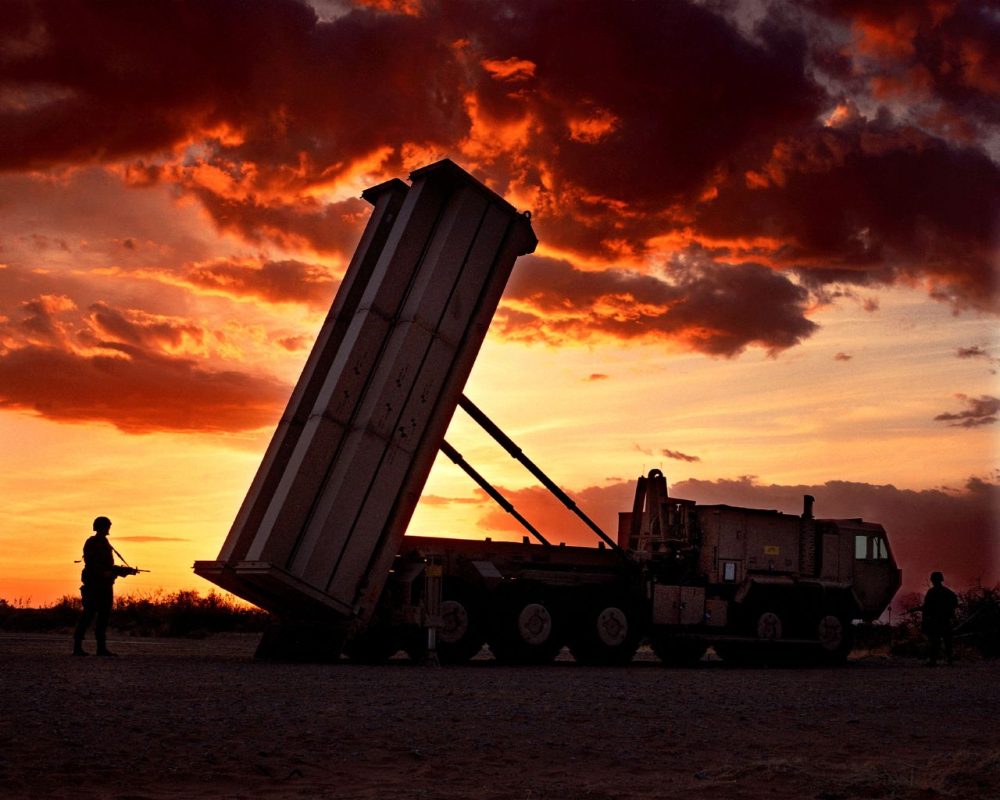
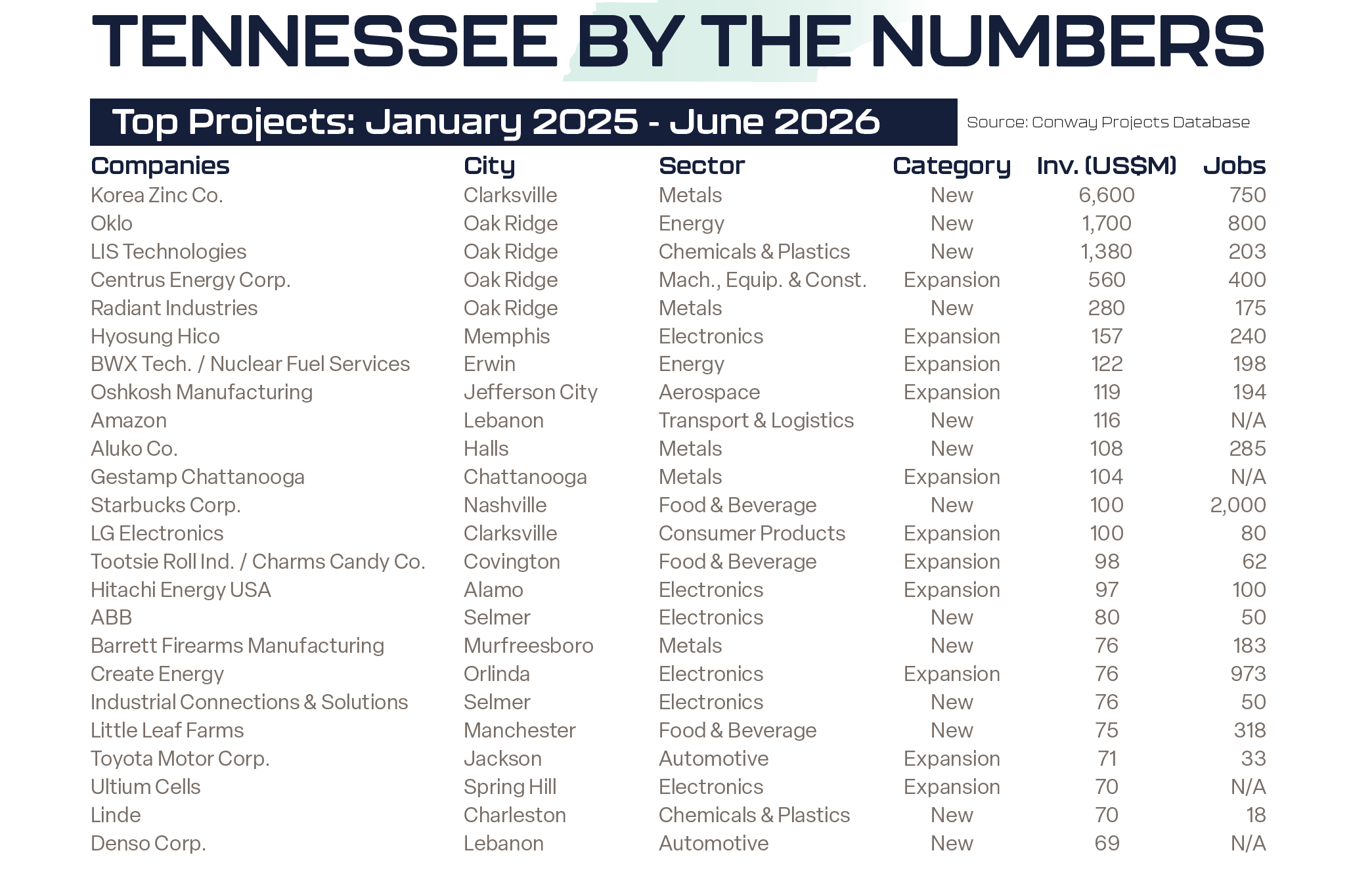
Lockheed Martin announced plans for a $420 million expansion of its missile manufacturing operations in southern Arkansas. BWX Technologies signed an agreement with Tennessee to pursue a $714.5 million, 181-job facility expansion in a community known as Tennessee’s oldest town. Boom Supersonic is constructing a $150 million “Superpower Superfactory” for power plant turbines in Colorado.
Semiconductors now sit at the center of how Asian governments compete for foreign direct investment. India joined that race later than most, so its progress is a fair test of whether a late mover can still build a credible position.
The U.S. government’s Opportunity Zone program is not only being renewed but made permanent. By special arrangement with the Brookings Institution, we present here an introduction to new research led by Brookings Metro Fellow Tracy Hadden Loh in partnership with AmericaFWD that analyzes the tax incentive’s impacts and how to enhance them.
See the link in the article for access to the full Brookings analysis and see below for a link to the newly designated OZs as of last week.
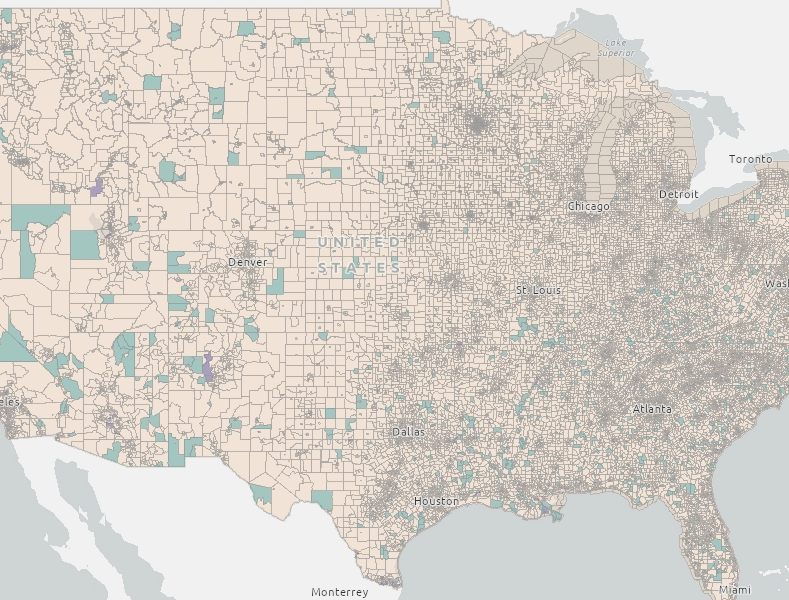
This snapshot of the new Opportunity Zones map shows urban OZs in gray and non-urban OZs in green.
Map courtesy of U.S. Department of the Treasury
Last Thursday the U.S. Department of the Treasury and the Internal Revenue Service (IRS) announced the Qualified Opportunity Zone (QOZ) designations for all 50 states, territories and the District of Columbia. “Under President Trump’s Working Families Tax Cuts, the Opportunity Zone tax incentive was permanently renewed, enhanced incentives for investment in eligible rural communities were added, and a process was established for redesignating zones every 10 years,” the announcement stated. “The new QOZ designations will become effective on January 1, 2027, and retain this designation for 10 years.”
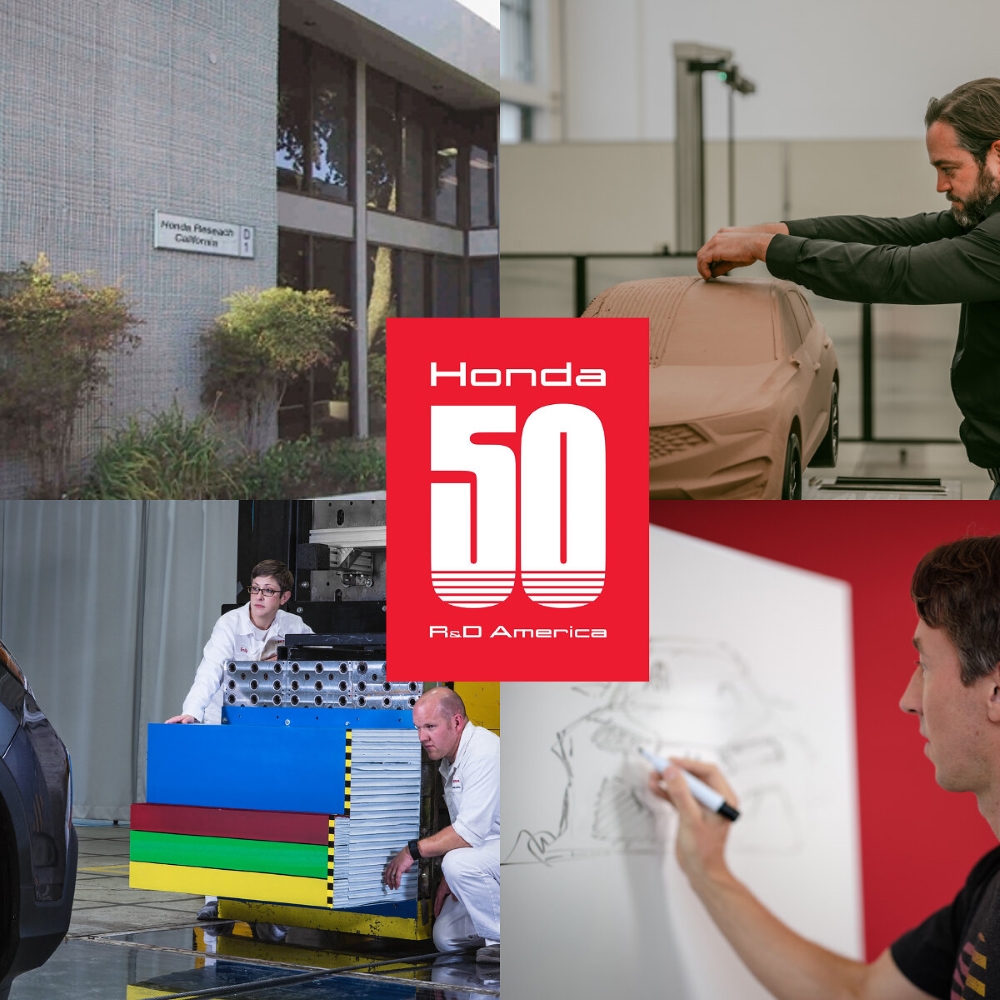
Honda last year marked the 50th anniversary of establishing its first U.S. R&D site in Southern California. Today, Honda R&D operations are “active at 21 locations across the United States, with a cumulative capital investment of more than $1.45 billion,” the company said, including multiple sites in California.
Photo courtesy of Honda
An October 29 release from the National Center for Science and Engineering Statistics at the National Science Foundation stated that businesses “continued to increase their research and development (R&D) performance in 2024, spending $765 billion on R&D in the United States — a 6.0% increase from 2023. Funding from the companies’ own sources accounted for $679 billion of total spending in 2024, and funding from other sources accounted for the remaining $86 billion.”
Full tables of data are available for download. Among them is one summarizing business R&D by state. “In 2024, of the $765 billion of business R&D performed in the United States, businesses in California alone accounted for 33.7%,” says the NCSES. “Other states with large amounts of business R&D were Washington (7.7% of the national total in 2024), Massachusetts (7.1%), Texas (5.4%), New York (5.1%) and Michigan (3.3%).”
Recent analysis by tax firm Hito notes that the California R&D tax credit “equals 15% of qualified research expenses (QREs) above a base amount, or 3% of QREs above a simplified base under the new Alternative Simplified Credit.” The state, Hito says, “has one of the largest concentrations of software, medical device, aerospace, biotech and advanced manufacturing research in the country.”
PHOTO OF THE DAY
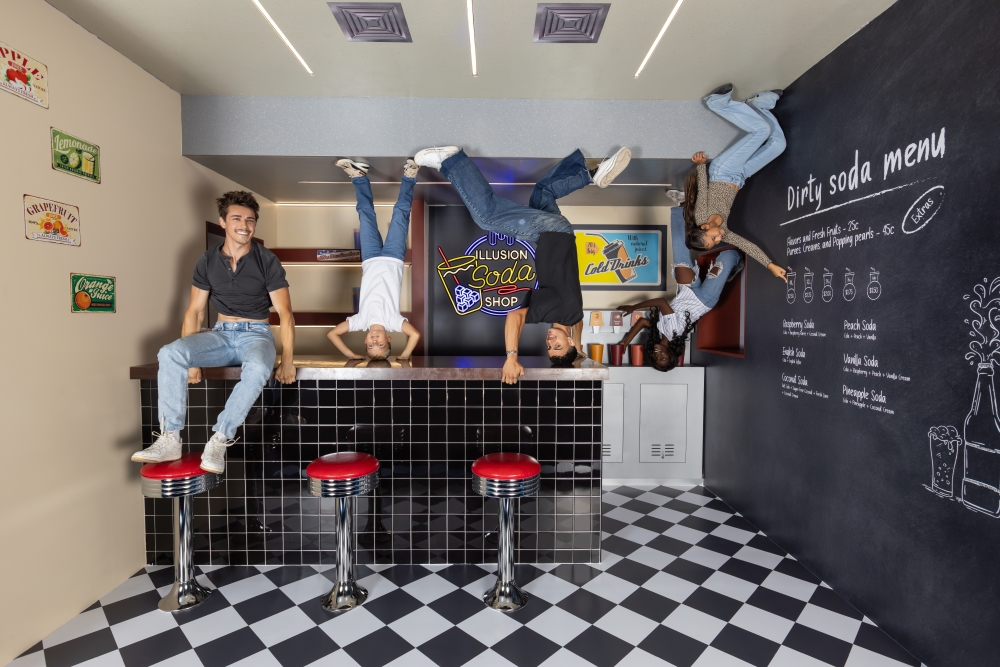
Among the organizations honoring National STEM Day yesterday was Museum of Illusions, whose reversed room is shown here. The Las Vegas-based chain of private museums operates over 70 locations across more than 30 countries.
Photo courtesy of MOI
Yesterday marked National STEM or STEAM Day, celebrated every November 8 to encourage young people to explore their interests in science, technology, engineering and mathematics (STEM, with the added “A” for arts). “The American Community Survey estimates that more than 41.6 million Americans ages 25 and older held a bachelor’s degree or higher in science, technology, engineering and mathematics or a related field in 2025, representing roughly 47% of all people with a bachelor’s degree or higher,” said a release from the U.S. Census Bureau last week.
STEM Day traces back to 2015 when “a toy company aimed to inspire kids to pursue STEM fields through play,” the Bureau notes. Which company? That would be Bratz and Little Tikes brand owner MGA Entertainment, based in Van Nuys, California, which that year launched a new franchise called Project Mc2 that featured “four super smart girls that are part of a secret spy organization called NOV8 (pronounced ‘innovate’), hence the selection of November 8th as National S.T.E.M./S.T.E.A.M. Day.”