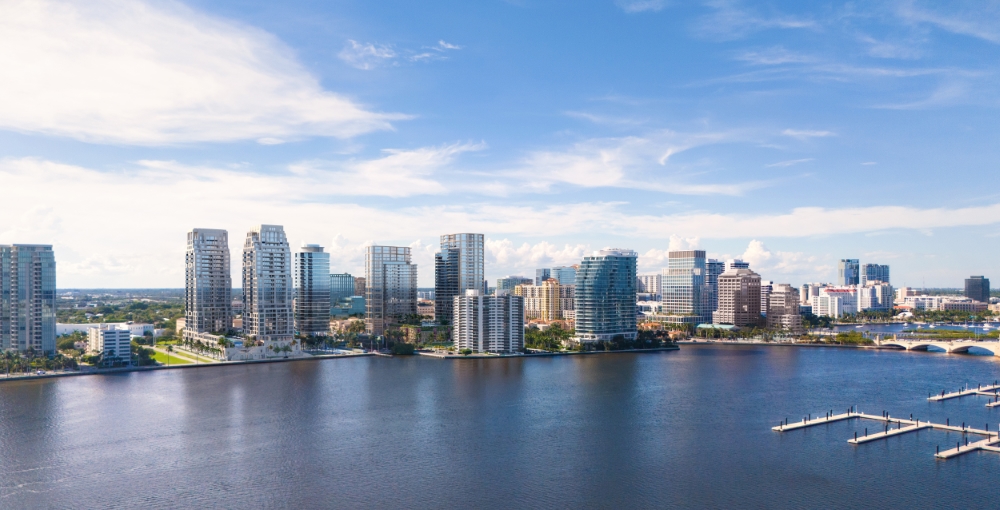
In an exclusive conversation with Site Selection Executive Vice President Ron Starner, Stephen Ross reflects on life, legacy and a capstone deal in Florida’s richest county.
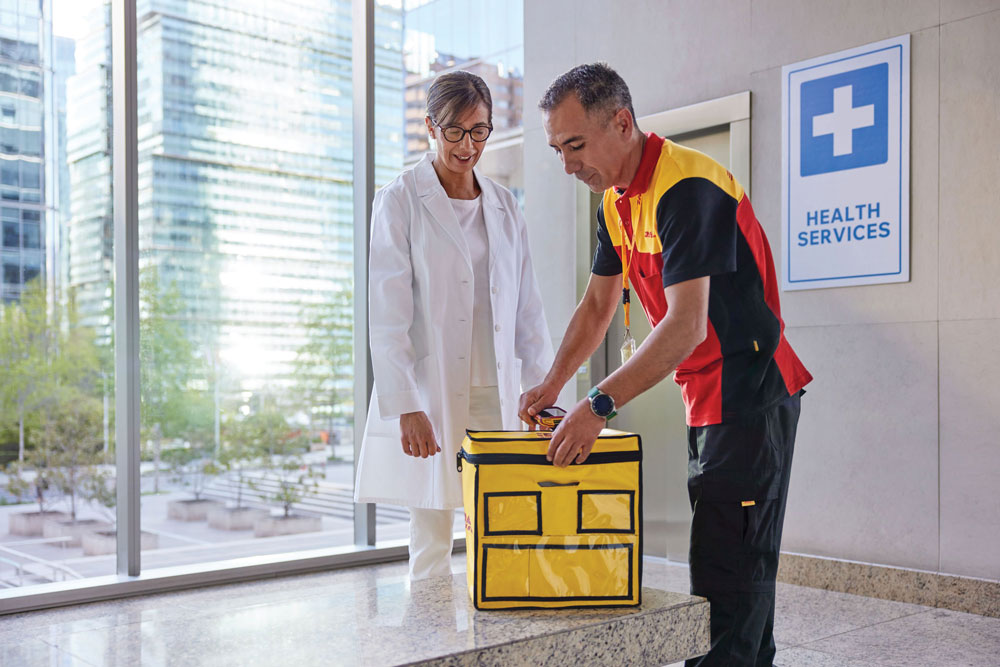
By special arrangement, Site Selection presents the most need-to-know findings from a new Cushman & Wakefield report outlining shifting supply chains across world regions. Don’t miss the Q&A with the report’s co-authors.
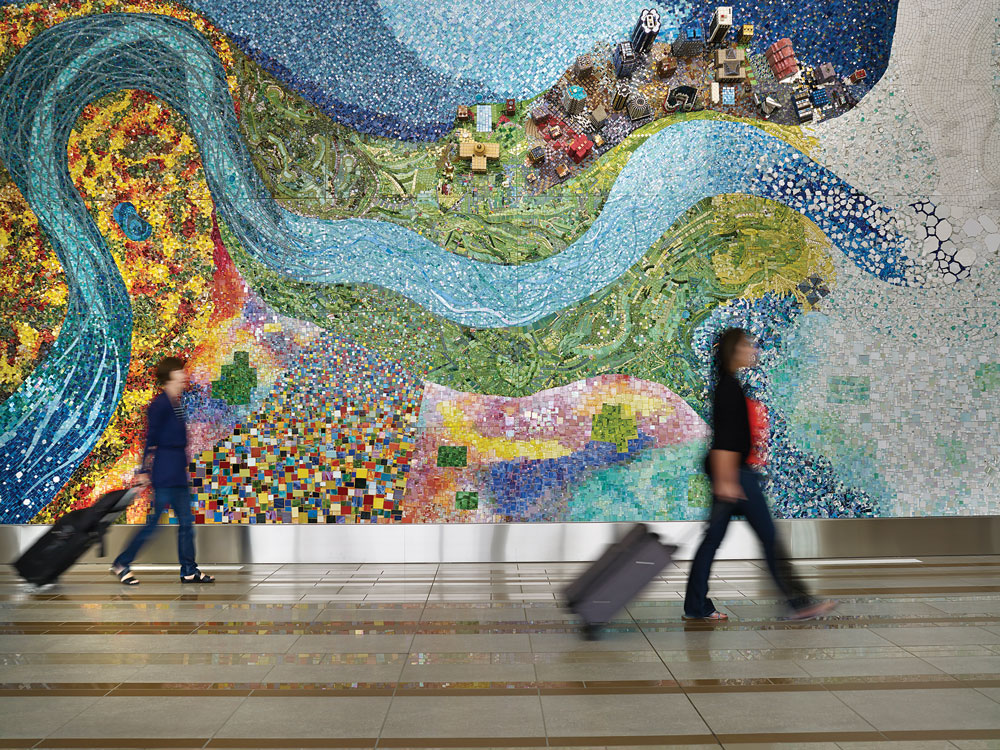
“The Leduc/Nisku Region in Alberta,” writes editor in chief Adam Bruns, “is one of those peripheral communities with enough momentum they don’t feel so peripheral anymore.”
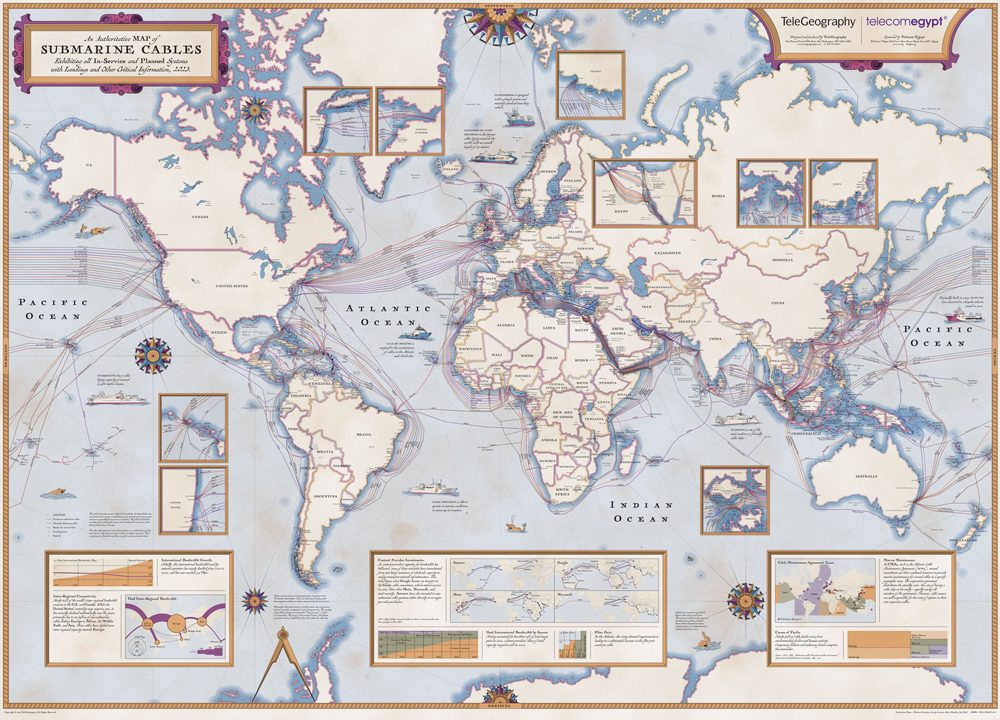
A 2023 map of submarine cable infrastructure from TeleGeography demonstrates the ubiquity and vulnerability of “the backbone of global communications.”
Image courtesy of TeleGeography
In August the Federal Communications Commission adopted new rules to boost submarine cable security and buildout in order to support growth of U.S. leadership in AI and next-gen technologies. “The new rules streamline the submarine cable licensing process, give certainty to investors and accelerate the timelines for building cables,” the FCC said. “To address the reality that foreign adversaries like China pose greater threats to submarine cable infrastructure than ever, the new rules emphasize protecting submarine cable infrastructure from foreign adversary threats.” Those threats have prompted equivalent agencies in Taiwan and Japan to boost their own security plans for the undersea infrastructure.
“These cables carry an estimated 99% of intercontinental Internet traffic and serve as the backbone of global communications,” said FCC Commissioner Anna M. Gomez. But what does that mean? One metric we have is the volume of financial transactions flowing over submarine cables, which is estimated at over $10 trillion dollars a day. Another way to view this is through the cost of laying an international cable. With submarine cable capacity measured in terabits per second, they are often operated by consortia with modern cables taking years of planning and construction and costing hundreds of millions of dollars. These are enormous investments.”
FCC Commissioner Anna M. Gomez
“For the past decade, private companies have been investing an average of $2 billion annually in new construction of undersea cables,” said FCC Chairman Brendan Carr. “As the U.S. builds the data centers and other infrastructure necessary to lead the world in AI and next-gen technologies, these cables are more important than ever.”
Site Selection has closely monitored undersea cable and related infrastructure as an economic development backbone for many years, including the following:
“Go Toward the Light,” March 2015, on data center site selection and the importance of dark fiber
“A New Tech Index Emerges from the Data,” January 2025, incorporating TeleGeography data on undersea and other internet infrastructure into Site Selection’s new North American Tech Hub Index, an exercise to be repeated in the publication’s January 2026 issue.
“Illinois has performed well over the last several years,” says Illinois Economic Development Corporation President and CEO Christy George of her state’s performance in corporate project attraction, “but I am looking forward to unseating Texas.” Read more from her conversation with Site Selection magazine’s Ron Starner.
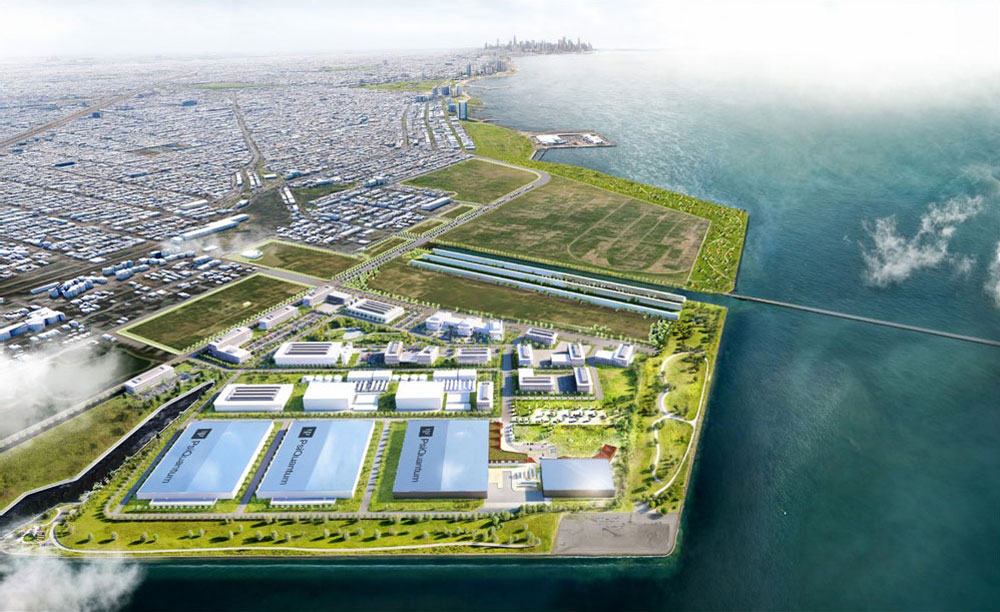
Among other stakeholders, the 128-acre Illinois Quantum and Microelectronics Park (IQMP) is now taking shape at the former U. S. Steel South Works plant.
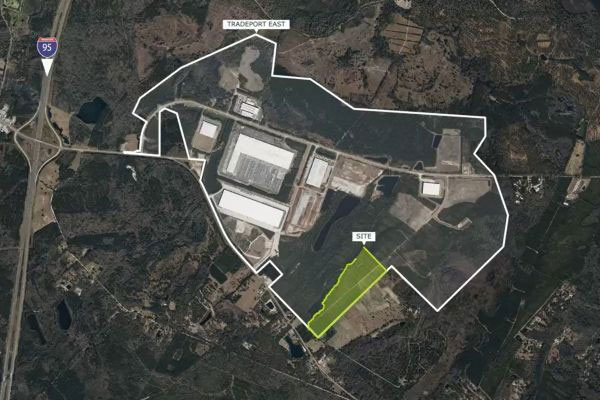
Located in Liberty County, Georgia’s premier Tradeport East Business Center, Coffer Court South is a 70+ acre shovel-ready site with the capacity for a 600,000 SF building configuration. Just three miles from I-95, 20 miles from I-16, and 35 miles from the Port of Savannah — one of the nation’s fastest-growing ports — the site offers outstanding logistical advantages. It is also positioned in the heart of the Fort Stewart labor pool and carries a Military Zone designation, providing access to valuable state job tax credits.
With its strategic location, infrastructure readiness and strong workforce base, Coffer Court South is an exceptional opportunity for advanced manufacturing, distribution or logistics operations.
Call Malissa MacKay, Vice President of Business Development with the Liberty County Development Authority, about your project! 912.536.1808
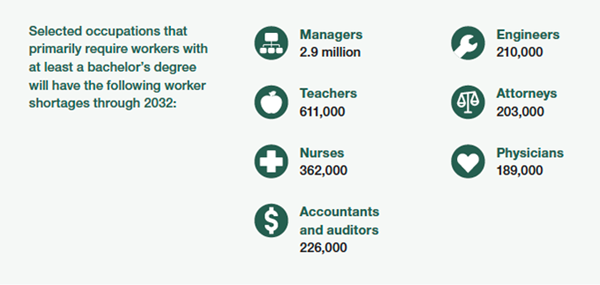
“From 2024 through 2032, 18.4 million experienced workers with postsecondary education are expected to retire, far outpacing the 13.8 million younger workers who will enter the labor market with equivalent postsecondary educational qualifications,” CEW said in a release. “Compounding the problem, the U.S. economy is expected to add 685,000 new jobs requiring postsecondary education and training over the same period. CEW’s research projects that the nation will need an additional 5.25 million workers with postsecondary education through 2032, 4.5 million of whom will need a bachelor’s degree or higher.”
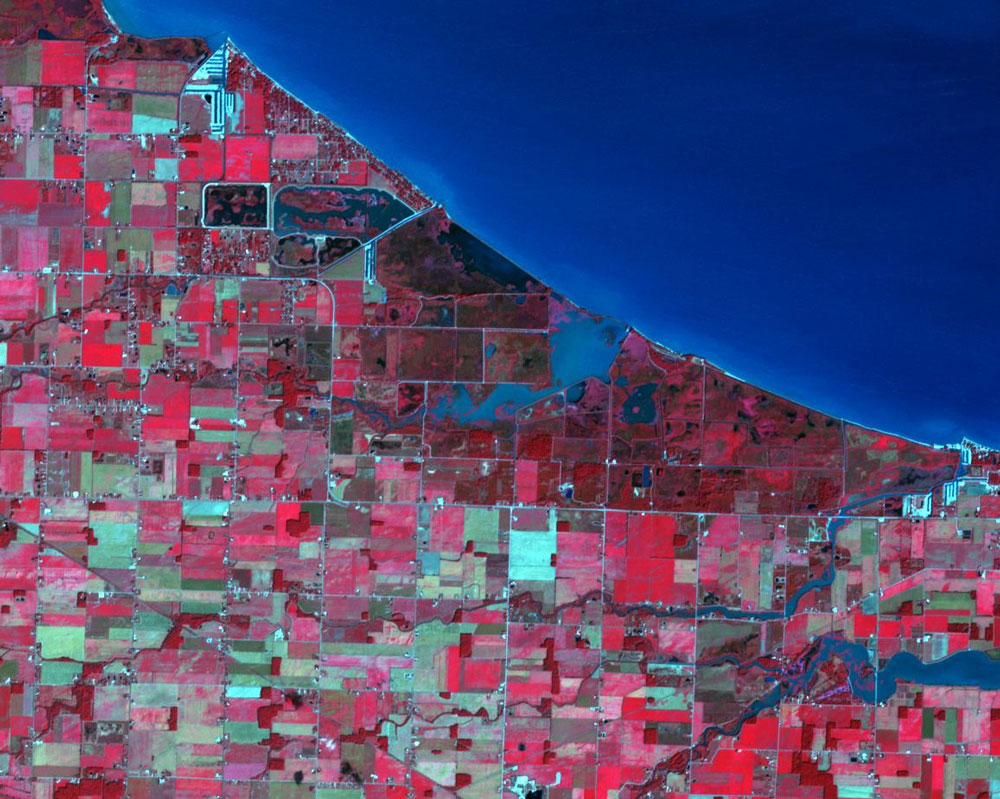
Photo courtesy of NASA/METI/AIST/Japan Space Systems and U.S./Japan ASTER Science Team
This image made exactly one year ago today with the Advanced Spaceborne Thermal Emission and Reflection Radiometer (ASTER) on board the Terra spacecraft shows the Magee Marsh Wildlife Area in northwest Ohio along the shores of Lake Erie. “It is internationally known for attracting significant numbers of migrating warblers in the spring,” says NASA, not to mention warbler watchers. “Every May, 60,000 to 80,000 avid birders converge for the annual birding festival.”
ASTER is one of five Earth-observing instruments launched Dec. 18, 1999, on Terra. The instrument was built by Japan’s Ministry of Economy, Trade and Industry. A joint U.S./Japan science team is responsible for validation and calibration of the instrument and data products.
The U.S. science team is located at NASA’s Jet Propulsion Laboratory in Pasadena, California. The Terra mission is part of NASA’s Science Mission Directorate, Washington.