

by LISA A. BASTIAN
The AI wave sweeping across the country is making Oklahoma a more attractive and much more competitive option.
AI, data centers, advanced manufacturing and industrial electrification are driving unprecedented demand for electricity. As a result, power availability has evolved from a background utility issue into a more prominent site selection factor that can determine whether locations are chosen or not.
Oklahoma is a strong contender for many new commercial developments due to its position as a nationally recognized energy leader. It earned this recognition by offering something many regions struggle to provide — abundant, reliable and affordable power.
Notably, the state produces about 61% more energy than it consumes, helping make Oklahoma one of the country’s largest energy exporters. That power surplus, most of which is exported outside its borders, gives businesses greater confidence in long-term energy availability and future operational growth.
Well-Established Transmission Infrastructure
The challenge today for many regions is no longer simply generating electricity. Rather, it’s the development of systems capable of delivering dependable power to major industrial and commercial users at scale.
Utilities in the majority of U.S. markets are scrambling to address transmission constraints, rising electricity demand and grid-capacity limitations affecting current customers — and unfortunately, driving away potential new ones.
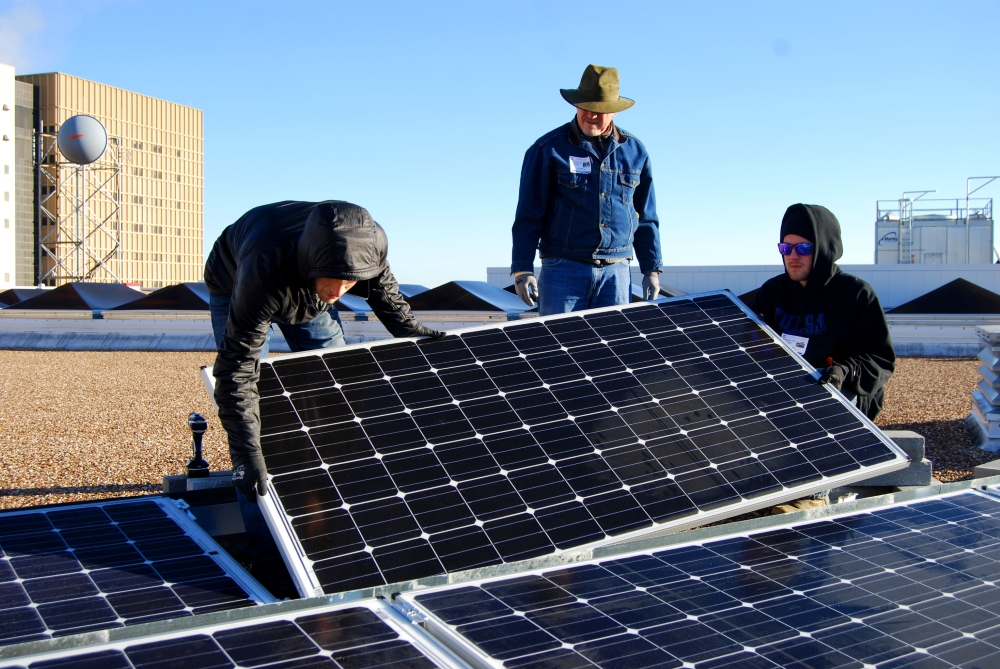
Workers install solar panels under the Tulsa skyline.
Photos courtesy of American Electric Power
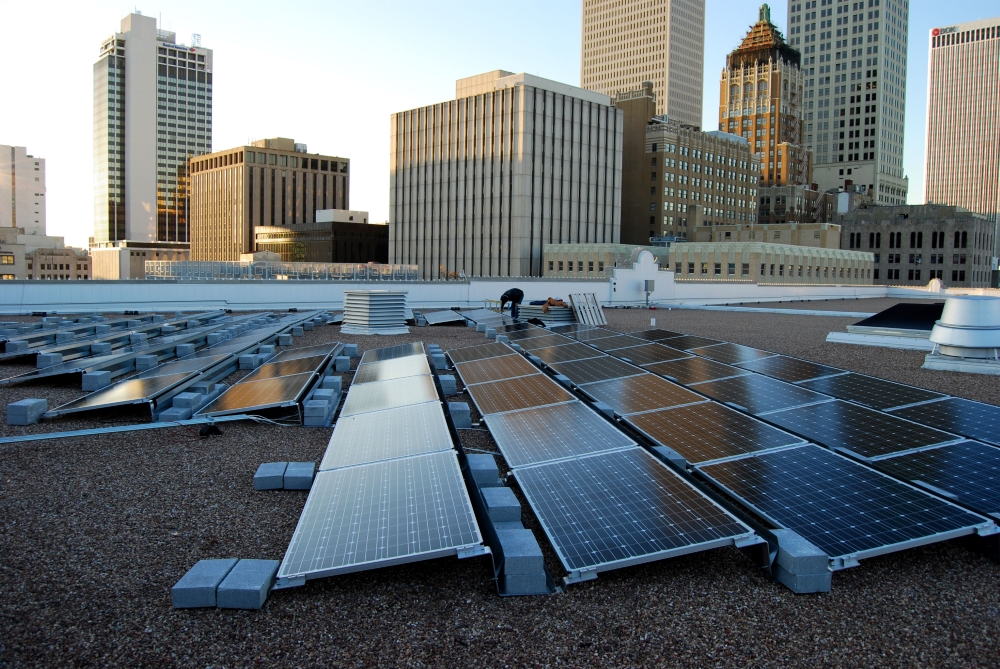
That’s not an issue in Oklahoma. Its long-established energy infrastructure already supports large-scale industrial activity without stressing power systems. Moreover, utilities across the state continue to invest in transmission systems and grid modernization projects for future expansion and rising electrical demand.
Renewables Fuel Present & Future
Traditional energy resources remain a cornerstone of Oklahoma’s economy. Oklahoma was the nation’s sixth-largest producer of both marketed natural gas and crude oil in 2024. The latest U.S. Energy Information Administration data show natural gas remained Oklahoma’s largest electricity source that same year, supplying about half of the state’s total power generation.
Beyond traditional fossil fuels, about half of Oklahoma’s electricity generation comes from renewable resources. Oklahoma ranks third nationally for total renewable energy production, and fourth for net renewable electricity generation.
Wind energy accounted for about 41% of electricity generation in 2023, placing Oklahoma among the nation’s leading wind-power-producing states. Other renewable resources — including hydroelectric, solar, geothermal and biofuels — further contribute to the region’s diversified energy profile.
The state continues investing in emerging energy technologies tied to long-term industrial growth, including carbon sequestration, hydrogen development and electrical grid modernization.
Oklahoma’s energy advantage extends into the affordability of its power. Overall electricity costs run well below national averages, while many industrial users benefit from electric rates estimated to be 20% to 30% lower than competing U.S. markets.
Aerospace & Defense
The state’s energy reliability matters enormously in its second-largest sector, aerospace and defense. Comprising over 1,100 entities, it’s anchored by the ecosystem built by Tinker Air Force Base, the country’s largest jet repair center.
About half of this industry’s players are concentrated in the Tulsa and Oklahoma City metro areas. Oklahoma City alone is home to more than 300 aerospace firms, including Boeing, Northrop Grumman, Lockheed Martin, Pratt & Whitney, Kratos and Field Aerospace.
Many aerospace and defense operations run multiple shifts or maintain 24-hour readiness requirements tied to military support and national security programs. These facilities depend heavily on uninterrupted electricity for mission-critical operations involving everything from aircraft overhaul operations, machining systems, robotics and composite manufacturing equipment to secure data systems, avionics testing, hangar operations and highly controlled production environments.
Advanced Manufacturing
Approximately 4,200 manufacturers depend upon Oklahoma’s large-volume, reliable and competitively priced power, particularly facilities operating around the clock. As increasing numbers of these companies adopt high-tech production environments, the state’s energy grid continues to smoothly provide access to substantial electrical capacity.
Oklahoma’s enviable power advantages also are attracting AI infrastructure and data center investment, Today, more than three dozen data centers operate statewide, with additional projects under development or under review.
Perhaps the clearest example of Oklahoma’s industrial energy capacity is the Emirates Global Aluminium smelter announced in 2025. It will be built in an industrial park at the Port of Inola, just east of the Tulsa metro. Construction on the $4 billion facility is expected to begin by the end of 2026. When operational later this decade, the smelter is projected to produce about 750,000 metric tons of aluminum each year; a feat more than doubling current U.S. aluminum smelting capacity.
Oklahoma’s available power capacity, comparatively lower-cost electricity and long-established industrial infrastructure were major factors in helping the state win this landmark project.
Food Processing & Cold Storage
Every year Oklahoma’s agribusiness industry generates approximately $111.8 billion in statewide economic activity, according to Oklahoma State University Agriculture.
Supporting that sector requires enormous amounts of reliable electricity. Food-processing plants, refrigerated warehouses and cold-storage distribution centers all depend upon continuous refrigeration, freezing, packaging and climate-controlled systems.
For these facilities, dependable power is critical. Even short interruptions can disrupt production, damage inventory and delay supply chains. Oklahoma provides the large-scale power these food-related operations require to run efficiently around the clock. Major companies operating in this food processing and cold chain space include firms such as Seaboard Foods, Tyson Foods, Cargill and Americold.
As industries become more tech-focused and energy-intensive, dependable power will play a larger role in influencing where companies invest, expand and compete. That trend positions Oklahoma favorably for attracting new businesses drawn to the state’s powerful energy foundation.
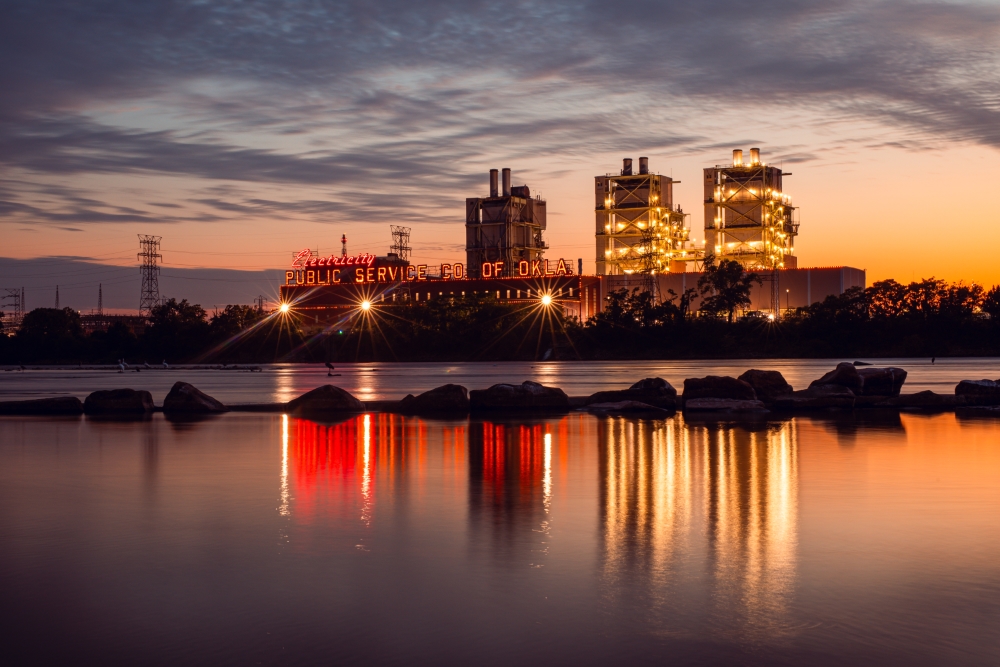
Public Service Company of Oklahoma’s Tulsa Power Station
Photo courtesy of Public Service Company of Oklahoma