
In Oregon, the same landscapes that inspire outdoor gear are shaping how it’s built, tested and brought to market.
by Savannah Yawn
Oregon’s rugged coastline, dense forests and high desert terrain have long drawn outdoor enthusiasts. But for a growing number of companies, these landscapes are more than a backdrop — they’re a proving ground. Across the state, outdoor brands are designing, testing and manufacturing products in the same environments where they will ultimately be used.
According to Business Oregon, “Oregon’s outdoor gear and apparel sector is more than an economic engine — it’s part of our state’s DNA.”
The Portland metro area anchors this ecosystem, home to global brands such as Nike, Columbia Sportswear, Adidas and Keen. When design, headquarters and advanced manufacturing roles are included, the sector supports nearly 45,000 jobs statewide. Beyond Portland, activity is spreading across the state, with clusters across Central Oregon and the Columbia Gorge, where companies such as Hydro Flask, Cush Core, Robert Axle Project, Ruffwear and Rolf Prima contribute to a broader network of design, manufacturing and innovation.
Designing in the Environment
For companies tied to outdoor recreation, Oregon’s varied terrain is a functional advantage.
“We are an outdoor brand. There’s no better place to build outdoor product than Oregon,” says Steve Belatti, vice president of product at Danner, a heritage bootmaker based in Portland since 1936 known for its rugged outdoor and work footwear. “We have such variety in geography. The uniquely rugged Oregon coast, the Coastal and Cascade mountains, the high desert, the agriculture-rich Willamette Valley, the Columbia River — we have it all.”
Steve Belatti, Vice President
of Product, Danner
Danner Portland, Oregon
Factory Imagery
That diversity allows product teams to test across a wide range of conditions within a relatively small geographic footprint. Rain, snow, heat and dry environments are all accessible within a few hours’ drive, enabling rapid iteration and refinement.
“The first products Danner made were logging boots built for the rugged terrain of the PNW timber industry,” says Belatti. “So, our heritage is in outdoor work, but over the years we’ve expanded to broader outdoor pursuits. As hiking expanded in popularity in the 1960s, we began making boots to serve their specific needs. This led us to become the first brand to put Gore-Tex into footwear in the late 1970s so we could keep hikers’ feet dry and comfortable. Today we also have a growing lifestyle footwear offering as the outdoor trends have moved into everyday wear. No matter what the product, our design and manufacturing remain influenced by the unique conditions of the PNW.”
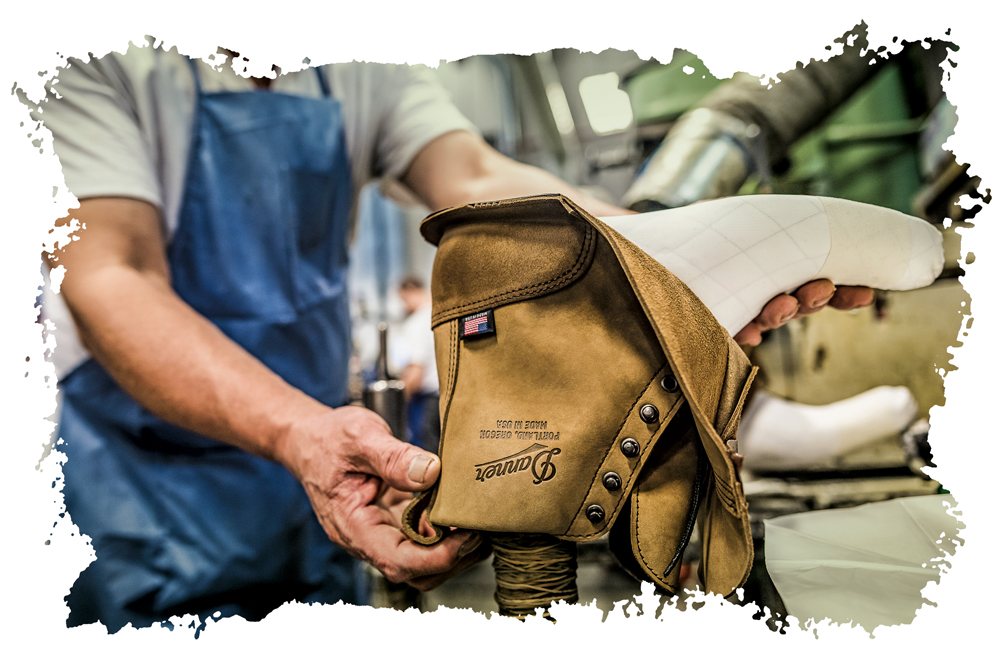
Business Oregon describes this advantage as a “living laboratory for product testing and innovation,” where companies not only design for outdoor conditions but actively engage with them throughout the development process. While Oregon’s outdoor reputation is often associated with design and branding, manufacturing also remains a critical part of the equation. Danner, for example, has maintained a manufacturing presence in the Portland region for decades.
“We’ve operated a dedicated boot making factory in the Portland, Oregon, region since the late 1930s, and we’re very proud of the work we do there,” Belatti says.
Danner’s model blends longstanding local production with a broader global network. The company maintains its Portland-area factory while also utilizing manufacturing partners outside the U.S. when specific products require different capabilities or scale. As Belatti explains, the primary driver in choosing where to build is matching each product to the location best suited to meet expectations for durability, quality and performance. That approach allows the company to preserve specialized craftsmanship at its Oregon facility while meeting varied product demands across its lineup.
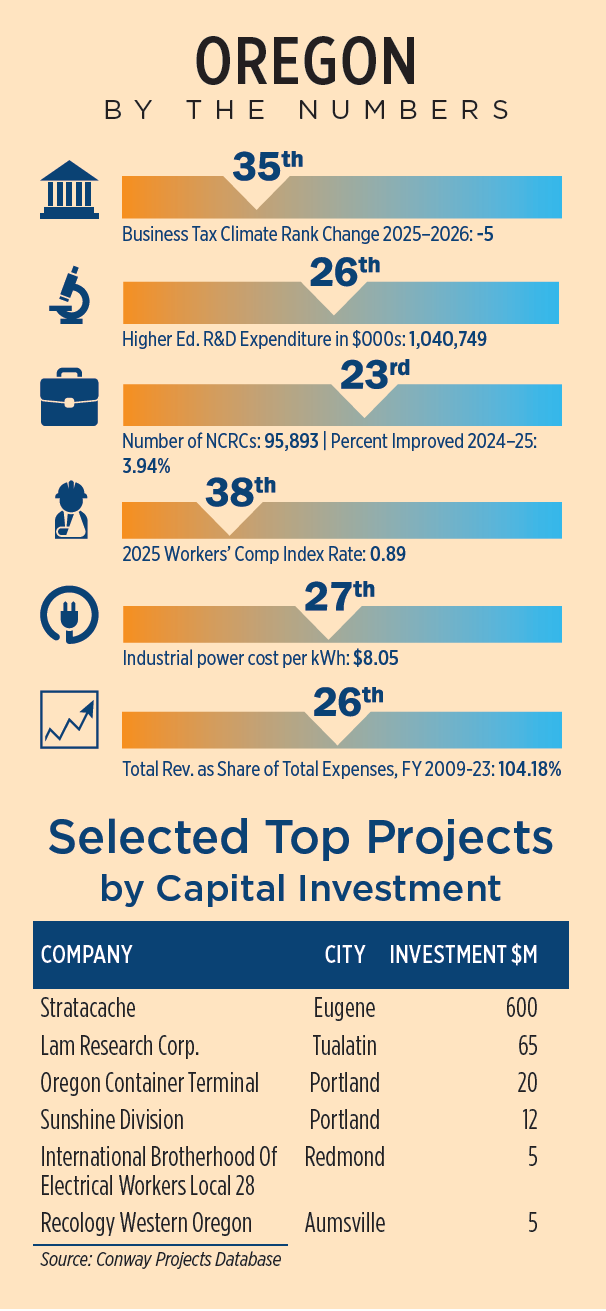
The state’s integrated supply chain further supports this model. Proximity to West Coast ports, access to major logistics corridors and a dense network of designers, engineers and manufacturers enable companies to move efficiently from concept to production and distribution.
From Makers to Markets
A key component of Oregon’s outdoor manufacturing ecosystem is its workforce.
“A fully operational footwear manufacturing facility is not just unique to Portland, but a rarity in the USA,” Belatti notes. “So, it’s critical we foster a pipeline of skilled footwear makers to support our Portland-based manufacturing.”
That need reflects a broader challenge and opportunity across the sector: maintaining and growing a skilled manufacturing workforce in specialized trades. Business Oregon highlights the state’s “skilled, values-driven workforce” as a differentiator, noting that employees often bring both technical expertise and a personal connection to the products they help create.
Partnerships with institutions such as the University of Oregon and Oregon State University–Cascades are helping build a pipeline of talent through programs focused on sports product design and outdoor product development, aligning curriculum with industry needs across design, materials science and engineering.
Business Oregon is also backing growth across the sector, including a $500,000 Outdoor Gear and Apparel Matching Grant for Bend Outdoor Worx to accelerate innovation, export promotion support for companies expanding internationally, and targeted assistance for brands like Hydro Flask, Cush Core and Rolf Prima to scale production and reach global markets. Industry coordination is further supported by the Oregon Outdoor Alliance, the state’s outdoor business network connecting brands, manufacturers and partners across the ecosystem.
Oregon’s outdoor industry illustrates how geography, culture and economics can intersect to create a distinct competitive advantage. Companies are not simply based in Oregon, they are shaped by it.