
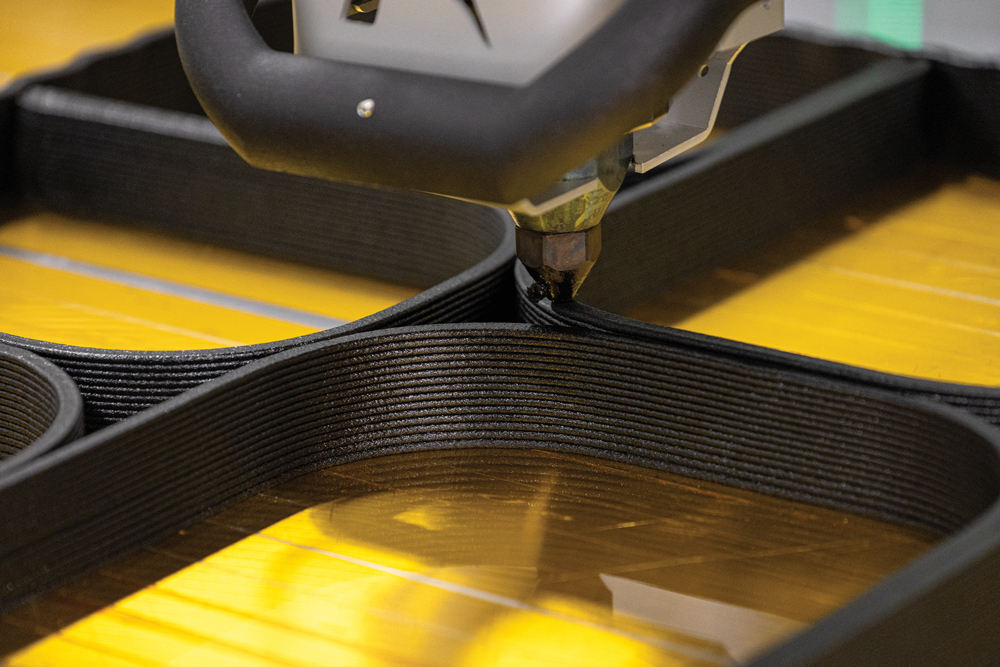
Additive manufacturing finds a home in Pflugerville.
by Savannah Yawn
Advanced manufacturing companies are expanding across Central Texas, drawn by the region’s access, talent and growing industrial base. A number of those investments are landing in Pflugerville, where companies are finding the space, workforce and connectivity needed to put that growth into practice.
That momentum is clear in a recent move by EOS, a global leader in industrial 3D printing, which announced a $3 million expansion at its Pflugerville campus. The project expands local assembly of its metal additive manufacturing (AM) systems and is expected to shorten delivery times for North American customers and address domestic procurement requirements, particularly for defense and government organizations. It also adds new capabilities on site, including a dedicated powder handling area and an in-house machine shop.
“Our Texas expansion enables us to scale North American metal AM assembly with both precision and consistency,” says Kent Firestone, senior vice president of operations for EOS North America. “From optimizing our production areas to onboarding new team members, every step has been carefully designed to accelerate turnaround times while maintaining the quality and reliability our customers expect from EOS.”
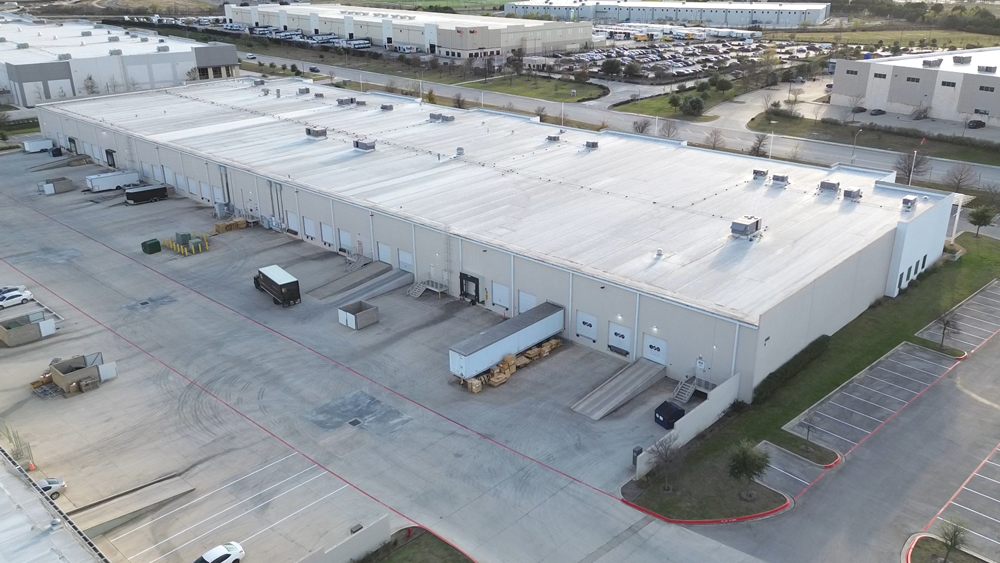
EOS’s Pflugerville campus anchors its expanding U.S. manufacturing footprint.
Photo courtesy of EOS
That focus on speed and consistency is closely tied to Pflugerville’s position within Central Texas. Situated along the IH-35 corridor and connected to State Highway 130, the city provides direct access to major markets across the state and efficient distribution routes beyond. Companies can reach Texas’s largest population centers within a day’s drive, while also benefiting from proximity to Austin-Bergstrom International Airport and multimodal transportation networks that support both domestic and global logistics. Proximity to Austin further enhances access to suppliers, partners and customers without imposing the cost and congestion challenges often associated with larger urban centers.
This balance of access and efficiency is especially important for advanced manufacturing operations, where supply chains are becoming more localized and speed to market is increasingly critical. By enabling faster movement of both materials and finished products, Pflugerville supports the operational agility that modern manufacturers require.
Where Manufacturing Takes Shape
EOS’s expansion is not an isolated move. It is part of a broader manufacturing ecosystem taking shape in Pflugerville, where companies across multiple advanced sectors are expanding to meet rising demand.
Large-format additive manufacturing firm Caracol has established a North American headquarters and production center in the area, integrating research, application development and production capabilities to better serve their U.S. clients.
“This new facility will allow us to accelerate innovation and deliver solutions tailored specifically for the North American market, where demand is growing rapidly” said Francesco De Stefano, CEO of Caracol in announcing the project in September 2025. “When we opened our first Austin office in 2023, it was about establishing a presence. Now it’s about building capability. This expansion means faster progress, closer collaboration with our customers, and solutions designed for their unique challenges, not to mention supporting domestic production in the U.S. As one of Europe’s fastest-growing deep tech companies, we’re excited to bring that same momentum to North America.”
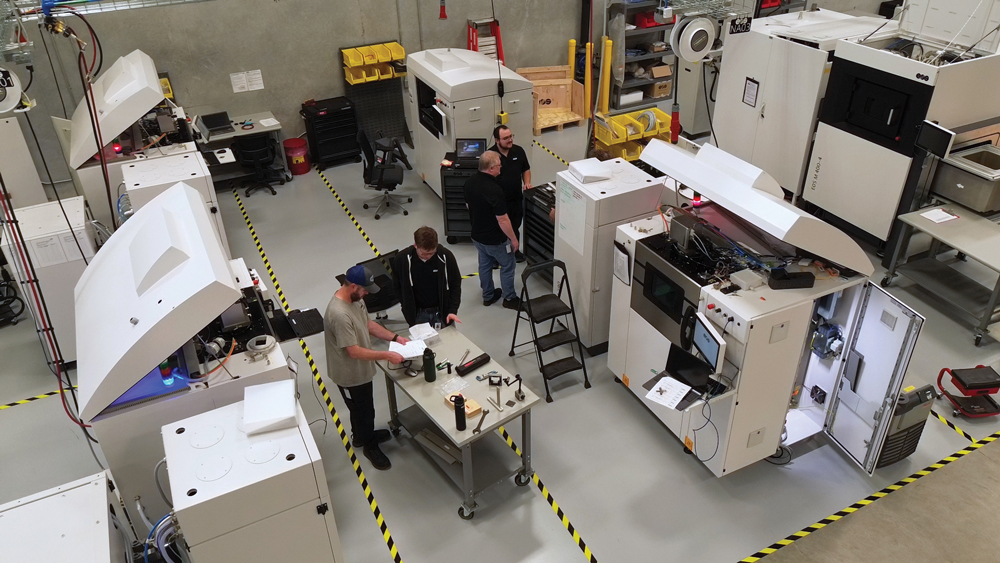
EOS metal additive manufacturing systems are used for high-precision industrial production.
Photo courtesy of EOS
The presence of companies like Sisu Devices further illustrates the depth of this ecosystem. Specializing in custom automation systems, the company supports industries ranging from semiconductors to energy and medical manufacturing, highlighting the diversity of applications supported by the local industrial base. Together, these companies reflect a shift toward more specialized, high-value manufacturing operations that require precision engineering, advanced materials and a technically skilled workforce.
Building the Talent Pipeline
Access to talent is a big reason companies land here. Pflugerville has made deliberate investments in building that pipeline, starting at the high school level. Through partnerships led by the Pflugerville Community Development Corporation, local schools have expanded career and technical education programs with industry-relevant equipment such as CNC cutting tables, robotic arms and precision machining tools. Students gain hands-on experience with the same technologies used in modern manufacturing environments, preparing them for immediate entry into the workforce or further technical training.
These programs are designed with employer needs in mind. Students progress from foundational skills into advanced applications, often earning industry-recognized certifications and participating in internships with local companies.
The area’s higher education network further supports that growth. Pflugerville is within reach of 28 colleges and universities, creating a steady pipeline of engineering, technical and professional talent. Nearly 45% of residents hold a bachelor’s degree or higher, and with dozens of colleges and technical programs nearby, companies have a deep talent pool to draw from.
This Investment Profile was prepared under the auspices of the Pflugerville Community Development Corporation (pfdevelopment.com).