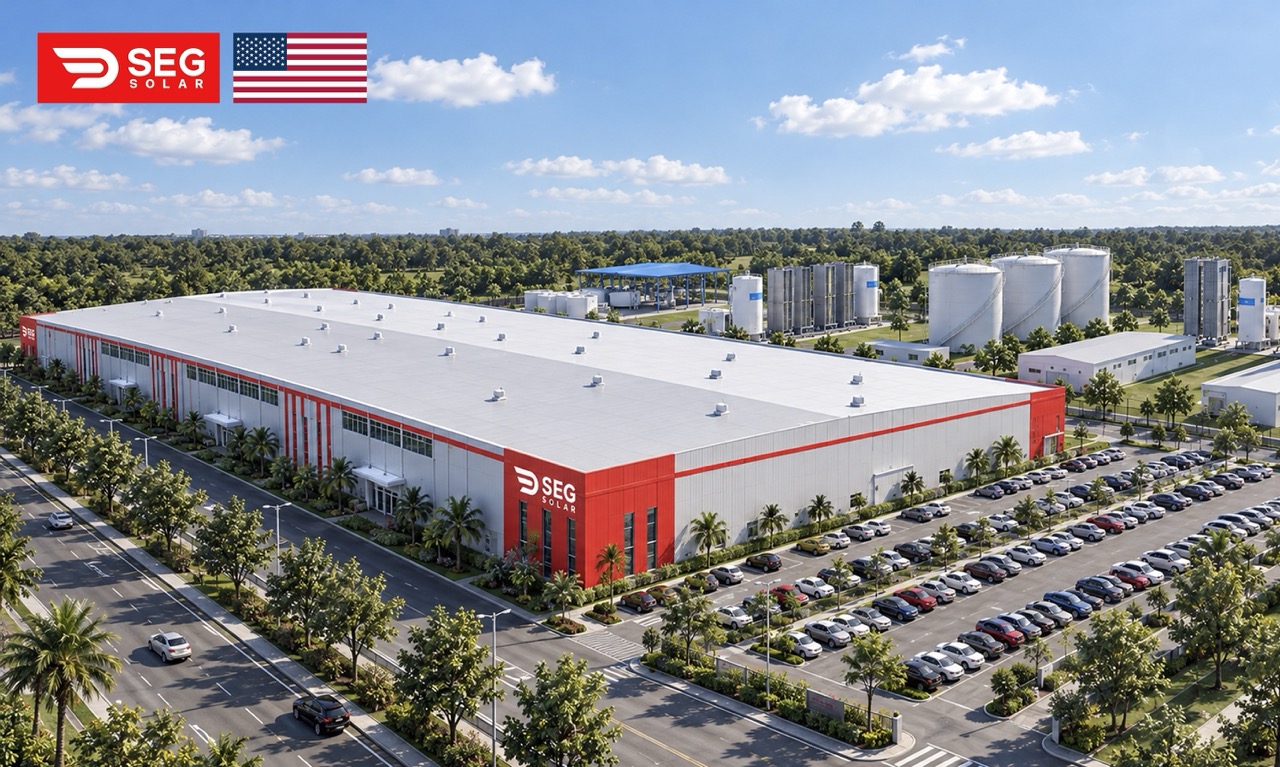
SEG SOLAR PREPARES FOR FULL HJT PRODUCTION
In Texas, SEG Solar’s Tomball Industrial Campus will move to become one of the only U.S. manufacturing operations where heterojunction (HJT) solar cells, modules and key components are produced under one roof. The global vertically integrated solar manufacturer shared news of a $950 million investment to construct a new 4-gigawatt (GW) HJT solar cell facility at its existing Tomball campus, which will be delivered over two phases. The Greater Houston region is a strategic point of growth for the company, as SEG Solar is currently constructing the Tomball #2 module manufacturing facility at the site. Each phase of the project will introduce 2GW of capacity, the first of which will come online in 2028. “Bringing HJT cell manufacturing to the U.S. will give customers a more domestic supply chain with clearer sourcing and a single company standing behind the product,” said SEG Solar CEO Jim Wood. “As the only U.S. company dedicated to integrated domestic vertical manufacturing, SEG will continue to strengthen our U.S. operations and innovation. American-made cells, American-made modules, one company accountable.”
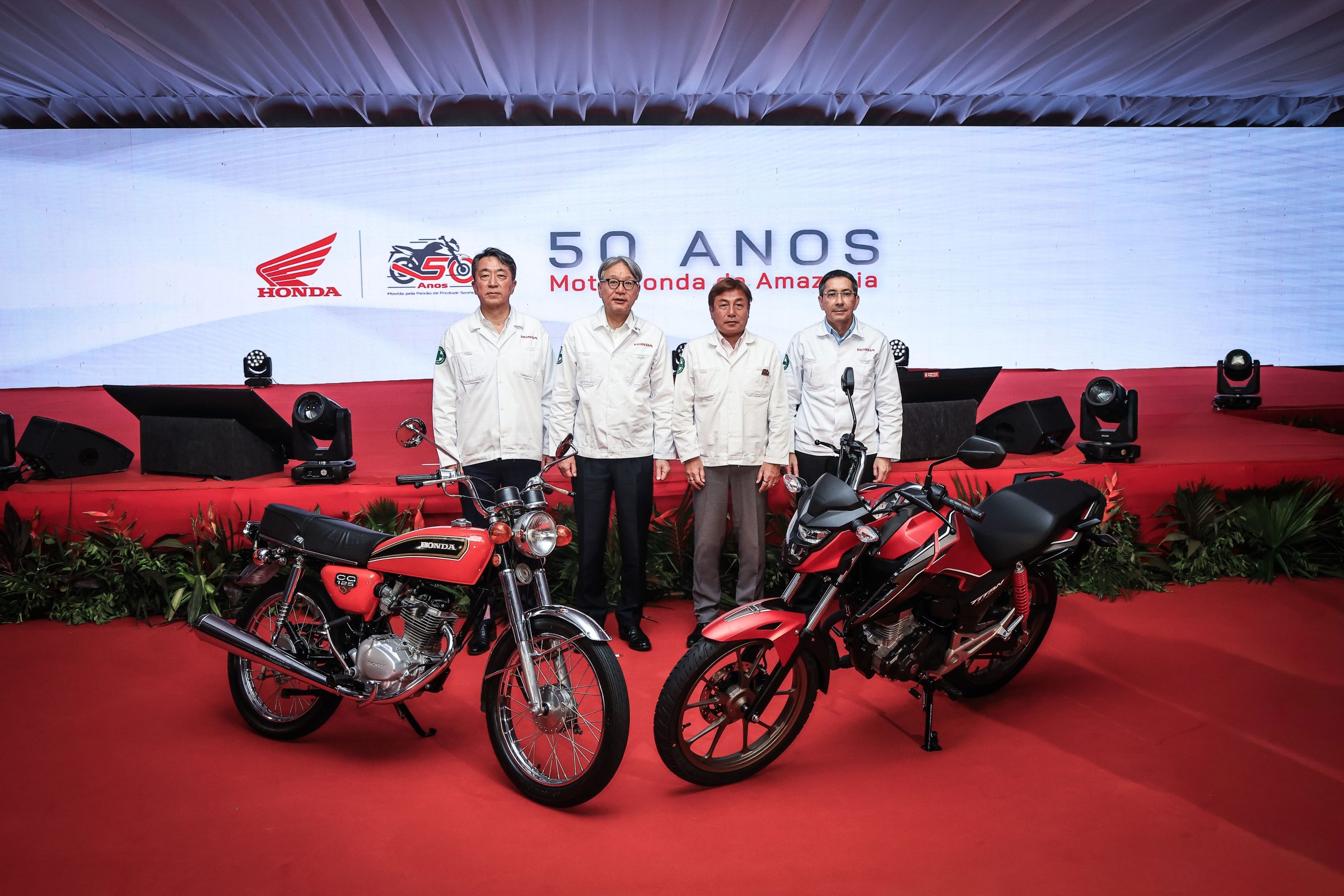
Photo courtesy of Honda
TWO NEW FACILITIES TO MEET 2 MILLION MOTORCYCLE CAPACITY
In early November, Honda celebrated its 50th year of motorcycle production in Manaus, Brazil. Positioned in the state of Amazonas, the Manaus site represents the company’s most vertically integrated motorcycle production facility in its global portfolio. Over 33 million motorcycles have exited these production lines to date, spanning 20 various models. Honda recently announced an over $583 million investment to expand annual production capacity at the Manaus facility, scaling to manufacture 2.3 million motorcycles per year by 2029. Two new plants will join Honda’s manufacturing complex, adding two new assembly lines for a total of six active production lines. “The Brazilian market continues to offer significant growth potential,” said President of Moto Honda da Amazônia Ltda. Keisuke Tsuruzono. “This investment, aimed at expanding the production capacity of the Manaus factory and strengthening its competitiveness, demonstrates our unwavering confidence in the future of Brazil, the Amazon region and Honda’s business.”
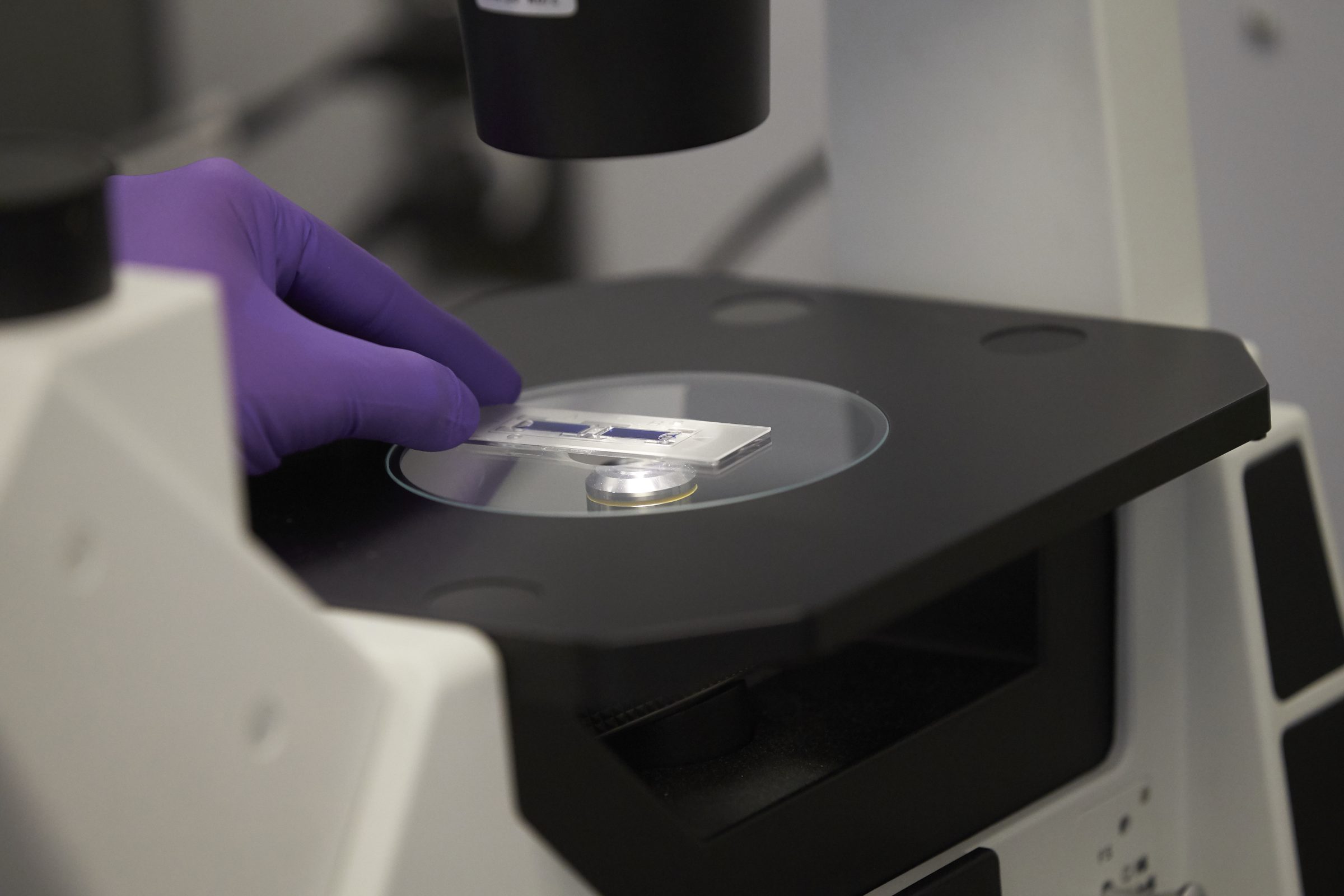
Photo courtesy of Pfizer
PURPOSE-BUILT FOR CLINICAL MANUFACTURING
Biopharmaceutical giant Pfizer is set to construct a new Manufacturing Technology Center at its research and development campus in the coastal Connecticut city of Groton. The company plans to invest $650 million to introduce the upcoming 220,000-sq.-ft. facility, which will focus on production of clinical active pharmaceutical ingredients and drug products to support Pfizer-sponsored clinical trials. “Pfizer has a long and proud history of scientific innovation in Groton, where many of the discoveries that advance our pipeline begin,” said Pfizer Groton Site Head Raja Mangipudy. “Building on that legacy, the new Manufacturing Technology Center will advance our ability to support clinical research and the development of new medicines for patients around the world.” The building will enable the company to consolidate its Groton employees and bring related operations together in a purpose-built center. Construction is slated to begin in 2027 with operations anticipated to launch by mid-2031.
Reports compiled and written by Alexis Elmore