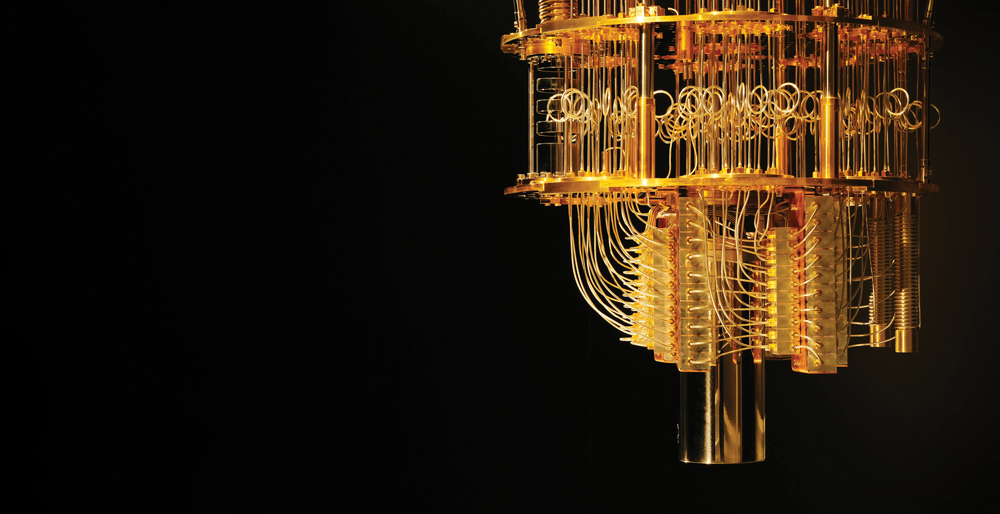
If you ever have doubts about the materiality of the quantum computing world, go to the place that specializes in putting high-falutin’ ideas into physical form: mHUB, the hardtech incubator, accelerator and all-around workshop in the West Loop of Chicago that calls itself a “launchpad for the physical future.”
In summer 2025, mHUB announced a $590,200 grant from the Illinois Department of Commerce and Economic Opportunity (DCEO) to build a new 4,000-sq.-ft. Deep Tech Lab that has specialized infrastructure and equipment for developing and scaling technologies in quantum, energy and microelectronics. In early 2026, the Illinois Quantum and Microelectronics Park (IQMP) announced its OnRamp program will serve as an anchor tenant, alongside Quantum Machines, Bluefors, and Diraq. “mHUB is a proud catalyst for Chicago’s emerging quantum ecosystem,” the organization stated in its annual report, “building the infrastructure, industry connections and commercialization pathways needed to attract and retain quantum startups to the region.”
Keeping track of the quantum connections in Illinois is nearly as challenging as tracking quantum itself. Here are a few glimpses that capture the power of a sector that JLL’s recent analysis of 240 quantum facilities across 35 countries reported had attracted $9.3 billion in private and public investment in 2025 — more than five times the 2024 total.
Start with Bluefors itself, a developer of cryogenic measurement systems for quantum technology which originally joined mHUB in February 2025, installing its LD400 dilution refrigerator system. The company also made an additional installation at Hyde Park Labs. In September 2025, innovators from San Francisco-based Conductor Quantum began to run experiments with the Bluefors system. By the end of 2025, mHUB reports, Conductor’s AI software platform “had been deployed across 64 different quantum devices. The company has since launched Coda, a natural language interface for quantum computing, supporting quantum computers from IBM and IonQ.”
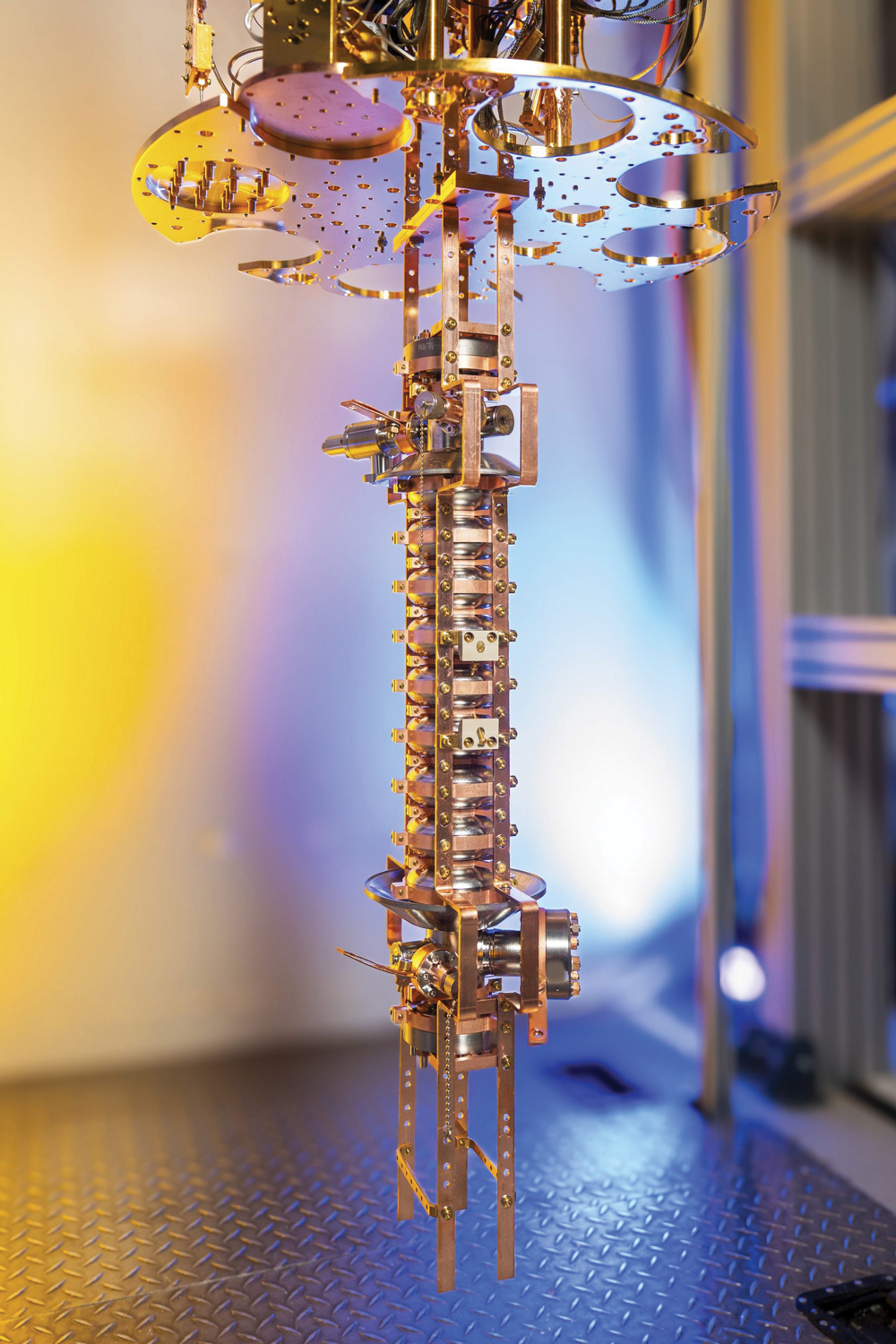
A prototype nine-cell superconducting radio-frequency (SRF) cavity-qubit system installed in a dilution refrigerator at Fermilab SQMS labs.
Photo by Ryan Postel courtesy of Fermilab; rendering courtesy of SQMS
IQMP Transforms Industrial Legacy into Tomorrow’s Crown Jewel
IBM is a major investor in IQMP, the 128-acre development that broke ground in fall 2025 and aims to provide infrastructure and resources to support the development and commercialization of quantum technologies, hardware, software and applications. IBM is anchoring the National Quantum Algorithm Center through its installation of an IBM Quantum System Two in Chicago by late July 2026, which will eventually move to the IQMP. Governor JB Pritzker and IBM in April announced the company’s new FutureNow Chicago delivery center at the IQMP. As part of FutureNow Chicago, IBM will create 750 new full-time jobs in AI, cybersecurity, data science, quantum and more. IBM also has committed to hiring at least one-third of qualified program graduates from a paid five-year, 500-apprentice pipeline developed in partnership with City Colleges of Chicago.
The company’s commitment to Illinois quantum isn’t confined to Chicago’s shorefront. IBM has quantum ties with the University of Chicago, members of the Chicago Quantum Exchange and the U.S. Economic Development Administration-designated Bloch Quantum Technology Hub. And its reach extends beyond Chicagoland as well.
In April 2026, IBM and the Grainger College of Engineering at the University of Illinois Urbana-Champaign (UIUC) announced an expansion of the IBM-Illinois Discovery Accelerator Institute.
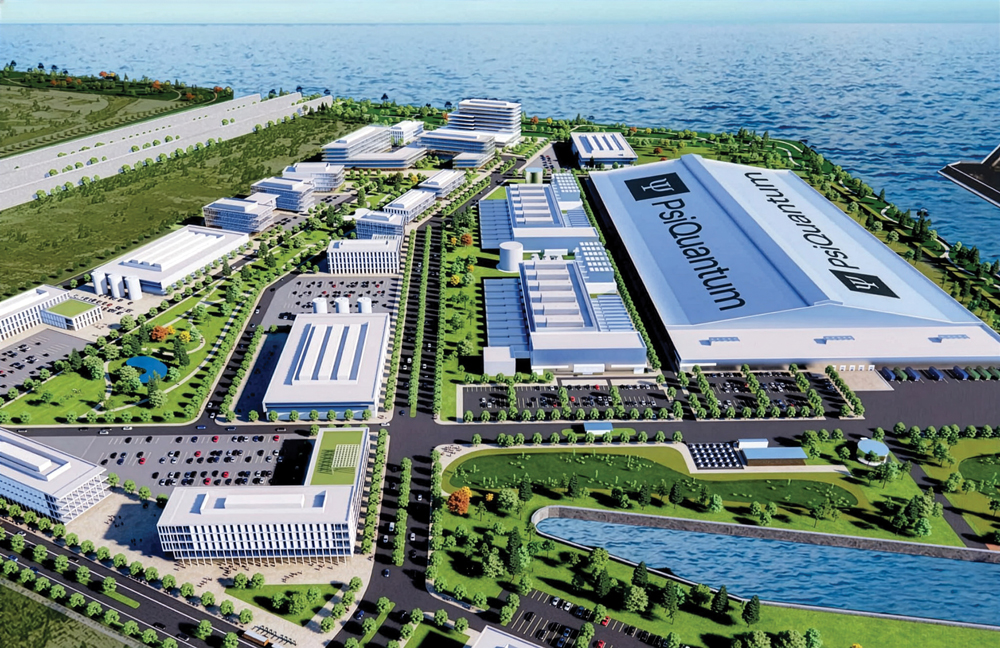
A rendering of the Superconducting Quantum Materials and Systems Center’s planned 100-plus-qudit SRF quantum processor, designed to demonstrate scalable, high-coherence quantum computation, communication and sensing within a single dilution refrigerator.
Photo by Ryan Postel courtesy of Fermilab; rendering courtesy of SQMS
“This includes deploying quantum-centric supercomputing to Illinois innovators through the integration of UIUC’s National Center for Supercomputing Applications (NCSA) Delta and DeltaAI supercomputers with IBM quantum computers,” stated UIUC in a release. “Launched in 2021, the Discovery Accelerator Institute has 20 current, ongoing projects across hybrid cloud, AI, quantum computing, materials discovery and sustainability, and its members have published more than 230 research papers.
“Quantum-centric supercomputing represents IBM’s vision for the future of computation, where quantum processors (QPUs) work alongside high-performance classical systems powered by CPUs and GPUs to solve complex problems in science and industry,” the university explained.
The Institute will also launch Algorithms-to-Silicon-to-Systems (AS2), a new research area to accelerate the integration and implementation of algorithms into silicon for specialized systems. “AS2 will represent a shift toward a unified, AI-native design paradigm, where algorithms, silicon and systems software are co-evolved, rather than developed in isolation,” UIUC stated. “The results will be a step change in productivity, accessibility and scalability to enable the rapid creation of complex, high-performance systems with strong guarantees of correctness, robustness and real-world usability.”
In an exclusive two-part contribution to Site Selection magazine’s Online Insider in summer 2026, Wendi J. Gedzun, senior director, Solutions Development, at JLL, saw the IQMP site as the embodiment of future-oriented economic development with the past and the community firmly in view.
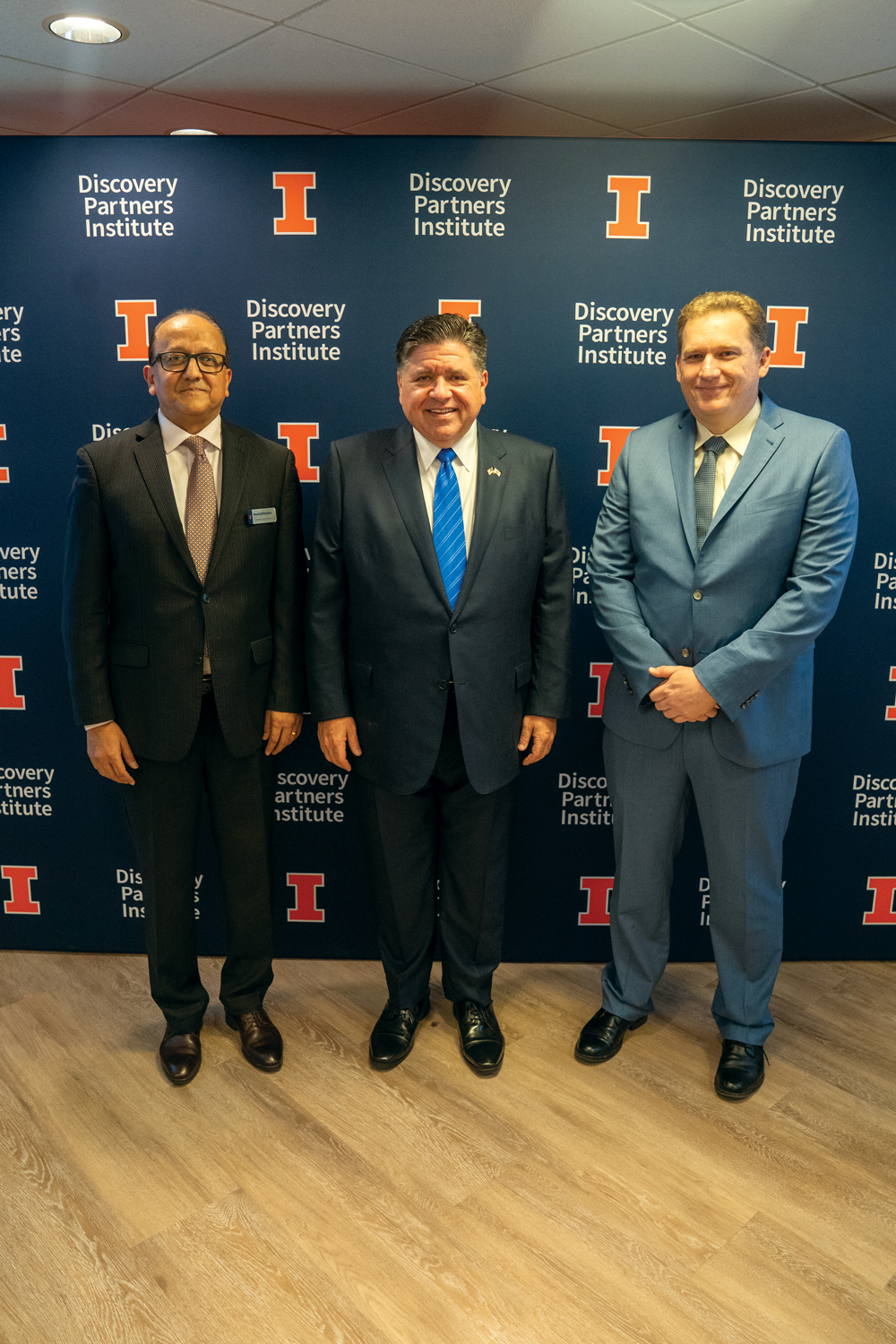
L-R: Rashid Bashir, Vice Chancellor for Chicago Strategic Partnerships, University of Illinois Urbana-Champaign, and Dean, The Grainger College of Engineering; Illinois Governor JB Pritzker; Jay Gambetta, Director of IBM Research and IBM Fellow.
Photo courtesy of The Grainger College of Engineering, University of Illinois Urbana-Champaign
“What is striking about IQMP is not the capital and not the technology. It is the quiet sophistication of the community choreography around them,” she wrote. “More than 100 acres of expanded parkland. Recreational paths threading the campus into Steelworkers Park, Park 566, and the ore walls themselves, which are being treated as features to design with rather than around.” A new 53-bed Advocate Health Care hospital at the north end of the broader 440-acre site anchors a $1 billion commitment to South Side health investment over 10 years, she noted.
In Gedzun’s view, IQMP is emblematic of a new way of thinking about corporate facility site selection and development that takes into account neuroscience, i.e., evaluating all aspects of a project’s impact on a community’s psyche and perceptions. Through the project’s various permutations and partnerships — just like at mHUB — what starts as a concept quickly takes physical, meaningful form.
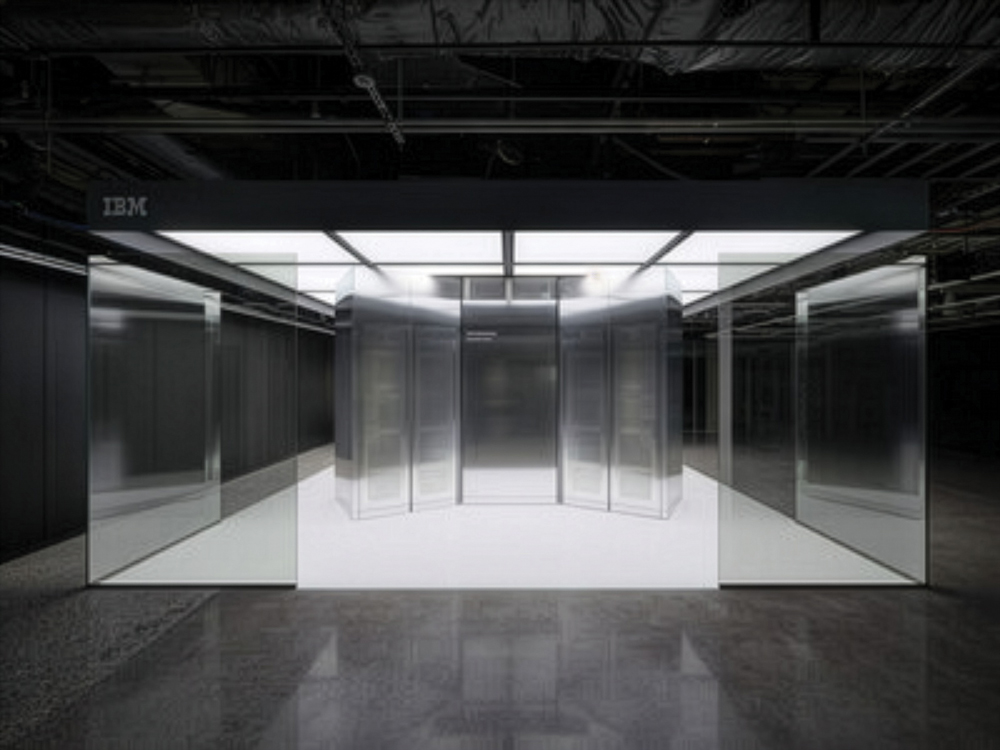
The National Quantum Algorithm Center at the Illinois Quantum and Microelectronics Park will be fueled by IBM Quantum System Two.
Photo courtesy of IBM
The IQMP’s partnerships and programs are building in parallel to the structures themselves:
In July 2026, IQMP and the Quantum STrategic industry Alliance for Revolution (Q-STAR) announced a new partnership memorandum of understanding to strengthen collaboration between Japanese companies and Illinois’ quantum ecosystem. “Quantum technology is entering a new phase where global collaboration is essential to accelerate commercialization and create real-world impact,” said Taro Shimada, chair of Q-STAR. “Through this partnership with IQMP, we look forward to strengthening connections between Japan’s and Illinois’ quantum ecosystems and creating new opportunities for companies, researchers and entrepreneurs on both sides.
The agreement comes after the Japan External Trade Organization (JETRO) in March 2026 organized a delegation to Tokyo, which included representatives from the IQMP, the Illinois Economic Development Corporation (Illinois EDC), the Illinois Department of Commerce and Economic Opportunity (DCEO), IQMP anchor tenant PsiQuantum, and others. In June 2025, a Japanese delegation came to Chicago to meet with DCEO, IQMP, Illinois EDC and others. Gov. Pritzker led a similarly focused delegation trip to Japan back in October 2024.
Also in July, Gov. Pritzker and DCEO announced the X-Labs Fast Fund to encourage U.S. National Science Foundation X-Labs teams to choose Illinois as the place to pursue technical breakthroughs in the quantum technology sector. The X-Labs Fast Fund is a $3 million capital fund to augment federal funding for teams focused on quantum technologies and awarded under Phase 0 of the federal X-Labs opportunity. Teams pursuing a federal X-Labs award may write their intention to pursue Illinois funding into their application.
“The State of Illinois has committed approximately $200 million to attract federal funding for quantum and already demonstrated an ability to quickly deploy those funds,” the organizations stated. “If awarded by NSF, teams will be able to apply to DCEO and receive the grant within months.” The Chicago Quantum Exchange, P33, Polsky Center for Entrepreneurship and Innovation and mHUB will add $250,000 in funding, immediate access to elite lab space and advanced prototyping facilities, and access to the IQMP’s technical infrastructure, including cryogenic, test and measurement equipment, and experimental research facilities.
“The State of Illinois’ $3 million X-Labs Fast Fund will attract new talent to Illinois, giving entrepreneurs the opportunity to take advantage of our world-class facilities and opportunities for growth,” said DCEO Director Kristin Richards. “With each new investment, Illinois is cementing its reputation as the leading hub for quantum innovation.”
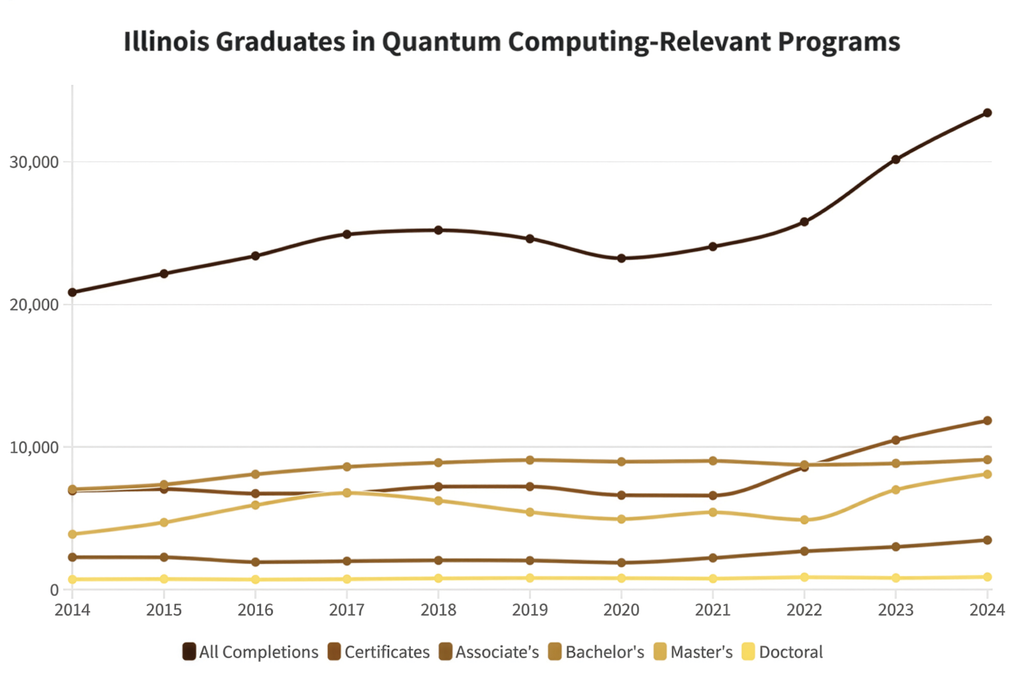
“Mapping Illinois’ Quantum Talent Pipeline: A Framework for Defining Quantum-Relevant Degrees and Certificates,” released in May 2026 by the Illinois Science and Technology Coalition (ISTC), Illinois EDC, IQMP and Chicago Quantum Exchange, found more than 33,000 quantum-relevant degrees and certificates were awarded in Illinois in 2024 alone — a 33% increase since the passage of the National Quantum Initiative Act in 2018 and a 60% increase over the last decade. Among other findings:
- Illinois accounted for nearly 5% of all quantum-relevant program completions nationally.
- Quantum-relevant certificate programs represented the single largest category of completions statewide.
- Illinois’ master’s-level computing pipeline is among the strongest in the nation, with nearly 3,000 computer science master’s degrees awarded in 2024 alone.
In November 2025, The U.S. Department of Energy Office of Science renewed the Superconducting Quantum Materials and Systems Center (SQMS), hosted by Fermi National Accelerator Laboratory in Chicago, with $125 million over the next five years to accelerate breakthroughs in quantum information science. SQMS, founded in 2020, is one of five DOE National Quantum Information Science Research Centers created under the National Quantum Initiative Act.
“The center is rooted in Fermilab’s expertise in superconducting radio-frequency (SRF) cavities, materials and cryogenics — technologies originally developed for particle accelerators — and in the lab’s mission to explore the universe at its most fundamental level,” said a Fermilab release.
Illinois is also home to three more federally funded quantum research centers: Q-NEXT, led by Argonne National Laboratory and funded by the U.S. Department of Energy; the Hybrid Quantum Architectures and Networks (HQAN) institute, led by UIUC; and the Quantum Sensing for Biophysics and Bioengineering (QuBBE) institute, led by the University of Chicago. HQAN and QuBBE are funded by the National Science Foundation.
“This renewal allows us to build on that foundation and take the next leap — moving from discovery to deployment,” said Anna Grassellino, director of the SQMS Center. “Together with our partners across national labs, universities and industry, we’re poised to scale quantum systems to a level that will unlock powerful new tools for science, technology and society.”