What’s the safest way to dispose of industrial waste? Break it down to its elemental properties and utilize it across the nation’s in-demand industries.
The country’s last bauxite-to-alumina refinery is located in Gramercy, Louisiana, transforming Jamaican bauxite into the primary feedstock for smelting aluminum. All U.S. aluminum smelters depend on alumina from this refinery. However, ElementUSA is now relying on its industrial waste.
ElementUSA CEO Ellis Sullivan says the team didn’t set out to become a waste-to-mineral company. It’s purely the fact that highly concentrated mineral reserves are in those byproducts.
For example, the refinery’s “red mud lakes” pose an environmental issue due to risk of spreading caustic solution. This 34 million tons of waste is composed of mostly iron with rare earth and trace minerals like gallium and scandium, which he states, “is enough to supply the whole country for all its needs for the next 50 years.”
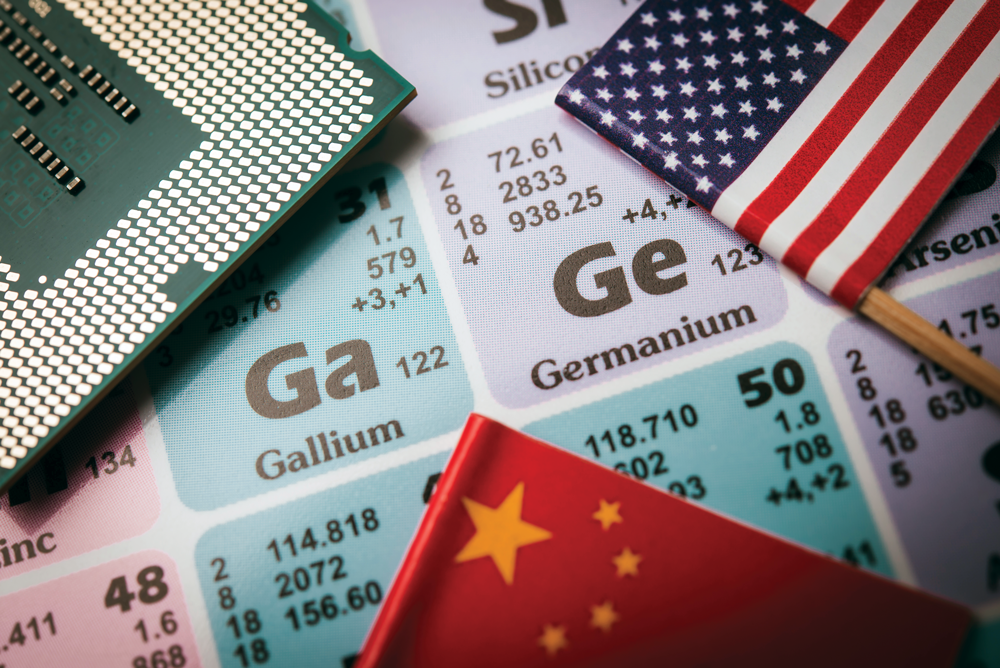
China’s critical mineral supremacy and the lack of midstream infrastructure in the U.S. means adverse effects for national security. That lack led the U.S. Department of War to award ElementUSA $29.9 million in November 2025 to develop a demonstration facility to extract gallium and scandium in Gramercy. Two months prior, ElementUSA launched a Critical Resource Accelerator in Cedar Park, Texas. Shared leadership and investors with Cedar Park-based Firefly Aerospace drew ElementUSA here, despite not being located in a mining corridor. Sullivan was reluctant, but now says it was the right call based on the region’s quality of life, tech ecosystem, skilled workforce availability, a tax-friendly environment and low-cost utilities.
Cedar Park serves as the company’s R&D and design hub, a sort of think tank to de-risk projects and fast-track development. Waste from the refinery, carried in 50-gallon drums, is trucked in from Louisiana in a day. The 30,000-sq.-ft. accelerator focuses on bauxite residue recovery, salt dross recovery, midstream infrastructure and AI integration. Analytical lab testing, bench scale testing, pilot scale development and advisory services housed here provide resource owners, technology providers and mineral end users with the technology to separate, extract and refine primary and secondary resources to vital minerals. In an effort to be zero-waste, byproducts are then turned to cement.
“We’re the first and only to have a resource accelerator like we have,” says Sullivan. “There’s plenty of other technologies and companies that are using waste as feedstock but they’re usually very singular in their effort.”
He notes that the company is already outgrowing this space and has plans to expand the warehouse for its technical team, opting to move executives to a new office nearby. As new contracts and domestic and international partnerships pour in, the accelerator is positioning itself to streamline access to missing midstream technologies and expertise.
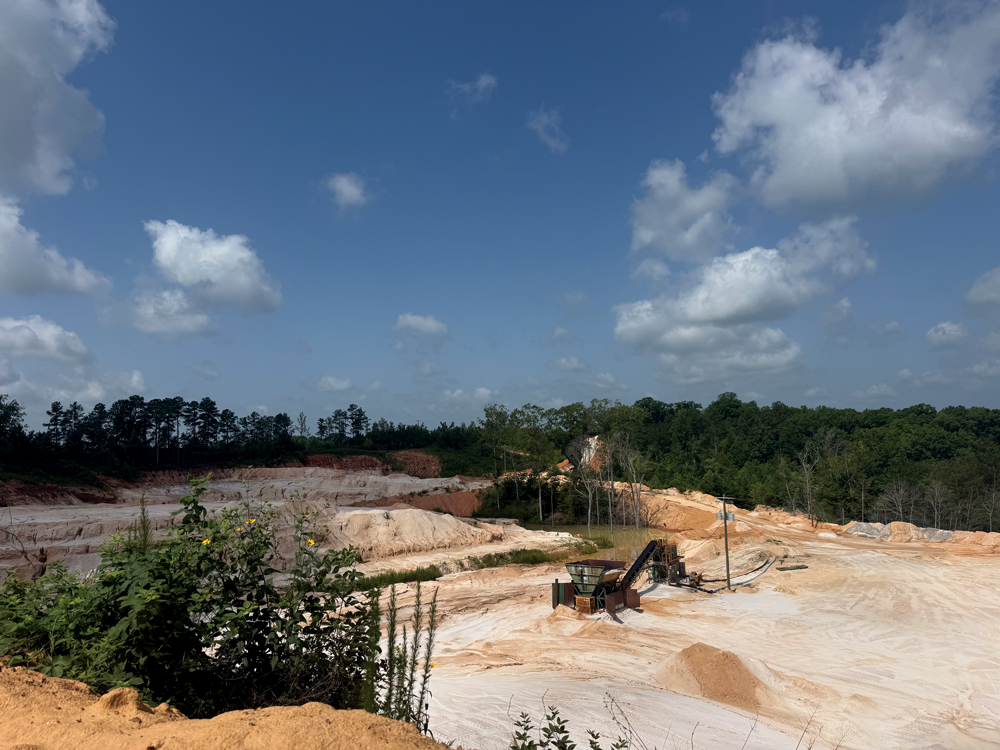
Kunin’s separation technology can detect trace amounts of critical minerals, which can provide an additional revenue source to American miners, smelters and refineries.
Photo courtesy of Kunin Technologies
“Cedar Park specifically has been really good for us because this is no longer a mining industry, it’s more of a tech industry because it’s all about the newest, latest equipment, extraction technologies and materials,” says Sullivan. “This is really the tech hub of the country. I just want to find more mineral projects we can build in Texas.”
In June 2026, ElementUSA and the Colorado School of Mines received $67 million from the U.S. Department of Energy to support design, construction and commissioning of a new rare earth element processing facility in St. John the Baptist Parish, Louisiana.
Unlocking the Periodic Table
A hunt for a secure domestic supply of gallium — a critical element within defense and semiconductor industries — led the U.S. Department of Energy to announce $5.4 million in funding to support five projects taking an innovative approach to gallium recovery.
Among the recipients was Chattanooga-based critical mineral recovery startup Kunin Technologies. Funded through the Technology for Recovery and Advanced Critical-material Extraction—Gallium (TRACE-Ga) initiative, Kunin will develop a pathway to recover gallium from metal streams, in hopes of producing 12 tons per annum of gallium using innovative processing methods.
Prior to launching his company, founder and CEO Daniel Rau was earning his bachelor’s degree in chemical engineering at Vanderbilt University in Nashville, Tennessee. When his interests shifted to mining and lithium extraction, a Vanderbilt professor inspired him to launch his own company.
During the Manhattan Project in the 1940s, Dr. Robert Kunin was brought in to work on radionucleotide separation utilizing ion-exchange resins. Kunin later brought ion-exchange resin technology to Rohm and Hass, enabling the company to scale, commercialize and apply it to new industrial uses such as water treatment, uranium extraction and heavy metal treatment. When starting out, Rau heavily referenced Kunin’s 1951 textbook on ion-exchange fundamentals when developing his company’s technology approach. Homage was paid to the expertise that seven decades later still holds weight, as Kunin Technologies was born.
“Kunin Technologies is putting a 21st century spin on his bedrock foundations, commercialization of an alternative ion-exchange media which [Dr.] Kunin identified while alive,” says Rau. “In many ways, Kunin is working in the Manhattan Project of Metals. [There’s] no better place to be building the Manhattan Project of Metals than Tennessee and in partnership with Oak Ridge National Laboratories’ Innovation Crossroads program.”
Rather than focusing on new material science or chemistry innovation, Rau aims to improve the cost and performance of decades of accumulated scientific discovery. That advantage lies in a novel ion-exchange media form factor, bringing a new performant space to ion-exchange economics by tapping into more complex process chemistries, lower concentration feedstocks and new resources. Kunin’s separation technology can selectively extract metals from any feedstock, including those in trace amounts.
“There needs to be an American national champion of ion-exchange, one which is vertically integrated,” Rau says of his business approach, “a one-stop shop for asset owners to unlock additional metal value.”
Outside of TRACE-Ga, Kunin Technologies is intent on recovering half of the periodic table of elements in the U.S. Rau states that base metals, precious group metals and critical metals including rare earths, gallium, germanium and scandium are within Kunin’s project pipeline.
“Kunin intends to continue growing in Chattanooga, strategically positioned near Kunin’s first deployments and bountiful young talent pools from Tier 1 universities UTK [University of Tennessee, Knoxville], Vanderbilt, Georgia Tech and Alabama,” says Rau. “Kunin will also be an international company, with operating and producing assets across six continents, all made possible from innovation built in the Volunteer State.”