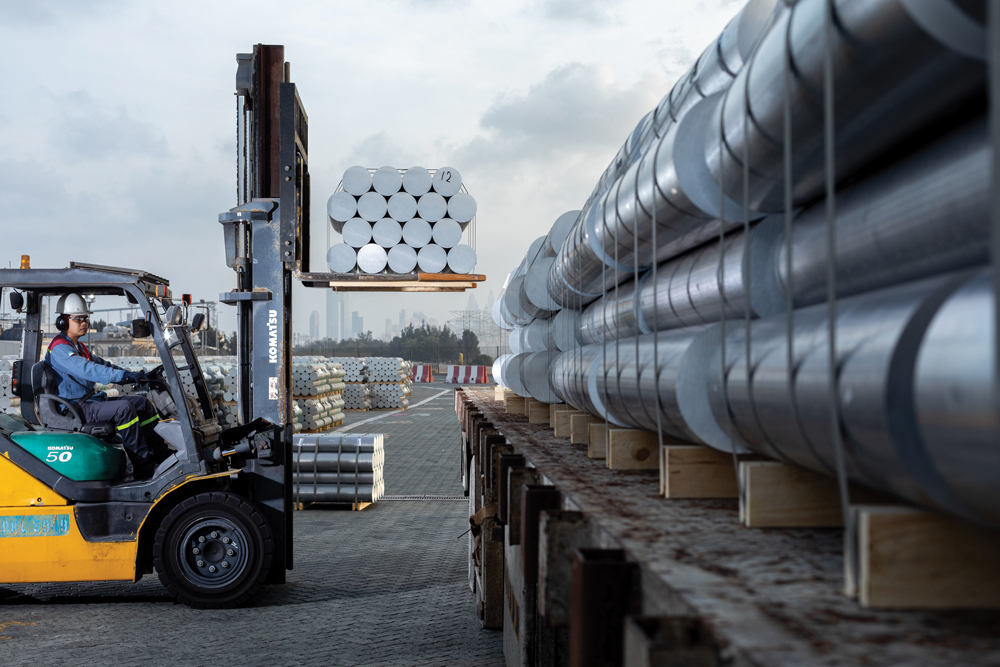
Oklahoma obtaining the nation’s first primary aluminum production plant since Alumax’s investment in Mount Holly, South Carolina, in 1980 — operations later acquired by Century Aluminum Company in 2014 — didn’t happen by chance.
Dependent on only four smelters, the U.S. currently produces about 683,500 metric tons of primary aluminum annually. It’s a significant decline from the nation’s peak of up to 5 million metric tons once delivered by 33 sites prior to shutdowns that began in the late 1990s.
Emirates Global Aluminium (EGA) is anticipated to more than double the nation’s current production to over 1 million metric tons annually, introducing a production capacity of 750,000 metric tons as operations launch at the end of the decade. The Abu Dhabi-based manufacturer is heading to the northeastern Oklahoma town of Inola, located outside of Tulsa, to begin construction of its $4 billion primary aluminum facility by the end of 2026.
At the Tulsa Port of Inola’s industrial park, EGA plans to manufacture billets, sheet ingots, high-purity aluminum and foundry alloys across its upcoming 350-acre campus, dubbed Oklahoma Primary Aluminum. While this may represent the first facility of its kind in over 46 years in the U.S., EGA is transferring decades of experience — and its proprietary EX technology — to the region.
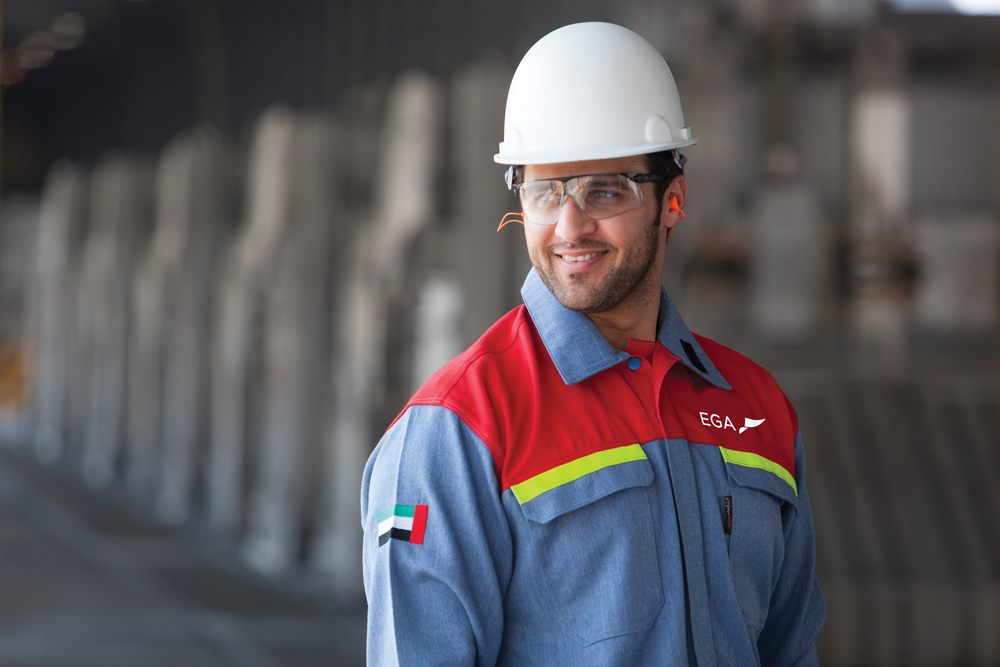
Once operational, EGA’s primary aluminum production facility will create 1,000 direct jobs in the Inola region.
Photo courtesy of Emirates Global Aluminum
“We conducted an extensive site selection process, evaluating potential sites in several dozen states. We selected Oklahoma, and Tulsa Port of Inola in particular, because of its great infrastructure, the state’s abundant energy, the region’s skilled workforce, river access and strong public-private support for transformative industrial projects as foundations of future economic growth,” says EGA Project Director for Oklahoma Primary Aluminum Ziad Fares. “This project is key to America’s industrial revival, and Oklahoma will be at the heart of it.”
These operations will be propelled by the expertise of Century Aluminum, which operates two of the nation’s four active smelters, as EGA announced a respective 60/40 joint development agreement with the company in February 2026. Fares says that from the very beginning of this initiative EGA was considering partners to support the future operations.
“We are pleased that EGA and Century are both now focusing our greenfield aluminum smelter development efforts at Tulsa Port of Inola,” he says. “What is great about this partnership is that it combines EGA’s world-class expertise in aluminum smelting design and technology, construction and operation with Century’s extensive history and expertise operating aluminum production facilities in the United States utilizing domestic supply chains.”
The combination of these two industry powerhouses will transform U.S. dependence on foreign critical minerals imports, while ushering in opportunity to enhance homegrown industry support. A project such as this creates significant opportunities in the supply chain, according to Fares, “and we will secure as much as possible of the goods and services we need from the local area.”
Weeks after Century Aluminum joined the initiative, U.S. Aluminum Company entered an agreement with the duo to become the facility’s first downstream partner.
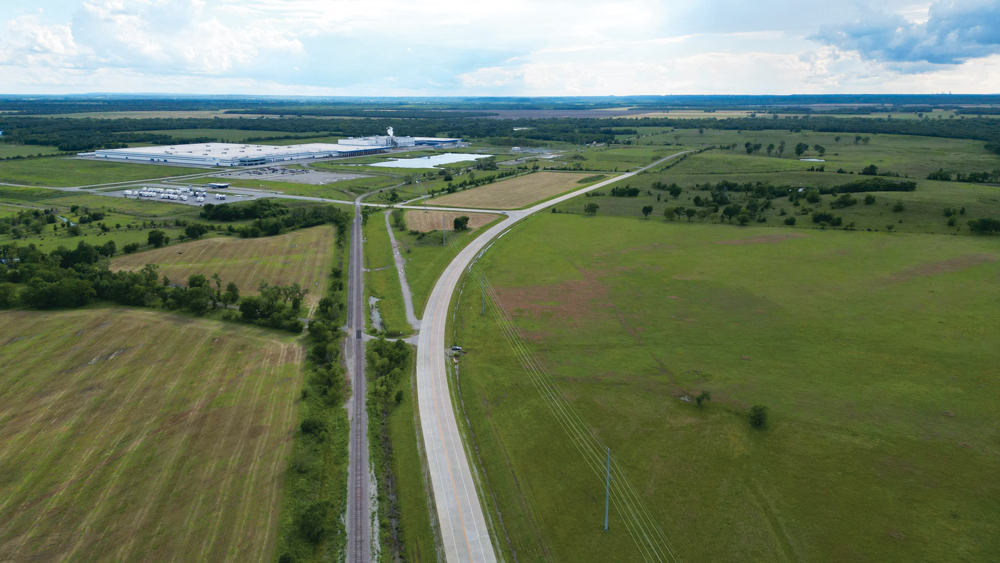
EGA and Century Aluminum will construct the nation’s first primary aluminum plant in over 50 years at Tulsa Port of Inola’s industrial park.
Photo courtesy of Tulsa Port of Inola
“Our supply of aluminum has the potential to make Tulsa Port of Inola and Oklahoma a hub for the American aluminum industry, creating secondary jobs and economic opportunities,” notes Fares. “Although production is likely to start at the end of the decade, we have already signed the first early stage agreement with a downstream firm based in Oklahoma.”
It’s a move that Oklahoma Department of Commerce Director of Business Recruitment Jay Shidler says is in precise alignment with the brand of Oklahoma.
“We’re dependent upon our resources here. We’re a very rich energy state, both in affordability and energy availability,” he says. “So, it aligns with our mission, our industries and the skillsets that we have now.”
U.S. Aluminum Company plans to construct a new aluminum fabrication plant near the Inola facility. The company plans to use the facility to turn liquid aluminum into products utilized by the electrical, aerospace & defense, automotive and machinery industries. Tulsa Port of Inola proximity opens vital access for transporting raw materials along the 445-mile McClellan-Kerr Arkansas River Navigation System, providing a natural avenue for the industry support to cluster nearby.
“We say all roads lead to Oklahoma and one of the advantages that you have here is coming up through the ports,” says Shidler of U.S. Aluminum Company’s decision to locate in the region. “If there are raw materials coming in through the Gulf, it makes sense to bring that up through the ports. Not to mention the intersections of I-35, I-40 and I-44.”
Once operational, EGA’s Inola facility will create 1,000 direct jobs.
Closing a Critical Industry Gap
For decades the nation’s rare earths supply chain has become reliant on imports from China, Malaysia, Estonia and Japan. On a larger global scale, critical minerals imports bring in resources from China, Canada, Germany, Brazil, Mexico, Japan and South Africa. These materials are essential to production activities throughout Oklahoma’s leading industries — including aerospace & defense, advanced manufacturing, automotive, and traditional and non-traditional energy industries.
On the heels of the 2026 SelectUSA Summit in Washington, D.C. in May, Shidler says many of his conversations with international entities interested in investing in the U.S. centered around gaining a better understanding of the state’s growing rare earths and critical minerals ecosystems.
To grasp how Oklahoma became the ideal location for the nation’s sole nickel refinery, one of the largest North American lithium refineries, the first U.S. commercial-scale lithium-ion battery recycling facility, a lithium-ion battery upcycling plant and now the first U.S. primary aluminum plant in over 50 years, it’s worth noting the resources the state brings to the table.
Aside from repping the status of a “one phone call state,” in terms of responding to employer needs, Oklahoma’s central geographic location provides logistical ease by way of rail, road, water and air. Access to affordable renewable energy, a skilled manufacturing workforce, Oklahoma’s pro-innovation business environment and a slew of targeted incentives are among the factors enabling the state to meet qualifications of domestic and international businesses alike.
“Oklahoma is definitely on the radar,” notes Shidler. “This is aligning with the Trump Administration’s focus around being energy dominant, which then also goes into national security, defense, as well as U.S. rare earths and AI dominance. All four of those industries coexist within the ecosystem and there are a lot of dependencies on each other.”
That intertwinement has made Oklahoma ripe for fresh foreign direct investment while creating a closed-loop system the U.S. is in desperate need of. Future availability of Oklahoma-made aluminum coming out of EGA’s project, battery-grade lithium coming in from Stardust Power, or rare earth metals produced by USA Rare Earths position Oklahoma to lead in sharpening domestic supply chain capacities.
Not to mention the direct materials access the state’s industries can tap into, especially as Oklahoma’s aerospace & defense industry saw a 300% capital investment increase in 2025.
“It completely builds out that ecosystem in one centralized location in the United States for easy distribution,” Shidler says. “It’s all a part of the ecosystem and the conversations that we can have to build on each other.”