
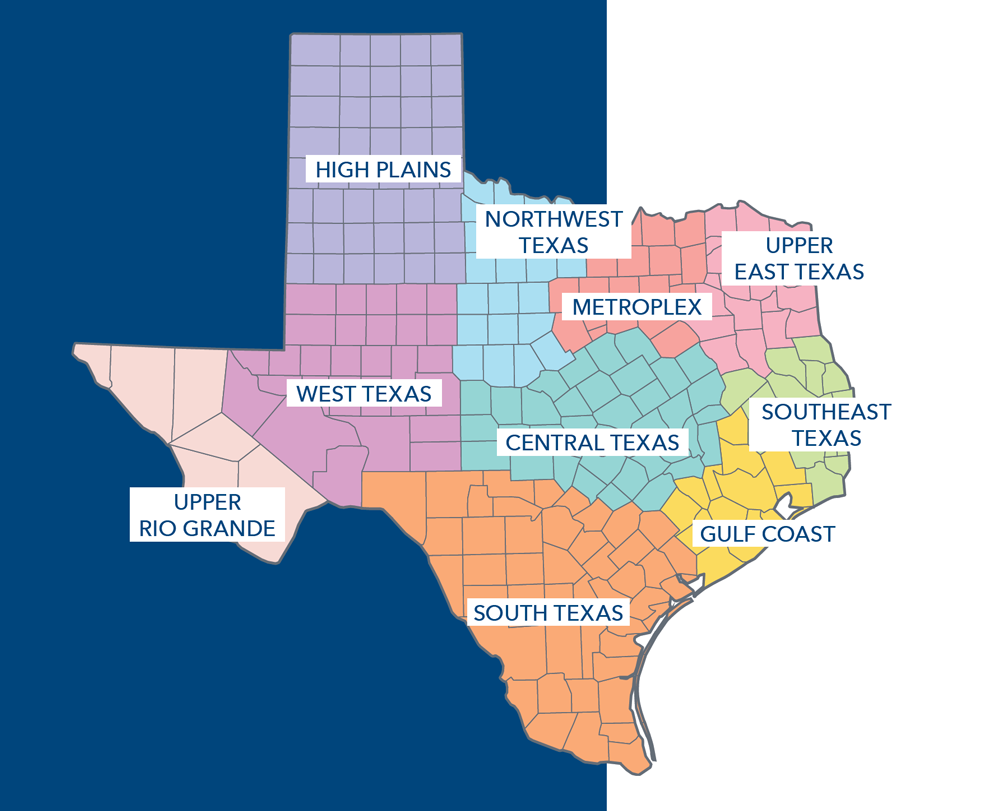
by SAVANNAH YAWN
Central Texas: Pegatron in Georgetown
Anchored along the I-35 corridor from San Marcos through Austin to Waco, Central Texas combines fast-growing metros, major universities and a deepening technology base often dubbed “Silicon Hills.” The region’s central location, highway connectivity and access to institutions such as The University of Texas at Austin, Texas A&M University, Texas State University and Baylor University underpin a steady pipeline of engineering and technical talent.

Lake Austin
Photo: Getty Images
In Georgetown, Taiwan-based electronics manufacturer Pegatron is establishing its first U.S. manufacturing operation, marking a significant step in the company’s North American expansion. The firm has acquired a 168,784-sq.-ft. facility in the Blue Springs development, where it plans to invest at least $35 million and create hundreds of high-tech jobs, 100 of which are required within the first three years.
Pegatron produces a wide range of electronics, from laptops and smartphones to automotive components and smart home devices. The Georgetown site will support manufacturing and service operations tied to these product lines, reinforcing domestic production capacity at a time when global supply chains remain under scrutiny.
The location offers direct access to Interstate 35 and sits within Central Texas’ broader technology and advanced manufacturing corridor. Proximity to Austin’s electronics and semiconductor ecosystem, combined with available industrial space in Georgetown, aligns with the operational needs of large-scale electronics production.
Pegatron’s investment reflects a broader shift toward U.S.-based electronics manufacturing, particularly for companies seeking greater control over production and logistics.

Downtown Houston
Photo courtesy of Travel Texas
Gulf Coast: Tesla in Brookshire
Along the Gulf of Mexico and anchored by the Greater Houston area, the Gulf Coast region combines one of the nation’s largest populations with a dense network of ports, highways and industrial assets. Home to major institutions such as Rice University, the University of Houston and the Texas Medical Center, along with NASA’s Johnson Space Center, the region supports a large and diverse workforce spanning engineering, construction and skilled trades.
Against this backdrop, Tesla is expanding its Texas operations with a $200 million manufacturing facility in Brookshire’s Empire West Business Park, west of Houston. The more than 1-million-sq.-ft. site will produce the company’s Megapack batteries, utility-scale energy storage systems designed to support grid reliability and store renewable energy.
Unlike Tesla’s vehicle assembly operations in Austin, the Brookshire facility is focused on energy infrastructure. The Megapack plays a central role in stabilizing power grids by storing excess solar and wind energy for later use, aligning with growing demand for large-scale energy storage solutions.
The site’s location along Interstate 10 provides direct access to major freight corridors and the Port of Houston, enabling efficient distribution across domestic and international markets. The Gulf Coast’s established logistics network and depth of industrial talent align with the operational needs of large-scale manufacturing and distribution.
The project is expected to create approximately 1,500 jobs, many in technical roles, with some positions exceeding $100,000 annually.

Texas Longhorn steer statue located at the National Ranching Heritage Center in Lubbock, Texas
Photo courtesy of Travel Texas
High Plains: DSM Semichem in Plainview
Across the Texas Panhandle between New Mexico and Oklahoma, the High Plains region includes the Lubbock and Amarillo metros and covers more than 42,000 square miles. Anchored by institutions such as Texas Tech University and West Texas A&M University, the region blends a strong agricultural base with growing activity in energy and advanced materials. Wind energy development, supported by more than 2,000 turbines installed over the past 25 years, underscores the region’s role in Texas’ broader energy portfolio, while ongoing infrastructure investments aim to support economic diversification.
DSM Semichem is expanding its specialty materials and chemicals facility in Plainview, reinforcing the High Plains’ role in the semiconductor supply chain. The project brings the company’s total investment at the site to $176 million and will create 40 new jobs, supported in part by a $7.87 million award from the Texas Semiconductor Innovation Fund.
DSM produces electronic-level sulfuric acid (ELSA), an ultra-pure chemical essential for cleaning semiconductor wafers without leaving impurities. This process is a critical step in manufacturing chips used in high-performance computing, 5G, artificial intelligence and defense applications.
Plainview offers cost advantages, available industrial land and access to transportation networks serving broader Texas manufacturing hubs. State-level incentives tied to semiconductor development also align with efforts to expand domestic chip production beyond major metro areas.
Specialty chemicals are a foundational material in semiconductor manufacturing, and domestic production capacity is increasingly viewed as essential to supply chain resilience.
Metroplex: FormFactor in Farmers Branch
From the Oklahoma border to the Brazos River, the Dallas-Fort Worth Metroplex is one of the most populous and economically diverse regions in Texas, home to more than 8 million residents. The region’s concentration of corporate headquarters, financial institutions and venture capital activity has fostered a strong business and innovation environment, supported by universities such as The University of Texas at Dallas, Southern Methodist University and Texas Christian University.
Within this environment, FormFactor is establishing an advanced manufacturing facility in Farmers Branch, with site work and equipment installation beginning in late 2025. The company plans to invest more than $140 million in the project in 2026 as part of an aggressive ramp-up strategy.
FormFactor’s technology is central to chip production, with billions of micro-electro-mechanical systems (MEMS) probes shipped globally and more than 10,000 probe systems installed worldwide. These systems are used to test and validate semiconductor performance, a critical function as chip complexity continues to increase.
The Metroplex offers a deep labor pool, strong transportation infrastructure and proximity to a growing cluster of semiconductor-related operations across Texas. Farmers Branch provides access to major highways and an established business environment that aligns with the needs of advanced manufacturing operations.
Local officials have characterized the project as one of the city’s most significant economic development wins, reflecting both the scale of investment and the strategic importance of semiconductor technologies.
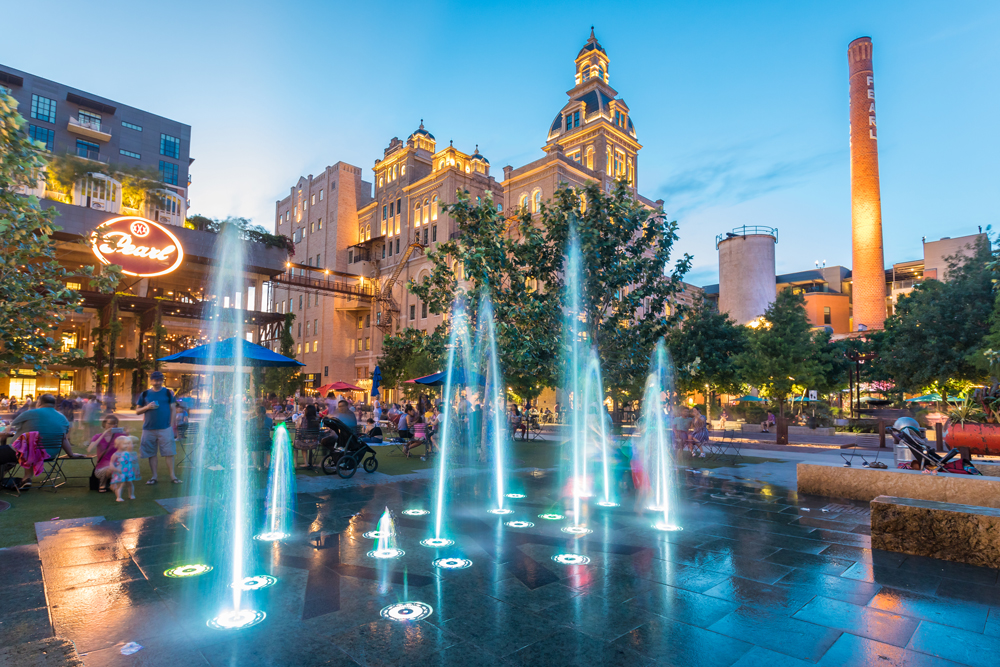
The Historic Pearl in San Antonio
Photo courtesy of Travel Texas
Northwest Texas: Stargate 1 in Abilene
From the Oklahoma border down to the Colorado River, Northwest Texas spans roughly 21,000 square miles and includes the Abilene and Wichita Falls metropolitan areas. The region has long been anchored by oil and gas production, mining and a growing aerospace manufacturing presence, while recent gains in transportation, engineering and computer-related occupations reflect a gradually diversifying economy. Institutions such as Abilene Christian University and Midwestern State University support workforce development across these sectors.
A massive digital infrastructure project is taking shape in Abilene, where the Stargate 1 development spans more than 4 million sq. ft. over 1,000 acres. The site is anchored by a 700-megawatt data center facility, with capacity large enough to support tens of thousands of high-performance computing units.
The facility sits adjacent to the Stargate campus, a major artificial intelligence infrastructure initiative associated with Oracle and OpenAI, and has secured a lease from Microsoft for data center operations. The proximity to this emerging AI hub places Abilene within a growing cluster of next-generation computing infrastructure.
Access to large-scale power capacity is a defining factor in the project. With approximately 700 megawatts available, the site meets the energy demands of hyperscale data centers and AI workloads, which continue to grow rapidly.
Abilene offers available land, scalable infrastructure and the ability to support energy-intensive operations, factors that align with the demands of large-scale data center development.
South Texas: Microsoft in Medina County
Running along the Texas-Mexico border and the Gulf Coast, South Texas covers nearly 52,000 square miles and is one of the state’s most geographically and economically diverse regions. Anchored by major metros including San Antonio, Corpus Christi and Laredo, the region serves as a critical gateway for international trade, supported by cross-border logistics networks, ports and multimodal transportation infrastructure. Institutions such as The University of Texas at San Antonio and The University of Texas Rio Grande Valley contribute to a workforce that is expanding in fields such as technology, life sciences and advanced logistics.
Microsoft is expanding its data center footprint in Medina County with two new facilities planned along County Road 381 in Rio Medina, roughly 25 miles west of San Antonio. The projects represent a combined $52 million investment, with construction expected to begin in 2027 and completion targeted for 2029.
Each facility is designed to support the company’s growing cloud and data infrastructure needs, reflecting continued demand for digital services and computing capacity. The phased construction timeline allows for coordinated development while scaling operations in line with market demand.
Medina County offers proximity to San Antonio’s workforce and infrastructure along with the land availability required for large-scale data center development. The location also provides access to power and connectivity essential for high-performance computing environments.
The project adds to Microsoft’s broader Texas presence and highlights South Texas’ growing role in supporting digital infrastructure development.
Southeast Texas: USG Paper in Orange
Extending from the Gulf of Mexico to the Louisiana border, Southeast Texas spans more than 12,000 square miles and includes the Beaumont-Port Arthur metro area. Long associated with oil and gas production, the region has evolved into a broader industrial and commerce hub supported by ports, the Intracoastal Waterway and a growing transportation workforce. Institutions such as Lamar University and Stephen F. Austin State University contribute to workforce development across manufacturing, logistics and technical fields.
USG Paper is investing $750 million to establish paper manufacturing operations in Orange, repurposing the former International Paper site that closed in 2023 and impacted up to 600 jobs.
The project will bring new life to the existing industrial facility, with construction already begun and full operations anticipated by 2028. USG plans to create between 120 and 150 full-time positions at the site.
The company manufactures gypsum-based products used in construction, and the Orange facility will expand its paper production capabilities tied to these materials. The site’s existing infrastructure, combined with access to regional transportation networks, supports redevelopment of large-scale industrial operations.
Southeast Texas’ established industrial base and access to waterborne and inland logistics networks align with the operational needs of paper and materials manufacturing.
Upper East Texas: Braven Environmental in Texarkana
From Cedar Creek Reservoir east to the Arkansas and Louisiana borders, Upper East Texas includes the Longview, Tyler, and Texarkana metropolitan areas. The region’s economy is supported by a mix of natural resources and industrial activity, with exports ranging from oil and gas to chemicals and agricultural products. A network of higher education institutions, including The University of Texas at Tyler and Texas A&M campuses in Texarkana and Commerce, supports workforce development across business, manufacturing and technical fields.
Braven Environmental is investing more than $145 million to build a state-of-the-art advanced recycling facility in Texarkana, introducing next-generation waste processing capabilities to Upper East Texas.
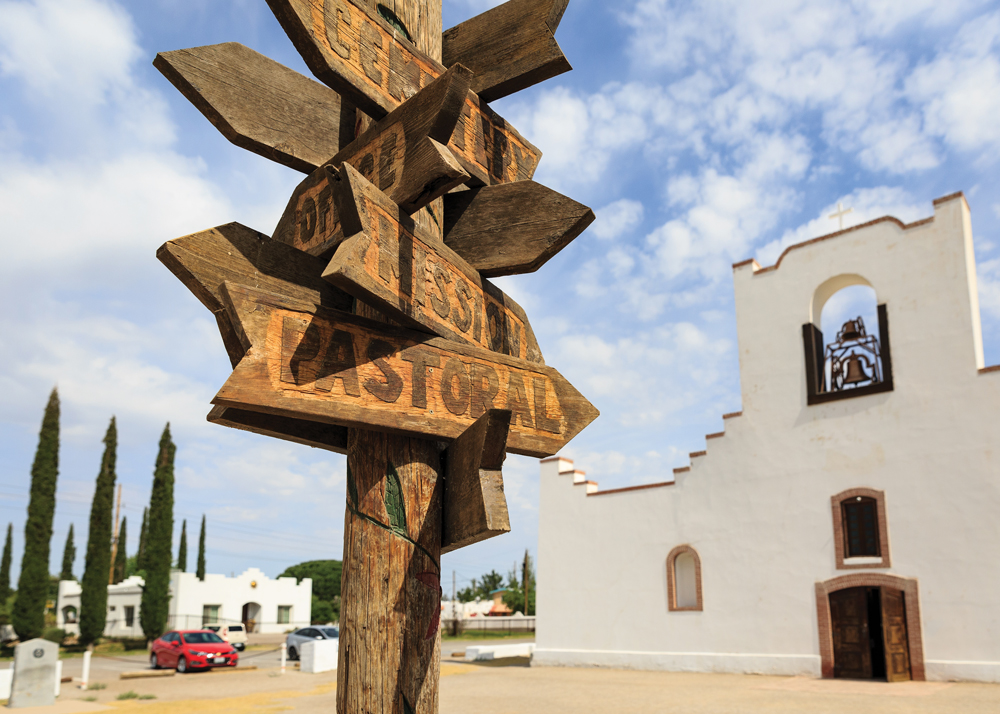
Historic Socorro Mission located near El Paso, Texas
Photo courtesy of Travel Texas
The facility will use proprietary pyrolysis technology to convert difficult-to-recycle plastics into chemical products, diverting waste from landfills and supporting circular economy initiatives. The process transforms plastic waste into usable feedstock for new materials, addressing a growing challenge in waste management.
Texarkana’s location along key transportation corridors and its access to industrial markets align with the operational needs of advanced recycling and materials processing facilities. The region’s existing base in chemicals and resource-driven industries provides a foundation for this type of investment.
The project positions Upper East Texas within the emerging advanced recycling sector, adding a new dimension to its diversified industrial economy.
Upper Rio Grande: Schneider Electric in El Paso
At the western edge of Texas along the U.S.-Mexico border, the Upper Rio Grande region spans more than 21,000 square miles and centers on the El Paso metropolitan area. The region functions as a key cross-border commerce hub within the Borderplex, linking El Paso with Ciudad Juárez and supporting integrated manufacturing and logistics activity. A diverse economic base and institutions such as The University of Texas at El Paso and Sul Ross State University contribute to a workforce growing in engineering, technology and life sciences fields.
Schneider Electric is modernizing and expanding its manufacturing operations in El Paso, with a multi-million-dollar investment expected to create 300 new jobs. The project is supported by a $1.5 million Texas Enterprise Fund grant.
The expansion will increase production capacity for medium-voltage switchgear, equipment critical to powering data centers and large-scale industrial facilities. As demand for digital infrastructure grows, so does the need for reliable electrical systems.
El Paso’s established manufacturing base and cross-border logistics capabilities support production serving both domestic and international markets. The region offers access to skilled labor and integrated supply chains aligned with advanced manufacturing operations.
The investment builds on Schneider Electric’s existing campus in El Paso.
West Texas: Brazos Midstream in Martin County
West of the Hill Country region, West Texas covers more than 38,000 square miles and includes the Midland, Odessa and San Angelo metropolitan areasf. It remains one of the most resource-rich regions in the state. Long defined by oil and gas production, the region also supports mining, construction and a growing base of engineering and technical occupations. Institutions such as The University of Texas Permian Basin and Angelo State University contribute to workforce development tied to energy and industrial sectors.
Brazos Midstream is developing the Sundance II facility in Martin County, a 300-million-cubic-feet-per-day natural gas processing plant representing $185 million in capital investment.
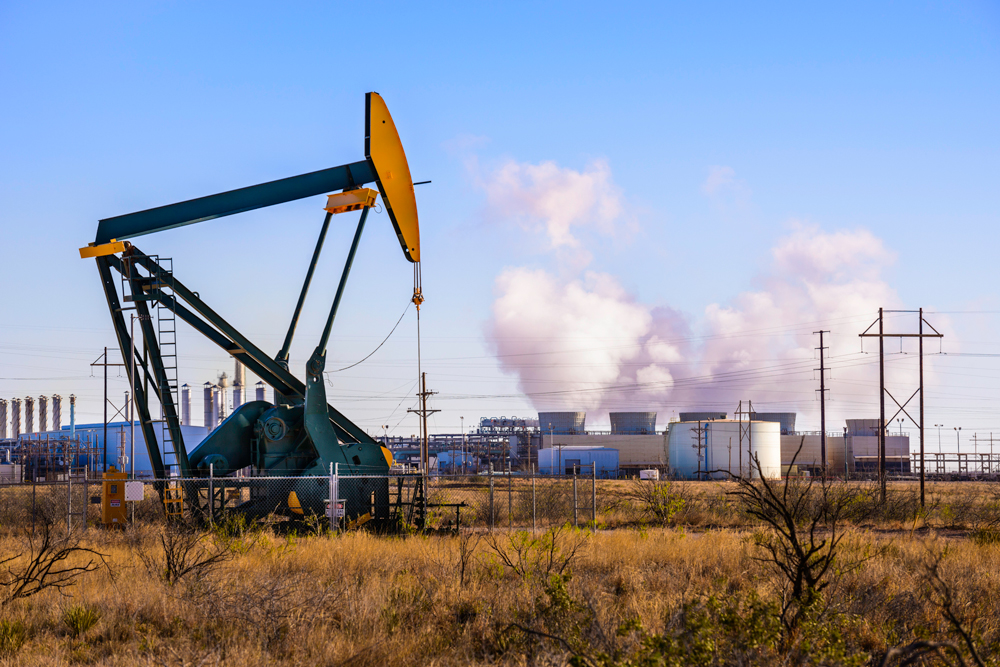
Oil refinery in Seminole
Photo courtesy of Travel Texas
Located in the Midland Basin, part of the larger Permian Basin, the facility will expand Brazos Midstream’s total regional processing capacity to 500 million cubic feet per day. The Permian Basin accounts for roughly 25% of natural gas production in the contiguous United States, making infrastructure expansion critical to sustaining output.
The project is supported through the state’s Jobs, Energy, Technology, and Innovation (JETI) program, reflecting Texas’ continued focus on strengthening energy infrastructure. The facility will provide essential gas processing and takeaway capacity for producers operating in the region.
Martin County’s location within a highly productive energy basin, combined with existing gathering and processing networks, aligns with the operational needs of large-scale natural gas processing infrastructure.