

By the Honorable Marc E. Andersen, Assistant Secretary of the Army (Financial Management & Comptroller)
The United States military is the greatest fighting force in the world. For nearly two and a half centuries — from the nation’s beginnings to the decisive victories of World War II to the precision operations of the modern era — American forces have demonstrated unmatched capability, professionalism and resolve.
Today, American warfighters remain in harm’s way confronting determined adversaries, including the regime in Iran. They fight with extraordinary courage and skill. Yet too often they do so relying on weapons systems, supply chains and acquisition timelines built for a different era — one defined by slower technological change and more predictable threats.
The challenge we face is not a crisis of valor. It is a crisis of velocity.
Modern conflict moves at the speed of technology, capital and industrial capacity. Our adversaries understand this well. They increasingly wage economic warfare — weaponizing supply chains, rare minerals, semiconductors and energy dependencies to weaken American strength without firing a shot. Meanwhile, our traditional defense acquisition processes often take years — sometimes decades — to field new capabilities. That mismatch is no longer theoretical; it is operational reality.
As Assistant Secretary of the Army for Financial Management and Comptroller, my responsibility is to ensure our Army is resourced to fight and win our nation’s wars. I serve as the principal advisor to Secretary of the Army Daniel P. Driscoll and senior Army leadership on budget, financial management and fiscal strategy. But resourcing the Army is not simply about funding today’s force; it’s about building the industrial and financial architecture necessary to sustain tomorrow’s battlefield advantage.
To do that, the Army must move at the speed of the American economy.
Secretary Driscoll challenged us to think differently about the Army’s vast portfolio of resources. In many respects, the Army is a troubled asset — not in its mission or its people, but in the way its immense institutional value is constrained by outdated structures and processes. Yet within that portfolio lies enormous, untapped potential to better serve our soldiers and their families, strengthen partnerships with industry, and dramatically increase readiness and lethality.
Unlocking that value requires a new approach.
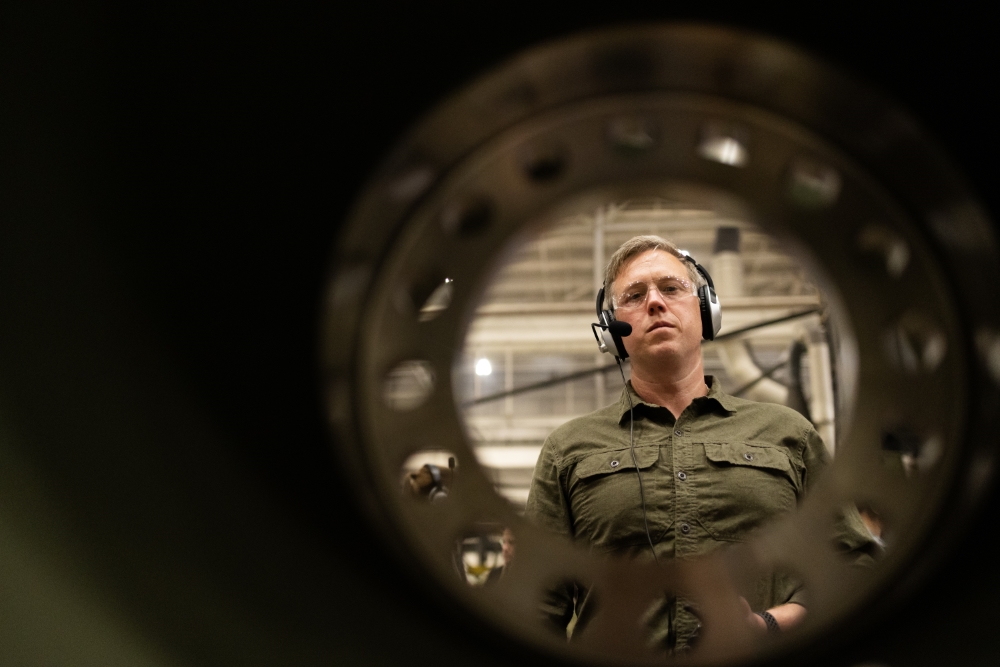
Among the Army’s assets is Rock Island Arsenal in Illinois, where Army leaders last June met with Secretary of the Army the Hon. Dan Driscoll (pictured). His visit included a tour of the Rock Island Arsenal Joint Manufacturing and Technology Center and Advanced Manufacturing Center of Excellence.
Photo by Kelly Haertjens courtesy of U.S. Army Sustainment Command and DVIDS
The Army’s response is the Army Enterprise Strategic Capital Initiative — a bold effort to align private capital, industrial innovation and national security in ways the traditional procurement system cannot.
At its core, the initiative recognizes a simple reality: The United States possesses the most dynamic private sector in the world. Yet too often that power operates parallel to national defense rather than fully integrated with it. The Strategic Capital Initiative seeks to close that gap.
“Resourcing the Army is not simply about funding today’s force; it’s about building the industrial and financial architecture necessary to sustain tomorrow’s battlefield advantage.”
For the first time, the Army is treating its vast portfolio of installations, depots, arsenals and industrial facilities not merely as infrastructure to maintain, but as a strategic platform for national industrial revitalization.
The opportunity is clear. America must secure critical supply chains. For too long, the United States has relied on geopolitical competitors for essential materials required for defense systems. Through strategic partnerships, the Army is exploring ways to enable responsible domestic mineral processing, refining and processing near existing industrial infrastructure.
Our military installations must also become fortresses of energy resilience — capable of operating independently of vulnerable civilian grids. Private-sector investment in advanced microgrids, energy storage and resilient power generation can ensure bases remain operational even in contested environments.
And the Army’s industrial base must evolve beyond legacy production models toward modern, automated manufacturing capable of rapidly scaling output in times of crisis. Robotics, digital manufacturing and software-defined production lines can transform arsenals and depots into flexible manufacturing platforms able to surge production in days rather than months.
In return, the Army offers something few institutions can: long-term, credit-worthy demand. Through structured offtake agreements for energy, materials and production capacity, private capital can access stable and predictable returns while directly strengthening America’s national security. This is not traditional procurement; it is strategic partnership.
History offers a useful reminder. In 1911, when the Army needed a more reliable sidearm, it conducted rigorous testing and adopted the Colt 911 pistol after it fired thousands of rounds without failure. The lesson was simple: When the problem is urgent and the solution is clear, decisive action matters.
Today the challenge is far larger, but the principle remains the same. The United States cannot afford to treat economic power, industrial capacity and national defense as separate domains. In an era of great-power competition, they are inseparable.
America’s private sector possesses extraordinary speed, efficiency and innovative spirit. Leaving that power on the sidelines of global competition would be a strategic mistake.
The Army Enterprise Strategic Capital Initiative is an invitation — to builders, innovators and investors — to help secure our supply chains, modernize our industrial base and ensure the American warfighter never enters a fair fight.
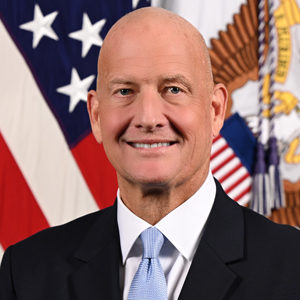
The Honorable Marc Andersen is the 18th Assistant Secretary of the Army, Financial Management and Comptroller (FM&C). Prior to his appointment, Andersen was founder and managing member of Andersen Advisory LLC, served as a venture partner in IronGate Capital Advisors and previously served as senior partner for Ernst & Young. Among other appointments, he has served as a commissioner to the White House Commission on Presidential Scholars, a trustee to the Virginia Veteran Services Foundation and an honorary commander of the U.S. Air Force 89th Airlift Wing.