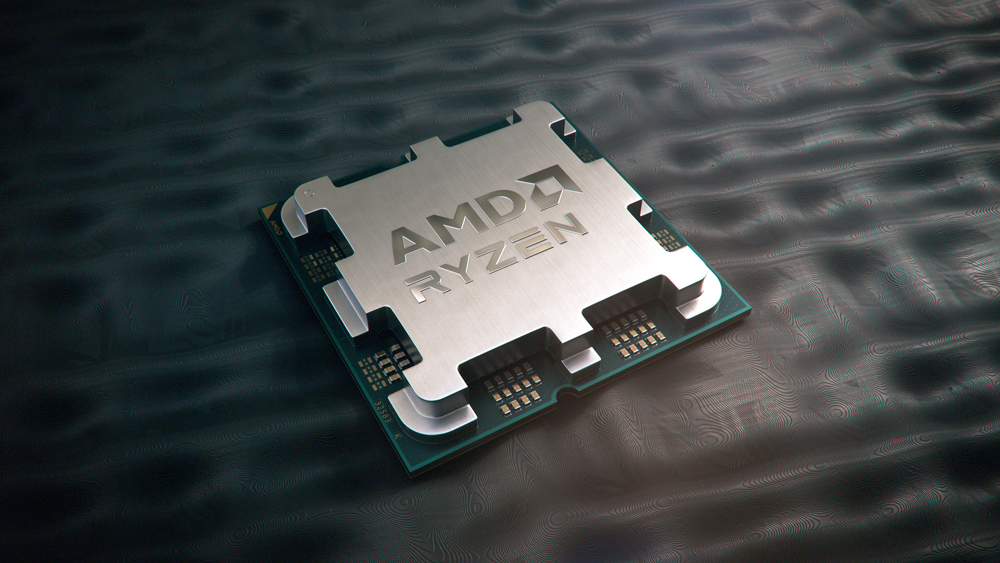
Ask and you shall receive.
The very first time Advanced Micro Devices (AMD) Corporate Vice President Trevor Bauer met Colorado Office of Economic Development and International Trade (OEDIT) Enabling Technologies Subject Matter Expert Dan Salvetti, the two discussed the potential of the City of Longmont’s inclusion in the state’s budding CHIPS Zone program.
Colorado’s CHIPS Zone program was created in 2023 under HB23-1260, which introduced a refund mechanism on specific income tax credits for companies involved in semiconductor and advanced manufacturing operations. The bill was the state’s direct response to the Biden Administration’s CHIPS and Science Act in 2022, allowing relevant companies within state-designated zones to claim income tax credits on qualified investments, business facility employees and expenditures for research and experimental activities.
“The CHIPS Zone program was one tool quickly established to provide companies the state-level support that they would need to access direct funding from the CHIPS Act, thereby making Colorado a strong contender for the investments,” says Salvetti. “The zone format was taken from our Enterprise Zone program, which has been a very successful retention tool for the state.”
The state’s first designated CHIPS Zone landed in nearby Fort Collins in July 2023. Within a few months the state would go on to establish its second CHIPS Zone in Longmont. Bauer and Salvetti dove into the background behind this designation in the first episode of the Longmont Economic Development Partnership’s new Impact Exchange webinar series.
Strategically located in the stretch from Fort Collins to Boulder, Longmont is at the center of Colorado’s semiconductor design and research corridor. AMD is joined by industry leaders such as Micron in focusing on chip design in Longmont, while Solidigm and Seagate Technology host respective R&D operations and Western Digital combines chip design and R&D activities in the region.
I asked Bauer, who also serves as AMD’s Longmont campus site leader, if it felt like a risk to advocate for Longmont’s inclusion in the growing program, to which he said, “We already had great, sustained partnerships with OEDIT and the Governor, so this didn’t feel risky. AMD leadership has leaned into where Colorado leads, which is deep and advanced R&D.
“We understand that Colorado is not only competing with other states, but frankly the rest of the world,” Bauer continues. “We are fortunate to have a state and local public sector that supports our broad growth strategy. Also, I’ve seen firsthand a number of small companies benefit significantly from OEDIT support. The support for AMD has been valuable, but the support for small companies can be game-changing. I appreciate what OEDIT does for AMD, but more broadly, I really appreciate what they are doing to foster technology development in the region.”
In the first year of the Longmont CHIPS Zone, AMD was able to receive over $1 million in refunded credits, enabling the company to welcome about seven new employees in the city and half a dozen jobs at its Fort Collins site, not to mention the up to $5 million in capital expenditure AMD was able to put toward its U.S. data center investments.

Modeled after Colorado’s Enterprise Zone program, the state’s three-year-old CHIPS Zone program allows eligible companies to maximize tax credit incentives.
Photo courtesy of AMD
Talent and Partnership Help Meet Challenges
Access to talent has been a key draw for AMD. Bauer notes that it’s important for Colorado organizations to continue working alongside local universities to develop talent and create highly valued jobs in the region, rather than relying on the state’s quality-of-life appeal alone.
“The pool of talent and expertise that we leverage and lean into underpin AMD investment in Colorado,” he says. “Other supporting factors help enhance the picture, but it’s the people that fuel our business by leading in cutting-edge research and design. That’s why we continue to stay committed to helping shape and inspire students at universities, creating a strong pipeline of local talent into the industry and to AMD.”
The company currently partners with universities on many different levels, including crafting new curriculum, donating hardware for hands-on learning and leading workshops and “hackathons” to teach students about AMD’s latest technologies, such as Ryzen AI or applying AMD silicon in novel projects.
“The AMD University Program has a long history of engaging with the University of Colorado, Boulder, the Colorado School of Mines, Colorado State University and surrounding universities across a broad range of curriculum and research engagements,” says Bauer. “For curriculum development we provide content for the classroom, slides, labs and demonstrations.”
Colorado currently ranks No. 10 among all states in overall semiconductor facilities while also becoming a top U.S. state for semiconductor R&D and design. From natural industry collaboration, strong educational institutions, diverse R&D activity and targeted incentives, the state has all its ducks in a row to strengthen the semiconductor industry, which Salvetti says provides strong value proposition for companies considering sites for operations in semiconductors and advanced technologies.
“Nonetheless, there are always challenges,” notes Salvetti. “Being a semi-arid state — where citizens are conscientious about that fact — provides a challenge for semiconductor fabrication and other heavy water-use industries. It’s also an opportunity for fabricators to think about and invest in water recycling technology, which has matured significantly and is not uncommon at newer facilities. Permitting lead times can also provide a substantial obstacle for large-scale projects.”
In an effort to partially mitigate such issues, OEDIT developed a “fast lane” with the Colorado Department of Public Health and Environment for air permitting associated with semiconductor and advanced manufacturing projects. Looking forward, Salvetti says a broader, cross-agency initiative is now underway to streamline state and local permitting. As new studies predict an upcoming global shortage of hundreds of thousands of STEM workers, OEDIT and state leaders look to initiatives like OEDIT’s $85 million workforce development program, Opportunity Now, and national programs including the National Network for Microelectronics Education to develop new semiconductor career pathways in Colorado.
Today, the state’s CHIPS Zone program extends beyond Fort Collins and Longmont, expanding into Broomfield, Louisville, Boulder and Colorado Springs. Aside from AMD, four other companies are now in the process of earning tax credit refunds.
Synergies For International Collaboration
In February 2026, Colorado and Taiwan announced a fresh Memorandum of Understanding (MoU) to drive opportunities within critical and emerging technologies such as quantum, photonics, precision agriculture and semiconductors. Complementary innovation ecosystems made the move natural to enhance exchange of information, business and organizational support and visitation to each region.
“Taiwan is the world leader in semiconductor fabrication and packaging and has developed successful models for industry clustering through science parks and close public-private cooperation with organizations like ITRI [Taiwan’s Industrial Technology Research Institute],” says Salvetti. “Colorado is extremely strong in R&D and design in semiconductors and excels in application industries like aerospace and quantum. As we work to strengthen our relationship with Taiwan through our MoU and other mechanisms, we hope to share these strengths with each other.”
Three months later, AMD announced a $10 billion investment into Taiwan’s ecosystem, aiming to foster new strategic partnerships and scale the country’s advanced packaging capabilities for AI infrastructure. With a focus on targeting higher performance, greater efficiency and faster deployment of AI systems, AMD’s investment is designed to cultivate strategic partnerships with Taiwan-based semiconductor companies like Advanced Semiconductor Engineering (ASE), Siliconware Precision Industries (SPIL) and Taiwan Semiconductor Manufacturing Company (TSMC).
One aspect of collaboration with industry partners ASE and SPIL will center around developing and qualifying next-generation
wafer-based 2.5D bridge interconnect technology, also referred to as an Elevated Fanout Bridge (EFB). The EFB architecture increases interconnect bandwidth and strengthens power efficiency for AMD’s “Venice” Central Processing Units (CPUs). Meanwhile, collaboration with TSMC focuses on securing the company’s 2nm process technology for its data center CPUs through increased production in Taiwan and TMSC’s Arizona fab.
While AMD’s chip design operations in Longmont cater to networking and communications, its Fort Collins facility works on semiconductor design and architecture relevant to data center CPUs. While the state is not privy to the level of detail in AMD’s operations to know for certain, this initiative may return a material and immediate impact in Fort Collins.
“Regardless of such company specifics, Colorado remains a leading node in the global semiconductor ecosystem — and one that is heavily focused on design,” says Salvetti. “As Taiwan pushes the needle forward on manufacturing and packaging processes, Colorado’s design operations are bound to increase and improve.”

The DOE is turning to research capabilities found in the Rocky Mountains region to boost development of innovative technologies and facilities to meet future U.S. demands for rare earth elements and other critical minerals.
Photo: Getty Images
North Carolina Railroad Company
The U.S. Department of Energy (DOE) has announced $45.7 million in funding toward 19 projects across the nation, which have been identified to aid in closing gaps associated with the country’s critical minerals and materials supply chain. Projects in the Rocky Mountains region allowed Wyoming, Colorado and Idaho to secure a combined $14 million in new DOE funding.
Wyoming gained $10 million from the DOE and another $10 million in non-DOE funding to support Big Blue Technologies, as the company looks to scale its primary magnesium metal production process from its pilot phase to commercial production by integrating a modular smelter into its Cheyenne operations. The single 2-megawatt modular smelter will demonstrate 2,000 hours of continuous unmanned operation, using dolomite ore and aluminum scrap as feed to produce magnesium metal.
In Golden, Colorado, the National Laboratory of the Rockies and its various project partners received $1 million in DOE funding to demonstrate Gas-to-Boule technology, which would allow high-purity silicon boules (single crystalline ingots) to be produced at a lower cost and energy input. This project aims to demonstrate a working reactor that will de-risk the technology and lower barriers to move it into production.
Three projects were selected in Idaho, as the DOE distributed a combined $3 million to the Idaho National Laboratory and University of Idaho. The university, along with its project partners, will use its $1 million DOE funding to advance exploration and extraction of Idaho-sourced rare earth elements (REEs) to support commercialization of rare earth metals.
The first project at the Idaho National Laboratory awarded $1 million to develop an electrochemically driven cobalt-nickel separation that will not require chemical consumption when processing lithium-ion battery leachates. This proof-of-concept project, in collaboration with Aqua Metals, will enable this technology to scale from a level one technology readiness level to a level four. Meanwhile the second project at the lab receiving $1 million focuses on creating a sustainable pathway to recover REEs and graphite precursors from unconventional sources. — Alexis Elmore