When Canadian-owned Craig Manufacturing announced last May that it would invest $4.4 million to add 24,000 square feet and 30 jobs at its plant in Lawrenceburg, the news confirmed what many site selectors already knew about Tennessee: Towns in the Volunteer State don’t have to be big to be mighty.
Craig is proof. Upon completion, the New Brunswick-based firm will employ 110 workers at its facility at the Team Lawrence Commerce Park, a Select Tennessee Certified Site in Lawrence County in the south central part of Middle Tennessee.
Lawrence County may have a population of just 46,914 people; but what it lacks in numbers, it makes up for in manufacturing prowess and can-do attitude. The county did that by convincing an 80-year-old company from another country to invest not once but twice in Lawrenceburg, the county seat of 12,350 people.
Craig produces steel attachments for heavy construction and supplies directly to original equipment makers and their regional dealer networks. Ryan Egly, president and CEO of the Lawrence County Chamber of Commerce, says the firm initially picked Lawrenceburg in 2018 after conducting a comprehensive site search throughout the Southeast U.S.

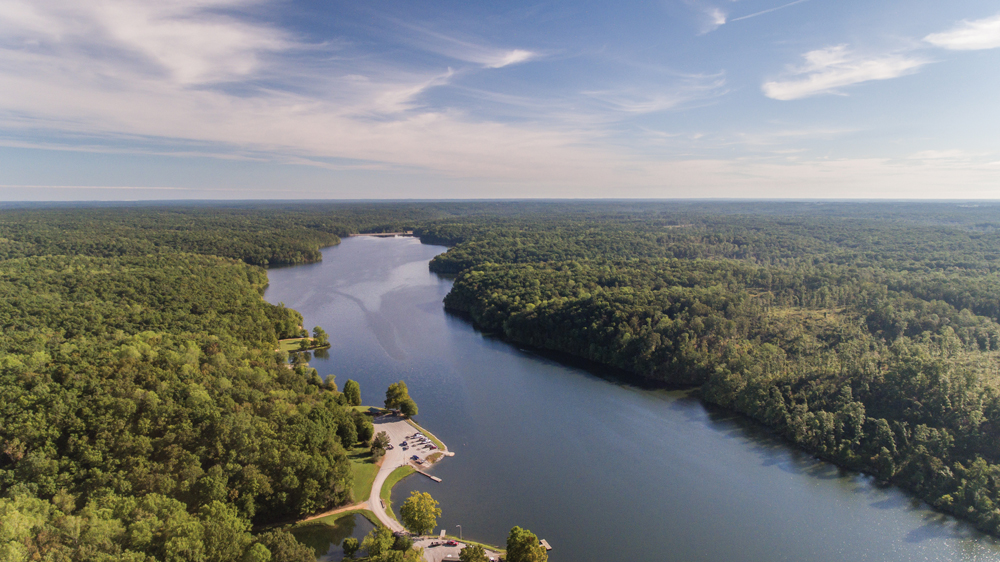
Popular spots in Lawrenceburg are the Laurel Hill Wildlife Management Area, dirt bike trails

The Crockett Theater
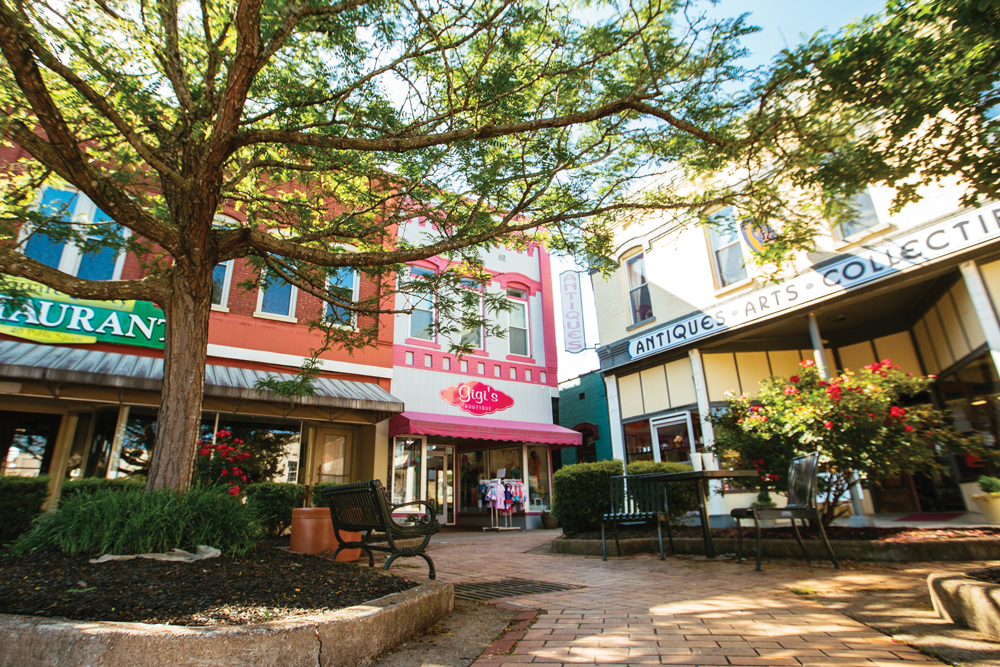
The Downtown Lawrenceburg Square
“They knew they needed to be in the Southeast,” he said. “They narrowed their search to Georgia, North Carolina and Tennessee. When they realized the flexibility of our inventory, including a spec building we built in 2014, they saw this as a place from which they could serve the Southeastern market.”
Other factors—including the local technical college, an experienced manufacturing workforce, ease of doing business and a close partnership with the Tennessee Department of Economic and Community Development (TNECD)—sealed the deal.
Now Craig is investing again, and Egly says the expansion of an existing business is emblematic of what’s happening not just in Lawrence County, but throughout Tennessee.
According to data from TNECD, 56% of the 8,086 total jobs committed statewide in 2025 were in rural Tennessee. Also in 2025:
- 55% of the 75 total projects landed by TNECD went to rural communities.
- 33% of the $11.2 billion in capital investment statewide went to rural areas.
- 28 of the 41 counties that landed economic development projects were rural.

“We compete with Columbia, South Carolina, and Atlanta, Georgia, for projects and win them. We are a can-do kind of team.”
— Ryan Egly, President & CEO, Lawrence County Chamber of Commerce
A Comeback for the Ages
Of Tennessee’s 17 micropolitan statistical areas, 10 of them recorded multiple project wins over the past five years, led by Cookeville’s 14 corporate facility deals, according to the Conway Projects Database of Site Selection magazine. Other top-performing small towns in Tennessee include Greeneville, McMinnville, Tullahoma-Manchester and Lawrenceburg.
When I asked Egly why small towns in Tennessee outperform many larger cities, he said it came down to one trait: resilience. “I was born and raised here,” he said. “In the early 2000s, manufacturing got hit hard. We lost a lot of jobs. My growing up here was pretty rough. We were told that, once we graduated from high school, we should leave, go to college and never come back. But around 2013-2014, during my final year of college, some development started to come this way.”
It wasn’t by accident, he noted. Community leaders were intentional. “They put good structure in place,” he said. “They realized that tourism could be an economic driver. They realized the value of having a spec building. They also realized we needed to expand our professional staff. We were a distressed community, and yet stuff was still happening within our labor shed.”
The turning point for Lawrenceburg came when “we shifted and changed the culture,” Egly said. “We realized we could go after more projects. The town realized it needed to diversify its base of industry. We went all in on metals. From welding to CNC machining, we now lead the state in metalworking talent. We know how to make things with metal.”
It was a long road to recovery after Murray closed its lawnmower plant in Lawrenceburg on September 30, 2005; but the comeback continues today, said Egly. “Murray made bicycles and lawnmowers here from the late 1950s to the early 2000s. At one point, they employed 3,000 workers in a town of 10,000 people,” he noted. “A lot of the businesses that survived the closure of Murray are still around today.”
And the wins keep coming. Over the last three years, Lawrence County has landed significant corporate facility investments from Old South Wood, Blickman Industries, Magna International, Flexco Products, Cabinets To Go and Lumber Liquidators.
Even though Lawrenceburg is 33 miles from an interstate highway, Egly says manufacturers and distributors like the sweet spot that Lawrenceburg occupies 75 miles south of Nashville and 70 miles north of Huntsville, Alabama. “We compete with Columbia, South Carolina, and Atlanta, Georgia, for projects and win them,” he said. “We are about to launch our own Visit Lawrenceburg brand. We are a can-do kind of team.”
Cookeville’s Recipe for Wins
Another leader who shares that can-do spirit and enthusiasm is Laurin Wheaton, mayor of Cookeville, the top-performing micro in Tennessee. Cookeville is a city of 38,184 people in Putnam County that anchors a four-county micro area of 152,000 residents in Middle Tennessee. It’s also one of the fastest-growing micros in the U.S.
“We are the biggest city on Interstate 40 between Lebanon and Knoxville,” said Wheaton, a nurse practitioner who is originally from Jackson, Mississippi. “We are called the Hub City. Seven counties touch ours. More than 100,000 people come into the city for shopping, education or recreation.”
Many more will be coming once Target and The Home Depot open their doors at a new shopping center in Cookeville this October. “This has been a request by residents since 2013,” the mayor said. “I’ve worked on this project since 2022. This will have the biggest economic impact on our community since I’ve been here. It was not an easy win at all. It was truly a partnership between the city, county, chamber and Tennessee Department of Transportation. This will completely change the landscape of Cookeville.”
Over the last five years, Cookeville has been a magnet for projects. U.S. Pillars, Anatolia Granite and Marble, Identity Group Holdings, and Sirius Cabinets and Millworks are just a few of the companies that have expanded operations in Putnam County.
The latest announcement came on May 1, when Florida-based Light Electric Vehicle (LEV) Manufacturing announced a $7 million investment in Algood to create 288 jobs making e-bikes in a 100,000-square-foot facility that will become the firm’s central hub for assembly and distribution of Rad Power Bikes products.
“If we think your project is a great fit for Cookeville, we look to find a way to partner with you to get it done. Whether it’s infrastructure, roads, sidewalks, utilities, TIF funding, etc., we know what we have and what we don’t have, and we will work with you.”
— Laurin Wheaton, Mayor of Cookeville

Being on I-40 and Highway 111 is a huge draw for these companies, says Wheaton. “Cookeville is blessed to have two major highways,” she noted. “Knoxville is 75 minutes away. Mount Juliet is one hour. Our residents drive from Cookeville to these cities to shop. That takes away our sales tax revenue. Having Target and The Home Depot come here will change that dramatically.”
She added that factory owners love doing business in Putnam County because “all four cities in the county work together to get projects done. Our chamber and economic development department work together to land capital investment projects from businesses. We are at a point in our development where we can be more selective for higher-quality, higher-paying jobs.”
When I asked her to share Cookeville’s best-kept secret, she did not hesitate: “It’s our ‘Yes’ attitude. If we think your project is a great fit for Cookeville, we look to find a way to partner with you to get it done. Whether it’s infrastructure, roads, sidewalks, utilities, TIF funding, etc., we know what we have and what we don’t have, and we will work with you.”
Even though Cookeville is growing rapidly, Wheaton said, “We know where we’re going as a community. We want to be very strategic in the way we’re growing. We’re constantly planning for the future.”
Supporting Rural Development
So is the state of Tennessee. That is why TNECD recently announced its second cohort for the Tennessee Rural Fellowship. On May 7, the department selected Julia Briggs for Cocke County, Faith Cook for Lake County, Tierney Macon for Lauderdale County, Noah Morrison for Carter County and Kylee Scarbrough for Unicoi County.
The fellowship is a hands-on program focused on helping the state’s distressed and at-risk communities move key projects forward while developing future leaders in economic and community development. “Our rural communities are the backbone of the state, and we look forward to continuing to support these communities through this fellowship for the next two years,” said Brooxie Carlton, assistant commissioner of Community and Rural Development for TNECD.
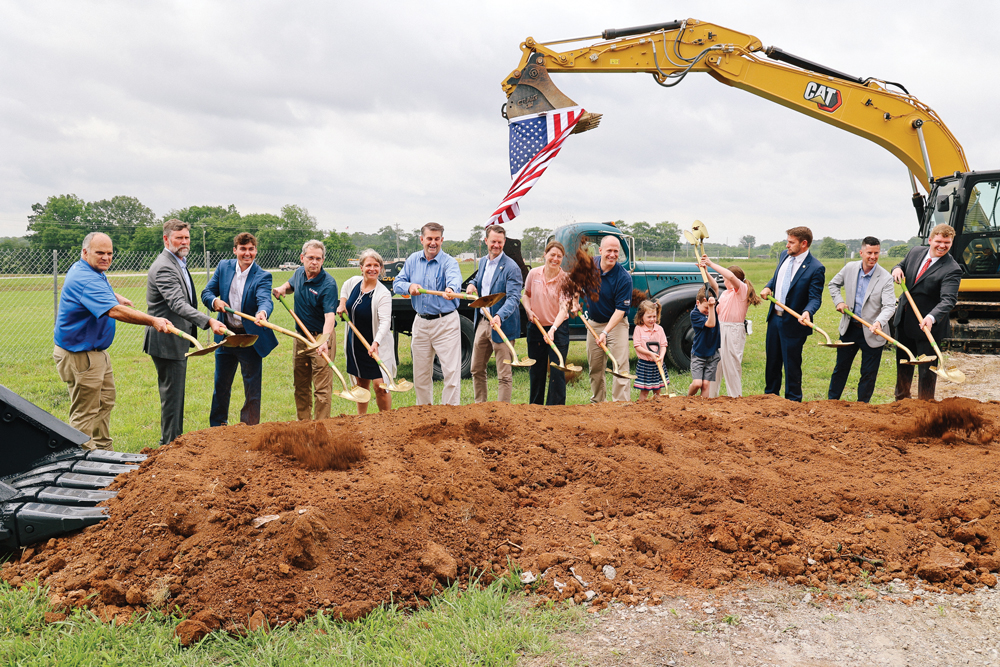
Craig Manufacturing breaks ground on its facility in Lawrenceburg. On hand were Deputy Governor and TNECD Commissioner Stuart C. McWhorter (center) and Lawrence County Chamber CEO Ryan Egly (far right).
Photo courtesy of Lawrence County Chamber of Commerce
Also, to help spur rural economic development, TNECD recently selected Jackson, Jefferson and Lawrence counties to participate in a new round of the Select Tennessee Property Evaluation Program.
“Tennessee holds a clear competitive edge in a company’s site selection process because we can offer shovel-ready sites that let businesses hit the ground running,” Deputy Gov. and TNECD Commissioner Stuart C. McWhorter said. “As Governor Lee’s administration comes to a close, his commitment to rural Tennessee will leave a lasting impact.”