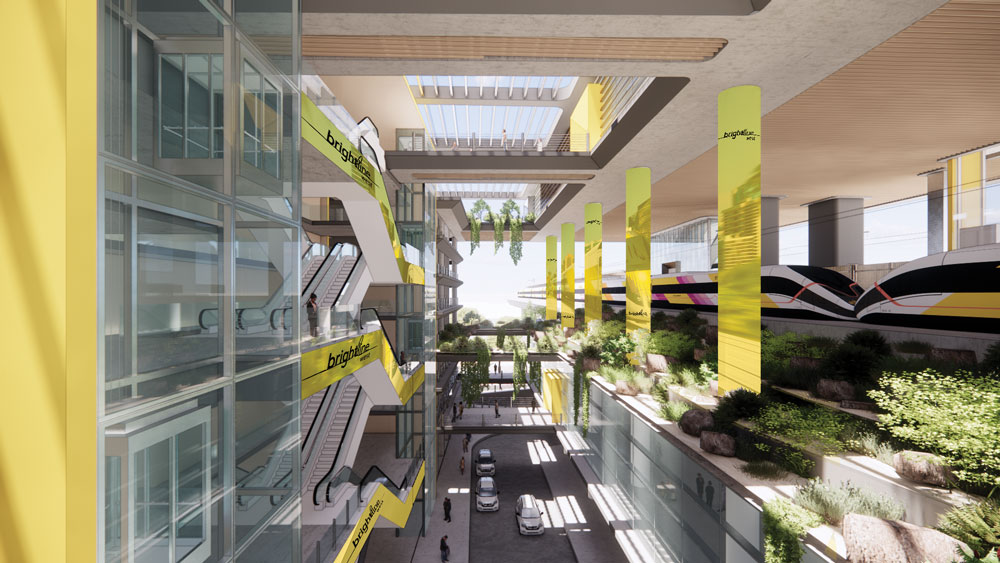
From Rancho Cucamonga to Barstow, the mindset is the same: Go BIG or go home.
To be “Bernardino” means, literally, to be “as brave or as bold as a bear.” In San Bernardino County in Southern California, one could say that a series of transportation infrastructure projects are more than living up to the county name.
Whether it is the massive Barstow International Gateway project by BNSF Railway in the northern part of the county or the confluence of Brightline West and Cucamonga Station in rapidly rising Rancho Cucamonga, multimodal transit is the wave of the future in this industrial mecca of the Inland Empire — and there’s nothing timid about it.
For a 20,000 square-mile county of 2.2 million people — stretching from the eastern outskirts of Los Angeles to the Nevada and Arizona border — these 21st century infrastructure projects promise to move people, freight and commerce faster and more efficiently than ever; and the world is taking notice.
Derek Armstrong, director of San Bernardino County’s Economic Development Department, calls these investments nothing short of transformational for a county that has become the North American epicenter for e-commerce fulfillment centers and other logistics users.
“Over the last decade, the county has really grown in logistics with all the e-commerce business,” he says. “What we’ve seen is a labor force that has grown to almost a million people. We are seeing a workforce that is younger than what is found in most other areas. Our county is a much more viable place to start a family, and multimodal projects like these are a big reason why.”
Major new railway infrastructure projects lead the way. The new Cucamonga Station will enable passengers to embark on the Brightline West high-speed passenger train in Rancho Cucamonga and take it all the way to Las Vegas in about two hours. The line also features stops in Apple Valley-Hesperia in the High Desert.

“We are working to create a regional destination in the heart of Southern California.”
— Rancho Cucamonga City Manager Elisa Cox
“This is one of the cornerstones of regional mobility connecting people in San Bernardino County’s cities to Las Vegas,” says Armstrong. “It connects people throughout the region seamlessly. It provides congestion relief by removing 3 million cars from the I-15 Corridor each year; and it creates a bunch of jobs — about 35,000 construction jobs and another 1,000 permanent jobs upon completion.”
The estimated economic impact of Brightline West is $10 billion, Armstrong notes.
Making Vegas a Day Trip
Elisa Cox, city manager of Rancho Cucamonga, says the impact of Brightline West and Cucamonga Station on her community of 180,000 people is unlike anything they’ve seen before. “This station is already a stop for Omnitrans [the county’s public transit agency] and connects people to Ontario International Airport,” says Cox. “The big addition is going to be the inclusion of the Brightline West station. When that is finished, it will include places for dining, last-mile travel options and other amenities for residents and visitors alike. State grant money will go toward supplying a zero-emissions shuttle from the station to the airport, area hotels and Victoria Gardens [an award-winning mixed-use development and outdoor shopping destination in Rancho Cucamonga]. We are working to create a regional destination in the heart of Southern California.”
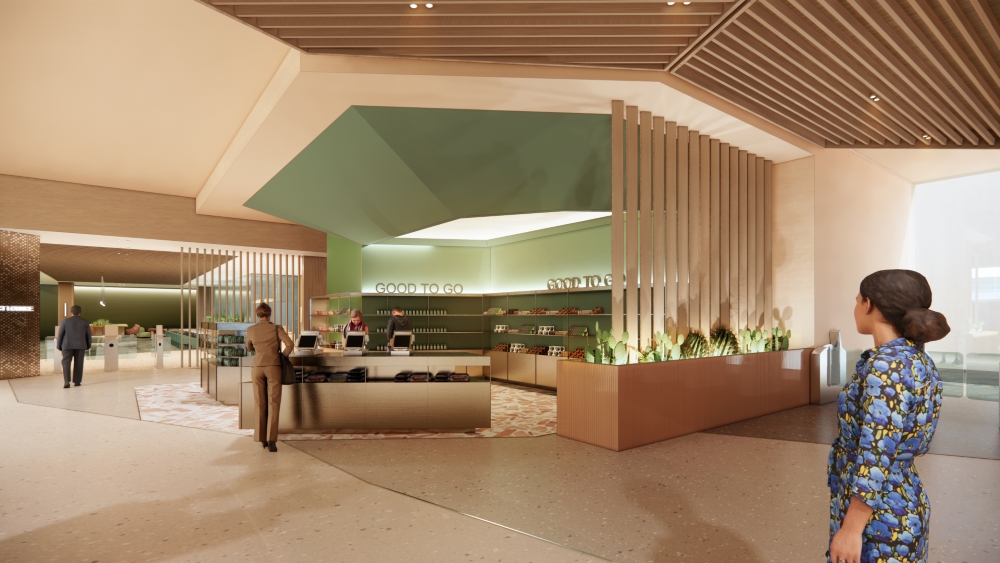
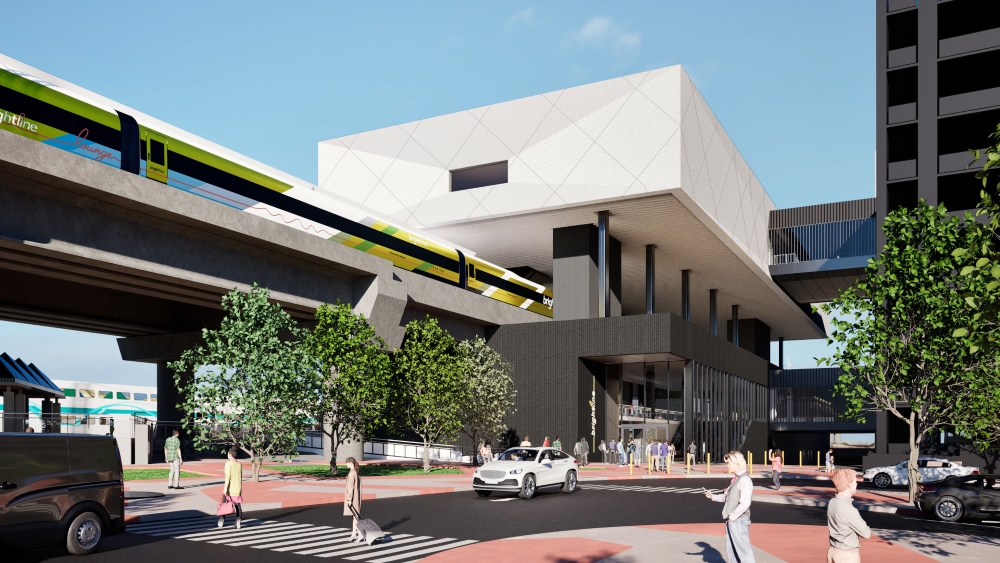

According to state officials and project developers, Brightline West service is scheduled to start in early 2029, with some test tracks ready for early deployment by the time of the 2028 Summer Olympic Games in Los Angeles. “Passengers will be able to go from Los Angeles and Rancho Cucamonga to Hesperia-Apple Valley and then on to Las Vegas,” says Cox. “At a trip time of two hours, that is much faster than flying or driving. Your bags meet you at your hotel. If you were to drive, depending on traffic, it could take three to five hours.”
Cox says Cucamonga Station will be unique because it will be the only station in the country to offer high-speed passenger rail, local commuter rail, direct connections to the airport, a shuttle bus service and a bicycle path connection. “You can park at our station and take advantage of any of these other travel options,” she adds. “Brightline also has plans to add a seven-story parking garage.”
Cox says construction of BL West will add billions in economic activity to the county. “We will see $300 million in direct station investment here and up to $43 million in annual economic output in ancillary spending in the region,” she says. “In addition, there will be 11,000 union jobs created in construction throughout the county, including 700 in Rancho Cucamonga. We will also see 300 new permanent jobs in the city.”
Infrastructure like this attracts corporate investors too, says Cox, citing a $500 million investment by Coca-Cola Bottling in Rancho Cucamonga — a project that is expanding an existing plant of 125,000 sq. ft. into a 620,000-sq.-ft. factory. “It will be the first major bottling plant they have done west of the Mississippi, and the first in California in decades,” says Cox.
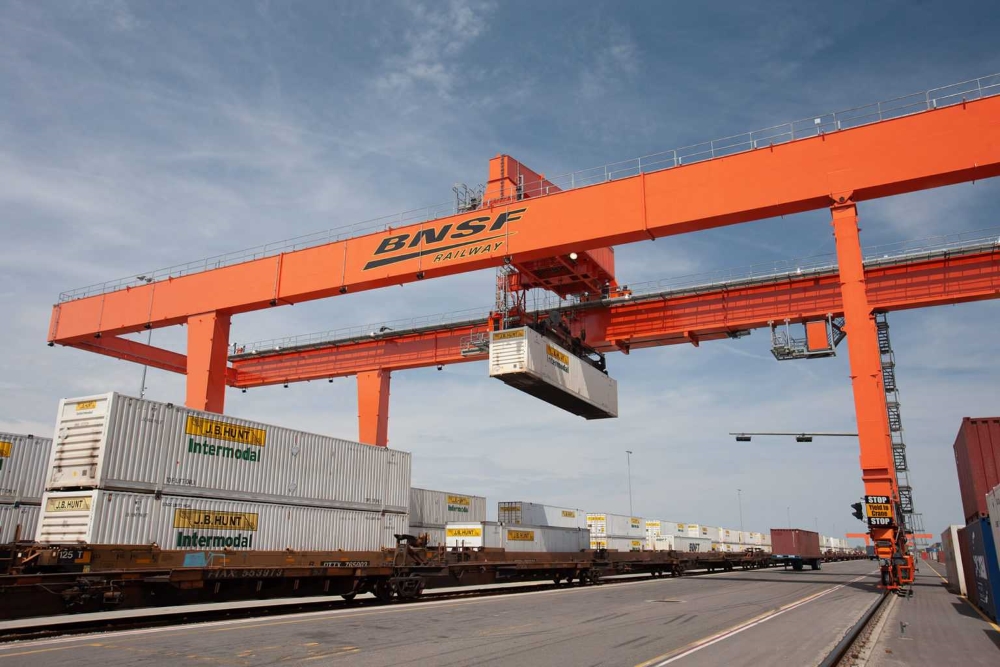
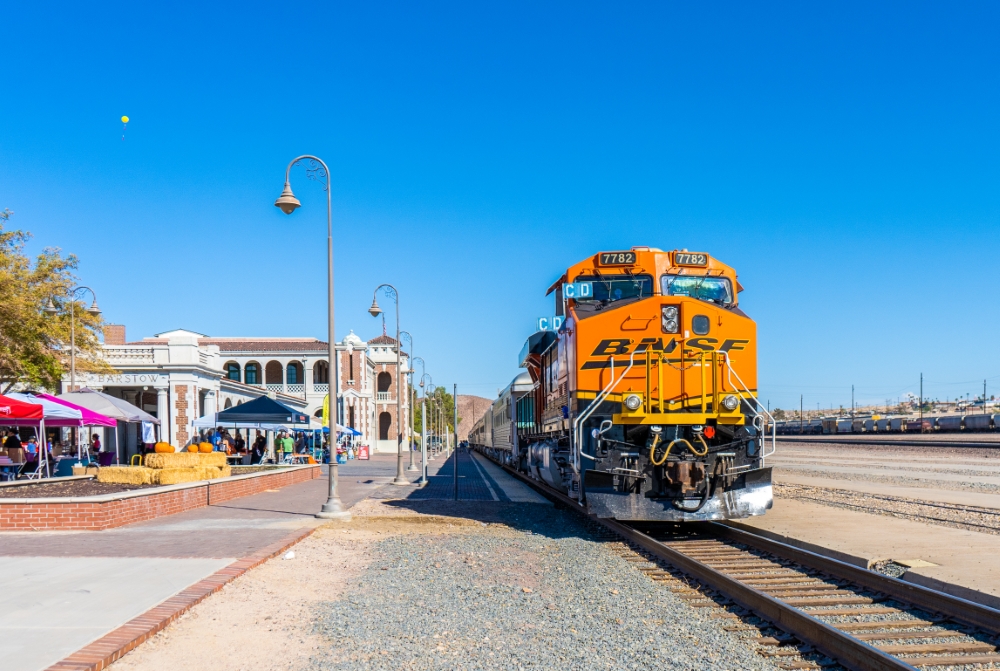
BNSF Railway is investing $1.5 billion to build out a 4,500-acre multimodal rail yard in Barstow, California.
Photos courtesy of BNSF Railway
Coca-Cola Making History
Armstrong calls the Coke project “an historic investment for the county. They are taking their existing facility and turning it into a state-of-the-art factory,” he says. “This is the first new Coke plant in California in 50 years. It adds 110 jobs and brings their total workforce to more than 500. They will produce over 30 million cases of Coke each year. The plant will have drought-resistant landscaping and a state-of-the-art water system. It will be one of the most modern bottling plants in the world.”
Some 75 miles to the northeast, you’ll find another game-changing project. It is called the Barstow International Gateway (BIG) intermodal hub, a project of BNSF Railway, which operates one of the largest freight railroad networks in the country, with 32,500 miles of rail across the western two-thirds of the U.S.
Upon completion, the 4,500-acre integrated rail facility on the west side of Barstow will include a rail yard and warehouses for transloading freight from international containers to domestic containers.
Lena Kent, general director of public affairs for BNSF, says the project is all about streamlining freight transport across the West. “BIG will allow the direct transfer of containers from ships at the Ports of Los Angeles and Long Beach to trains for transport through the Alameda Corridor onto the BNSF mainline up to Barstow,” Kent says. “Once the containers reach BIG, they will be processed at the facility using cargo-handling equipment powered by clean energy and then staged and loaded onto trains moving east via BNSF’s network across the nation. Westbound freight will similarly be processed at the facility to bring trains more efficiently to the ports and other California terminals.”
BNSF is investing $1.5 billion and expects to generate a statewide economic impact of $5.4 billion, including $3.4 billion in San Bernardino County. Barstow City Manager Rochelle Clayton says that BIG will be a boon to her city.
“The project is expected to significantly impact our community by creating at least 5,000 new full-time jobs with wages that exceed current average salaries in the region,” Clayton says. “In addition, the project will bring thousands of construction jobs that will boost spending in our community during buildout. This is the largest investment Barstow has seen in decades, and we anticipate it to act as a catalyst to invigorate future growth across multiple sectors.”
Clayton says that BIG will position Barstow to be a global leader in freight logistics. “Sitting at the crossroads of I-15 and I-40, Barstow is within an 8-hour drive of major population centers in the West including Las Vegas, Los Angeles, Phoenix, Reno, Sacramento, Salt Lake City, San Diego, San Francisco and Tucson,” she notes. “In addition to the BIG campus, the proposed 2048 Barstow General Plan designates nearly 9,000 additional acres of land adjacent to BIG, which will help our community attract logistics and industrial development opportunities in the future. As our ‘Hub of the West’ brand depicts, this investment will quickly establish Barstow as a major player and job center in the logistics sector.”
Targeting Businesses Big and Small
With 60 million travelers passing through Barstow every year, there is a prime opportunity to grow the local economy, says Clayton. “Best known for our location along historic Route 66, Barstow is home to the Army National Training Center at Fort Irwin and the Marine Corp Logistics Base,” she says. “Barstow also benefits from travel related to nearby Edwards Air Force Base, the diverse collection of national parks and preserves that sit within a short drive of the city, and its strategic location as the gateway to greater Los Angeles and Southern California.”
She adds that more than 40,000 skilled workers in the transportation, manufacturing and construction industries reside within a 30-minute radius. Expand that radius to 60 minutes and employers can reach 146,000 skilled workers, she says.
Armstrong says he expects BIG to unleash a whole new wave of economic development in the eastern portion of the county. “I have experienced firsthand from talking to companies overseas that there will be benefits from it,” he says. “It will be the largest multimodal park in the country and maybe the world for an inland port. It will enable companies to get goods to market much faster and provide more value than ever before.”
Armstrong says that success stories like Barstow and Rancho Cucamonga are just the beginning for San Bernardino County. He points to major airport industrial parks in San Bernardino and Ontario, where ONT is building a 3-million-sq.-ft. air cargo hub.
But he also wants entrepreneurs to know that San Bernardino County supports small businesses too. On May 29, 2025, the county launched its BizHUUB online platform to provide entrepreneurs with free online resources to help grow their businesses. The new website gives business owners access to educational webinars and expert consultants, among other resources.
“We are committed to growing and supporting our small business community,” says Amrstrong. “We hear about the constant challenges business owners face. It can be overwhelming. That is why we’re making this important in-depth resource available to our small business community that they can access on their timeline.”
Besides providing helpful tips and business guidance, BizHUUB gives entrepreneurs access to a funding directory, a learning library with educational courses, an events calendar and an ecosystem map via its Community Resource Directory. Plus, BizHUUB is accessible in English and Spanish.
In any language, that’s a bold move.
This Investment Profile was prepared under the auspices of San Bernardino County. For more information, contact the County’s Economic Development Department at 909-387-4460. On the web, go to www.SelectSBCounty.com.