
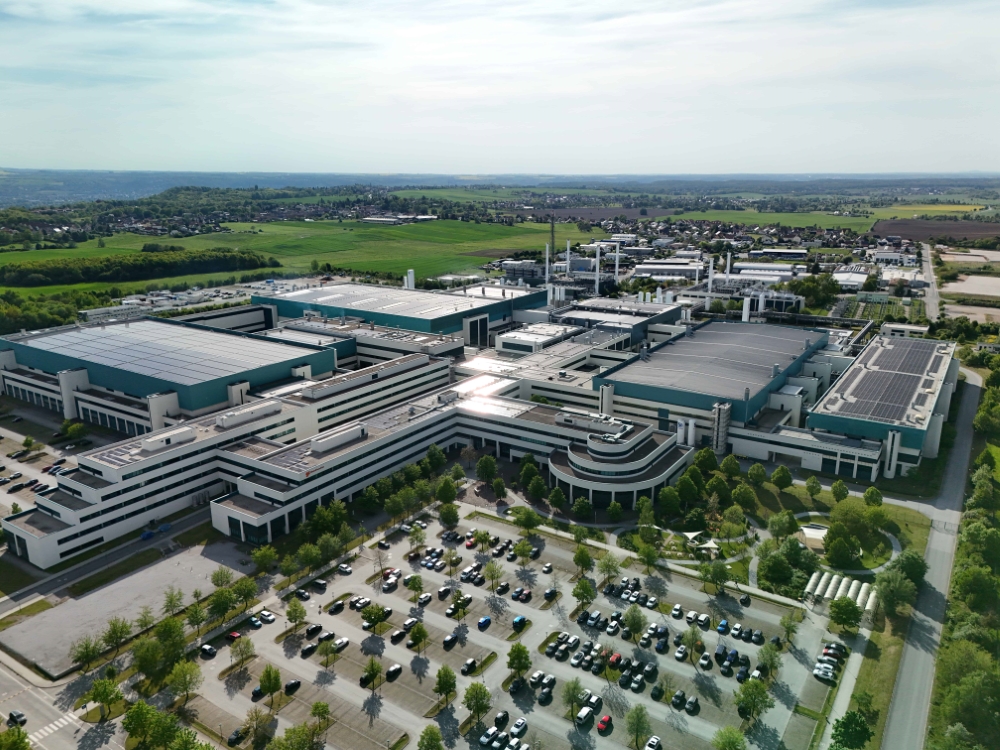
“Semiconductors are essential to building the space and artificial intelligence infrastructure that will define our future,” said Texas Governor Greg Abbott on December 17 at the ribbon-cutting ceremony for Texas Instruments’ new 300 mm semiconductor wafer fabrication facility in Sherman. “Today’s announcement by Texas Instruments helps Texas to expand our No. 1 ranking and helps lead the semiconductor manufacturing boom we have here in Texas.”
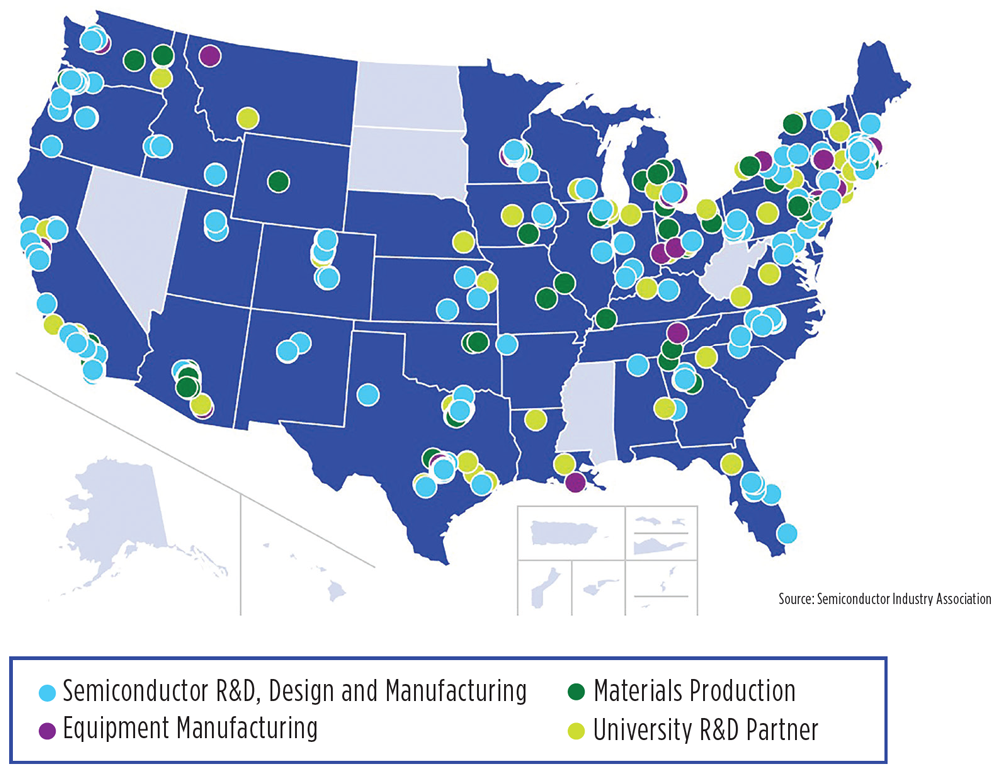
It was a fitting way to close out 2025 for the Lone Star State, which in addition to Texas Instruments is home to Samsung’s semiconductor facilities in Austin and Taylor and operations of GlobalWafers, Infineon Technologies, Silicon Labs and several other industry players.
Looking ahead, the new TI fab in Texas is just the start. The company foresees investing up to $40 billion in four fabs in Sherman in the coming years.
That’s just the tip of the iceberg where semiconductor industry forecasts are concerned. World Semiconductor Trade Statistics (WSTS), a leading source of market data and forecasts for the semiconductor industry, forecasts the global semiconductor market to grow by more than 25% in 2026, reaching $975 billion, according to its Autumn 2025 forecast.
Semiconductor sales also point to growth momentum. In early December, the Semiconductor Industry Association (SIA) announced global semiconductor sales were $72.7 billion during the month of October 2025, an increase of 4.7% compared to the September 2025 total of $69.5 billion and 27.2% more than the October 2024 total of $57.2 billion (figures from WSTS).
“Global semiconductor sales continued to increase in October, topping September’s results and far outpacing October of last year,” said John Neuffer, SIA president and CEO. “Growth continues to be driven by sales into the Americas and Asia Pacific.”
“Growth is expected across all regions and product categories,” WSTS said in its forecast. “Memory and Logic are again projected to lead, both increasing by over 30% year over year. Most other product categories are expected to continue their gradual recovery, expanding at a more moderate pace. Regionally, all major markets are expected to expand. The Americas and Asia Pacific remain the strongest contributors, while Europe and Japan are forecast to see low double-digit growth.”
Sprinting Forward in Germany
Notwithstanding that European forecast, one global giant is adding on to the double-digit billions of euros it’s invested in Germany.
GlobalFoundries (GF) in October announced plans to invest €1.1 billion to expand its manufacturing capabilities at its site in Dresden, Germany. The investment will enable a production capacity increase to more than 1 million wafers per year by the end of 2028, making it the largest site of its kind in Europe, the company said.
GF’s Dresden site already is the largest in Europe, employing around 3,000 people. GF recently joined the “Made for Germany” initiative, a coalition of companies demonstrating long-term commitment to Germany through major industrial investment. The company has invested more than €10 billion at its Dresden site since 2009.
Known as Project SPRINT, the plan is expected to be supported by the German federal government and the State of Saxony under the framework of the European Chips Act, GF said.
“The SPRINT project is a commitment to Germany as an industrial and innovation location — and above all to the sovereignty of our country and Europe,” said German Chancellor Friedrich Merz during a visit to GF Dresden. “The investment in chip manufacturing in Dresden sends a signal that Germany wants to play an active role in shaping the development of the global semiconductor market. Germany already plays a leading role in microelectronics in Europe. With its national microelectronics strategy, the federal government is setting the course for further expanding this strength.”
“Semiconductors are the gateway between the real and digital worlds,” said Cedrik Neike, member of the managing board of Siemens AG and CEO Digital. “They form the backbone of modern industrial economies. GlobalFoundries’ investment strengthens the European semiconductor ecosystem. Together we are building a robust foundation for sustained innovation and global competitiveness to accelerate our customers’ digital transformation.”
The transformation continues and evolves: Siemens’ Neike and GF’s Breen got together again in Munich in December to ink a new strategic collaboration to “leverage each company’s complementary AI-based capabilities to enhance performance of semiconductor manufacturing and advanced industries — making operations more efficient, secure and reliable.” The new agreement focuses on “automation technologies for semiconductor fabrication (fab automation), electrification, digital solutions and software ranging from chip development to product lifecycle management.”
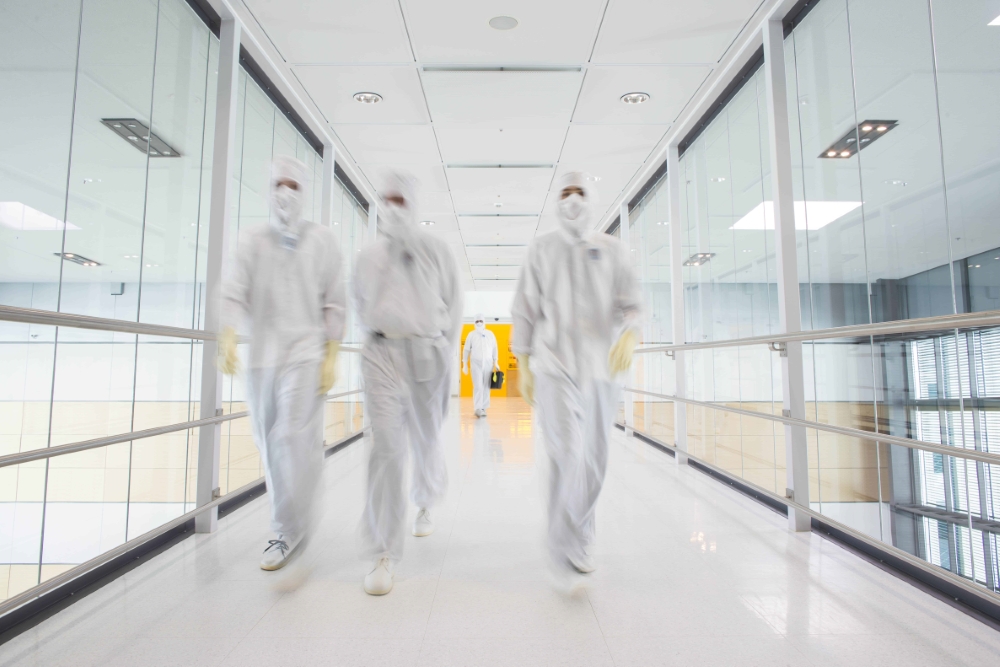
Photo courtesy of GlobalFoundries
How embedded are chips in the entire industrial economy? Search for the word “semiconductor” in Site Selection’s Conway Projects Database and it spits out 330 projects since January 2024 somehow related to the chip sector, from the $6.6 billion Korea Zinc investment just announced in Clarksville, Tennessee, in December to Jenoptik’s own €100 million facility investment in Dresden followed by a $10.7 million investment in its hometown of Jena in the German state of Thuringia.
“Recent disruptions in the automotive sector underscore just how vulnerable global chip supply chains truly are,” said Tim Breen, CEO of GlobalFoundries. “Our planned expansion in Dresden is yet another step in GF’s strategy to address these challenges head-on and deliver on our commitment to support Europe’s need for secure supply chains and differentiated technologies. By scaling our manufacturing footprint in Europe, in the U.S. and around the world, GF is reinforcing its role as a resilient and trusted partner to customers in critical industries and building a foundation for the next wave of innovation as physical AI becomes reality.”
“GlobalFoundries’ expansion in Dresden strengthens the semiconductor ecosystem, paving the way for advanced solutions in the automotive sector,” said Michael Budde, president of Mobility Electronics, Robert Bosch GmbH. “GF’s technologies empower the performance, safety and connectivity essential for next-generation mobility. This investment affirms leadership in automotive innovation and strengthens the Silicon Saxony region.”