
by SAVANNAH YAWN
At the Port of Vinton in southwest Louisiana, a $5.9 million public investment is helping a much larger private-sector project move faster.
Through Louisiana’s FastSites program, the state is investing in site readiness work tied to Aclara Resources’ planned $277 million rare earth separation facility. According to Louisiana Economic Development, the FastSites investment is expected to be fully returned by March 31, 2028, while accelerating the project by approximately two years.
“Louisiana’s ability to operate at the speed of business has been a major advantage for this project,” Aclara U.S. Chief Financial Officer Alonso Guzman said. “The FastSites investment is helping accelerate critical site infrastructure, which allowed our team to submit our air permit application ahead of schedule and maintain strong project momentum. It also gives us an opportunity to engage the community earlier and provide meaningful insight into our facility and operations at a pace we’re extremely encouraged by.”
That is the new math of site development. The return is not measured only in land improved or infrastructure, but in time saved, risk reduced and a clearer path from location selection to construction.
For years, economic development organizations have used terms such as “shovel-ready,” “certified” and “development-ready” to signal that an industrial site had cleared basic hurdles. In many cases, that meant zoning was in place, environmental work had been completed, infrastructure was nearby and a company could move toward construction with fewer unknowns.
As advanced manufacturing, AI infrastructure, data centers, semiconductor supply chains and reshoring projects grow larger and more complex, the meaning of “ready” is changing. Companies are not only asking whether a site can work. They are asking whether it can work on their timeline.
Marybeth Flournoy, director of industrial development at Norfolk Southern, says readiness has moved well beyond basic due diligence and permitting.
“Ten years ago, a site could be labeled ‘ready’ if it had environmental work completed, zoning in place and a reasonable path to utilities,” Flournoy says. “Today, companies are looking for something much closer to certainty at speed.”
The idea of “certainty at speed” reflects a broader shift in how companies evaluate industrial sites. It is no longer enough for power capacity to exist on paper; companies want confidence that it can be delivered when their projects need it. Transportation access has to be understood early enough to shape facility design and operating models. Utilities, railroads and local jurisdictions need to be aligned before late-stage surprises threaten a project schedule.
The Race to Compress Time
That race is pushing states to invest earlier, before a prospect is at the table and before a promising site becomes a delayed project.
Louisiana’s FastSites program is one example. The state has long maintained a Certified Sites program, which documents site conditions, completes key due diligence and validates readiness through independent review. FastSites builds on that foundation by directing public investment into targeted site and infrastructure improvements before those needs become barriers to growth.
Backed by the $150 million Site Investment and Infrastructure Improvement Fund, FastSites is designed to help communities address needs such as utilities, access and rail-related improvements in advance of major project activity.
“Companies are making location decisions on tighter timelines, and they need confidence early in the process that a site can support their project requirements, infrastructure needs and construction schedule,” says Louisiana Economic Development Director of Strategic Investment Landon Lemoine.
In Georgia, the same pressure shows up in a slightly different form: speed-to-market.
Georgia Department of Economic Development Deputy Commissioner of Global Commerce Misti Martin says companies are “increasingly up against tight turnarounds,” particularly international companies that need to establish a U.S. presence quickly.
“Combined with the greater size and complexity of many newer facilities, speed-to-market has become one of the most important factors in site selection as companies aim to move quickly and at scale,” Martin says. “Companies want to know that a community has done the groundwork necessary to move a project forward quickly and with minimal risk of delay.”
Georgia’s Rural Site Development Initiative and Georgia Ready for Accelerated Development program are designed to meet that need by helping communities prepare sites before a prospect arrives. Martin says those programs make a “quantifiable difference” in meeting timelines.
“A site that has undergone due diligence, infrastructure evaluation and advance planning is far more appealing than one that requires months of site preparation work,” she says. “These programs help communities build readiness, giving site selectors confidence that projects can move quickly from announcement to groundbreaking, in any corner of the state.”
The point is not just that states are funding site work. They are trying to remove time from the development process. In an environment where delayed utility service, unresolved permitting questions or an unprepared parcel can knock a site out of contention, time has become a form of competitiveness.
Infrastructure: A Deciding Factor
The new readiness standard also demands more precision around infrastructure.
For large, power-intensive projects, Lemoine says power delivery, infrastructure capacity, speed-to-market and execution certainty are increasingly important. Companies need to know that a site can support significant energy demand, that infrastructure requirements are understood early and that public and private partners can move quickly once decisions are made.
Louisiana’s energy profile helps in that environment, but the broader point reaches beyond one state. Power nearby is not the same as power ready. For many projects, companies want a realistic schedule for delivery, a clear understanding of capacity and confidence that the required infrastructure can be scaled when needed.
Transportation access is being examined with the same urgency. Georgia’s site readiness strategy leans heavily on proximity to major infrastructure assets. Martin notes that many of the state’s RSDI recipients and GRAD-certified sites are located near major drivers, including Georgia’s two deepwater ports, the Southeast’s most extensive rail network and major interstates and highways. That proximity, she says, can make access to key infrastructure more affordable for companies.
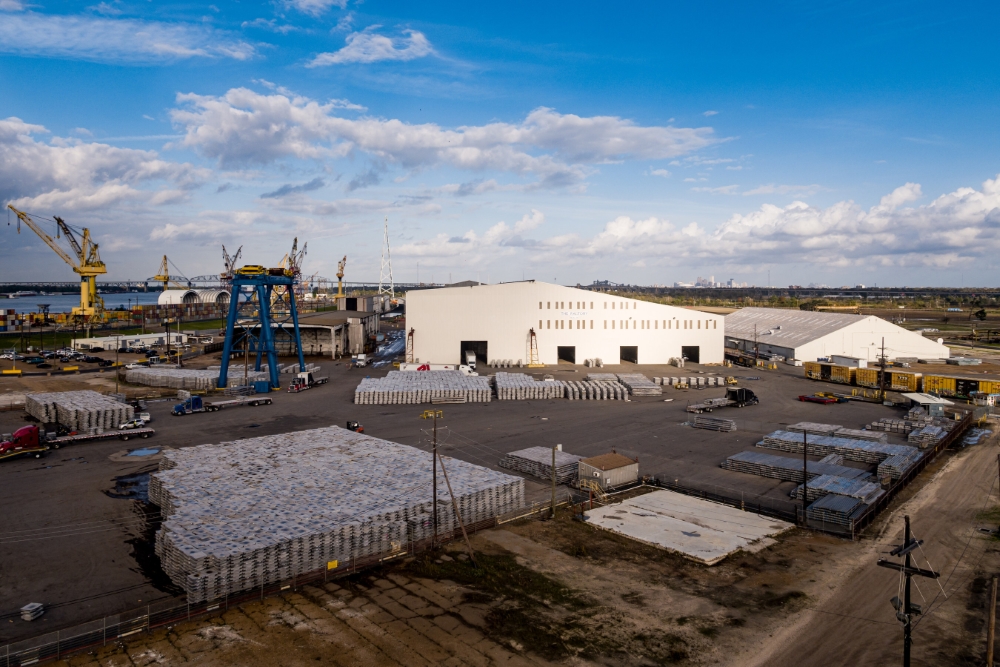
Avondale Global Gateway (AGG), in partnership with JEDCO, announced in March it had been selected to receive an investment through Louisiana Economic Development’s FastSites program. T. Parker Host has redeveloped the former Avondale Shipyard into a multimodal hub.
Photo courtesy of T. Parker Host.
North Carolina offers another example of how the definition of readiness continues to expand. Site readiness is increasingly being evaluated beyond the boundary of the parcel itself, with modern projects requiring attention to multimodal transportation, high-capacity utilities, broadband connectivity, stormwater capacity, environmental due diligence, workforce pipelines, training partnerships and housing availability.
That makes site readiness less of a real estate label and more of an operating test. A site may have acreage and zoning, but still fall short if power delivery is uncertain, workforce pipelines are undefined or transportation access cannot support the company’s operating model.
From Checklist to Coordination
With that in mind, the most important work may happen before a company ever even announces a project.
For Norfolk Southern, that means rail and supply chain partners need to be brought into site discussions earlier. When rail is added late, Flournoy says, it can become a constraint. Companies may be forced to fit service into a site plan that was not designed for it, increasing costs, stretching timelines or limiting operational efficiency.
“When rail and broader supply chain partners are engaged up front, the conversation changes completely,” Flournoy says. “Site layout, building orientation and even land assembly can be optimized around how materials will actually move. That can improve throughput, reduce truck reliance and in many cases lower long-term operating costs in a meaningful way.”
The same principle applies to utilities, permitting authorities, local governments and workforce partners. As project timelines compress and infrastructure needs grow, partner coordination is becoming a readiness factor in its own right.
Norfolk Southern’s REDI Sites program, which participates in the Site Selectors Guild’s REDI Sites framework, is intended to reduce ambiguity for both communities and companies. The program evaluates rail serviceability, infrastructure needs, site constraints and development costs while bringing railroads, utilities, developers and economic development teams into a more coordinated process.
For companies, that transparency provides a clearer picture of what it will take to develop and operate at a site. For communities, it can highlight infrastructure gaps and other improvements that may need attention before a project is ready to move forward.
When Readiness Becomes a Business Solution
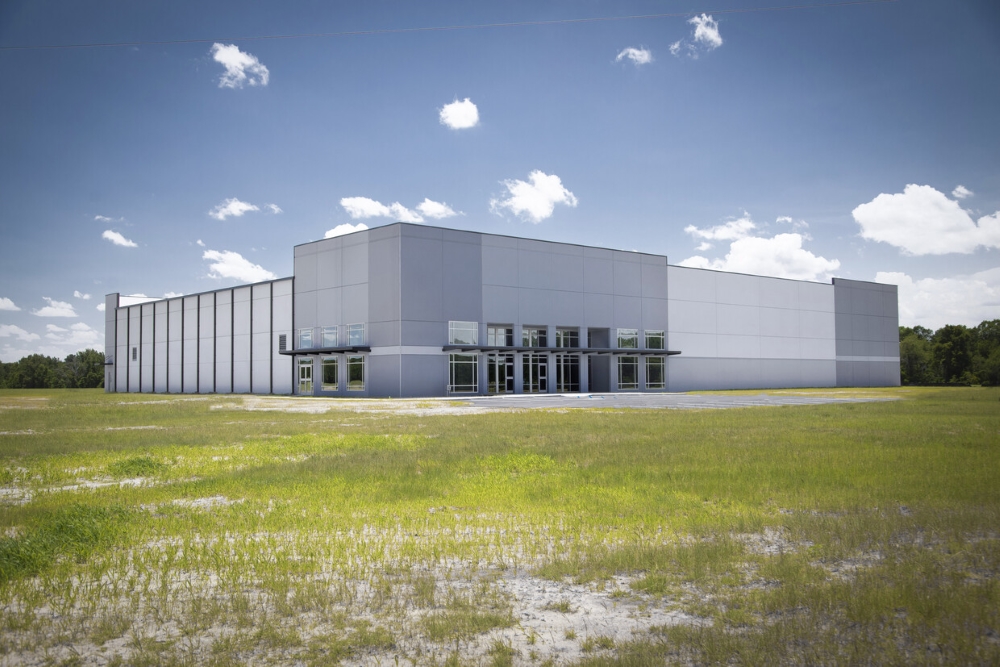
Georgia’s Preciball USA project in Screven County shows how these pieces can come together at the project level.
According to Martin, Preciball USA selected coastal Georgia for several reasons, including proximity to the city and Port of Savannah, an available and well-trained labor pool, synergies with nearby businesses and the cost savings offered by locating at the Screven County Industrial Park.
The local economic development authority used RSDI funding and the advantages of a GRAD-certified site to prepare a spec building that became Preciball USA’s new home. Martin says the move allowed the company to practically double its workforce.
For Georgia, projects such as Preciball USA illustrate how site readiness works in combination with other competitive advantages, including workforce availability, infrastructure access and connections to domestic and international markets.
Certified sites, readiness grants, utility-backed site programs and rail-served designations are not simply new labels for old work. At their best, they help communities remove uncertainty before a company ever narrows its search, making it easier to demonstrate that a site has the infrastructure, access, partnerships and preparation needed to keep a project moving.
“Sites that rise to the top tend to be the ones where the key players, utilities, rail and local government are already working together and aligned on a realistic path forward,” Flournoy says. “In many ways, that coordination is becoming just as important as the physical characteristics of the site itself.”