EDITOR’S NOTE:
The project records appearing every week in the Site Selection Project Bulletin are pulled from the
Conway Projects Database, a proprietary resource with tens of thousands of records
of corporate end-user facility investments across all industry sectors and all world
geographies. Want to look for our projects yourself? Look
here.
Upper Sandusky, Ohio
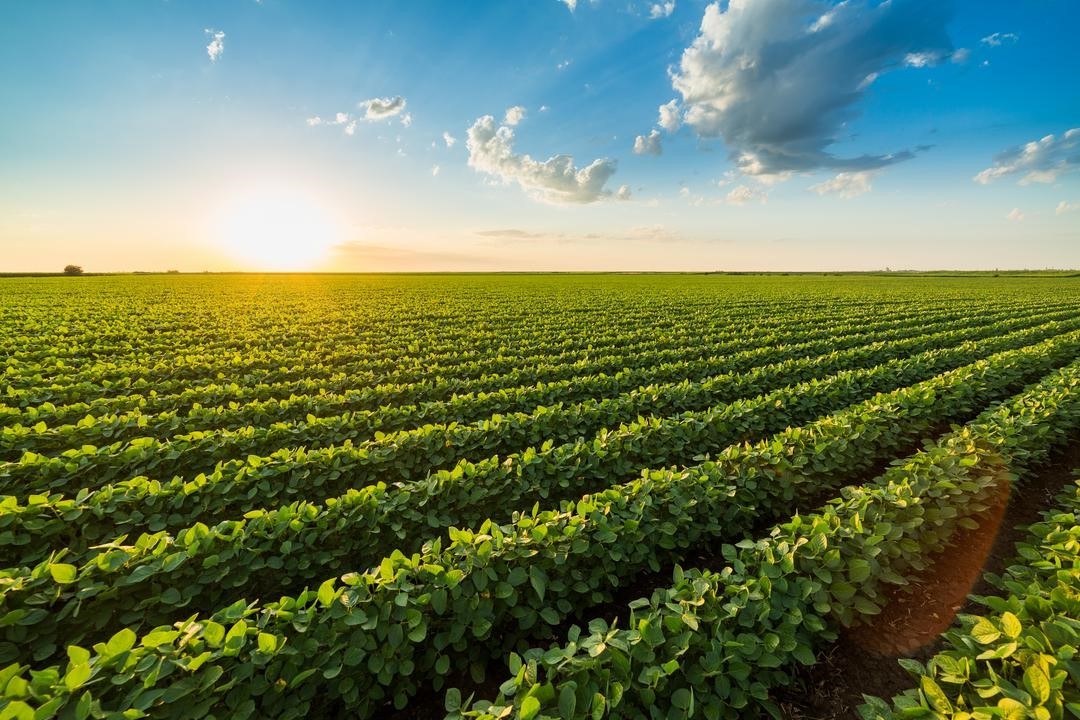
The Upper Sandusky facility will have an annual production capacity of 1.5 million metric tons of soybean oil.
Photo courtesy of Louis Dreyfus Company
Last week, Ohio Governor Mike DeWine and other state officials announced that Louis Dreyfus Company would be investing $500 million in a new soybean processing facility in Wyandot County. The new plant will be located an hour north of Columbus, Ohio, in a community selected due to the region’s history in agriculture and its qualified workforce offerings. Operations will cover soybean processing, edible oil refining, lecithin production and packaging and will create 100 new jobs in the region. The project reflects the company’s commitment to building up the North American distribution market, adding to facilities it operates in Indiana and New York. The investment also reflects the state’s growing agriculture sector and will support the over 26,000 soybean farmers in the state, whose business currently has a $5.3 billion economic impact in Ohio. Construction on the project is expected to begin in 2024.
ADVERTISEMENT
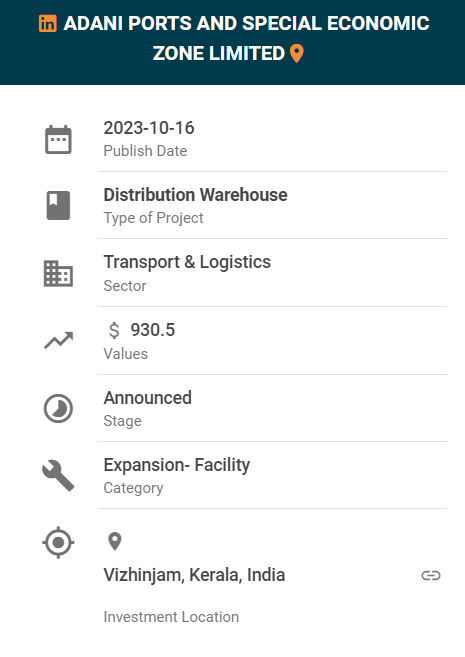
Vizhinjam, Kerala, India
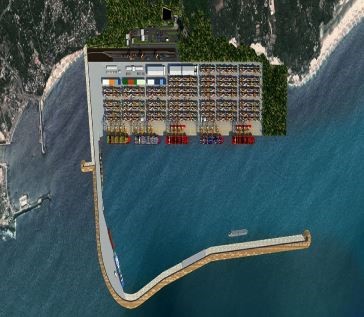
Adani Ports is pursuing India’s first deep-sea transshipment terminal at Vizhimjam Port.
Photo courtesy of Adani Ports
India is making intentional moves to expand its international maritime trade offerings. In mid-October India’s Adani Ports company introduced a new terminal at the Vizhinjam transshipment container port, the first of its kind for the country. The new deep-sea port will allow India to have the capacity to support large cargo ships that previously had to skip over India due to shallow harbors’ inability to support these vessels. Positioned on a natural channel that stretches 24 meters (nearly 80 ft.) below the surface, the new terminal will position the Vizhinjam port as a hub for international trade. By 2030, Adani Ports plans to invest $2.4 billion at the terminal to expand capacity, having invested $930.5 million in this initial phase. This asset is one the country hopes will remove roadblocks that have been faced by India for years and boost integration within the global supply chain.
ADVERTISEMENT
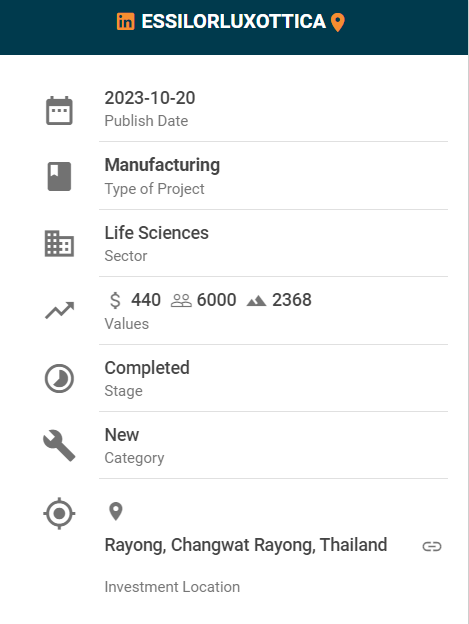
Rayong, Changwat Rayong, Thailand
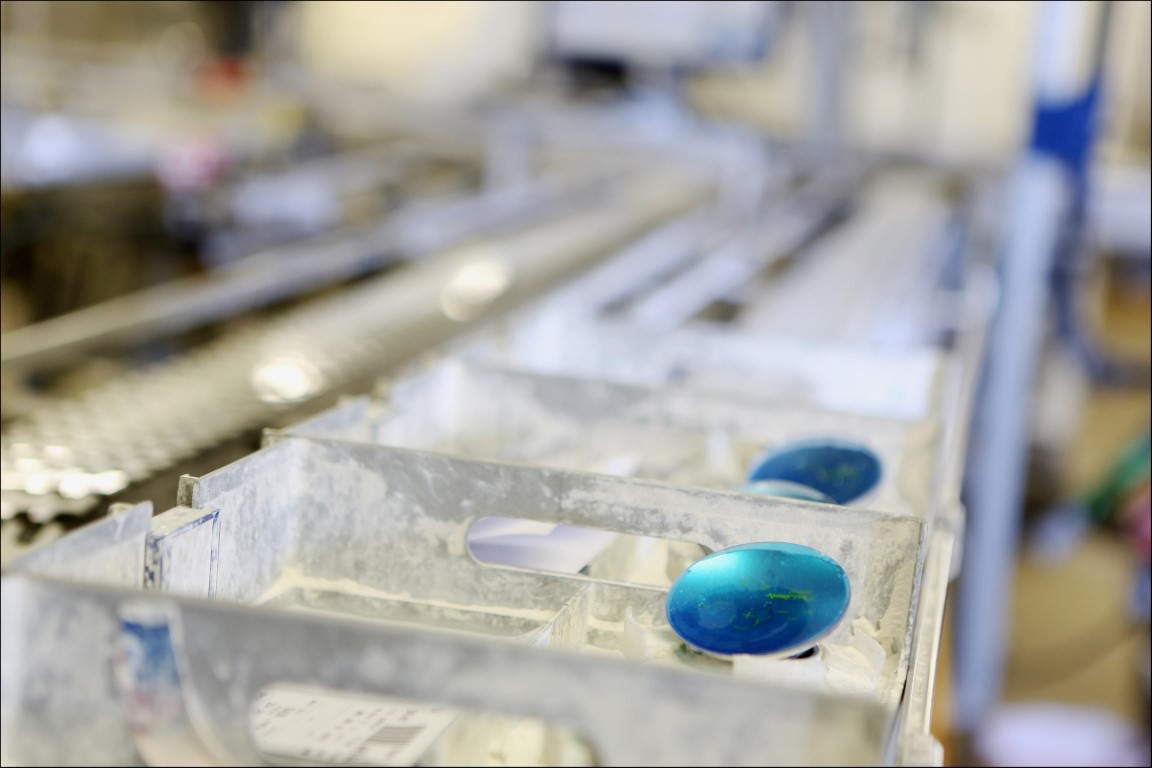
EssilorLuxottica plans for its Rayong location to serve as a prominent production center for the Asia-Pacific region.
Photo courtesy of EssilorLuxottica
If you’re a fan of the Oakley or Ray-Ban brands and you live in Southeast Asia, there’s a good chance that the eyewear was manufactured in Thailand. That chance is about to get better. EssilorLuxottica, the parent company behind the leading brands, currently operates one of its largest production facilities in the world in Thailand’s Chonburi province and inaugurated a new plant there earlier this month with a $421 million investment. Located an hour south of Chonburi in the Rayong province, the new 220,000-sq.-ft. eyewear facility is expected to become fully operational in November. The new location will produce 50,000 units per day, setting the facility up to be one of the largest manufacturing plants across the globe while creating 6,000 new jobs over the next five years. For the company, this investment reflects its efforts to strengthen its worldwide distribution network.
In support of the French governments initiatives to decarbonize mobility, Stellantis invests over $1.1 billion for the production of three new Peugeot models of hybrid cars based on the STLA One model. Investments will boost Peugeot in the European automotive flagship market segment which accounts for 30% of automotive sales. Production will start in 2029 in Mulhouse, France, roughly 300 miles Northwest of Paris, in the Mulhouse plant, the new project ensuring future stability for the 4,500 employed there.
Looking back over the past year of my chairmanship of IAMC, two key points come to mind. First is that this year was a watershed of sorts. While COVID variants still threaten our public health, we have learned how to maneuver — and actually be productive — within new rules of business and social engagement. […]