
Purchasing power is quietly shaping where companies invest across the South Central United States.
by Savannah Yawn
As cost gaps widen between U.S. metropolitan areas, purchasing power is becoming a practical factor in where companies choose to invest and grow.
In some U.S. metros, $100 barely covers the basics. In others, it still goes a long way. That difference in purchasing power shows up in hiring conversations, housing availability, employee turnover and long-term operating costs.
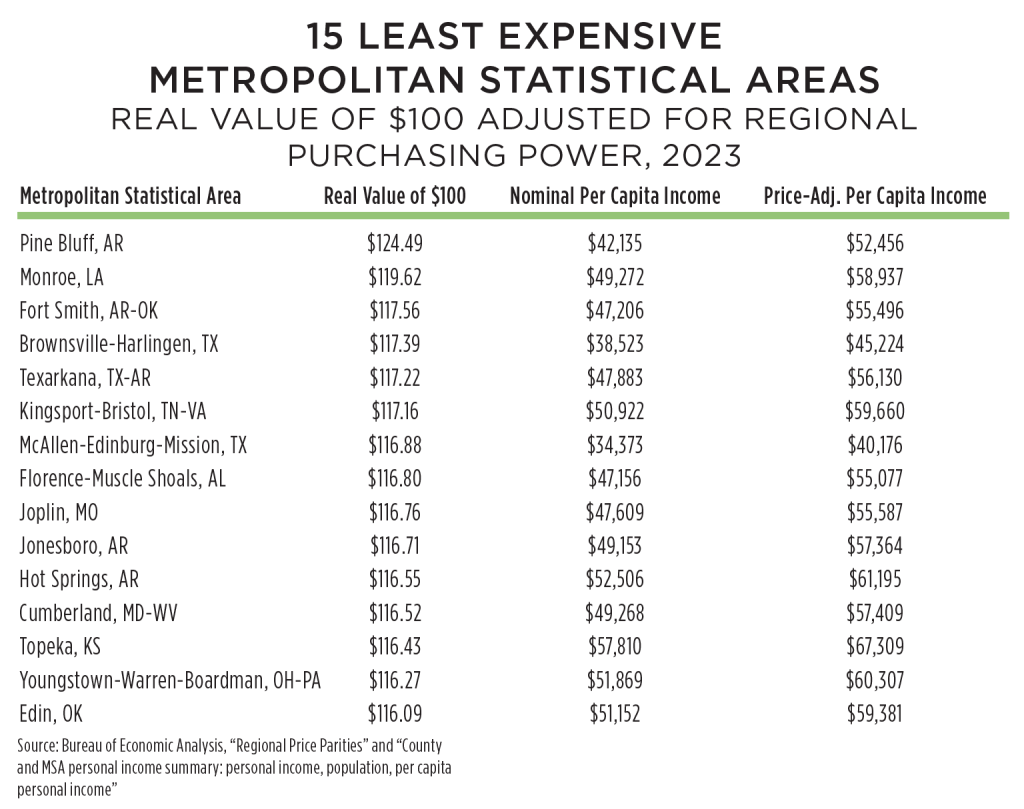
New purchasing-power data based on regional price parities from the Bureau of Economic Analysis, analyzed by the Tax Foundation, puts real numbers to that gap. In 2023, the real value of $100 in the San Francisco–Oakland–Berkeley metro area was $84.58. In Pine Bluff, Arkansas, that same $100 bought $124.49 worth of goods and services, representing a nearly 50% difference in purchasing power between two U.S. metros.
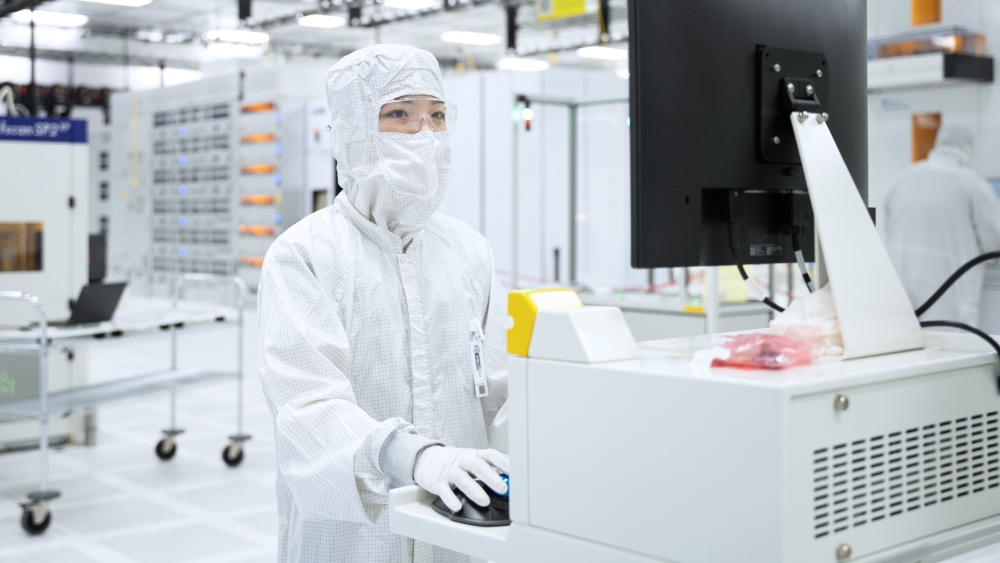
Photo courtesy of Texas Instruments
Several of the nation’s more affordable metropolitan areas are concentrated in Arkansas, Louisiana, Oklahoma and Texas. Wages in these markets may appear lower at first glance, but higher purchasing power often means stronger real incomes and leaner operating costs. As inflation lingers and housing constraints continue to reshape labor availability in coastal markets, purchasing power increasingly becomes less of a lifestyle incentive and more of an operating condition that determines how far both paychecks and capital investments can stretch.
That dynamic is playing out across the South Central United States.
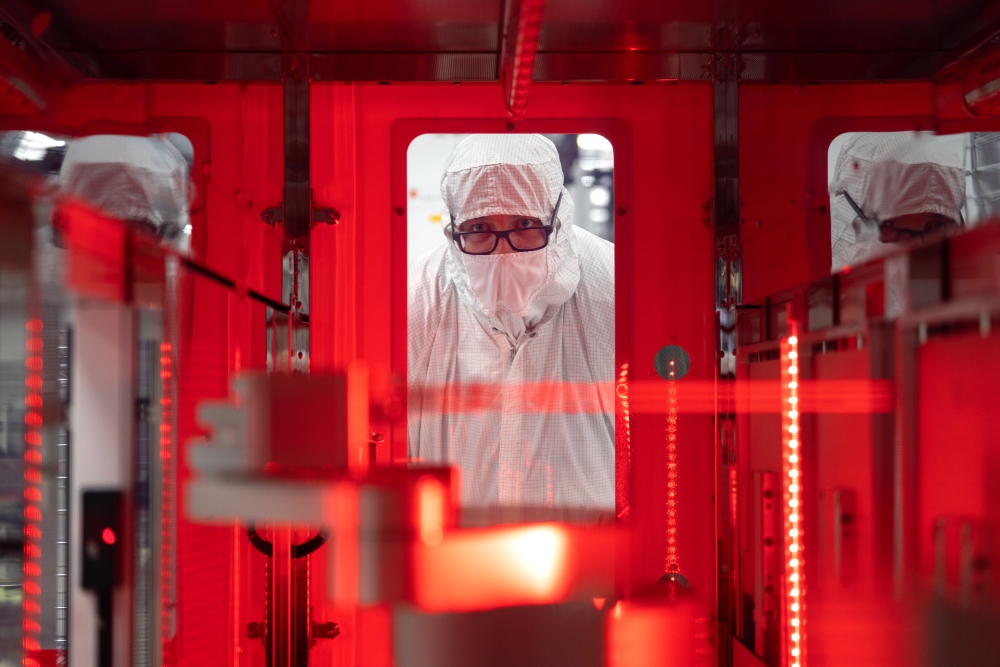
Photo courtesy of Texas Instruments
Arkansas: Where Affordability Supports Long-Term Industrial Commitments
Pine Bluff ranks at the top of the Tax Foundation’s purchasing-power analysis, with $100 stretching to $124.49 in real terms. Other Arkansas metros tied to recent investment activity also post strong purchasing power, including Fort Smith ($117.56) and Texarkana ($117.22). Together, they point to a cost environment where wages and operating dollars go further. That backdrop helps frame a cluster of recent manufacturing and defense investments in southern Arkansas.
L3Harris Technologies is expanding solid rocket motor production at its Camden site as part of a federal effort to increase domestic rocket propulsion capacity. Nearby, R2S, a joint venture between Rafael Advanced Defense Systems and Raytheon, an RTX business, has opened a new manufacturing facility in East Camden to produce interceptor missiles for U.S. and allied defense systems. The facility represents an investment of $63 million, will create up to 60 new jobs and builds on an existing production footprint in the region. On the civilian side, Key Tronic Corporation is expanding clean-tech electronics manufacturing in Springdale, with plans to invest more than $28 million and create over 400 jobs over the next five years. The expansion establishes the company’s flagship manufacturing and research footprint in the state.
“Aerospace and defense companies like R2S choose Arkansas for a reason,” said Gov. Sarah Huckabee Sanders, pointing to the state’s workforce, cost of living and regulatory environment as key factors behind these investments.
Louisiana: A Manufacturing Expansion Rooted in Real-Income Strength
Ascentek recently broke ground on a Manufacturing Assistance Facility expansion at its Shreveport site. The company is constructing a 270,000-sq.-ft. addition connected to its existing operations, backed by an investment of more than $50 million. The expansion is expected to create 91 new direct jobs while retaining 105 existing positions. The lower-cost environment helps explain why projects like this continue to land in north Louisiana. In nearby Monroe, the real value of $100 reached $119.62 in 2023 (second best in the nation, according to the Tax Foundation rankings), reflecting purchasing power levels that translate into stronger real incomes and lower day-to-day cost pressure for workers and employers alike.
Regional leaders have framed the investment in similar terms. “Ascentek’s expansion is exactly the kind of forward-looking investment we strive to attract to North Louisiana, and proof that companies choosing to locate in North Louisiana can be successful here,” said North Louisiana Economic Partnership President and CEO Justyn Dixon. “This project strengthens Shreveport’s position as a center for advanced manufacturing, creates high-quality jobs, and demonstrates long-term confidence in our workforce and infrastructure.”
That infrastructure got a huge boost at press time when Amazon announced it would invest $12 billion in new data center campuses across Caddo and Bossier Parishes in northwestern Louisiana. The investment is expected to create 540 direct jobs paying wages at or above 150% of the statewide annual average wage. “By spanning both sides of the Red River, this project quite literally bridges our communities and ensures opportunity flows across the entire region,” Dixon said.
Other recent projects tracked by Site Selection’s Conway Projects Database reinforce the same pattern across Louisiana. In Lafayette, MMR Group is investing $55.2 million to expand its manufacturing operations and expects to create nearly 200 new jobs over the next 10 years with an average annual salary of $85,000. In Shreveport, Schlumberger Technology Corporation (SLB) is expanding its footprint with a $30 million manufacturing investment expected to support approximately 600 jobs.
Texas: Large-Scale Investment in a Lower-Cost Environment
In South Texas, purchasing power has become part of the operating logic behind some of the state’s most capital-intensive investments. In the Brownsville–Harlingen metro, where the real value of $100 reached $117.39 in 2023 (fourth least expensive metro in the country), SpaceX has built out its Starbase operations as a hub for spacecraft manufacturing, testing and launch activity. The scale and technical complexity of the project put sustained demands on labor, housing and local infrastructure, costs that are materially different in Brownsville than in higher-priced coastal markets.
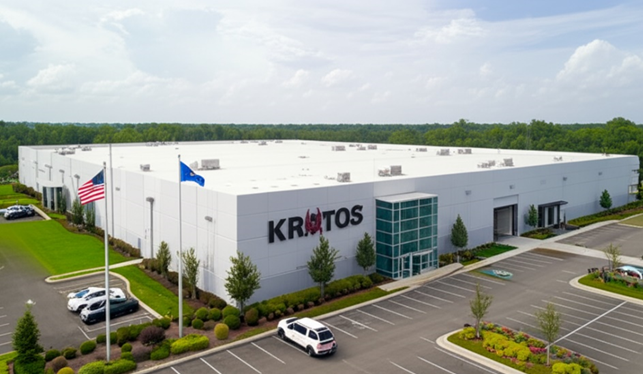
Kratos’ manufacturing facility in Bristow, Oklahoma
Photo courtesy of Kratos
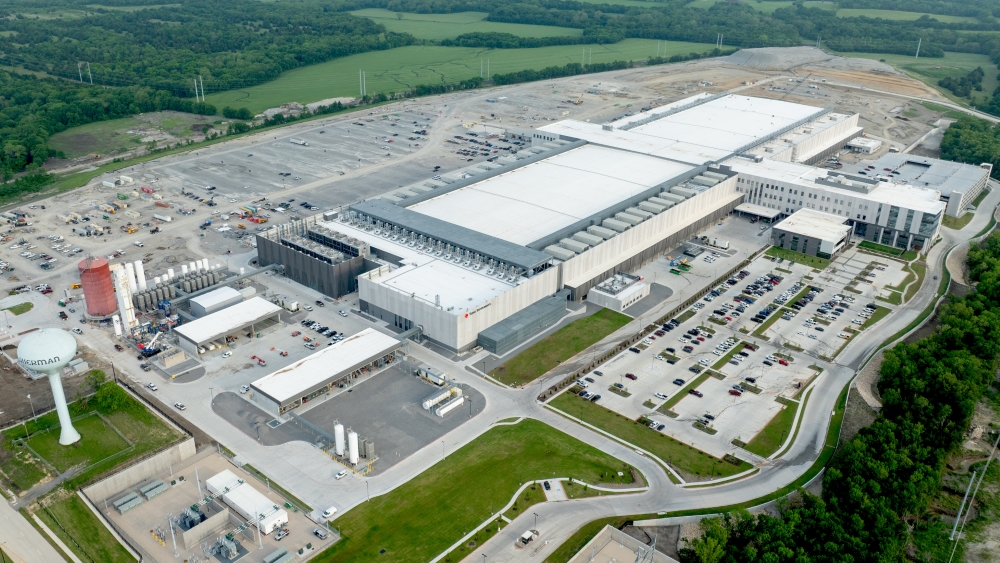
In North Texas, Texas Instruments is moving forward with one of the largest semiconductor manufacturing expansions nationally. The company is planning up to $40 billion in capital investment tied to a multi-generation manufacturing buildout anchored in Sherman, with expectations of roughly 3,000 new direct jobs and thousands of additional indirect positions. TI’s first fabrication facility in Sherman is now operational, marking the initial phase of a longer-term expansion that includes more planned fabs to support future demand. The Sherman investment complements continued advanced manufacturing activity in Richardson.
Large-scale digital infrastructure investments are following a similar pattern. Google has committed roughly $40 billion to Texas, its largest investment in any state, supporting data center, cloud and energy infrastructure projects across multiple regions. To meet related electrical labor demands, Google is backing the electrical training ALLIANCE’s effort to train existing workers and more than 1,700 apprentices statewide by 2030, significantly expanding the pipeline of skilled electricians.
Oklahoma: Capital Investment Anchored by Cost Stability
Across Oklahoma, purchasing-power data helps explain why recent projects pencil out. In Enid (No. 15 among the nation’s least expensive metros) the real value of $100 reached $116.09 in 2023. In the larger metros where investment activity concentrates, $100 carried a real value of $109.92 in Oklahoma City and $111.76 in Tulsa, which is still well above many high-cost coastal markets.
Oklahoma’s recent investment momentum has been broad, spanning manufacturing, aerospace, defense and digital infrastructure. The state set a record for new capital investment in 2025, highlighted by Google’s commitment to invest $9 billion over two years in Oklahoma, part of the company’s broader infrastructure expansion across the South Central U.S., including construction of a new data center in Stillwater.
In the Tulsa region, Beale Infrastructure has started on a new data center campus in Tulsa County, backed by a planned $1 billion investment and up to 100 permanent technical jobs, along with construction employment.
“Oklahoma has a number of communities, including Tulsa County, that offer the qualities that make the significant level of investment and development of our projects a good fit,” Beale Infrastructure said in an emailed statement. “From a skilled workforce pipeline, to creating partnerships with local education institutions to build workforce readiness programs, to support from state and local leaders, Beale Infrastructure is proud to contribute to the continued success of these communities through our investments and long-term partnerships.”
Manufacturing activity elsewhere in Oklahoma shows the same long-term orientation. In Lawton, Firehawk Aerospace’s $22 million investment is expanding advanced manufacturing operations, while in Bristow, Kratos Defense & Security Solutions plans a new facility that further broadens the state’s high-value industrial base.
Across the South Central U.S., the numbers tell a simple story: A dollar still goes further. In metros across Arkansas, Louisiana, Oklahoma and Texas, higher purchasing power changes how wages feel, how housing works and how operating costs behave over time. That difference is visible in where companies are placing advanced manufacturing, defense production and infrastructure projects, often in markets where real incomes hold up even as costs rise elsewhere.