How state agencies work to find win-win solutions for companies.
If you want to know how Mississippi will govern your industry and your expansion plans in the Magnolia State, all you have to do is listen to the governor himself.
“This is not your grandfather’s Mississippi,” Gov. Tate Reeves said in an interview posted on his Instagram on May 16. “We were the second-fastest-growing economy in America in both 2024 and 2025. We plan on keeping it that way.”
From day one of his administration, Reeves made it clear he advocates for a free-market approach to economic policy that focuses on cutting red tape, streamlining permitting and generally moving government out of the way so companies can be free to invest and expand in Mississippi. He champions free-market solutions and business deregulation, especially when it facilitates private capital deal-making in his state.
Over the last five years, this approach led to $85 billion in announced new capital investment in Mississippi and placed the state among the leaders nationwide in economic growth and corporate investment.
To do that, Reeves overhauled state policy in a number of key areas, including energy regulation. “Mississippi’s energy policy is simple,” the governor said at SelectUSA on May 6. “If it’s available, reliable and affordable — we’re for it.”
That has led to Mississippi authorizing 4,000 new megawatts of electricity generation capacity over the last several years.
Companies that want to take advantage of this free-market approach, as well as the abundant new energy supplies, find that when they work with state agencies in Jackson, they encounter people who want to help.
One of them is Chris Wells, executive director of the Mississippi Department of Environmental Quality. He leads a staff of 350 employees and oversees an annual budget of $250 million. Guided by MDEQ’s mission to safeguard Mississippians by protecting the state’s air, land and water while fostering prudent economic growth, he represents the state in many environmental restoration efforts. He serves as the state’s trustee for the Deepwater Horizon Natural Resource Damage Assessment under the Oil Pollution Act and as Mississippi’s representative on the Gulf Coast Ecosystem Restoration Council created by the RESTORE Act. Wells also serves as president of the Environmental Council of the States, the national association of state and territorial environmental agency leaders.
Mission Statement Guides MDEQ
An avid outdoorsman, Wells says his love of Mississippi’s natural resources inspired him to pursue a career in environmental protection. When I asked him how permitting works at MDEQ, he said, “It starts with our mission statement. It specifically notes striking a balance between environmental protection and economic growth.”
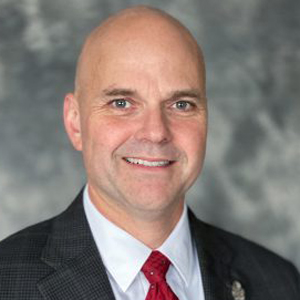
“We want to manage expectations on the front end. We tell people: Meet with us early and often. The more lead time you give us, the better it is for everyone.”
— Chris Wells, Executive Director, MDEQ
He notes that “we can protect the natural resources of the state while furthering economic growth. Some other states do not take that approach. We see ourselves as an important part of the economic development apparatus of the state. We have a job to do. Gov. Reeves has always told me that he would never ask us to do anything that would hinder our ability to protect the environment.”
Wells adds that “we do not want to be a roadblock or holdup to economic development in Mississippi. We know that it does not do the public any good to write bad permits. If we are issuing bad permits, we are going to get sued and the company will get sued. We are better off dotting the I’s and crossing the T’s at the front end. That means we will not hold up your project, but sometimes it takes time to get things right on the front end.”
By statute, MDEQ has 180 days to issue a permit. Wells says that he and his team meet frequently with staff at the Mississippi Development Authority to ensure that projects remain on track and conform to all state and federal regulations.
“We have matched our 401 certifications to nationwide permits,” he says. “On construction stormwater permits, there is generally a 30-to-60-day turnaround. Air permits are the most complex permits we issue. They can take the longest. But for non-PSD permits, we try to do those in three to six months. We want to manage expectations on the front end. We tell people: Meet with us early and often. The more lead time you give us, the better it is for everyone.”
On speed to market, he says, “We try to turn around everything as efficiently as we can. If we are short on staff on a project, we will use contractual support to fill those gaps. Our goal is to meet these timelines and meet your expectations. It should not even matter to the applicant who is writing the permit. When you come to MDEQ and submit your application, what you want is for the permit to be issued as efficiently as possible. Whatever we need to do to make that happen, that is what we do.”
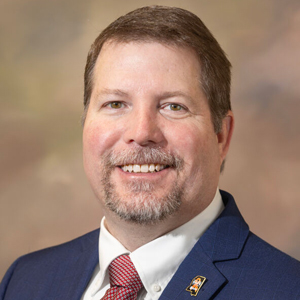
“We have to think of the efficiency of the roadway and the safety of the traveling public, but we do our best to work with you and pursue a win-win solution.”
— Jim Willis, Director, Office of Intermodal Planning and Highway Operations, MDOT
Wells says MDEQ takes this approach no matter the size of the project. “The smaller projects are just as important. They don’t catch the headlines, but they are very important,” he says. “We have very good folks. They field the pressure of the increasing workload we have, but we are still able to meet expectations. We are able to be part of that speed to market. That speaks volumes to the quality of people we have working here.”
At the end of the day, he notes, “We want to find a way to some sort of yes. We are looking for a way to say yes — even if it is not the same form of yes that the applicant wants.”
Wells says he is guided by the fact that Mississippians love outdoor recreation. “They love to hunt, fish, boat, hike, etc. People here love the outdoors. We exist to protect those natural resources,” he says. “We work here so that we can earn the money we need to enjoy these things — things like clean air, clean water, greenspace, etc. What we say to applicants is that we want to see you here. We want good corporate neighbors. We want to help foster your investments.”
On the Road to Better Transportation
Over at the Mississippi Department of Transportation, the viewpoint is much the same. Jim Willis, director of the Office of Intermodal Planning and Highway Operations, says the department has detailed processes on how it assists project applicants.
For example, if a company needs to add an access road to a site, Willis notes that “a lot of the time, they will get access to a state highway through a permit. We have a process for that. It depends on the type of development going in and whether they need permanent access or temporary access.”
MDOT coordinates its regulatory activity and permitting on specific construction projects with the team at MDA. The newly restructured Office of Intermodal Planning and Highway Operations went into effect January 1, 2024. The division aims to further ensure quality of life and economic development by providing support for a well-planned, comprehensive, coordinated and sustainable intermodal transportation network guaranteeing safety, access and mobility across Mississippi.
“We have had some large development projects across the state,” says Willis. “We partner with the MDA and the developer. They may need special access to a highway or interstate. That happened with Nissan, Toyota, Continental Tire and at a site in Northeast Mississippi where we are building an interchange for an applicant.”
The goal at MDOT, he says, is to not hold up projects. “We want to expedite our work as quickly as we can,” he notes. “There are certain things you must do. A new law passed last year allows us to use alternative delivery processes. We can work more hand in hand with designers and contractors to streamline the process as best we can.”
Willis advises companies to reach out to MDOT as soon as they identify an expansion opportunity in Mississippi. “The sooner the developer has a dialogue with MDOT, the sooner we can get them an answer,” he says. “We have to think of the efficiency of the roadway and the safety of the traveling public, but we do our best to work with you and pursue a win-win solution.”
Mississippi Public Utilities Commission
The same philosophy of governance guides the work of the Mississippi Public Utilities Commission in Jackson. MPUC regulates gas utilities, electric utilities, water utilities, sewer utilities, gas pipeline safety and certain telecommunications providers.
Under the leadership of Gov. Tate Reeves, Mississippi has taken an “all of the above” approach to energy development, meaning that the state is now embracing harnessing energy from natural gas, nuclear power, wind, solar, hydrogen and other fuel sources.
Much of this went into effect with the unveiling of the Mississippi Power Play on May 1, 2025. MPP is an initiative designed to establish Mississippi as a national leader in energy production and investment. MPP aims to streamline regulation, accelerate permitting, reduce financial risk and partner with the private sector to expand the energy grid.