Portrayed perpetually in bounce-back mode, some industrial regions in the Great Lakes are using their very resilience to propel them to the lead instead of playing catch-up.
Metro Cleveland and Northeast Ohio offer a case in point — multiple cases, in fact — when it comes to livable and affordable neighborhoods, brownfield redevelopment and greenspace.
Mayor Justin M. Bibb, the City of Cleveland and the Site Readiness for Good Jobs Fund (SRF) this summer announced “two major milestones in Cleveland’s industrial and housing strategy” with the selection of MMY US as the City’s preferred modular housing manufacturer, and the award of $2.56 million in Ohio Historic Preservation Tax Credits for the redevelopment of the historic Wellman-Seaver-Morgan Engineering Company building at 7000 Central Avenue.
A release stated that the announcements “reflect a coordinated effort to expand housing production capacity in Cleveland, create quality manufacturing jobs and activate one of the Midline’s most significant historic industrial assets … MMY’s investment will support the City’s Housing Innovation District,” a focused strategy designed to “accelerate housing production through modern zoning, incentivized permitting, innovative construction techniques and infrastructure investments.”
I spoke with Mayor Bibb about the historic Wellman-Seaver-Morgan building when we met in Atlanta two years ago at the national conference of the African American Mayors Association.
Founded by Samuel T. Wellman, inventor of the first open-hearth furnace in the United States, alongside Charles H. Wellman and John W. Seaver, the facility served as home to the Wellman-Seaver-Morgan Company until 1978.
“The company earned an international reputation for engineering some of the largest material-handling systems ever built, including Cleveland’s renowned Huletts,” the city explained in its announcement, referring to massive ore unloaders.
‘Shore to Core to Shore’
Bibb and his city council colleagues several years ago directed $50 million of American Rescue Plan Act monies toward the newly established Site Readiness for Good Jobs Fund, which worked with Cuyahoga County Land Bank to close its acquisition of the Wellman-Seaver Engineering Company plant and adjoining 10 acres. Cleveland at that time had about 4,000 to 5,000 acres of vacant, abandoned or underutilized industrial property, redevelopment of which the city said could help create some 25,000 jobs.
The program meshed with Cleveland having been chosen by Bloomberg Philanthropies as one of 25 U.S. cities to join Bloomberg American Sustainable Cities, a three-year, $200 million initiative to “leverage historic levels of federal funding to incubate and implement transformative local solutions to build low-carbon, resilient and economically thriving communities” through “transformative solutions in the buildings and transportation sectors.”
Bibb told me in Atlanta he believes the Site Readiness Fund program will help attract companies to the city’s urban core, as will a $7 billion makeover of Cleveland waterfront from the banks of the Cuyahoga River to Lake Erie. The “Shore-to-Core-to-Shore” strategy is key to his team’s walk-to-work agenda. The idea of Cleveland being one of the world’s “15-minute cities” started for Bibb when he, like everyone, needed to find a place to exercise during the pandemic because all the gyms were closed.
“Luckily there was an outdoor park in walking distance that allowed me to have my own open-air gym,” he said, which led him to learn more about the 15-minute city concept from Franco-Colombian urbanist Carlos Moreno and experiments in Paris, France. The idea is to have things like a job, a park, quality public transit and a fresh grocery store within 15 minutes of home, all the things, Bibb said, that “are critical for a healthy, safe, vibrant city where there is equity, joy, jobs and justice. I decided to run for mayor and made it my vow to make Cleveland one of the first 15-minute cities in North America.”
Bibb is part of the coalition of leaders who in 2024 founded the National Housing Crisis Task Force. Asked for further insight into this latest step in Cleveland in 2026, the mayor’s office provided this comment from the mayor:
“As a city with more than 18,000 vacant residential parcels, we have a tremendous opportunity to lead in urban infill. Now it’s time to match that opportunity with the ability to build at the speed and scale our residents deserve. If we want to expand access to affordable homes, we have to expand our ability to produce them. That means investing in advanced manufacturing, creating good-paying jobs and building a stronger local supply chain for housing. We’re aligning industrial revival with neighborhood vibrancy so economic growth creates more opportunity for Cleveland residents.”
Breathing New Life Into Old Corridors
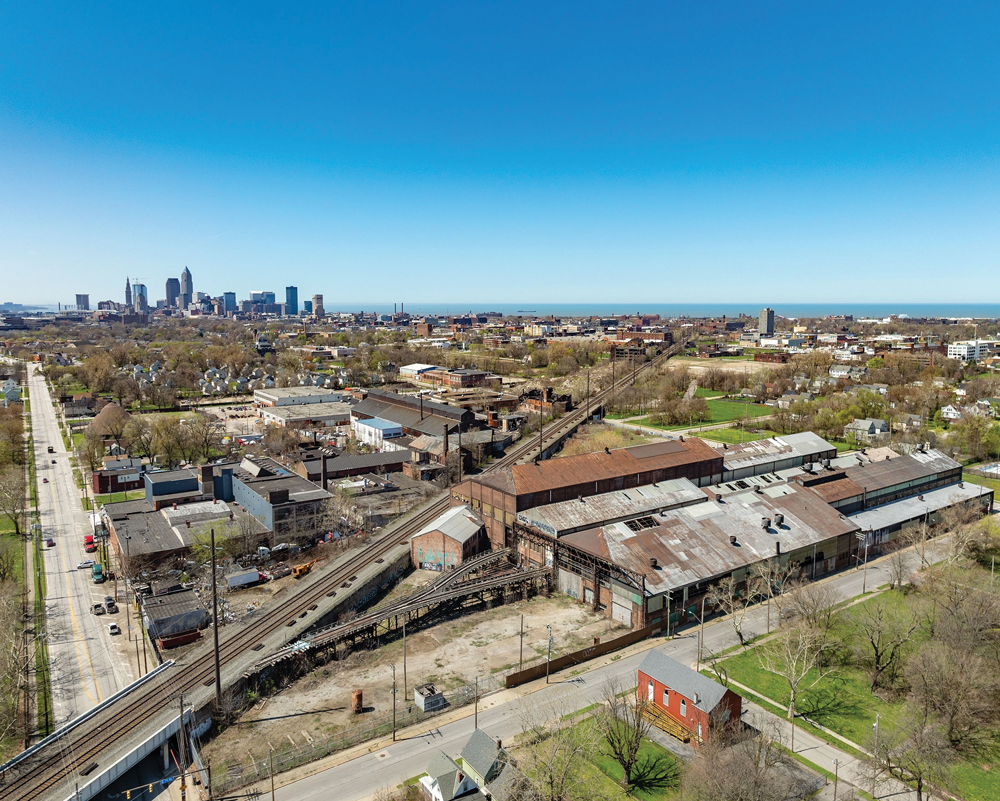
The urban infill work is not confined to the Wellman-Seaver-Morgan complex. In May, the city in partnership with the Site Readiness for Good Jobs Fund announced a redevelopment initiative called The Midline that will convert “long-vacant industrial land” amounting to more than 350 acres along the historic Norfolk Southern rail corridor on the city’s near east side into “a unified district designed for advanced manufacturing, research and development and related industries” as well as public greenway space. “Plans call for at least 1.5 million square feet of new industrial and commercial space, supporting more than 2,500 direct jobs within reach of public transit,” the city stated. “At full build-out, the project is projected to generate up to $100 million in annual tax revenue for the city.”
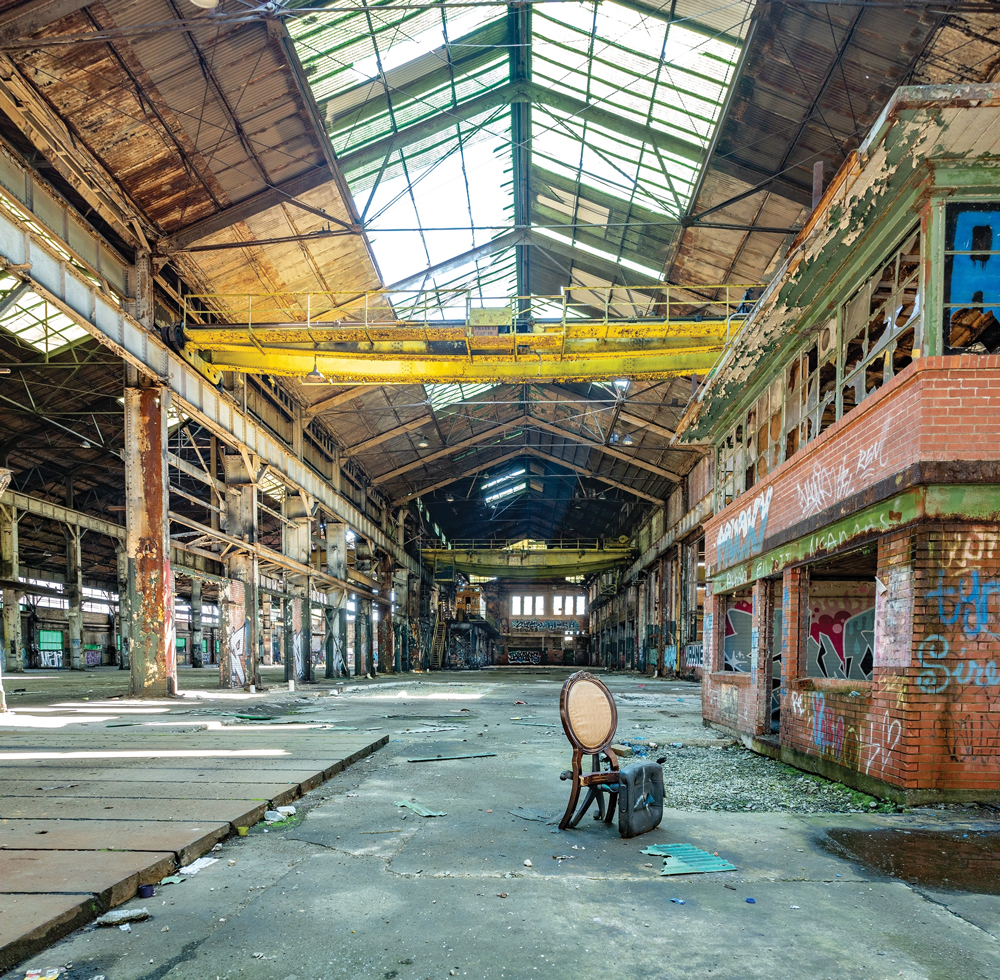
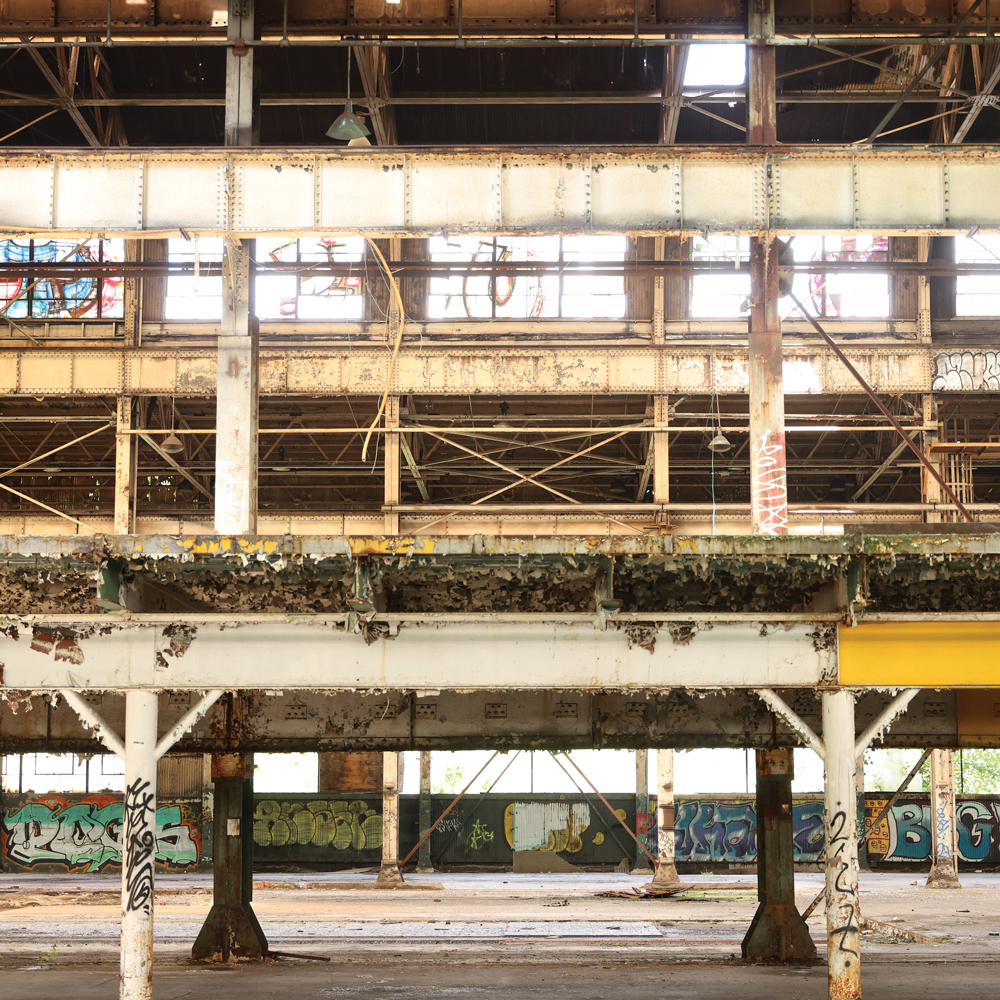
The dilapidated but historic Wellman-Seaver-Morgan Engineering Company building in Cleveland will now be redeveloped as a manufacturing operation for modular housing, with both the jobs and the product sparking underserved neighborhoods to life.
Photo courtesy of City of Cleveland
The Midline sits within reach of bus rapid transit routes, two RTA rail stations and interstate highways, placing it within a 30-minute commute of nearly 900,000 workers. A master plan is expected to be published by the end of summer 2026. “For generations, neighborhoods like Central and Fairfax were places where Clevelanders could live, work and build a future within a few blocks of home,” Mayor Bibb said in a release, reinforcing his 15-minute city mission. “When industry left, and jobs disappeared, contaminated land was left behind — creating barriers to opportunity that held these neighborhoods back for decades. Today, we are changing that.”
A few days later in July, as part of a $100 million investment from its Greening America’s Cities Initiative, Bezos Earth Fund awarded $10 million to Western Reserve Land Conservancy for a partnership with the City of Cleveland for its Vacant Land Restoration Initiative, which focuses on the Hough and St. Clair-Superior neighborhoods on Cleveland’s east side, “home to approximately 17,000 residents and characterized by decades of disinvestment, high vacancy rates, low tree canopy and disproportionate health burdens.” Other awards in this round and a previous round of funding have gone to projects in Great Lakes region cities Allentown, Pennsylvania; Chicago, Illinois; and Indianapolis, Indiana.