
From Teklab in Collinsville to IQMP in Chicago, Illinois turns R&D into new opportunity.
by Savannah Yawn
Technology investment does not always arrive in the form of a software company and a glass office tower. In Illinois, some of the most interesting activity is taking shape in laboratories and advanced manufacturing facilities. It can be found in the sophisticated testing equipment used to protect public health and support environmental compliance, as well as in the specialized systems emerging around the state’s growing quantum computing industry.
That breadth gives Illinois a technology story grounded in both research and production. The state is home to approximately 30,000 technology companies employing more than 268,000 people and generating more than $61 billion in gross regional product, according to the Illinois Economic Development Corporation.
Illinois also ranks among the nation’s top 10 states for information technology employment and business locations and has the country’s fifth-most-concentrated semiconductor-ready workforce. That existing base gives the state both the technical talent and industrial capacity to pursue emerging fields while continuing to invest in the practical technologies already supporting businesses and communities.
Environmental Technology Expands in Metro East
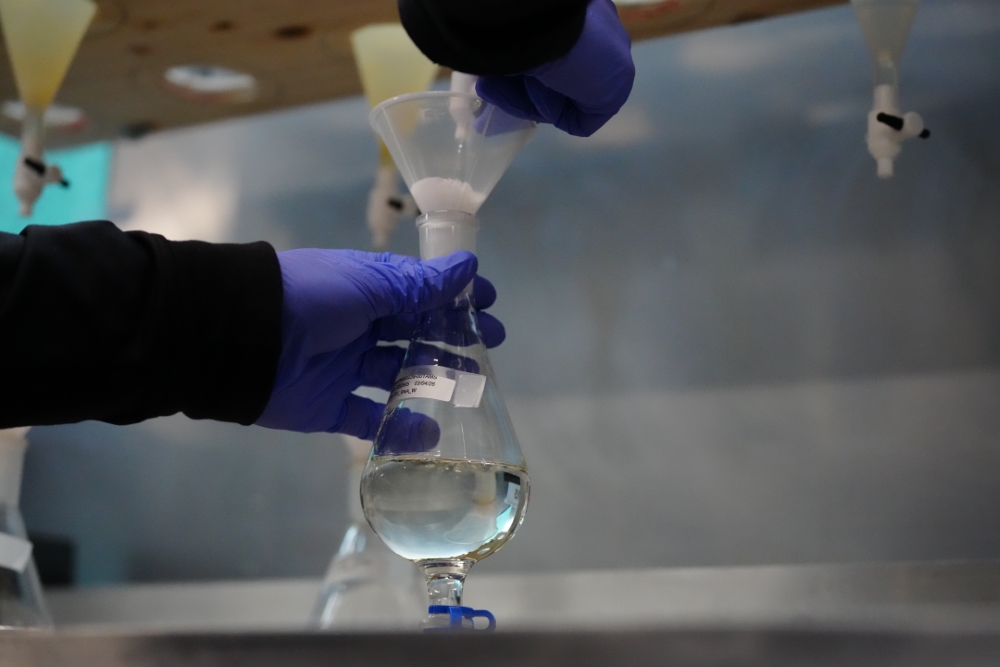
Teklab has opened a new 36,500-sq.-ft. environmental testing laboratory in Collinsville, backed by a $10 million company investment. The facility will create 40 full-time jobs while retaining nearly 100 existing positions, giving the company additional capacity to serve clients across the Midwest and expand its expertise nationwide.
Founded in 1982, Teklab is a veteran- and family-owned environmental laboratory that analyzes air, drinking water, wastewater, groundwater, soil, hazardous waste, oil, sludge and other materials. Its clients span the industrial, environmental consulting and municipal sectors. The company is headquartered in Collinsville and also operates service centers in Downers Grove and Springfield.
For Teklab, remaining in Collinsville meant building on relationships and regional advantages developed over more than four decades.
“Teklab has called Collinsville home for decades, so when it came time to invest in our future, expanding here was the natural choice,” says CEO John Riley. “The Metro East region provides a strong business environment, access to a skilled workforce, and a central location that allows us to efficiently serve clients throughout Illinois, Missouri and the Midwest.”
The region’s interstate access supports the courier and logistics operations required to collect and transport samples across several states. Teklab also cited proximity to industrial companies, municipalities and environmental consulting firms as an advantage, along with a workforce pipeline supported by area colleges and technical programs. The company currently employs nearly 50 graduates of Southern Illinois University Edwardsville and maintains a partnership with the university.
The new laboratory was designed to accommodate additional analytical capacity, new technologies and testing services as customer needs evolve. Workforce expansion has already begun, and Teklab owns adjacent property that could support further development in Collinsville.
Support from state and local partners helped make the project possible, according to Riley.
“Their partnership throughout the planning and construction process demonstrated a shared commitment to growing high-quality jobs and investing in the region’s future,” he says. “That collaboration gave us the confidence to make the largest investment in Teklab’s history while reinforcing our long-term commitment to Illinois.”
Relocating an accredited environmental laboratory required more than transferring equipment into a new building. Teklab worked closely with the Illinois Environmental Protection Agency to validate its instruments and maintain its accreditations throughout the move. The project also received support through the Illinois Department of Commerce and Economic Opportunity’s Economic Development for a Growing Economy program.
The new facility includes purpose-built laboratory space designed to improve safety, efficiency and collaboration, as well as employee gathering areas and a fitness center. As demand for environmental analysis grows, the expansion positions Teklab to add skilled jobs and testing capabilities while continuing to invest in the community where the company began.
For Illinois, the project illustrates a practical side of technology investment: an established company using new equipment, expanded scientific capacity and regional talent to serve industries and communities across a multistate market.
Building a Quantum Supply Chain
At the other end of the technology spectrum, Illinois is making an ambitious bet on quantum computing and microelectronics.
Illinois’ quantum ecosystem includes top-tier research universities like the University of Illinois, the University of Chicago, and Northwestern University as well as Argonne National Laboratory, Fermilab, the Chicago Quantum Exchange and four of the 10 quantum research centers funded under the National Quantum Initiative Act.
The centerpiece is the $500 million Illinois Quantum and Microelectronics Park (IQMP) on Chicago’s South Side. The campus, which broke ground in the last half of 2025, is being developed to support quantum companies, researchers, suppliers, and other partners working to facilitate the development and commercialization of quantum technologies. Announced IQMP participants include PsiQuantum, IBM, Diraq, Infleqtion, Quantum Machines, Pasqal and the Defense Advanced Research Projects Agency. With support through Illinois’ Manufacturing Illinois Chips for Real Opportunity, or MICRO, program, Zero Point Cryogenics will establish its first U.S. location at IQMP. The Canadian company plans to colocate research and development, sales and service operations at the park, where its ultra-low-temperature systems will support quantum companies and collaborators.
“Our presence here underscores the essential role cryogenics plays as foundational infrastructure for quantum computing, positioning us directly at the epicenter of this rapidly evolving industry,” said Chris Cassin, CEO and co-founder of Zero Point Cryogenics. “We couldn’t have chosen a better place to open Zero Point Cryogenics’ first international Innovation and Service Hub location than here in Illinois. The region offers an exceptional pool of world-class talent, making it the perfect collaborative community to better serve our thriving U.S.-based clients and partners.”
While Zero Point represents a company entering the Illinois market, Ability Engineering Technology (AET) shows how the emerging quantum sector can create new opportunities for manufacturers already operating in the state.
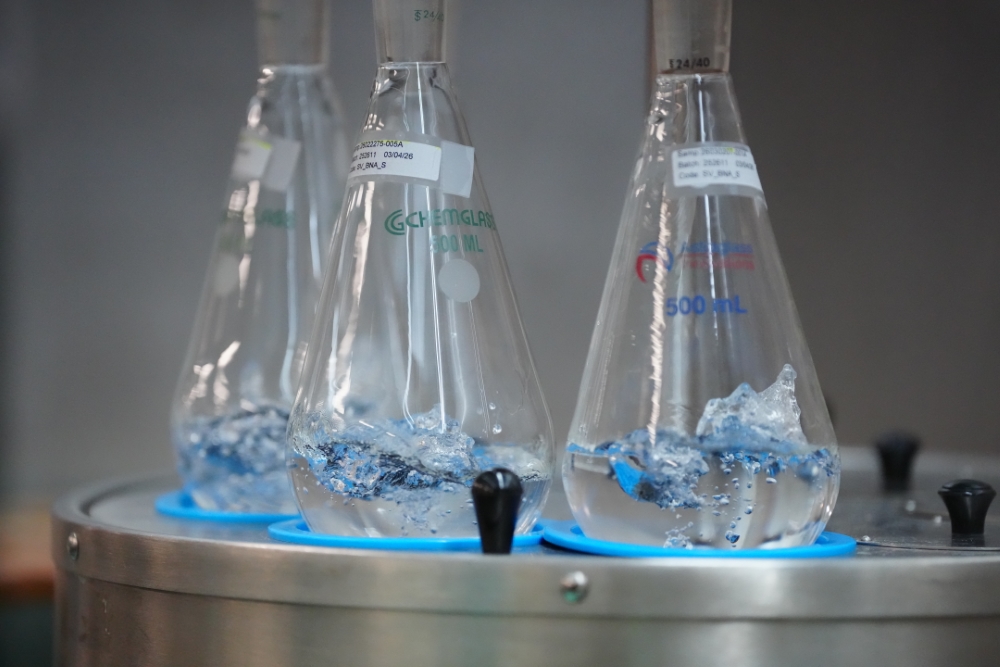
Photo Courtesy of Teklab
AET is expanding its 35,000-sq.-ft. operation in South Holland while establishing a presence at IQMP. Founded in Illinois in 1947, AET designs and manufactures custom cryogenic and vacuum equipment for customers in aerospace, energy, industrial gases and scientific research. Its South Holland expansion will include new machinery, improved crane and material-handling systems, structural upgrades and changes to the facility’s workflow. At the quantum park, the company will support rapid prototyping, small-scale fabrication, equipment modification and workforce training.
“This expansion builds on that legacy while advancing Illinois’ ambition to lead in quantum technology,” said Ability Engineering Technology President Eugene Botsoe. “Investments in our South Holland facility will enhance our ability to deliver the highest levels of quality and capability, while our presence at the IQMP FaQtory places us at the center of Illinois’ growing quantum ecosystem, where we can collaborate with leading researchers and innovators.”
Illinois is also extending that supplier and commercialization network internationally. In 2026, IQMP signed an agreement with Japan’s Q-STAR alliance to connect Illinois companies, researchers and institutions with a network of more than 160 Japanese corporations, startups and academic organizations. The partnership is intended to support collaborations across research, business development, investor connectivity, and industrial supply-chains.
Building the Quantum Workforce
These investments begin to answer one of the most important questions surrounding quantum development: Who will build the equipment, components and support systems needed to turn scientific progress into a working industry?
They also suggest that the opportunity will extend beyond physicists and doctoral researchers.
In 2026, the Illinois Science and Technology Coalition, the Illinois Economic Development Corporation’s Economic Research Center, IQMP and the Chicago Quantum Exchange released the first comprehensive analysis of Illinois’ potential quantum workforce. The organizations identified 171 fields of study spanning computer science, engineering, mathematics and data science, advanced manufacturing and precision production. Illinois institutions awarded more than 33,000 quantum-relevant degrees and certificates in 2024, a 60% increase over the previous decade. Certificate programs accounted for the largest category of completions.
“A sustained quantum ecosystem relies on a seamless connection between world-class research, industry and diverse educational pathways,” said University of Chicago Professor of Molecular Engineering David Awschalom, director of the Chicago Quantum Exchange. “This new mapping framework demonstrates that our regional talent pipeline extends far beyond traditional labs, investing heavily in certificate and technical programs to ensure future quantum careers are fully accessible to workers without advanced degrees. By establishing this clear baseline, our region is setting a national blueprint for how to build an inclusive and capable workforce for the quantum technology economy.”
These investments show Illinois building technology capacity from the ground up: expanding established scientific businesses, attracting specialized suppliers, connecting manufacturers with emerging industries and preparing workers to turn new research into real-world applications.