For two consecutive years, international businesses have accounted for over two-thirds of the capital investment unveiled in Tennessee. These companies aren’t taking risks on future-focused operations; they’re zoning in on a business environment that delivers results.
In December 2025, non-ferrous metal smelter Korea Zinc shared news of a $6.6 billion investment for two new Tennessee production facilities in Clarksville and Gordonsville that represent the company’s first U.S. operations and the single largest capital investment in state history.
What could be viewed as an outlier investment in actuality provided a substantial sign-off to a year driven by foreign direct investment (FDI) across Tennessee. Of the $11.4 billion poured into the state in 2025, 70% (or $7.8 billion) came directly from international companies, who also contributed half of the over 8,000 jobs announced in that period.
From 35 countries — led by Japan, Germany and the UK — more than 1,000 international companies house operations in the state, building upon leading industries including advanced manufacturing, aerospace & defense, life sciences, nuclear energy and food & beverage. At a critical point of innovation and growth across these domestic sectors, Tennessee’s FDI partners have doubled down on cultivating new opportunities to scale capacity.
Powerful Growth
Hyosung HICO, a subsidiary of South Korea-based Hyosung Heavy Industries, made the decision to explore establishment of its first U.S. manufacturing operations in 2017. A two-year site selection search in the nation’s Southeast region led to consideration of both of the Carolinas, Georgia, Florida and Tennessee.
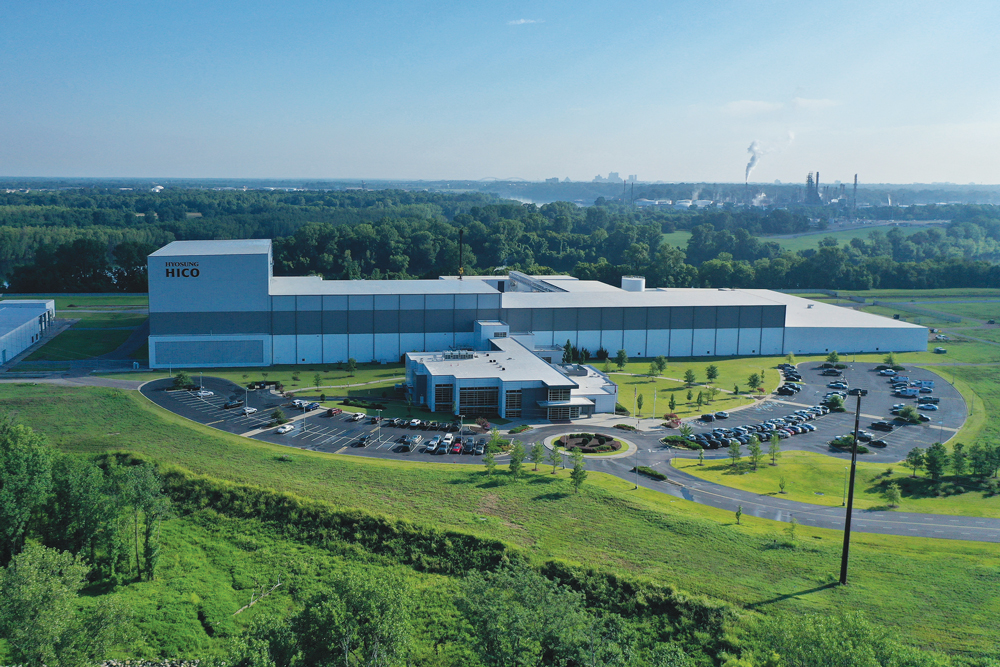
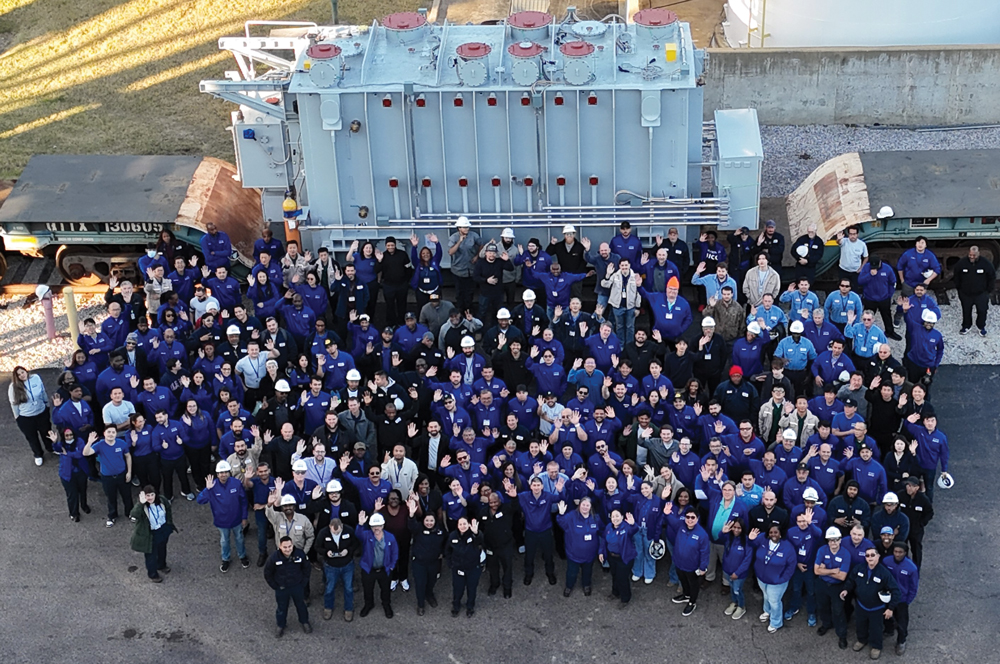
The company wanted to first focus on production of high-voltage power transformers in the U.S., engaging directly with the Tennessee Department of Economic and Community Development (TNECD) to find a suitable site. In Memphis, a 360,000-sq.-ft. transformer plant formerly owned by Mitsubishi Electric Power Products provided an ideal foundation to build from. Upon acquiring the 200-acre site for $86.9 million in February 2020, Hyosung HICO began facility updates, transferring technology from South Korea and building a workforce of over 400 local employees.
“We acquired the plant on Valentine’s Day,” says Hyosung HICO President Jason Neal. “Our first unit shipped in June that year to a major U.S. utility, so it was quick. It was pretty amazing.”
The Memphis facility is capable of producing power transformers ranging from 69 kilovolts (kV) to 765 kV, making the company the only current U.S. producer of 765-kV transformers. While noting that it was a definite ramp-up from technology built by the previous plant owner, Neal says Hyosung HICO’s new talent caught on fast. Since operations launched, demand in the U.S. for power transformers has increased by 116%, according to data from global research group Wood Mackenzie.
Hyosung HICO felt the effects of that rising demand, investing $51 million to expand its operations in May 2025. Six months later, the company returned with an additional $157 million and 240 new jobs as it prepared to construct a brand new facility at the site, which will soon make the campus one of the largest domestic power transformer operations in the nation. Expansion activity is ongoing at the campus and is expected to reach completion in 2027.
Once operational, the new facility will enable the company to double its current production. Neal says that many factors kept this expansion in Tennessee, beginning with the initial welcome to the community Hyosung HICO experienced years prior. Paired with robust state and local relationships, an outstanding regional talent pool and vital transportation network, Memphis remained the best choice.
“We continue to add meaningful jobs in Memphis and this will continue in the coming years,” says Neal. “We remain actively engaged with TNECD through our expansion engagements and opportunities to bring more and more production to the U.S. We are proud of our diversity in our leaders and employees in Memphis as we grow to be the top producer of large power transformers in the U.S. — at a time that the market needs us.”
Shared Values
As demand for reliable, efficient and digital energy technology is accelerating, investment into Tennessee was strategic to strengthening France-based Schneider Electric’s growing U.S. manufacturing footprint.
That is according to Schneider Electric North America Engineered to Order Cluster Vice President Susan Chandy, speaking to a combined $85 million investment made in Smyrna and Mt. Juliet in March 2024. To allow for increased production capacity of energy management and automation products, this move brought expansion to the company’s decades-old operations in Smyrna while introducing plans for a new custom power distribution manufacturing facility in Mt. Juliet.
“Middle Tennessee offers a strong workforce, a central geographic location and a rapidly growing customer base across data centers, infrastructure and industry,” she says. “These facilities support our global strategy to localize production, enhance supply chain resilience and accelerate deployment of advanced electrification and automation technologies in one of our fastest-growing markets.”
The company later delivered an additional $85 million to construct a second facility at the Mt. Juliet site in November 2024. Exactly one year later, doors opened to the first completed building, spanning more than 500,000 sq. ft. of the campus. Chandy says the second facility, which is over 540,000 sq. ft., is still under construction and is expected to become operational in 2027.
Schneider Electric’s expansions ushered in over 450 new jobs, a hiring experience that has proved extremely positive for the company. Chandy says that the region’s deep bench of manufacturing and technical talent — from early-career candidates to seasoned professionals and military veterans — and emphasis on workforce readiness and skills-based hiring goes into what makes Middle Tennessee an ideal location to grow advanced manufacturing and energy-technology related roles that supports its customers and an evolving energy landscape.
When considering what initially drew Schneider Electric to solidify operations in Tennessee, Chandy notes the state offered exactly what the company was looking for then and still does today. A strong energy and manufacturing ecosystem, reliable infrastructure, a skilled workforce and collaborative state and local partners were among the factors that sealed the deal.
“The region’s commitment to workforce development — including strong support for U.S. veterans — aligned closely with our culture and values,” she continues. “Those strengths made Tennessee an excellent long term investment then, and they continue to fuel our growth today.”
This Investment Profile has been prepared under the auspices of the Tennessee Department of Economic and Community Development. For more information, visit tnecd.com.