
How a targeted transferable tax credit helps manufacturers and infrastructure projects move forward.
by Savannah Yawn
As states compete aggressively for industrial investment, incentive programs increasingly need to do more than reward job creation alone. For Oklahoma, the Strategic Industrial Development Enhancement (SIDE) Act serves as a flexible financing tool aimed at helping manufacturers and infrastructure operators make the capital investments that can move projects from consideration to commitment.
“The SIDE Act is a transferable tax credit,” Jon Chiappe, chief partner and programs advisor at Oklahoma Department of Commerce, explained in a recent interview. “It is one tool that we have associated with our strategy of helping manufacturing companies primarily, and our short-line railroad companies to be able to invest in themselves and their operations. Many of our state incentives are related to job creation. This is more related to the investment in infrastructure and industrial sites.”
That distinction matters in today’s site selection environment, where project requirements vary significantly by industry and business model. While project drivers vary, from workforce access to infrastructure needs, the SIDE Act offers a financing mechanism aimed at helping companies make major capital investments.
Unlike some incentive tools tied directly to hiring thresholds, the SIDE Act allows Oklahoma to evaluate broader economic impact. Chiappe notes that the program operates under a $12 million annual cap, with four application windows each year, allowing the Department of Commerce to weigh competing projects and their potential benefit to the state.
The program includes two primary components: an infrastructure-focused track and an economic development component geared toward industrial investment.
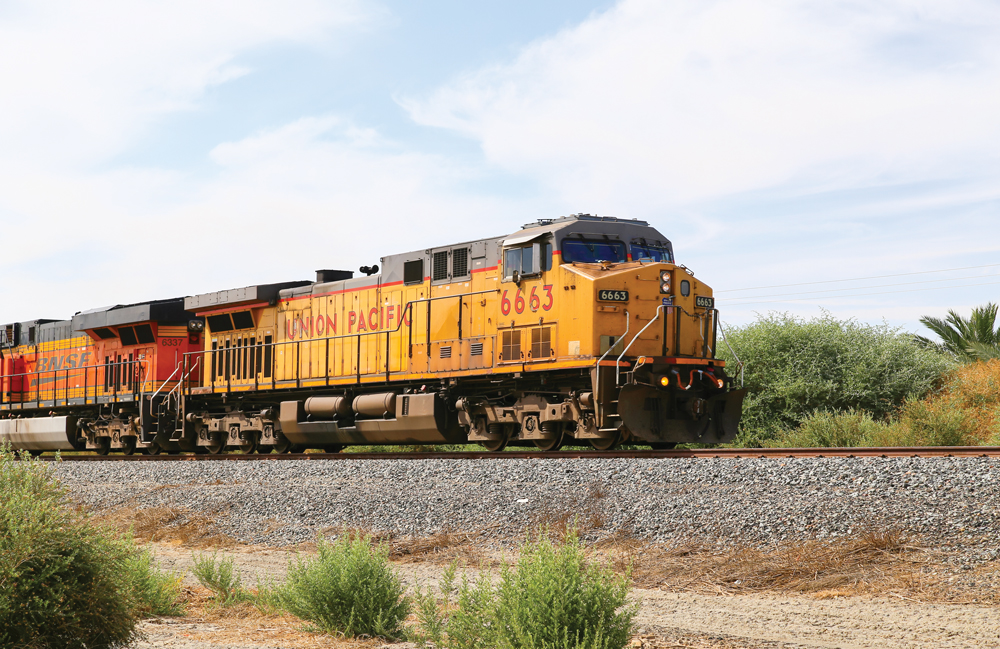
For Oklahoma’s rail infrastructure, the incentive helps strengthen a key competitive advantage: connectivity.
“With the infrastructure component,” Chiappe says, “the more connection we have to Class 1 rail, which then connects the global marketplace, [the more] we have opportunities in the state of attracting companies that need those rail-served sites.”
One example is Plains Cotton Cooperative’s operation in southwest Oklahoma, where SIDE- supported rail improvements helped expand loading capacity for cotton shipments headed to domestic and international markets.

“This tool allows us to target companies that have a tax liability or are partners with companies that have tax liability that can help finance the project on the front end. Since the tax credit can be transferable, it can help finance the cost of expanding in the state. ”
— Jon Chiappe, Chief Partner, Programs Advisor, Oklahoma Department of Commerce
The program’s economic development component has also supported industrial redevelopment and manufacturing expansion.
Chiappe points to Irish building materials manufacturer Kingspan as a notable example.
“When we were competing for that project, they indicated the SIDE Act was one of the factors that helped them decide to locate in Oklahoma,” he says.
Kingspan announced its Stillwater manufacturing expansion in 2024, with plans to create more than 100 jobs and invest more than $80 million in the facility, according to the Oklahoma Department of Commerce. The project involved renovating an existing building and installing manufacturing equipment, the type of capital-intensive investment the SIDE Act is designed to support.
Another example is Blue Whale Materials in Bartlesville, where the battery recycling and critical minerals company used the program in connection with renovations at the Bartlesville Industrial Park. Since launching in Oklahoma, Blue Whale has expanded significantly, including a $55 million U.S. Department of Energy-backed expansion expected to strengthen domestic critical minerals supply chains.
A defining feature of the SIDE Act is its transferability, which gives companies additional financing flexibility.
“This tool allows us to target companies that have a tax liability or are partners with companies that have tax liability that can help finance the project on the front end,” Chiappe said. “Since the tax credit can be transferable, it can help finance the cost of expanding in the state.”
The program itself is also evolving. Oklahoma lawmakers recently extended the SIDE Act’s sunset from 2027 to 2032 while clarifying statutory language around strategic finance partners, a move intended to provide greater certainty for investors participating in projects.
That combination of flexibility, accountability and infrastructure-focused investment support has made the SIDE Act an increasingly important part of Oklahoma’s industrial recruitment toolkit.