Innovative developers create affordable homes for working families.
In many communities, the biggest barrier to workforce entry is not a lack of skillsets. It’s the inability of the average working family to afford to live near the workplace.
Decades of homebuilding slowdowns, combined with ever-escalating apartment rents, have brought America to a point where, in most cities, the average-wage worker can no longer afford to buy or rent a home without going into upside-down debt.
Research by professors Joseph Gyourko and Angie Basiouny at the Wharton School of the University of Pennsylvania revealed that housing construction in America has been declining for the past three decades. The housing dropoff has been particularly acute in the Sunbelt, which has become increasingly unaffordable for many workers and their families.
As a proliferation of local building regulations stifled new home construction around the country, more Americans were displaced from homeownership and forced to become permanent renters, or worse. As the median home price in the country’s top 10 markets increased to anywhere from $605,000 to $1.4 million, renting became the only option for most people.
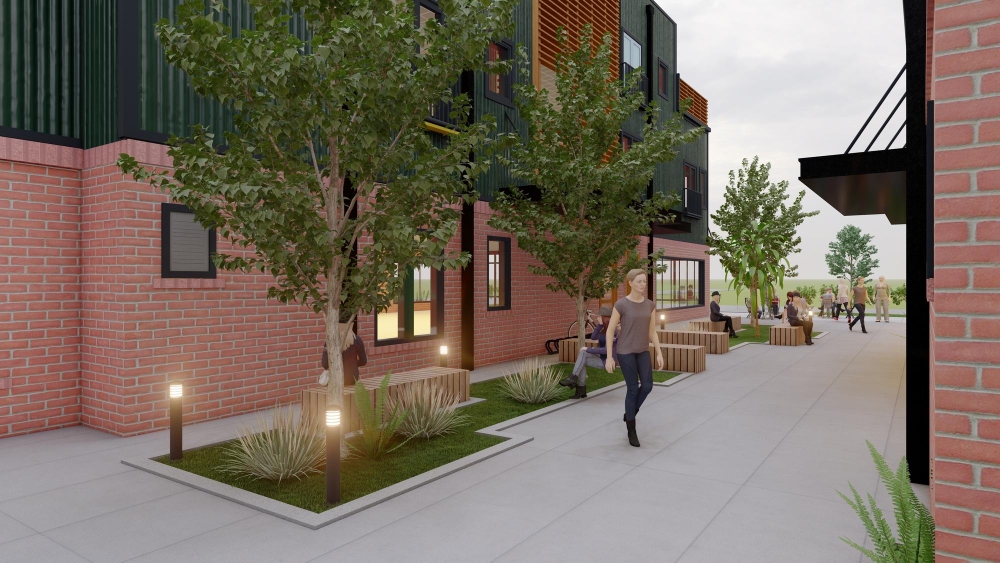
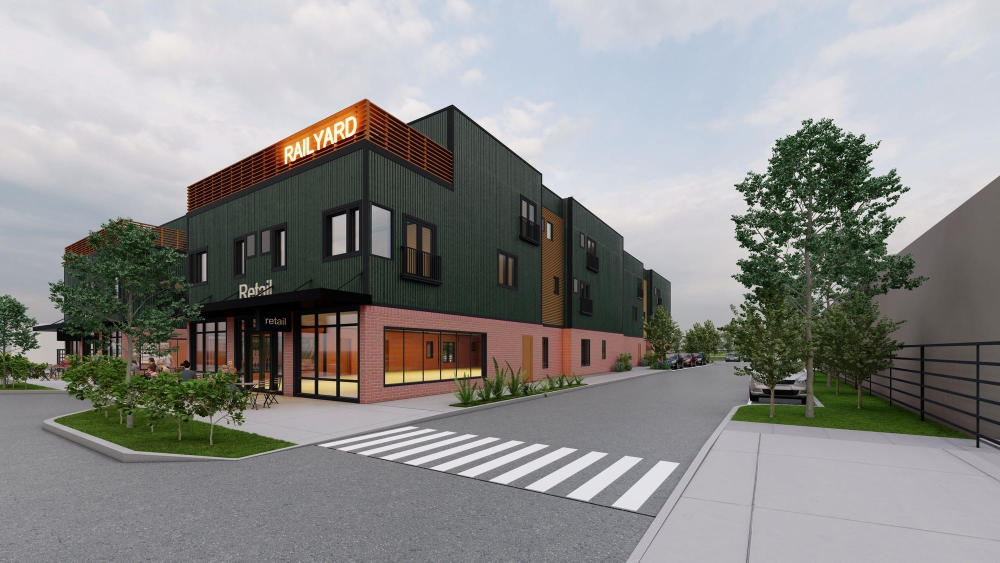
Images courtesy of 1000 Delaware LLC
“America once responded to demand by delivering more density, but it does no longer,” Gyourko notes in his report for Knowledge at Wharton, the school’s business journal. “This suggests that not only is America failing to deliver housing in its most productive metropolitan areas, but we are also failing to deliver housing in our most desirable neighborhoods.”
Janneke Ratcliffe, vice president of the Housing and Communities Division of the Urban Institute, recently addressed the workforce housing crisis during the Beyond Four Walls podcast of the National Housing Conference. “We have not built enough housing,” she said. “From 1968 to 2006, an average of six to eight housing units were built per 1,000 residents per year. New housing fell off a cliff around 2008. It dropped to just two units per 1,000 people and then rose back to five units, but it still lags behind. Manufactured housing drifted downward to a shell of its former self; and rent is flattening. We need to see more starter homes on the single-family side built.”
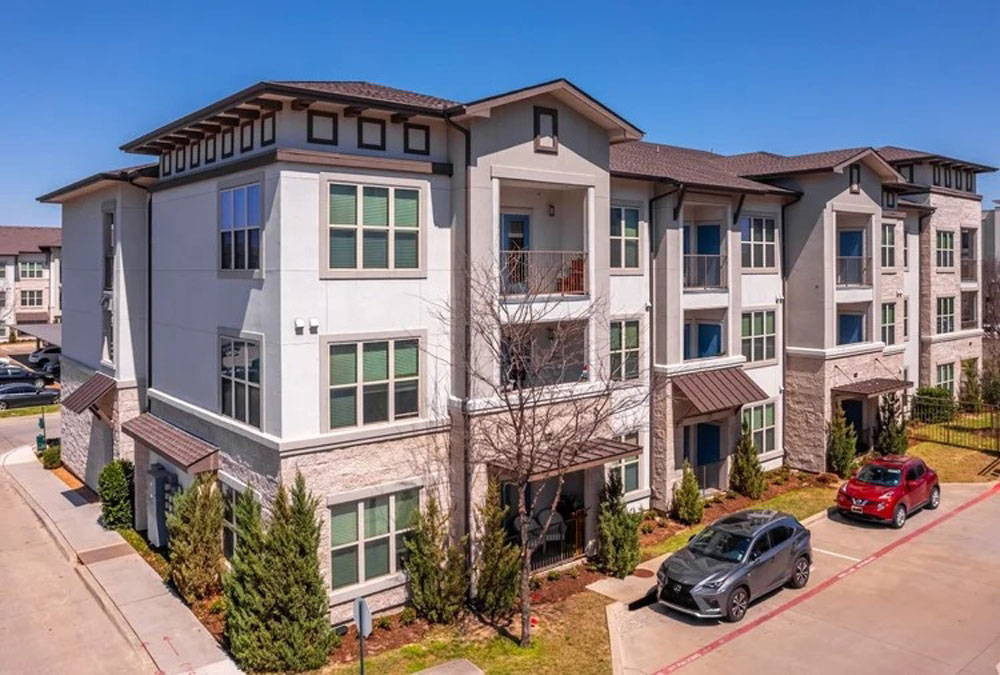
The Domain at Midtown Park in Dallas is an essential housing project of Waterford Property Company.
Photo courtesy of Waterford Property Company
The main problem, she says, is the rising cost of home construction. “The cost of producing new housing is going up due to land costs going up, the cost of labor going up, and the cost of materials going up,” she says. “To make a profit today, a builder has to build more expensive homes. Starter homes don’t cut it for them. Zoning is also part of the problem in land-use planning, along with building codes and other regulatory barriers.”
She said it is imperative for the country to solve this problem. “By making the average working American family more stable, you are making the American economy more stable,” says Ratcliffe.
A Bluegrass Building Solution
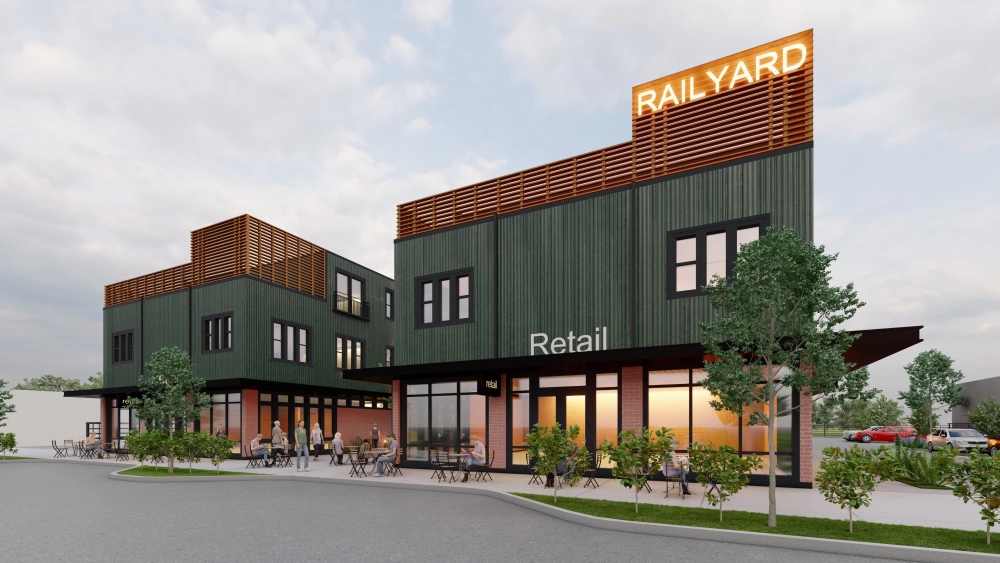
Against that backdrop, some companies and organizations are stepping up to provide innovative solutions. On December 4, 2025, Kentucky Lt. Gov. Jacqueline Coleman joined state and local leaders in Lexington to break ground on The Railyard, a new mixed-income, mixed-use infill development that will feature 32 rental homes and neighborhood retail on a long-vacant former industrial site on Delaware Avenue.
“Every Kentuckian deserves a safe place to call home,” Gov. Andy Beshear said. “This exciting new project in Lexington is an example of the good that happens when state, local and private partners come together with the shared goal of creating affordable housing for our people.”
Coleman added, “We believe access to affordable and safe housing is a basic human right. It will take all of us to create more affordable housing in Kentucky. I am thrilled to break ground on this project, which will change the trajectory of 32 Lexington families.”
The $7.5 million project received $25,000 in funding from the Kentucky Energy and Environment Cabinet and is eligible for a state tax reduction through Kentucky’s Brownfield Redevelopment and Reuse Program. The project is unique because it includes 12 one-bedroom apartments reserved for residents earning up to 80% of the area median income, along with two ground-floor commercial spaces. The Railyard is being developed by 1000 Delaware LLC of Lexington.
“The Railyard shows what collaboration can accomplish,” said Jim King, CEO of the Federation of Appalachian Housing Enterprises (FAHE). “This project brings together financing from Lexington-Fayette Urban County Government and FAHE on a project that will expand access to workforce housing and contribute to neighborhood revitalization and local economic growth. We are honored to be part of a partnership that is turning a shared vision into a lasting community asset.”

“By making the average working American family more stable, you are making the American economy more stable.”
— Janneke Ratcliffe, Vice President, Housing and Communities Division, Urban Institute
The Railyard is located on a one-acre former industrial property less than two miles from downtown Lexington. It is also near major health care employers and the University of Kentucky. Construction is set to be completed within 12 months. The first residents are expected to move into the neighborhood in late 2026.
Good Homes for People Who Work Hard
In Texas, another group is working hard to close the housing affordability gap for working families. At The Markson in Austin, what appears to be a luxury community at first glance is, in reality, an attempt to solve the workforce housing crisis.
The brand-new apartment complex includes a pool lined with cabanas, outdoor grills, pet spa, fitness center and scenic views of downtown Austin, but it is also part of a new kind of multi-family housing development aimed at providing good homes for hardworking Americans and their families. Located at 5313 Vega Avenue in Austin near the Barton Springs recreational area, the 330-unit complex features apartments ranging from one bedroom to three bedrooms with monthly rents ranging from $1,487 to $3,182.
What sets this community apart is that more than half the units are reserved for tenants earning 80% of the area’s median income, according to project owner Waterford Property Company. Based in Newport Beach, California, Waterford specializes in developing and owning affordable workforce housing. To date, the firm has developed or acquired 7,384 multi-family housing units and 1.5 million sq. ft. of commercial space. The firm’s total transaction volume to date is $2.82 billion.
The company states that its core mission is to “deliver impactful housing solutions.” To do this, the firm has built or acquired more than 4,500 rent-restricted units targeting low and middle-income tenants since 2014. Schoolteachers, police officers, firefighters and other first responders often qualify for these dwellings.