Even as amenities and opportunities blossom and diversify in Upstate South Carolina, manufacturing remains the region’s beating heart.
With a focus on mobility, life sciences and advanced energy, the annual Southeastern United States-Canadian Provinces Conference (SEUS-CP) — designed to enhance economic ties between six Southeast U.S. states and six Canadian provinces — convened in Greenville, South Carolina, in June 2026 for three days of connection and discussion.
There’s a certain amount of ceremony to the affair: South Carolina Governor Henry McMaster and Ontario Premier Doug Ford, for example, signed a memorandum of understanding to increase economic opportunities and collaboration between the two jurisdictions known for their automotive sectors. But there were also plenty of meetings taking place as executives, entrepreneurs, higher education leaders and government officials explored supply chain opportunities and common areas of endeavor.
In other words: Just a typical three days of doing business in the Upstate.
Asked for comment about the event and the Upstate, the team at the Consulate General of Canada in Atlanta, which provides services across those same six states in the Southeast, chose instead to send a comment they procured for me from an executive at a legendary Canadian corporation.
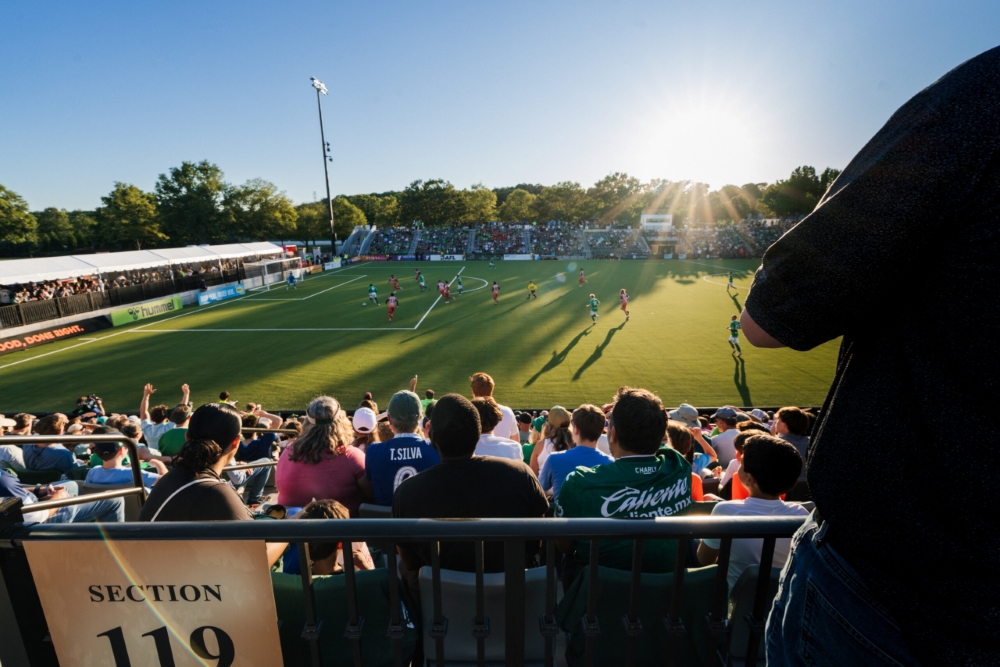
Opened in June in Mauldin’s mixed-use BridgeWay Station development, GE Vernova Park is home to the Greenville Triumph and Greenville Liberty professional soccer teams.
Photo courtesy of GE Vernova Park
“The Upstate of South Carolina continues to be a destination of choice for both domestic and international investment,” says Marcel Summermatter, senior vice president and regional vice president of commercial banking at TD Bank U.S. “Businesses are drawn to the region’s highly skilled workforce, strategic location, collaborative business environment and exceptional quality of life. Through our work with organizations across the market, we see continued interest in Greenville and the broader Upstate as a place where businesses can invest, innovate and thrive. The region’s commitment to supporting businesses of all sizes, combined with its vibrant communities and economic momentum, continues to create opportunities for long-term success.”
It’s a heady blend of quality of life and down-to-earth manufacturing — two strands that form the Upstate’s core DNA.
“We are growing by 81 people a day here,” says John Lummus, president and CEO of the Upstate SC Alliance. Drive around the region on any spoke and you’ll see new industrial development rising side by side with new luxury residential communities. And while data centers keep grabbing headlines, companies that make things keep grabbing real estate and talent. “We continue to see manufacturing projects and companies that are supporting manufacturing projects,” Lummus says of a region that hosts over 2,500 manufacturers.
Now the region needs attainable and affordable housing, he says, and it has federal Opportunity Zones in all 10 counties ready and waiting. “The city of Greenville is fairly well developed and the prices have gone higher,” says Lummus, himself a resident of Anderson, where he says the housing starts are unprecedented. “You’re seeing a lot of it going south — Mauldin, Simpsonville, Woodruff, then Laurens County, Fountain Inn,” he says. “There is lots of housing following I-385. The further down you get the better the price point is.”
A Global HQ Moves from Beijing to Woodruff
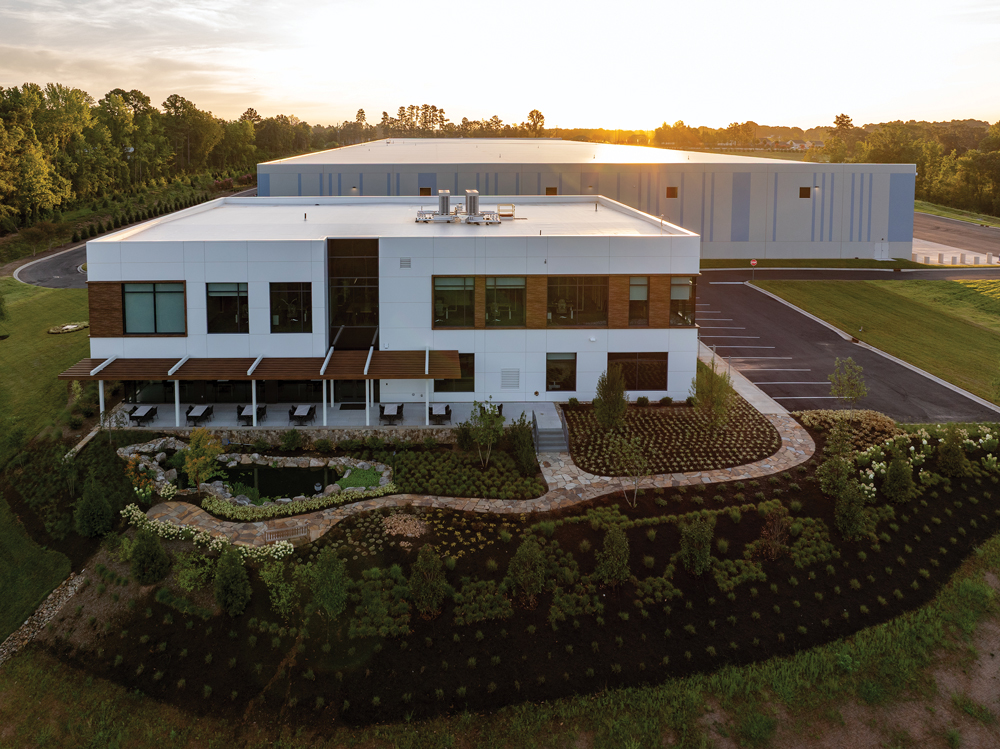
You can see plenty of that growth on the drive over to Woodruff — home to such growing operations as a $700 million, 300-job BMW battery plant and the recently expanded manufacturing campus making the signature sweet tea (and unsweet) at Milo’s Tea. There you’ll find a once-foreign investor with giant plans that first located in the region five years ago. Today, Airsys, a maker of mission-critical cooling and thermal management solutions supporting data centers, telecommunications networks, AI infrastructure and other critical digital systems worldwide, has relocated its global headquarters to Woodruff from Beijing, China, and is investing in multiple facilities in the Upstate.
The company also stepped up as a corporate partner to Greenville Triumph SC, a USL League One professional soccer club, for its Made in the Upstate match, held for the first time in July to celebrate the region’s manufacturing legacy, innovation and ingenuity as well as the more than 117,000 people employed in manufacturing across the Upstate today.
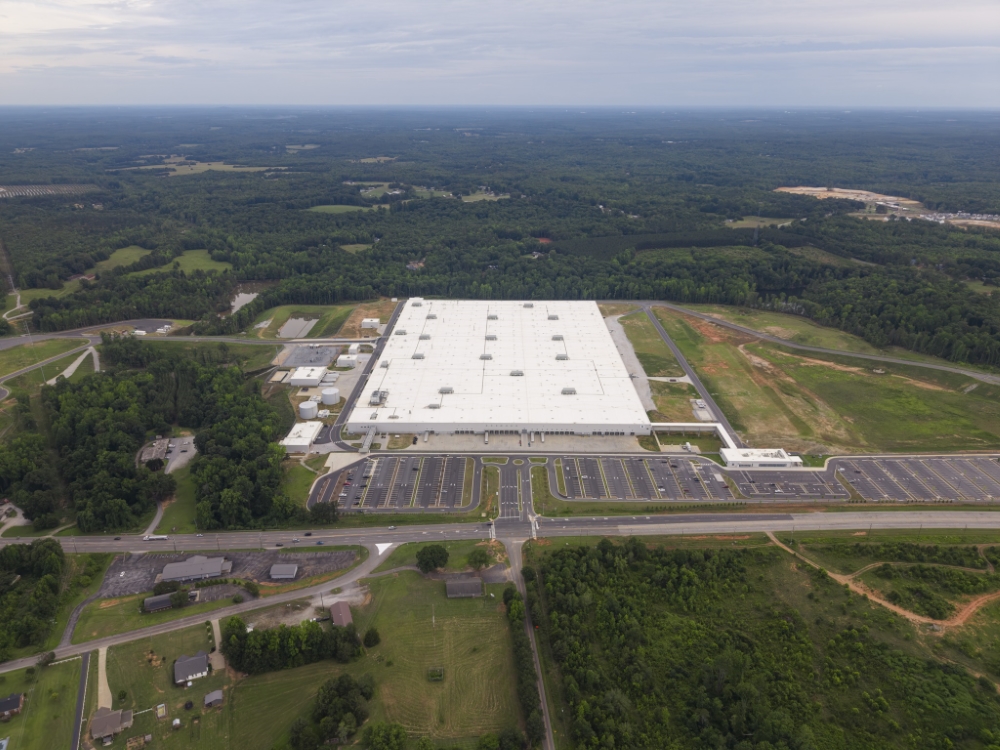
In December, the new BMW Group Plant Woodruff will begin series production of high-voltage batteries for the new fully-electric BMW iX5 assembled 15 miles away in Spartanburg.
Photos courtesy of BMW Group
Yunshui Chen, the founder and CEO of Airsys, has been getting to know the area’s ingenuity and charm for nearly a decade.
“I visited the Spartanburg area in December 2016,” he says by email. “A local company, a target for M&A, provided me all the positive info about Spartanburg, Greenville and South Carolina. Adding my own observation, and later research, I was convinced this should be Airsys’ future HQ location.”
The 60-acre HQ campus opened in May with a $60 million investment and an expectation of creating 215 jobs on site. Full manufacturing will commence in 2027 to make high-efficiency, zero-water cooling technologies supporting the rapid growth of AI and edge infrastructure. Data centers make up a large percentage of the $7.6 billion worth of projects the Upstate attracted last year.
“This investment reflects our commitment to advancing cooling innovation across the entire spectrum of mission-critical infrastructure. We have built a foundation on this 60-acre site that is designed to support our domestic and international customers and partners, Airsys’ rapidly expanding team and the local community for decades to come,” Chen said at a ceremony that included key partners from South Carolina Manufacturing + Commerce, OneSpartanburg, Inc., Choate Construction and architect LS3P. Chen himself now lives in Greer (the location of an intermodal inland port) and plans one day to establish the Blue Ridge History Museum in the area, with vintage firearms from his collection forming the theme.
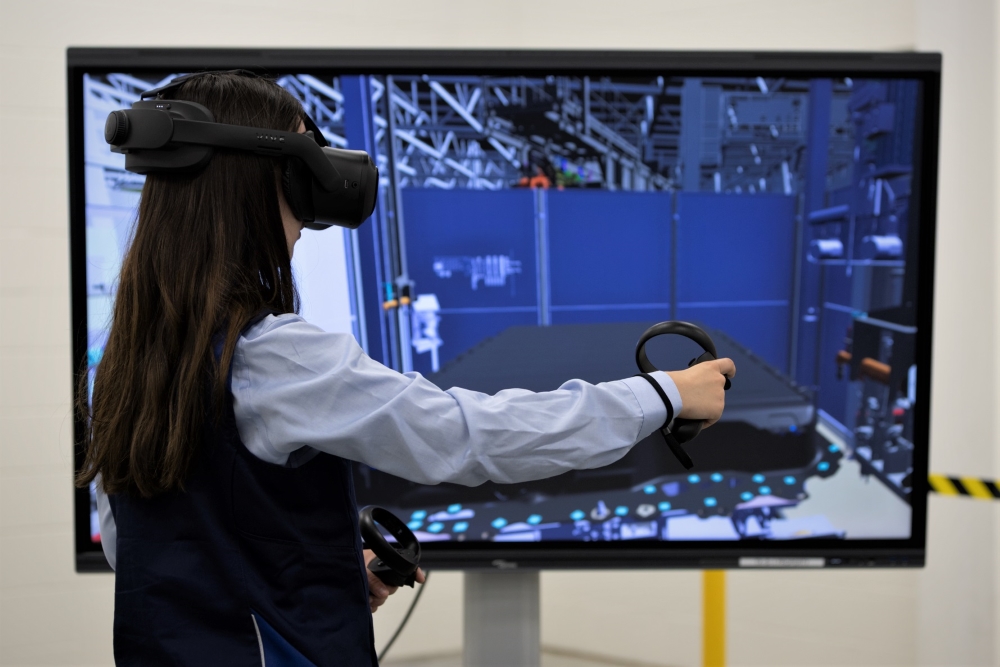
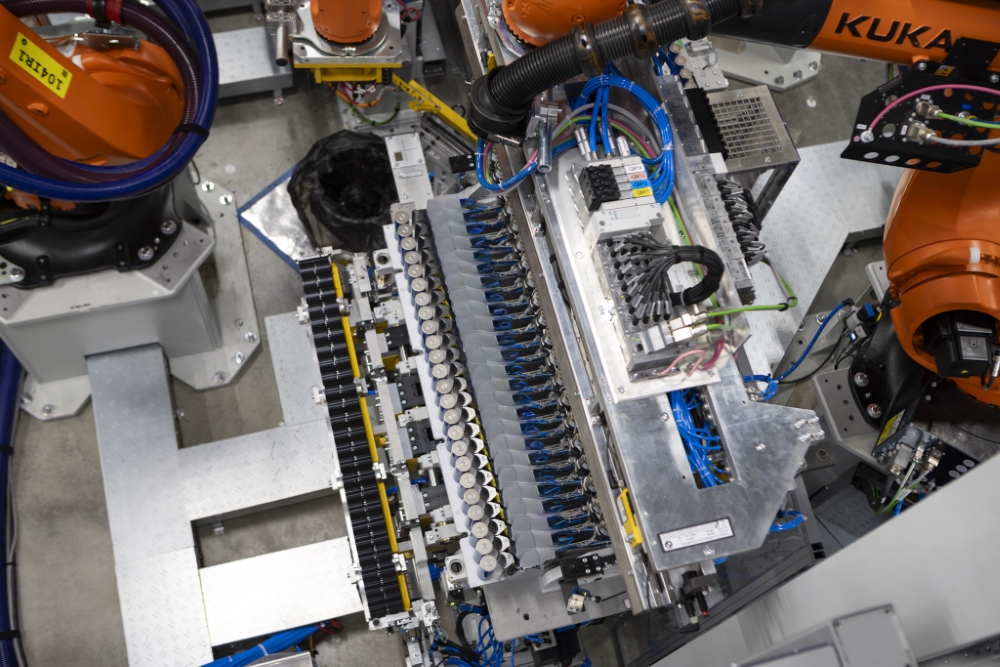
All production staff are undergoing VR training at the BMW plant in Woodruff, which is similar to other new plants in Hungary, China, Germany and Mexico.
Known already for its cooling solutions for schools and its modular telecom cabinets, Airsys says the new complex will allow it to “scale its diverse cooling portfolio across air, liquid, and hybrid technologies. From supporting legacy environments to high-density AI workloads, Airsys provides a bridge between current infrastructure and next-generation demands … Enhancing Power Compute Effectiveness (PCE) is a central focus of the new Airsys campus” — in other words, how much power is structurally available for IT compute after accounting for cooling, electrical losses and auxiliary systems. “We actually got our start with medical cooling,” says Airsys Global Marketing Communications Manager Jason Thomas during a tour of the facility. “Now the majority of MRI machines you see have Airsys cooling technology in them.”
Airsys has more than 1,000 employees across 16 global locations. The company is also operating an R&D site in Anderson. This is just the beginning of a multi-phase project, says Thomas.
“We’re still ironing out the details,” he says. “We’ll have another production facility. We’ll also have another corporate office building. The next phase is the future of Airsys where we’ll be doing a lot of our additive manufacturing. We’re going to have what is likely one of the world’s largest 3D printing operations for liquid cooling technology. So we’ll physically be printing out our own product in that next chapter.”
Additive manufacturing thereby tightens up the supply chain. “We’re not relying on other third-party vendors or other manufacturing components. We do it all in house,” Thomas says, noting how proud Airsys is to be part of the advanced manufacturing momentum in a state where manufacturing is a $30 billion industry. Moreover, Airsys is part of an international mix that just keeps making the circle bigger. “South Carolina being receptive on a personal level to international companies has been very conducive to our growth and one of the reasons that we’ve had a pretty seamless transition here,” he says.
There’s nothing foreign about foreign direct investment in the Upstate, where assets include U.S. Foreign-Trade Zone 38, one of two foreign-trade zones granted to the South Carolina Ports Authority. Look at the fine print and you’ll get a good idea of the Upstate’s continuing growth trajectory. Both of the SCPA’s FTZs are organized under the U.S. Foreign-Trade Zones Board’s alternative site framework, which allows establishments outside a strict physical footprint to be part of the zone. However, “FTZ 38 is nearing its 2,000-acre limit and expansion is not currently approved,” says the SCPA. “As of May 2026, new locations will be outside of the ASF service area and not subject to the zone’s activation limits.”
“At the top of the list now is a cybersecurity and AI facility. We are doing benchmarking trips for that.”
— Kelvin Byrd, Greenville Technical College Chief Economic Development Officer and Vice President, on the college’s No. 1 capital project priority now that its new welding center has opened
New Welding Center Accentuates Greenville Tech’s Profile
Inside the 245,000-sq.-ft. Airsys manufacturing facility, crated components and equipment sit side by side with massive 53-foot chiller units designed to be lifted onto a flatbed truck for transport to a final lift onto the top of a data center. Also on the floor we find Airsys Strategic Sourcing & Procurement Manager Kyle Merckle, whose resume includes time at Magna, Gestamp and Yanfeng Automotive. Merckle went to school at Greenville Technical College.
As it happened, I visited two campuses of Greenville Tech the day before in order to speak with the school’s Chief Economic Development Officer and Vice President Kelvin Byrd and to get a tour of the new 44,000-sq.-ft. Center for Welding & Automation Excellence (CWAE) on Greenville Tech’s Brashier Campus from Greenville Tech School of Advanced Manufacturing and Transportation Technology Dean Raymond James and Welding Technology, HVAC and IE Program Department Head Terrance Shearn.
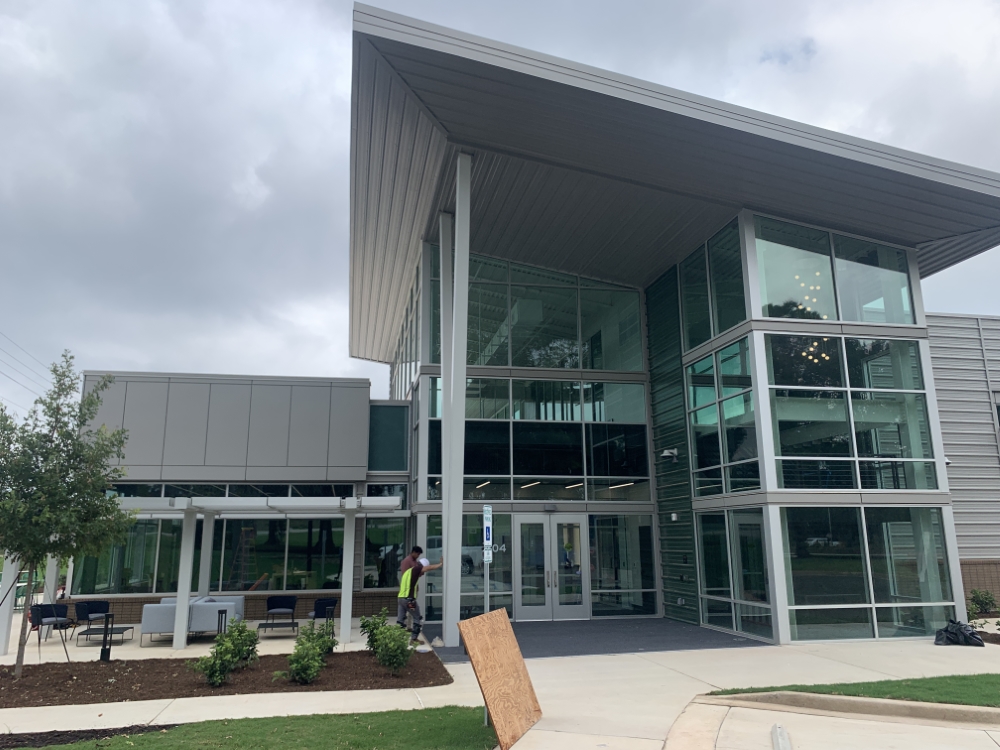
Advanced Manufacturing and Transportation Technology Dean Raymond James (left, below) and Welding Technology, HVAC and IE Program Department Head Terrance Shearn are overseeing every last detail at the school’s new Center for Welding & Automation Excellence (CWAE) on Greenville Tech’s Brashier Campus (above).
Photos by author
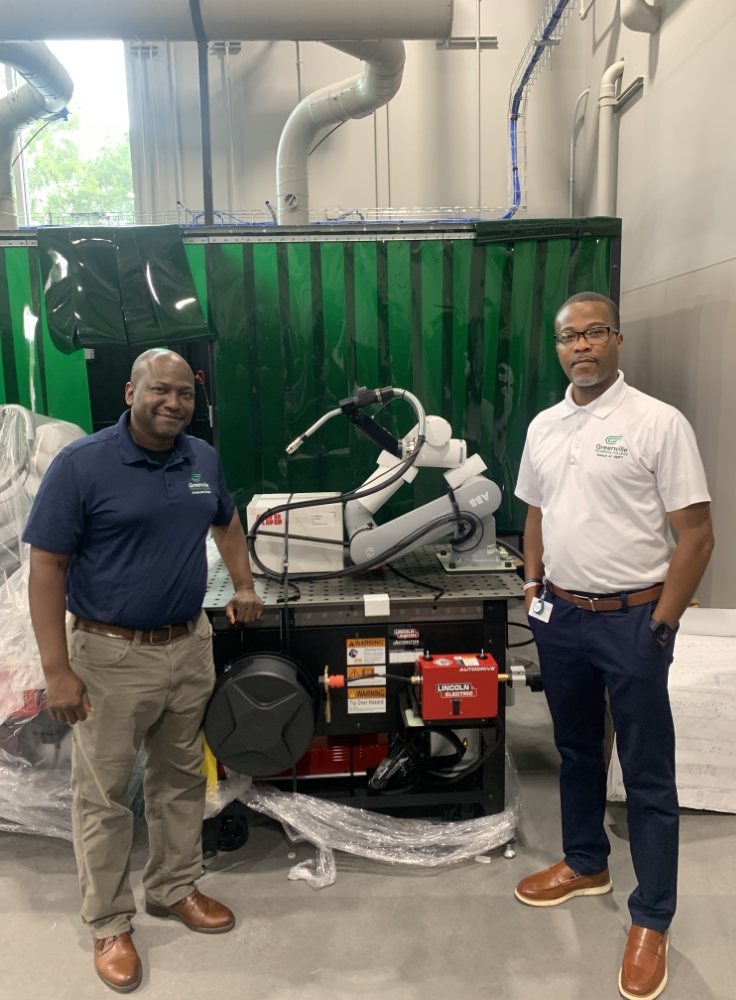
“The largest and most advanced welding facility in the Southeast, CWAE is designed to address the welding shortage head on,” said a Greenville Tech release when the facility opened on August 20. “Currently, there are 400,000 welding job openings nationwide and only one new welder prepared to enter the workforce for every four who retire or leave the field.”
In addition to $3 million in federal funds and $15 million allotted by the South Carolina General Assembly, the CWAE shows visible support from such companies as Fluor, Thompson Turner, Vermeer Charitable Foundation, Hirebotics, Truist Foundation and ORBIS Corp. “The country’s only AI-powered welding lab serves as a hands-on demonstration space where AI-powered welding systems are utilized to improve precision, efficiency, and quality in welding processes,” the college notes. “A Robotics Welding Lab allows students to master the limitless possibilities of automated welding. A Non-Destructive Testing Lab showcases the essential role of inspection and testing in ensuring the integrity and reliability of welded structures. MIG, pipe, and laser welding labs provide students with cutting-edge training.
Between expanded capacity at CWAE and additional career center seats for Greenville County Schools at the former welding training facility, the college and the school district have expanded capacity from 120 to 486 seats — a 305% increase — to meet workforce demand, the college says.
A native of Laurens County, Byrd came through the college’s welding program (which then maxed out at around 40 students) nearly 40 years ago when he was serving in the Army National Guard, then worked as a machinist at GE. “It’s amazing to see that transpire,” he says of the welding program’s evolution from his time as a student to the opening of the CWAE. Byrd was invited back to teach welding at Greenville Tech and never left, managing programs from automotive and mechatronics to machine tooling. Today, 33 years later, he oversees continuing education, corporate training, workforce development, work-based learning and an emerging alumni association that could be joined by some 80,000 eligible alumni. Among Byrd’s goals is to “make sure all students are exposed to some type of work-based learning.”
Byrd also oversees the college’s 40 advisory boards, gaining direct insight from industry about hiring needs, soft skills and equipment. He sees firsthand the value of partnerships, recalling one in particular from his time directing mechatronics as part of the college’s Center for Manufacturing Innovation. “We partnered with Kuka Robotics, but they did not have a landing spot in South Carolina on the East Coast,” he says. “They reached out and asked if we could allow them to put their school inside Greenville Tech. We agreed to it … They are able to buy equipment yearly, and most institutions are not. They have allowed us to use their equipment free of charge, and allowed our students to sign up for any program they have. That’s been a great partnership. We have a lot of those programs in place.”
Work-based learning was the topic of a dissertation Byrd recently completed. He concludes that students and industry alike need to be more aware of the experiential learning partnership opportunities that exist at places such as Greenville Tech. He cites a statistic that showed only 14% of 1,600 students in manufacturing studies at the school participated in a work-based learning program.
“A lot of business and industry was not aware they could come in and hire our students and connect with them early on,” he says. “There’s no obligation. We have things in place where there’s scholarship money. The state gives them a tax break for every student they hire in a work-based platform. They could hire them and help close this gap. We need to grow that more. Business and industry need to understand it’s here … they can tap into that.”
As they do, they’ll benefit from the unique blend of skills, outlook and collaborative spirit exuding from the Upstate.
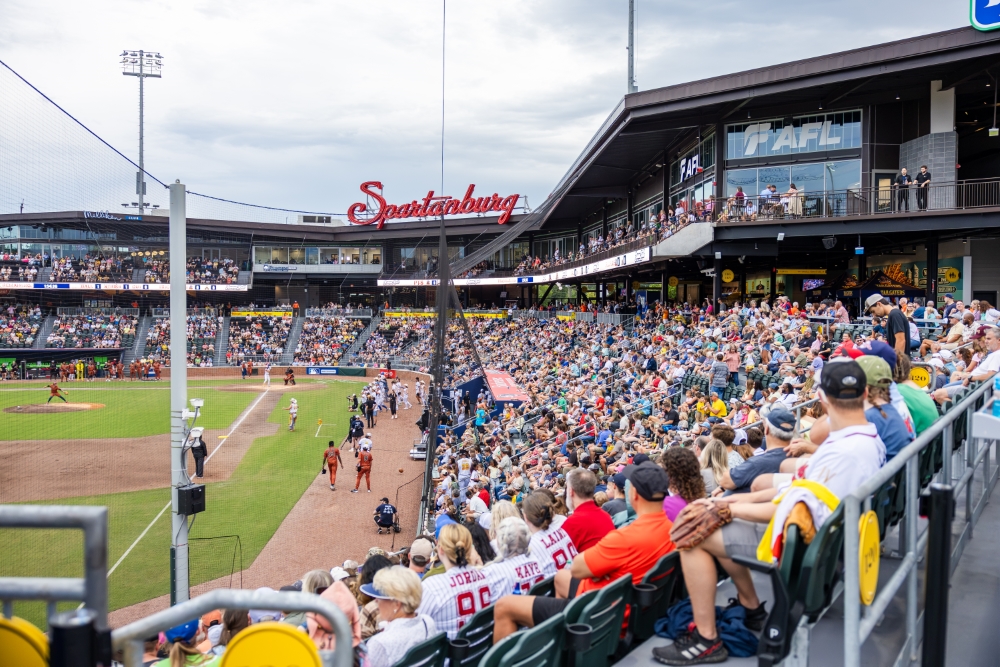
Photos by Becca Torncello courtesy of Hub City Spartanburgers
The view from the top of the AC Hotel in downtown Spartanburg reveals cranes and growth in nearly every direction, from Fifth Third Park (home of the Hub City Spartanburgers) to new office, hotel and government buildings. OneSpartanburg Inc. Vice President of Industrial Development Kyle Sox notes ongoing expansion in the city and county from fintech firm Advance America, Milo’s Tea ($200 million) and Keurig Dr. Pepper, among others. He also says bioscience facilitator Palmetto InnovaSphere is working with Spartanburg Community College to implement a site readiness grant from the South Carolina Department of Commerce to install, build and operate a cleanroom at the college’s Spark Center.