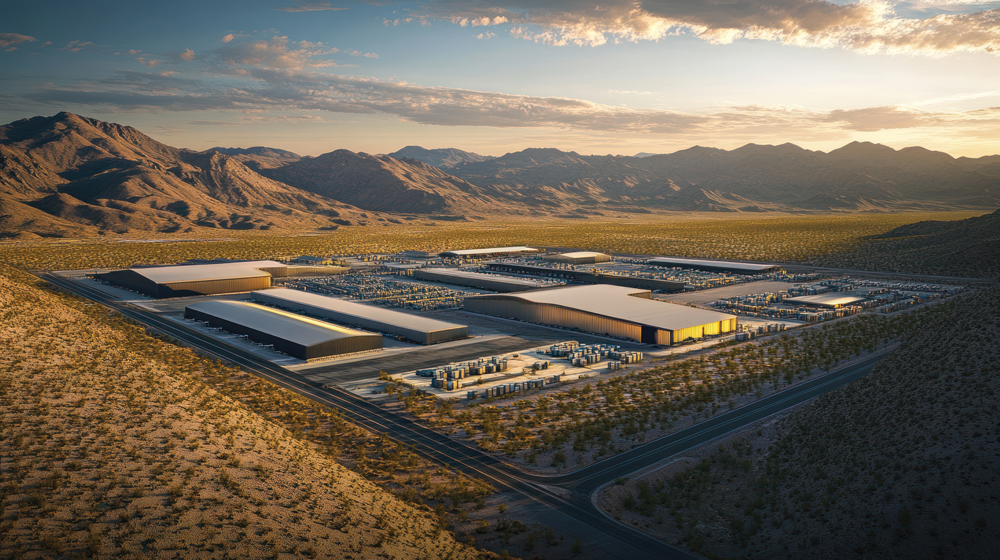
Hyperscale demand pushes limits and demands innovation.
The drain that data centers put on the power grid has gone from technical preoccupation to global cause. AI data centers and other hyperscale complexes drawing hundreds of billions of dollars in investment continue to also draw so many electrons that many states and major utilities have drawn up policies forcing end users to pay for or generate their own power, including the pending deployment of small modular nuclear plants.
Lost in power’s shadow can be the sector’s equally unprecedented demand on water resources — resources that other sectors need too. But it’s coming to the fore: A hyperscale complex looking at 1,300 acres in Polk County, Florida, for example, got city council approval in tiny Fort Meade but was met with a letter in opposition from Florida Commerce Secretary Alex Kelly, who noted among other things that the proposed project’s projected use of 50,000 gallons of water per day “appears woefully underestimated” for a 4.4-million-sq.-ft. data center.
As for those other sectors’ water needs, the Michigan Strategic Fund recently approved a $17 million infrastructure grant to the City of Coopersville in western Michigan that will allow the addition of a 20-inch transmission main and additional water storage tank that will accommodate the provision of 1.1 million additional gallons of water per day. The grant serves as the initial funding to begin a three-phase, $47 million water infrastructure upgrade plan, with additional water infrastructure costs to be covered by major water users and community service agreements. The upgrade will allow fairlife to create more than 150 new jobs and secure more than 400 existing positions at the company’s operation while also supporting the region’s overall food and agribusiness cluster.
“Investments like this strengthen the region well beyond a single project,” said Jennifer Owens, president of Lakeshore Advantage, noting that the combination of private investment and public infrastructure improvements “also builds momentum for the Lakeshore’s growing agribusiness and food production industry cluster, where reliable infrastructure and a strong supply chain are essential.”
What type of strain are data centers placing on such essential infrastructure. The 2024 United States Data Center Energy Usage Report published in December 2024 by researchers at Lawrence Berkeley National Laboratory put it in stark terms: “In 2014, data centers consumed 21.2 billion liters of water, with 64% in internal data centers. By 2023, hyperscale and colocation account for 84% of the 66-billion-liter total, while internal data centers fell to just 12%, driven by water efficiency improvements. These trends are expected to continue through 2028, with internal data centers falling to just 2% of the total. Hyperscale data centers in 2028 are expected to consume between 60 and 124 billion liters.”
In March, University of California Riverside engineering Professor Shaolei Ren published “Small Bottle, Big Pipe: Quantifying and Addressing the Impact of Data Centers on Public Water Systems,” based on collaborative research between experts at UC Riverside and Caltech. They found that “community waterworks across the United States will need billions of dollars in new infrastructure to meet spikes in data center water demands during peak usage. Without new water efficiencies, data center cooling systems four years from now could require 697 million to 1.45 billion gallons of additional peak water capacity per day — roughly equal to the typical daily water supply of New York City. Even with optimistic water use reductions, the new water capacity, if pooled, could rival the supply to half of New York City for most of the year.”

“There is no national reservoir.”
— “Small Bottle, Big Pipe: Quantifying and Addressing the Impact of Data Centers on Public Water Systems,” by Prof. Shaolei Ren (pictured) and co-authors, March 2026
In February 2026 alone, a UC Riverside release noted, “three major technology companies announced they had secured multi-million gallons of water per day for projects in Virginia, Louisiana, and Indiana, with the total water infrastructure cost approaching $1 billion. “Even if you have money, the water source is another challenge,” Ren said. “In many cases, the water is naturally replenished by snowpack and reservoirs. But reservoirs and snowpack are limited. You may have money to build treatment plants and pipes, but money can’t buy more snowpack.”
In an interview, Ren tells me his team found data through government records, water utilities and some industry disclosure. “If we wrote the paper last year, we would not have been able to see as much useful information,” he says. “In recent months, we were seeing huge investments in water infrastructure and some disclosure from government records because they signed water allocation agreements,” including for major projects in Indiana, Virginia and Oregon. He says he reached out to a few hyperscalers but none responded. “It’s not surprising, because this is something they don’t want to talk about in the public domain. I don’t really blame them. They’re doing their job, and we’re trying to understand the real challenge and also quantify the challenge.”
Ren says misinformation abounds on both sides of the issue: Data center users are neither taking away everyone’s water nor are they achieving true zero water consumption, though many of them have been working for years on better conservation and efficiency practices. Compared to agriculture, data centers use “a very small amount of water,” he says. “But there is not a national reservoir. It is mostly municipal water systems, and those are potable water. In some cases, one data center gets up to 8 million gallons per day. That amount of water is the region’s reserve for the next few decades.”
Similar to power, water is another bottleneck, Ren says. “We just need to learn and optimize. How can we build AI in a water-constrained world?” Asked for examples of solutions, he says one technical pathway is to increase the temperature set point for non-AI servers, which “will help reduce the water need a lot.” Meanwhile, policy solutions are available too. In some cases, state law or local authorities require new water users to pay for part of the water infrastructure cost. But that doesn’t necessarily get to the root of the issue.
“You pay for the share you’re responsible for,” Ren says. “But the water system is all interconnected. Maybe you have a new pipe and you pay for that pipe, but then you are stressing the upstream water treatment plant. That is community wealth. Instead of paying what you’re obliged to pay, companies can more proactively pay for infrastructure and maybe bring in more infrastructure.” Ren and his co-authors also recommend that data center developers report peak water use, not just yearly averages, since annual figures can hide short periods when cooling systems demand the most water. And they say data centers could work more closely with utilities by adjusting cooling methods — “using water-based cooling when the power grid is stressed and switching to dry cooling when the community water system is stressed, which uses fans or vapor-compression technologies similar to home air-conditioning systems but often requires significantly more electricity.”
Ren thinks all data center companies are focused on the water issue, and salutes Equinix and Google in particular for their willingness to openly talk about the benefits and challenges they are having with water. Indeed, in a March 2026 post about his company’s focus on responsible water use, Equinix Global Head of Masterplanning and Sustainability Andrew Higgins wrote, “At Equinix, we remain dedicated to being responsible stewards of water. We do this by assessing the local water context of all new builds and optimizing our data centers for water efficiency, measuring and reporting water usage effectiveness, and proactively working with partners and communities to expand the availability of alternative water sources.
Ultimately, Ren says, companies and communities alike need to face a simple fact: “Water is a constraint, and in some places a binding constraint. Let’s be straightforward about it and address this issue more proactively. Dismissing these concerns … is not helpful.”