A new federal office will expedite major projects.
Canada’s industrial market had a bumpy 2025 thanks to uncertainty surrounding tariffs and the looming renegotiation of the USMCA trade agreement that will likely result in bilateral trade deals between the U.S. and its neighbors. But recent analysis from JLL, its Canadian Industrial Demand Survey Q4 2025 specifically, has a positive outlook for 2026.
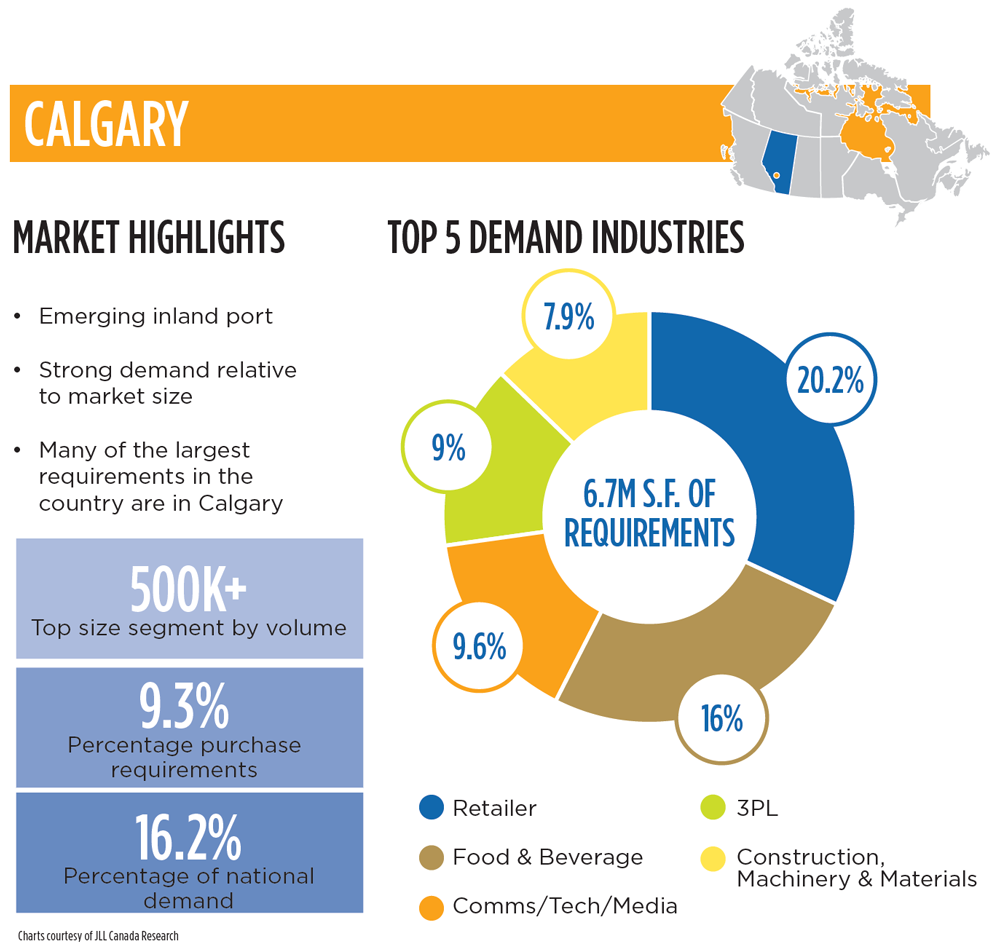
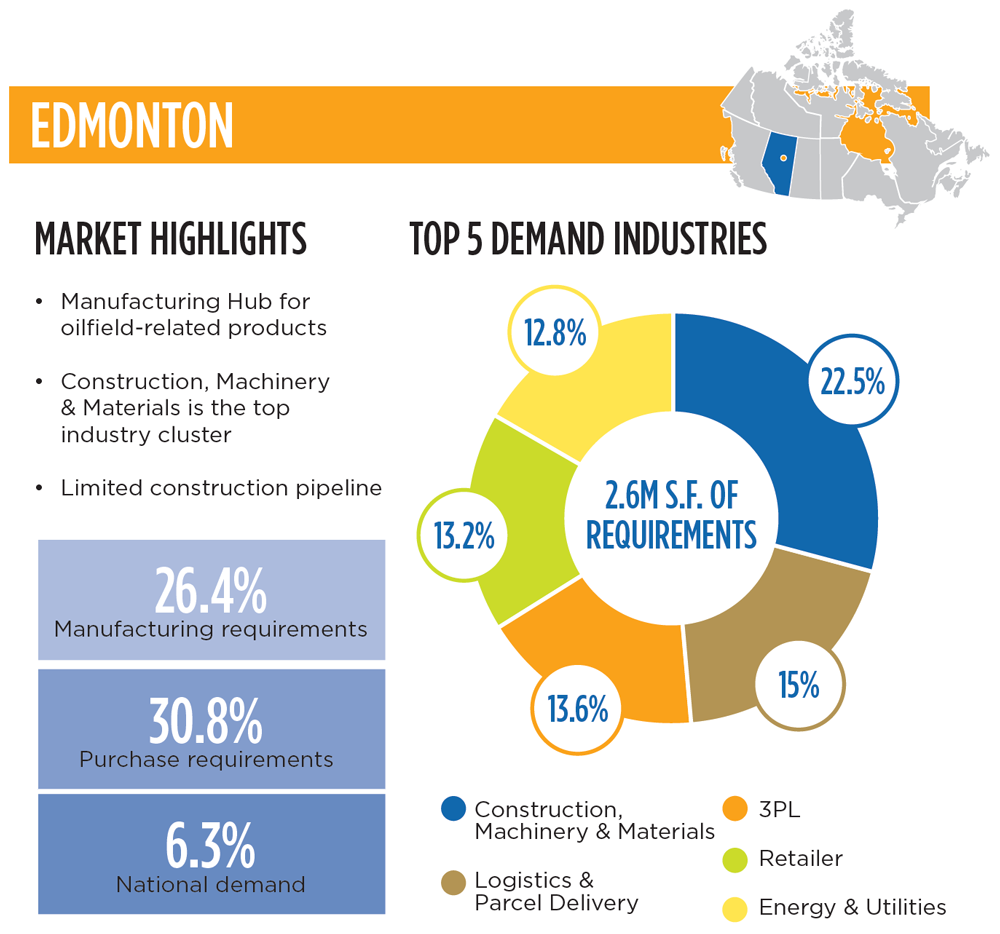
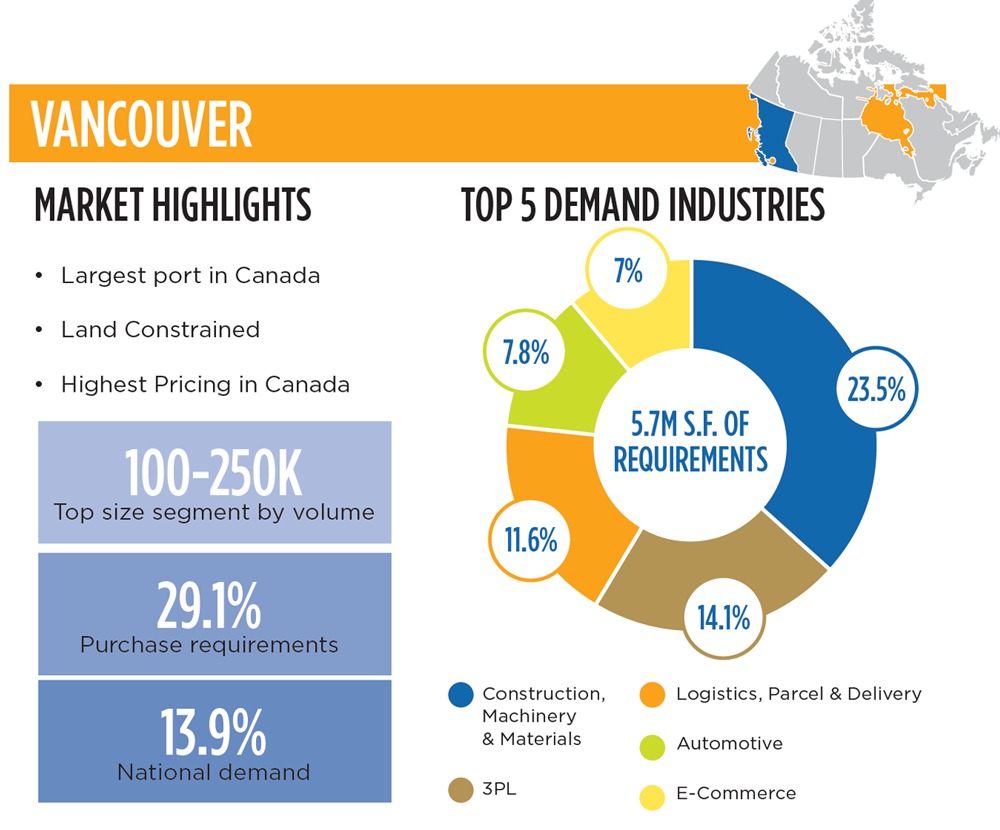
The report looks at six Canadian industrial markets, including three in Western Canada — Vancouver, Calgary and Edmonton. This is the region showing the strongest demand in the coming year with Calgary in particular punching above its weight class.
“Both Calgary and Vancouver are expected to outperform that overall Canadian Industrial market in 2026,” says Chad Piche, research manager, Canada Industrial, at JLL. “This is due to the amount of active user requirements we tracked versus the amount of available space in the market in both existing and under-construction buildings,” he explains. “Calgary had a demand-to-availability ratio of 103%, and Vancouver had 81%. By contrast Southwestern Ontario had a ratio of only 16% and Montreal only 18%.”
Piche says several factors are behind the expected strong demand in Western Canada.
“First off, it has been a market that has been largely spared from the uncertainty of U.S. tariffs. More manufacturing-centric markets like Southwest Ontario have been hardest hit as many users are reliant on U.S. exports and are unlikely to be looking for new space until a lot of the current uncertainty fades,” he says. “Calgary has also been emerging as the primary distribution hub for Western Canada in recent years. It is often referred to as an ‘inland port’ due to proximity to Vancouver but with a much lower price tag and much more space for the development of large distribution centers that is much harder in Vancouver due to land constraints. Recent trade disruption is also an opportunity for a growing distribution hub like Calgary as it may benefit from increased interprovincial trade as well as trade with Asia-Pacific due to demand spillover from Vancouver.”
Major Projects Office
In August, Canada’s Prime Minister Mark Carney launched the Major Projects Office (MPO) to “fast-track nation-building projects by streamlining regulatory assessment and approvals and helping to structure financing, in close partnership with provinces, territories, Indigenous Peoples and private investors,” according to a statement. In September, five projects were referred to the MPO for consideration, three of which are in Western Canada. The Prime Minister’s Office has made available the following project synopses:
LNG Canada Phase 2, Kitimat, British Columbia: “This project will double LNG Canada’s production of liquefied natural gas, making it the second-largest facility of its kind in the world. It is expected to attract significant private-sector capital to Canada, contribute to our GDP growth, and support jobs and economic growth in local communities. It will diversify our trading partners and meet increasing global demand for secure, low-carbon energy with Canadian LNG, contributing to worldwide energy security by increasing the supply of available natural gas for Asian and European partners. Leveraging Canada’s sustainable advantage, emissions are projected to be 35% lower than the world’s best-performing LNG facilities and 60% lower than the global average.”
McIlvenna Bay Foran Copper Mine Project, East-Central Saskatchewan: “Situated in one of Canada’s richest mineral belts and working in close collaboration with the Peter Ballantyne Cree Nation, this project will supply copper and zinc to strengthen Canada’s position as a global supplier of critical minerals for clean energy, advanced manufacturing and modern infrastructure. It will create 400 jobs, boost local economies in Saskatchewan and Quebec, where the copper will be smelted, and is expected to be the first net-zero copper project in Canada.”
Red Chris Mine expansion, Northwest British Columbia: “This major expansion project will extend the lifespan of the mine by over a decade, increase Canada’s annual copper production by over 15%, employ about 1,500 workers during operations, with a peak of approximately 1,800 workers during construction, and reduce greenhouse gas emissions by over 70% when operational. Working in close collaboration with the Tahltan Nation, it is an important step in reconciliation and further developing the potential of Northern British Columbia and will strengthen Canada’s role as a reliable supplier of copper and other resources essential for global manufacturing and clean energy technologies. This mine is part of the proposed Northwest Critical Conservation Corridor. This corridor is being moved to the MPO for consideration, as it presents opportunities for critical minerals development, clean power transmission, Indigenous project leadership and a potential new conservation area the size of Greece.”
“At this moment of transformative change, Canada’s new government is focused on delivering major projects to connect our communities, empower Canadian workers and build Canada’s strength,” said Prime Minister Carney. “With the first in a series of new projects, we will build big, build now and build Canada strong.”
“This is a defining moment for Canada. To get to ‘one project, one review, one decision’ will set Canada apart globally and will attract enormous inflows of capital,” added Major Projects Office CEO Dawn Farrell.