Finding the missing talent is job one for most employers today.
When Lightcast reported last year that baby boomers had slipped to the second smallest generation in the U.S. workforce, the finding reinforced what most economic development leaders believe is the single greatest challenge facing American employers: the ever-shrinking labor pool.
In Lightcast’s groundbreaking study, titled “The Rising Storm,” the Moscow, Idaho-based labor data analysis company revealed that millennials make up the largest cohort of the American workforce, at 59.81 million workers. Ranking second is Gen X with 51.39 million, followed by Gen Z with 29.24 million. Bringing up the rear are baby boomers (25.1 million) and the Silent Generation (1.16 million).
“The Silver Tsunami has hit shore,” the report noted. “Just as the Baby Boomers’ entrance into the labor market created a surge in the number of available workers, their retirement is leaving behind a workforce whose numbers are not keeping pace with the U.S. population.”
The double whammy for American employers hit in the summer of 2020 when the onset of the global COVID-19 pandemic sent shockwaves through the workforce, prompting millions of U.S. workers to abandon their careers and quit working altogether.
“The Labor Force Participation Rate took a serious hit in 2020 and has not recovered since,” Lightcast reported. “In 2019, roughly 95 million people in the U.S. had no job and were not actively looking for one. Since 2020, that number has been hovering near 100 million.”
The combination of these factors created the perfect storm undermining both employment and productivity. “Since the start of the decade, 5 million economic producers have become consumers only, meaning that a larger share of people are now depending on our working population, which is not keeping up,” the report notes. “More than anything else, Baby Boomer retirements are driving that shift.”
As company leaders around the country grapple with the fallout of these trends, the people responsible for leading economic development at the state and local levels are wrestling to help employers solve the many challenges created by rising worker shortages.
The Not-So-Magnificent Seven
In an attempt to ascertain how these problems manifest themselves in markets around the U.S. — and to learn how communities are stepping up to solve them — we reached out to economic developers nationwide. The first thing we learned is that there is consensus on the biggest challenges confronting workforce development in 2026. Here are the top seven:
- Replacing the workers who have been lost from the workforce.
- The need to upskill existing workers, particularly in the high-demand jobs being created by advanced manufacturing.
- The increasing role that artificial intelligence plays in disrupting the workforce.
- The changing nature of work itself and the relative importance that different generations place on it, affecting everything from return-to-office policies to work-life balance.
- The need to elevate training in soft skills such as communication, work ethic, time management and other skillsets foundational to employee productivity.
- Improving access to quality, affordable child care services for working parents.
- Developing talent retention strategies essential for maintaining a high-quality workforce in a labor market that is getting tighter and more competitive every day.
A recent Industrial Media LLC poll corroborates these findings. The nationwide survey of manufacturers in November showed that 46% said that closing the skills gap was the most critical factor for ensuring the survival of manufacturing in the U.S. Closing the skills gap topped all other answers by a significant margin.
What follows is a snapshot of comments from the economic developers we interviewed for this story:
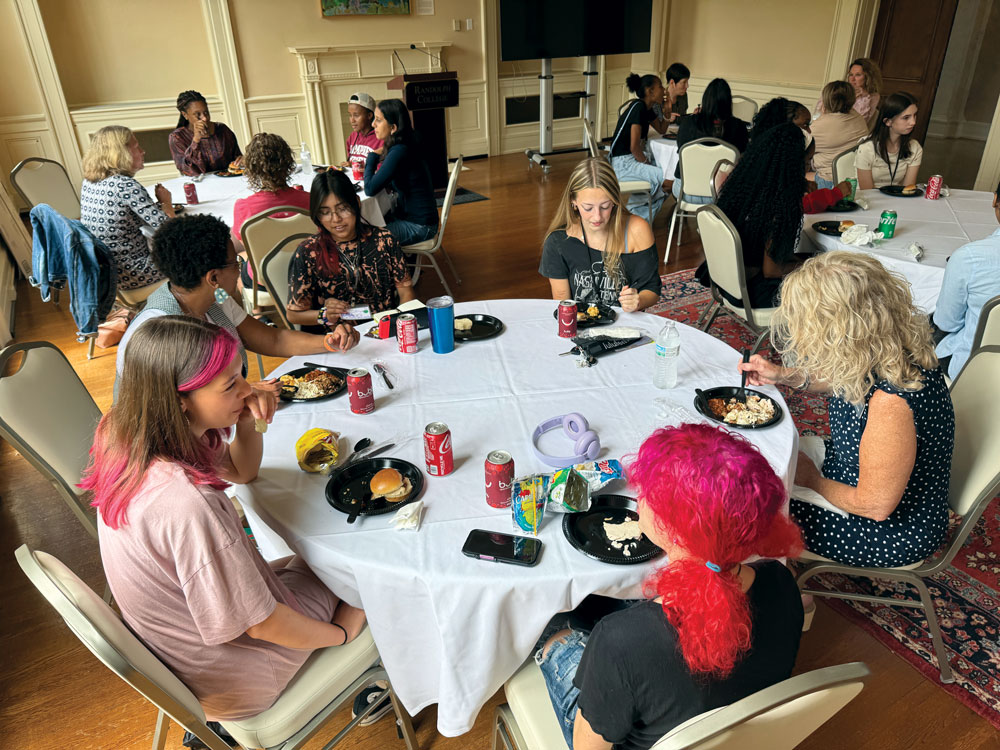
She Week is a program that exposes high school girls to career opportunities and adult female mentors in south central Virginia. It is organized by the Lynchburg Regional Business Alliance.
Debi Durham, Director, Iowa Economic Development Authority and Iowa Finance Authority:
“The biggest workforce challenge in 2026 will be backfilling the wave of retiring baby boomers. Iowa is tackling this through a comprehensive workforce strategy focused on talent attraction, upskilling and retention. In 2025, we added 22,000 people to our labor force and increased our labor force participation rate by 0.5%, outperforming the nation. We also implemented unemployment insurance reform and created a one-stop shop for employers to streamline hiring and provide workforce solutions. These efforts reflect our commitment to ensuring businesses have the talent they need to grow.”

“The biggest workforce challenge in 2026 will be backfilling the wave of retiring baby boomers. Iowa is tackling this through a comprehensive workforce strategy focused on talent attraction, upskilling and retention.”
— Debi Durham, Director, Iowa Economic Development Authority
Rod Crider, President and CEO, Rowan (County) Economic Development Council, Salisbury, North Carolina:
“Three challenges come to mind from an event we held with manufacturers: First is attracting and retaining top talent. This remains a top concern of employers, though the urgency is lessening. Recent mass layoffs attributed to AI or tariffs are making the job market more favorable for employers, but boomer retirements and slow population growth make it a significant challenge. Second is upskilling and reskilling. Employers have to be able to act quickly to prepare their workforce for what’s next. This means more investment in professional development and career growth to promote internal mobility. The adoption of AI has much merit, but it is not fully trusted, and job replacement fears are hindering adoption. Third are the employment challenges with soft skills. Employers report issues with punctuality, demonstrating dependability and time management, which are crucial for workflow and reliability. They are addressing this with reward systems, coaching and cultural changes such as team-building exercises.”
Michelle Bauer, Chief Operating Officer, Tampa Bay Economic Development Council, Tampa, Florida:
“The first challenge is artificial intelligence, which includes how to upskill or reskill existing workers to maximize the utility of AI in the organization and ensure competitiveness. This is a common challenge among diverse employers in Tampa Bay. Moffitt Cancer Center and many other employers are enrolling their teams in courses such as the one that the University of South Florida is offering to become more fluent in AI usage. CareerSource Florida offered AI Training Grants to Florida employers (this program ended in June 2025). Those who have to reduce their workforce are availing themselves of CareerSource Tampa Bay to help displaced employees transfer their skills into new lines of work or upskill/reskill for newer, more relevant positions within their field. A related challenge is finding enough talent with the AI skillsets employers need. Hillsborough County is the No. 1 county in Florida and No. 24 county in the U.S. for AI job openings. Thanks to the USF Bellini College of AI, Cybersecurity and Computing, Tampa is becoming a destination for AI innovation.”
In 2019, around 95 million people in the U.S. had no job and were not looking for one. Since 2020, that number has been close to 100 million.
Source: lightcast.io/resources/research/the-rising-storm
Kim Allonce, Director of Economic Development, City of Johns Creek, Georgia:
“AI will disrupt the labor market as more companies integrate it into their systems to improve efficiency, potentially leading to additional layoffs across industries. I also expect that employers will continue to struggle to find the right talent to fill job openings. Downtown areas are likely to experience a resurgence as more organizations implement mandatory return-to-office policies. And employee retention rates will improve as competition in the labor market increases and fewer job opportunities become available.”
Mike Swesey, President and CEO, St. Petersburg Economic Development Corp., Florida:
“One of the biggest workforce challenges is going to be the full-out storm that’s been brewing between the generations about the role of work. Now that we’re fully out of the pandemic and more companies are requiring return to office, Gen X, millennial and Gen Z expectations may clash. While Gen X entered the workforce determined to be different from our parents, we seem to have absorbed boomer or even Greatest Generation attitudes towards work: Do what’s required, whatever it takes. Millennial and Gen Z employees are far more concerned with work-life balance and are more likely to push back on obligations that cut into ‘me’ time. We see less of this in St. Pete, because while many of our employers have ‘work from work’ policies where employees need to be in the office, it’s offset by our overall work-life balance culture. When you’re not working, you’re more likely to be out in nature or enjoying something cultural, so time not at work is perhaps more restorative here than elsewhere. Outside our area, I see this being a pain point for both employers and employees in the coming year.”
Christine Kennedy, Chief Operating Officer and Executive Vice President, Lynchburg Regional Business Alliance, Virginia:
“Creating career pathways for students and existing workers is a challenge we took on at the Lynchburg Regional Business Alliance. After taking 16 educators to Alabama to explore everything they were doing in West Alabama around the Mercedes-Benz plant to boost career pathways for students, we came back and created our own program called Worlds of Opportunity. It took us 18 months to collect feedback, but we created a Workforce Roadmap that gave us what we needed to look for and hire talent. We are now in year three of implementing that roadmap. Around 135 to 140 employers participate in this program. More than 2,500 middle-schoolers go through this expo over two days. Kids are exposed to the whole manufacturing process. It is very hands-on. Employers are enjoying connecting with young people. From that, we created She Week — a women’s career summit in which we fill the gaps for girls on career pathways. It is a weeklong experience that includes college tours, personality assessments, and interactions with female leaders. We also do a section on financial literacy. These programs have been wildly successful.”