
“Oh, to be in England / Now that April’s there …”
— Robert Browning, “Home-thoughts, from abroad,” 1845
Anyone engaged in regional investment attraction knows an essential truth: Things seem to go much better when your area’s economy and policies align with your country’s.
Judging by the results of this year’s Global Best to Invest index, things could not be more united anywhere in the world than in the United Kingdom, whether it’s April, September or December.
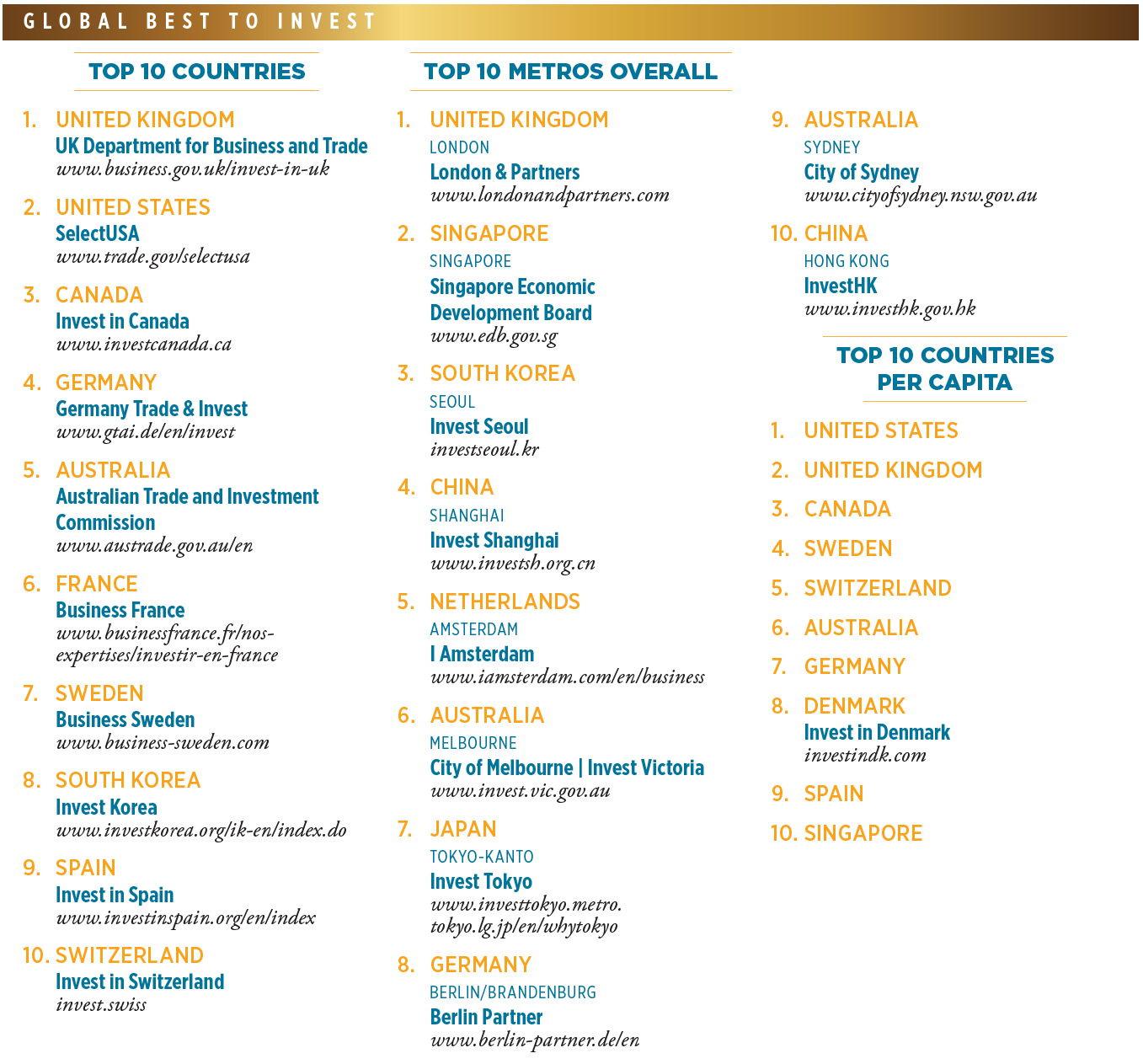
Based on a index comprising data from Site Selection’s Conway Projects Database, Kearney’s Global FDI Confidence Index, IMD’s World Competitiveness Rankings, the United Nations’ Human Development Index, the OECD, the World Intellectual Property Organization and DHL’s Global Connectedness Index, the United Kingdom is No. 1, followed by the United States, Canada, Germany and Australia.
In a separately calculated index derived from data found in the Conway Projects Database, Kearney’s Global Cities report, IMD’s Cities report, Mori Foundation’s Global Power Cities Index and startup ecosystem analysis from Startup Genome and Startup Blink, the London metro area also comes out on top, followed by Singapore, Seoul, Shanghai and Amsterdam.
“The UK earning top spot in Site Selection’s Global Best to Invest rankings — and London being recognized as the world’s number one metro — reflects what leading businesses already know,” His Majesty’s Trade Commissioner to North America Oliver Christian tells Site Selection. “The UK is simply the best place in the world to invest, grow and succeed. Our Modern Industrial Strategy offers the certainty and stability that C-suite leaders demand, backed by the lowest corporation tax rate in the G7, capped at 25% for this Parliament. With Europe’s largest venture capital market, world-class talent, trade agreements spanning over 70 countries and territories, and a government with growth at the heart of everything it does, the UK’s appeal to international investors has never been stronger.”
That appeal applies as much to individuals as it does to companies, given policies like the doubling of resources behind the UK’s Global Talent Taskforce that were announced at the World Economic Forum in Davos in January. Among its planks: the reimbursement of visa fees for select trailblazers in deep tech sectors and those joining the most promising UK companies in priority sectors; establishing new functions to support individuals to relocate and companies to set up UK offices at pace; and “emboldening its concierge offer to the world’s elite talent, starting with a dedicated focus on international AI talent,” said a release from the UK government clearly targeted toward North American companies at a time of deep political and trade consternation.
The £54 million Global Talent Fund is one part of more than £5 billion that the UK Department for Science, Innovation and Technology will spend on top science and research talent with what the UK government calls “a suite of flagship talent and grant schemes running to recruit the very best scientific and research talent.”
“We are positioning the UK as the destination of choice for the brightest minds and innovators as we strive to lead the global race for talent,” said UK Business and Trade Secretary Peter Kyle. “By attracting leaders in AI, quantum, life sciences and clean energy, we will drive growth, innovation and make the UK the premier launchpad for the world’s best entrepreneurs.”
“North America is home to some of the world’s most dynamic innovators, researchers and entrepreneurs,” Christian added in Davos. “Whether you’re a tech founder in Silicon Valley, a researcher in Boston or an entrepreneur in Toronto looking to scale globally, these new measures will make it easier than ever to grow your business in Britain.”
One indicator such policies are working: London & Partners reported in the lead-up to London Life Sciences Week in November 2025 that up to that point, the London metro area had attracted $2.1 billion in life sciences venture capital investment up to that point in the year, more than 1.6 times the amount raised in 2024 ($1.3 billion) and over triple the amount raised by Paris ($679 million) as of that date.
When talent gets there, they’ll find connectivity abounds, says Jonathan Hjembo, senior manager of infrastructure research for TeleGeography, which in March delivered its latest Market Connectivity scores for worldwide metros based on 45 indicators that include data center power and cloud onramps.
“It’s no coincidence that Site Selection’s list of Global Best to Invest markets and TeleGeography’s list of top connected markets have significant overlap,” Hjembo says. “Locations that have healthy investment indicators also have the dense underlying communications infrastructure that makes an economy flourish. London currently ranks as the strongest global metropolitan market according to TeleGeography’s Market Connectivity Score, with more carriers present and more direct international city routes than any other market. London’s ranking is further bolstered by the fact that it is also one of the world’s largest data center and internet peering markets.”
TeleGeography’s next-highest-ranked markets for the first half of 2026 are Frankfurt, Germany; Tokyo, Japan; Singapore; and Amsterdam, further reinforcing the Global Best to Invest findings.
Movement in the Rankings
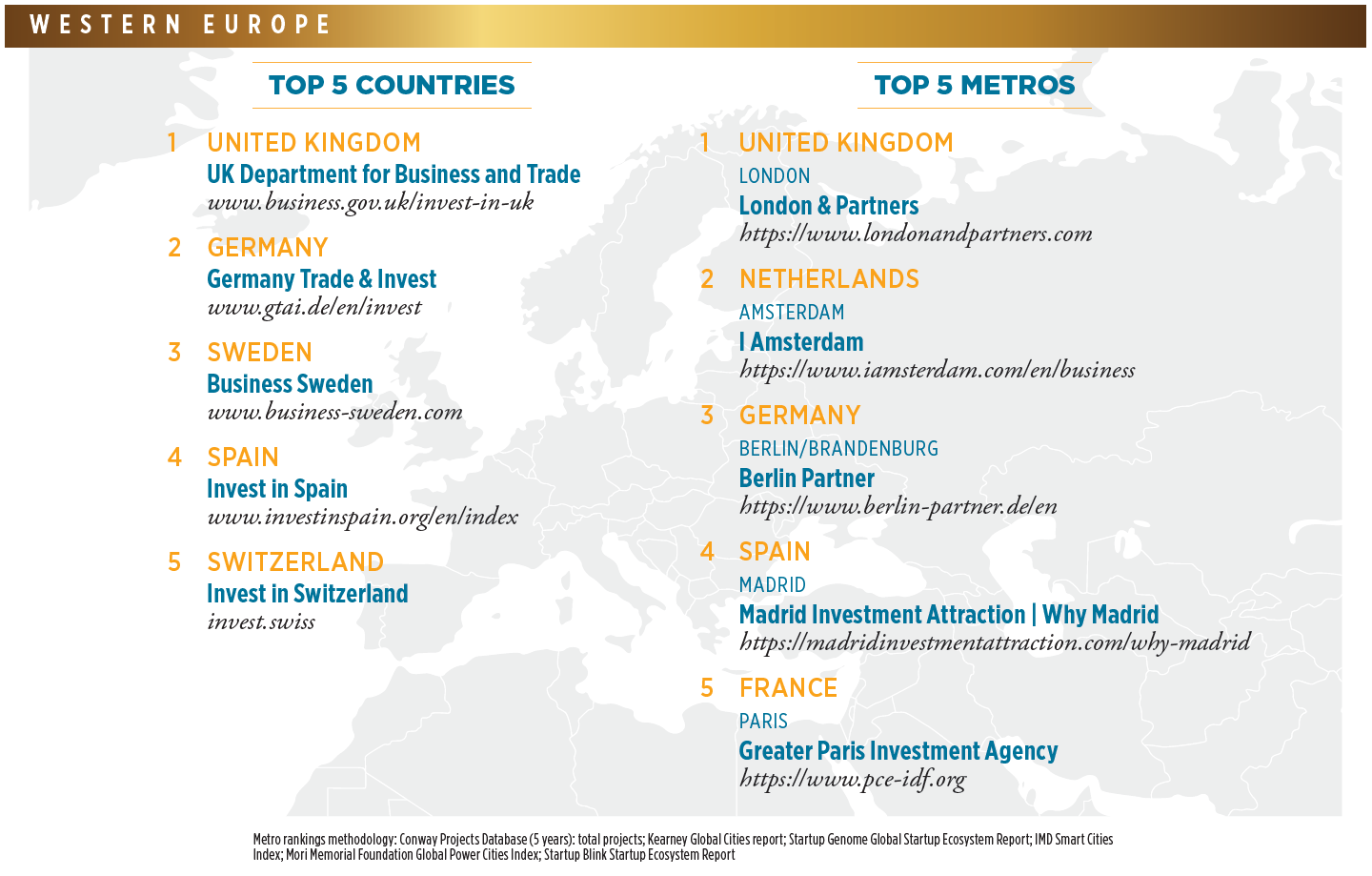
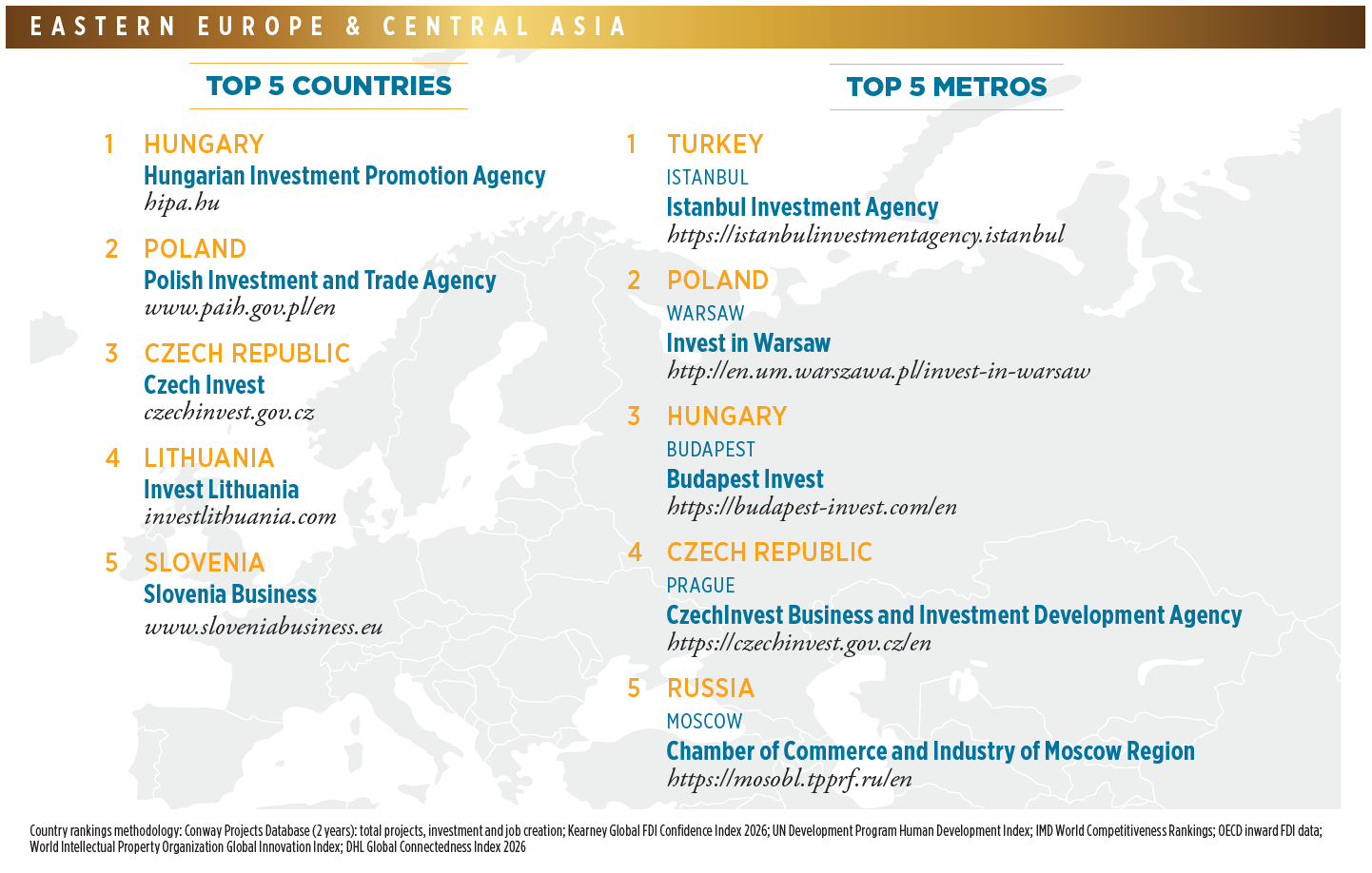
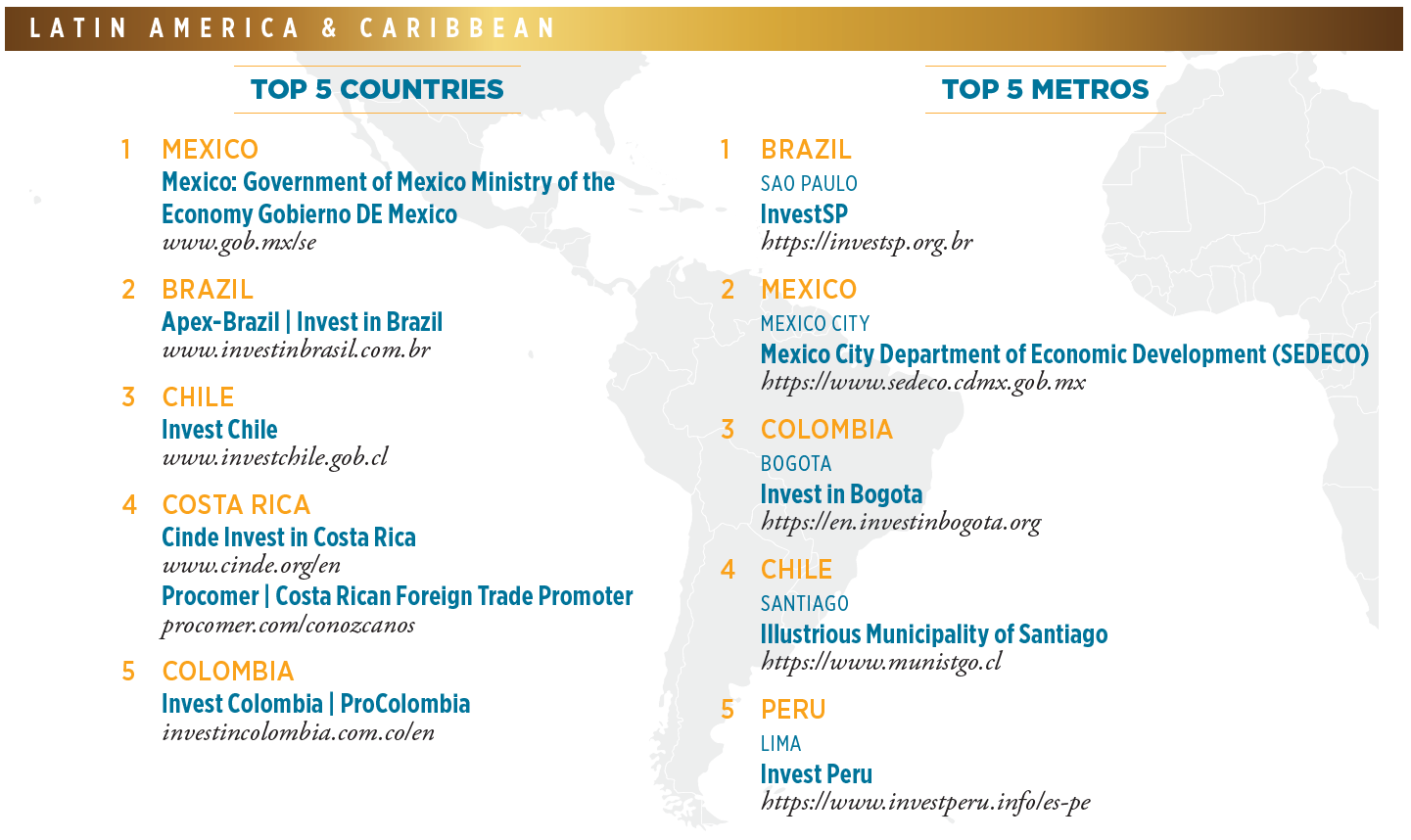
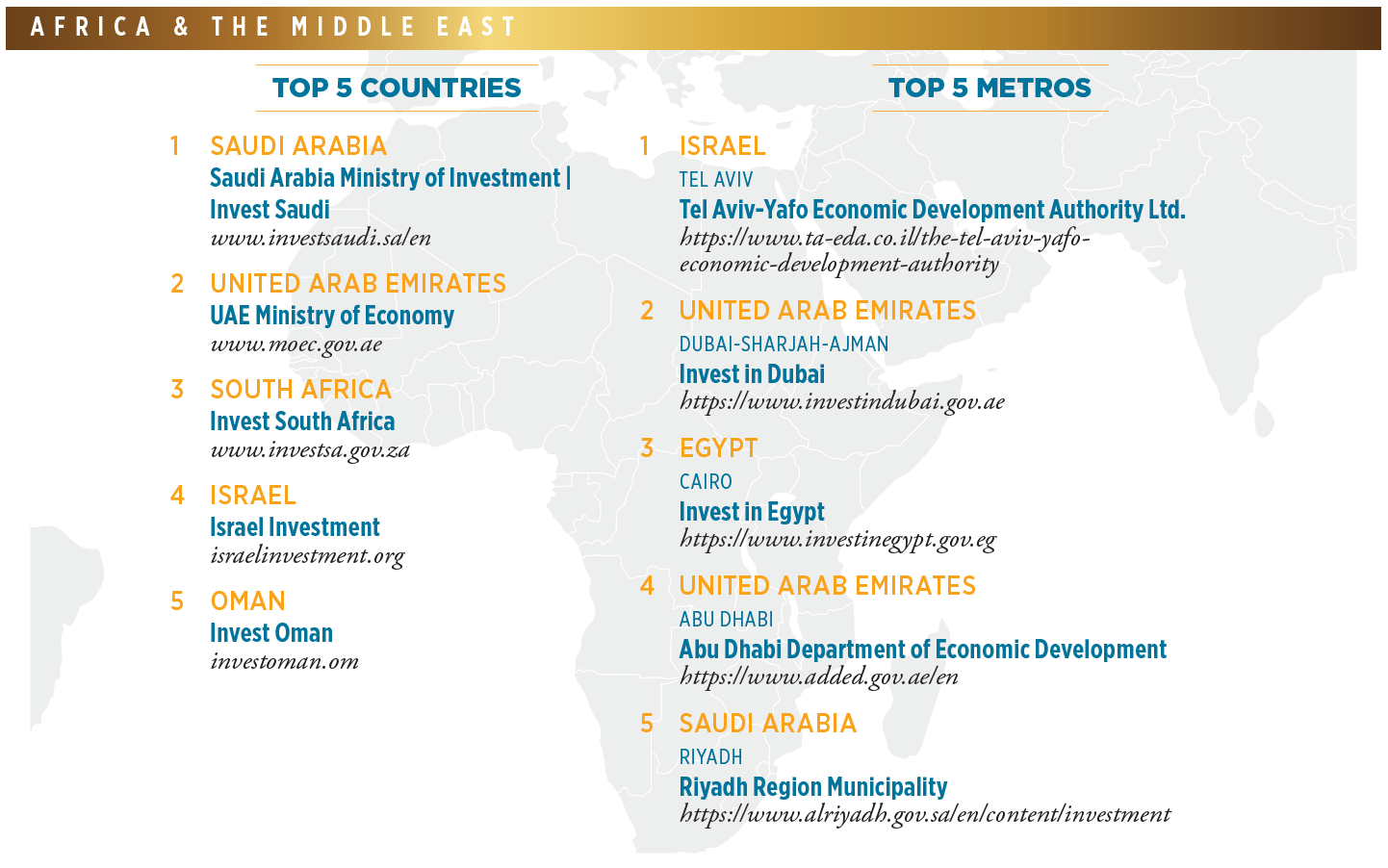
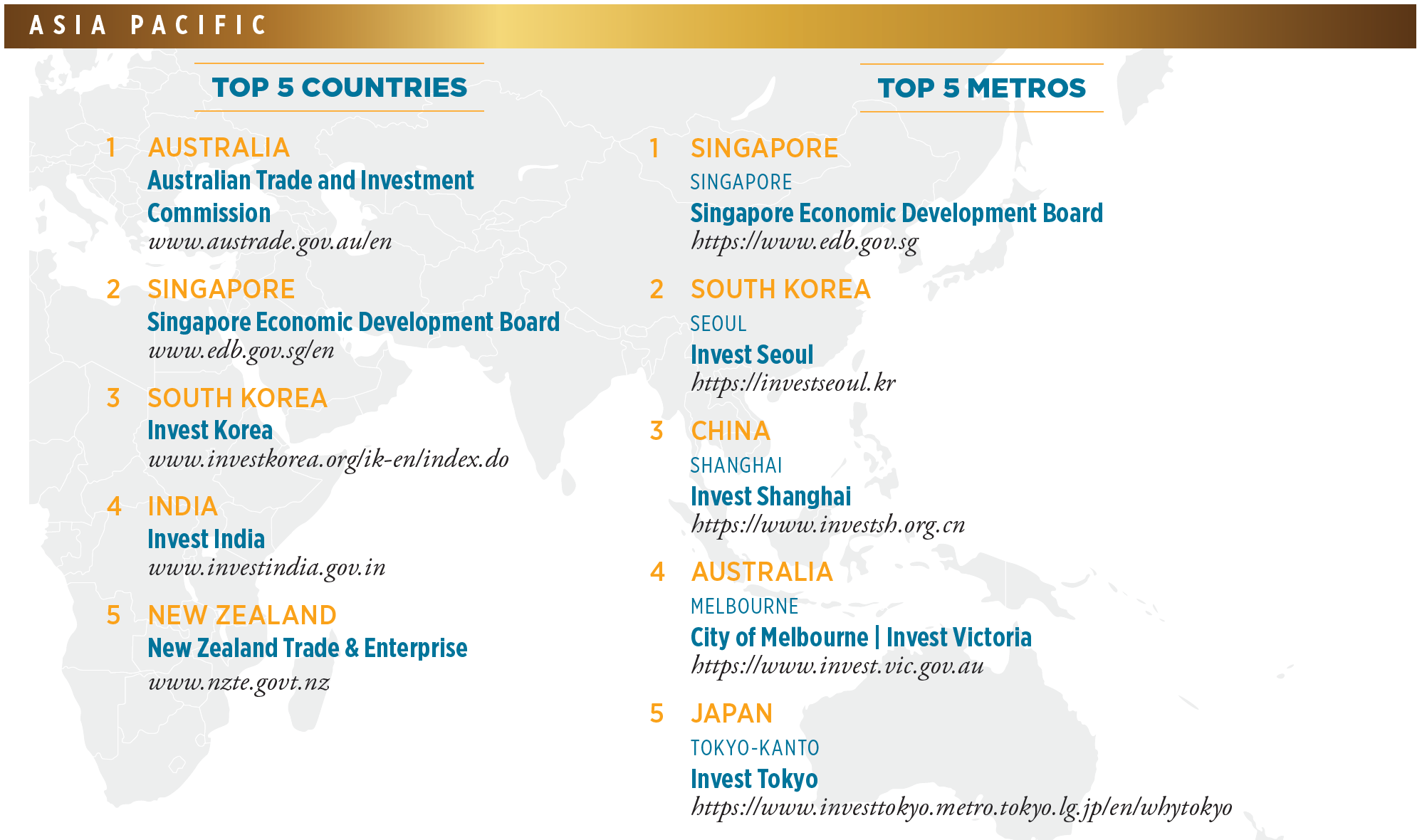
Full Global Best to Invest charts of top countries and metros by world region are found in the pages that follow. While there was no exceedingly dramatic movement from last year’s findings, notable upwardly mobile countries include No. 6 France climbing up from No. 8, Sweden rising to No. 7 from No. 10 and Spain moving from No. 11 to No. 9. Outside of the top 10, China rises to No. 11 from No. 17, Japan shoots from No. 20 to No. 13 and Saudi Arabia takes a giant leap from No. 25 to No. 14.
On a per capita basis, the United States comes out on top, followed by the UK and then Canada. The biggest improver among the top 10 is Spain, rising from No. 18 to No. 9.

London and the UK are as focused on drawing talent as they are on attracting employers of that talent.
Photo by Peter Cohen courtesy of London & Partners
At the metro level, Amsterdam jumps to No. 5 from No. 11 and both Melbourne, Australia, and Tokyo-Kanto rise into the top 10 from unranked status last year.
Data from the DHL Global Connectedness Report 2026, released in March, fills one of the nine columns of Global Best to Invest metrics. This year the DHL report finds Singapore to again rank as the world’s most globalized nation, followed by Luxembourg and the Netherlands. “Europe is the most globalized region, followed by North America and the Middle East & North Africa,” said a release from DHL and its report partner the NYU Stern School of Business. “The United Kingdom has the most broadly distributed flows worldwide. The United Arab Emirates recorded the largest increase in globalization since 2001.”
Kearney in April released the findings of its 2026 FDI Confidence Index under the banner “World Recalibrating.” Based on a survey of global business leaders, the United States, Canada and Japan finish 1-2-3, followed by China (including Hong Kong) and Germany. While the United Kingdom repeats at No. 1 this year in Site Selection’s overall Global Best to Invest ranking, it drops from No. 3 to No. 6 in Kearney’s survey.
Kearney’s biggest upward mover is last year’s No. 1 Global Best to Invest metro and city-state Singapore, going from No. 15 to No. 8 in Kearney’s index. Saudi Arabia moves from No. 13 to No. 10. In a smaller but not insignificant move, China (including Hong Kong) moves from No. 6 to No. 4.
Among emerging markets (as defined by the International Monetary Fund), China tops the list, followed by the United Arab Emirates, Saudi Arabia, Brazil and Mexico. Thailand moves up to No. 6 from No. 10 and Malaysia rises from No. 11 to No. 7, reflecting their growing stature as non-Chinese operations destinations in Asia. What may surprise some is India’s drop from No. 5 to No. 8 among emerging markets, even as it rises from No. 24 to No. 22 in the overall findings encompassing all markets.
Echoing Hjembo’s observations about tech infrastructure underlying economic development success, Erik R. Peterson, managing director of the Global Business Policy Council at Kearney, noted what he called an “important shift in this year’s index” when it comes to what survey respondents listed as the most important overall factors in choosing where to locate their investments.
“Technological and innovation capabilities rank at the top,” Peterson said in an April webinar about the new findings. “There’s a clear shift toward innovation-led competitiveness borne out in the data. It was the strongest reason to invest in 10 of the top 25 markets in our index. It’s a reflection of investments in a whole range of technologies, in particular AI, in several key markets.”
Although the survey was conducted before the beginning of the conflict in Iran, Peterson said enthusiasm for growth and expansion showed no signs of waning.
“What is striking is that, as of January, investors indicate they are not pulling back,” he said. “Eighty-eight percent planned to increase their FDI in the next three years.”
Continue reading The Rest of the Story here