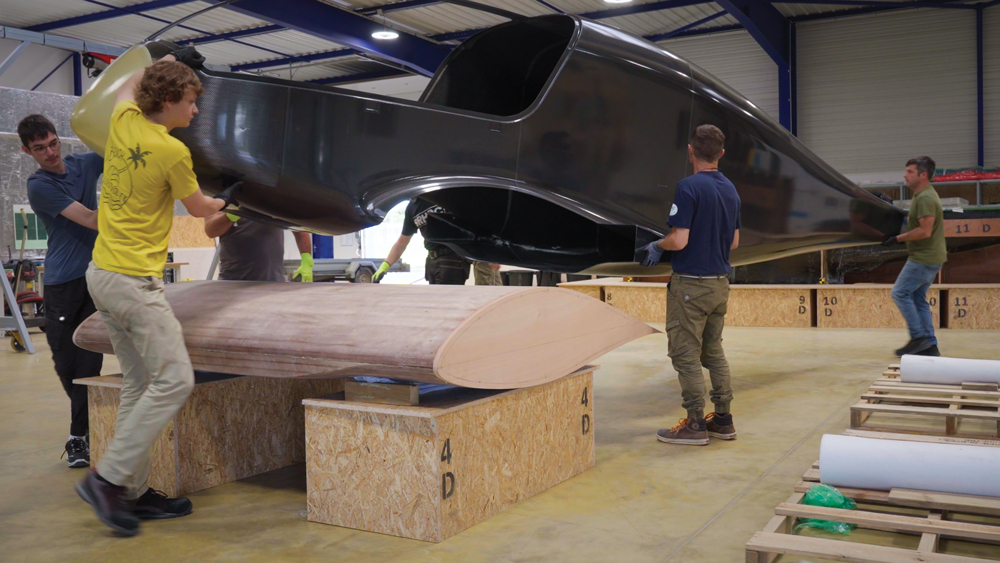
When Executive Vice-President of the European Commission and Commissioner for Prosperity and Industrial Strategy Stéphane Séjourné in mid-July granted the European Commission’s official patronage to Climate Impulse, he was marking the next chapter in a story Site Selection has been tracking ever since Climate Impulse’s predecessor Solar Impulse took to the skies more than a decade ago on its solar-powered journey around the world.
Climate Impulse aims to take things further by achieving the world’s first non-stop, zero-emission flight around the globe, powered entirely by green hydrogen, thus demonstrating the EU’s twin commitments to industrial strength and to sustainability. Central to that venture are partners such as materials science firm Syensqo, OCP Group and Mohammed VI Polytechnic University (UM6P).
By email, I talked to leaders of the project about the new stratosphere of materials innovation required for success, and the European and global manufacturing and intelligence supply chain that will fortify the endeavor and springboard from it into the future.
First up: composite-materials engineer Raphaël Dinelli, who will co-pilot the aircraft alongside Solar Impulse co-founder and pilot Bertrand Piccard. (For this exchange, my questions to Dinelli were translated by Climate Impulse communications professionals into French and answered in French, with both questions and responses now translated back into English using Google Translate.) Then I engaged with Mike Radossich, who officially became CEO of Syensqo in January 2026.
Site Selection: Which physical operations and locations comprise Solar Impulse’s current facility portfolio? Are you looking to expand anywhere?
Raphaël Dinelli: Les Sables d’Olonne, France: location of the aircraft construction workshop, design office, and powertrain development workshop Châteauroux, France: aircraft test base Florac/Chanet, France: aerology research center Lausanne, Switzerland: headquarters of the Solar Impulse Foundation, responsible for project communication and managing financial partners.
The EC patronage announcement notes the involvement of Morocco’s Mohammed VI Polytechnic University. How did this particular institution come to be part of the coalition … and which other higher education institutions are notably part of the R&D ecosystem?
Raphaël Dinelli: Morocco is currently at the forefront of green technologies and the energy transition. It is within this context that two leading economic and academic institutions in the country, including Mohammed VI Polytechnic University (UM6P), have chosen to support the Climate Impulse project. This commitment illustrates the shared interest in developing innovative technological solutions to promote decarbonization and sustainable aviation.
Mike Radossich: Climate Impulse is built on the belief that breakthrough innovation happens when industry, academia and entrepreneurs work together. Universities bring scientific expertise, fresh thinking and the next generation of engineers. UM6P joined Climate Impulse in 2024, together with OCP Group, as a main partner to the project alongside Syensqo. Their expertise in AI strengthens the project, as today four UM6P students are working for Climate Impulse to turn the atmosphere into an ally for its round-the-world mission. By developing AI models that read and anticipate wind patterns, they aim to identify routes where the aircraft can fly farther while using less energy. This aerology program is also delivering a flight simulator that embeds the Climate Impulse flight model, giving pilots a realistic way to train on the ground — and refine decisions in flight — so every choice of route becomes a smarter step toward maximizing range and making the mission a success.
That collaboration has grown beyond Climate Impulse. In 2025, Syensqo and UM6P launched a joint AI Lab and established a Syensqo office on campus, bringing together expertise in AI, advanced materials and sustainability while enabling researchers and students to collaborate on real-world industrial challenges.
Climate Impulse shows how chemistry, materials and energy must work as one system: Lighter composites reduce energy demand, advanced materials enable liquid hydrogen storage at –253°C, and fuel-cell chemistry drives performance. Solving challenges like this requires bringing together the best minds from our research centers, universities, startups, customers and technology partners. What attracts exceptional scientists is the combination of intellectual freedom, collaboration and the chance to apply deep science to challenges that matter.
In your statement welcoming the European Commission’s patronage, you mention applications beyond aviation. Please describe some of those potential applications.
Raphaël Dinelli: Research on materials, technology, human factors, etc., contributes to developing reference data for all stakeholders or sectors of activity using these materials or technologies, both in other aspects of mobility and in diverse sectors such as energy management, logistics, etc.
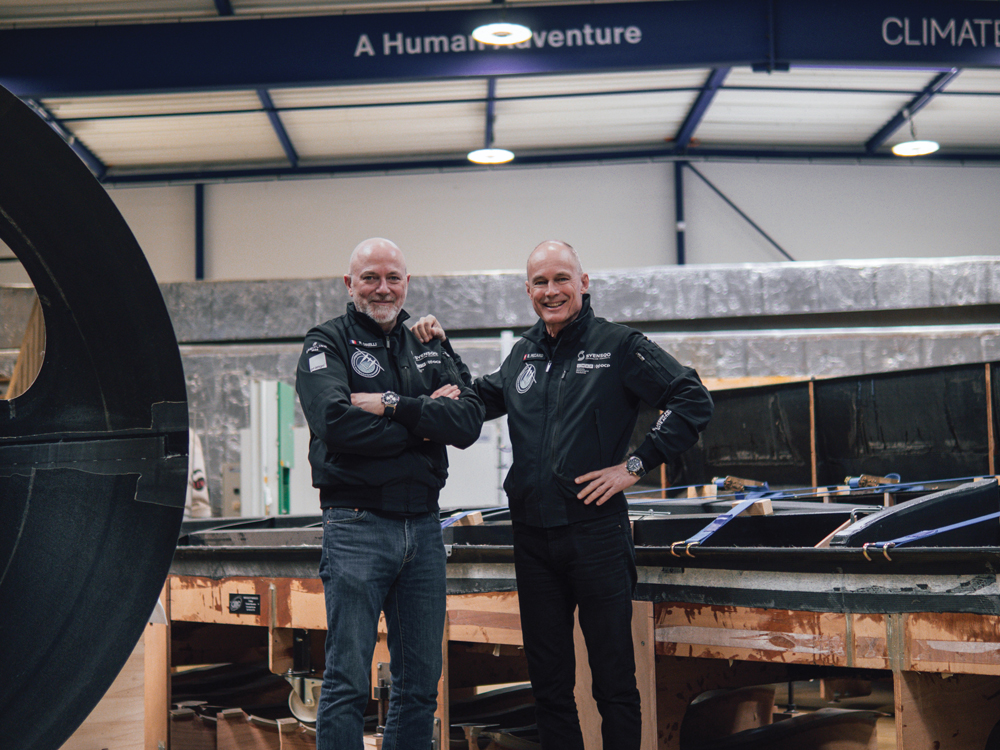
Climate Impulse is led by Bertrand Piccard (right), explorer and pioneer of clean technologies, and Raphaël Dinelli, navigator and composite-materials engineer.
Photo by Fanny Loison courtesy of Climate Impulse
How do you see the work Syensqo will do with Climate Impulse eventually proving useful to business growth in other sectors beyond aerospace?
Mike Radossich: Climate Impulse is much more than an aviation project. It is an innovation platform for developing technologies with applications across multiple industries. The same lightweight composites, hydrogen technologies and advanced materials being developed for the aircraft have potential applications in hydrogen mobility, energy systems and other industries where reducing weight, improving efficiency and managing extreme conditions are critical. We have seen this before. Technologies developed during the Solar Impulse project later became part of our commercial portfolio, particularly in composites and batteries. This is how we approach innovation at Syensqo: solving ambitious challenges today while creating value for customers across multiple industries tomorrow.
A glance at Syensqo news releases in 2026 alone reveals how all-encompassing your business is, from scalp treatments to semiconductors, medical devices to spacecraft coatings. Describe how this project with Climate Impulse engages various locations and expertise across Syensqo’s business.

Mike Radossich
Mike Radossich: Climate Impulse is a unique demonstration of how Syensqo works as one global science company. It brings together expertise in advanced composites, specialty polymers, hydrogen technologies, application engineering and research to solve one of the most demanding engineering challenges ever attempted: a non-stop, zero-emission flight around the world. This is much more than supplying materials. It is about co-developing the most performant technology solutions with our partners, from lightweight aircraft structures to fuel cell performance and hydrogen storage.
The project mobilizes teams across Europe and beyond. Our global composites and application engineering teams contribute from research and innovation centers in France, Belgium, Italy and the United States, while our technical centers and manufacturing sites in the UK, the U.S., Italy and France manufacture, test and validate the advanced materials used throughout the aircraft. Our Green Hydrogen laboratory in Bollate, Italy, supports research, testing and validation across the hydrogen value chain.
Climate Impulse reflects how we innovate every day: bringing together experts across disciplines and geographies to solve customer challenges. The technologies developed for this project have the potential to benefit applications beyond aviation.
Walk me through the supply chain involved with lightweight composite materials. What does the picture of this supply chain look like in Europe today, and what do you want it to look like?
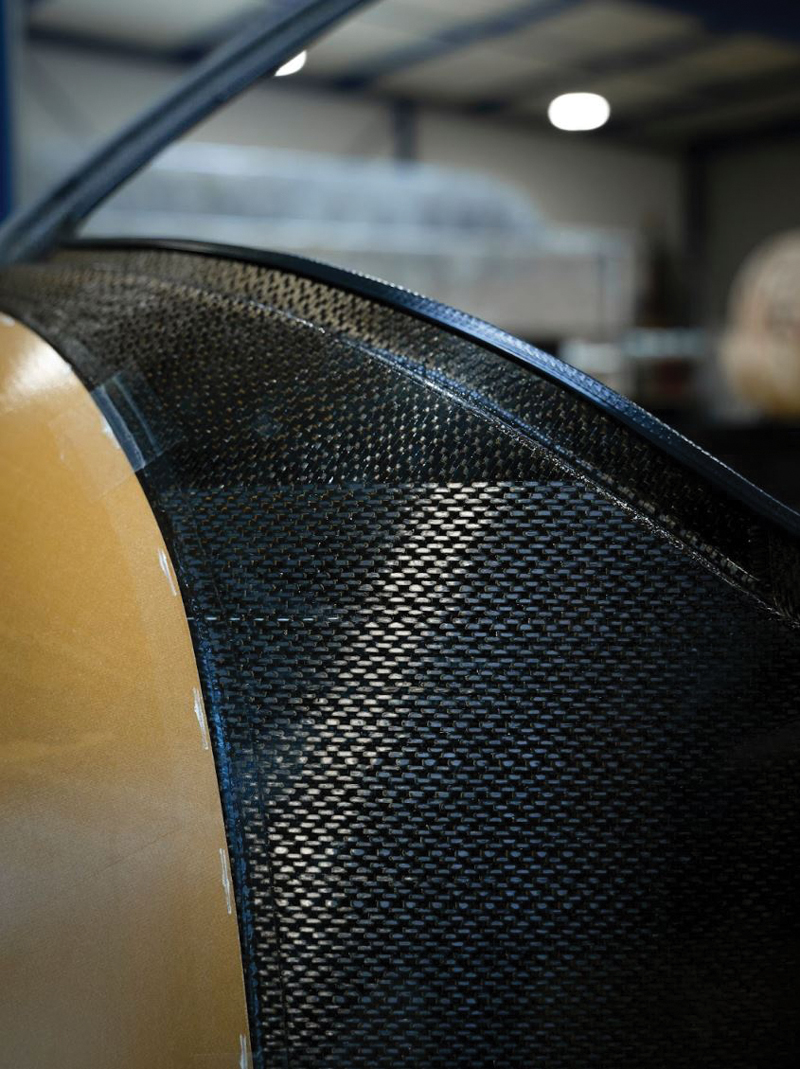
Mike Radossich: Climate Impulse shows how advanced materials innovation works across our global ecosystem: from material science development and application engineering to manufacturing, testing and aircraft integration. Syensqo contributes high-performance carbon-fiber prepregs, adhesives and advanced materials for the aircraft’s wings, fuselage and cockpit, while also providing hydrogen technologies that support fuel cell performance and composites materials development that will enable the safe storage of liquid hydrogen at -253°C during the planned nine-day flight. Our teams work alongside aircraft designers, manufacturers, research partners and technology specialists throughout the project. While Europe is home to many of the project’s partners, Climate Impulse is a global collaboration. It brings together Syensqo’s research, technical and manufacturing teams across Europe and the United States, alongside universities, startups and industrial partners. This combination of scientific and industrial expertise is what is making this unique and forward-looking project possible. This innovation ecosystem illustrates Syensqo’s DNA: to accelerate the journey from laboratory research to real-life application. The faster ideas become products, the faster we can help customers develop the next generation of sustainable technologies.
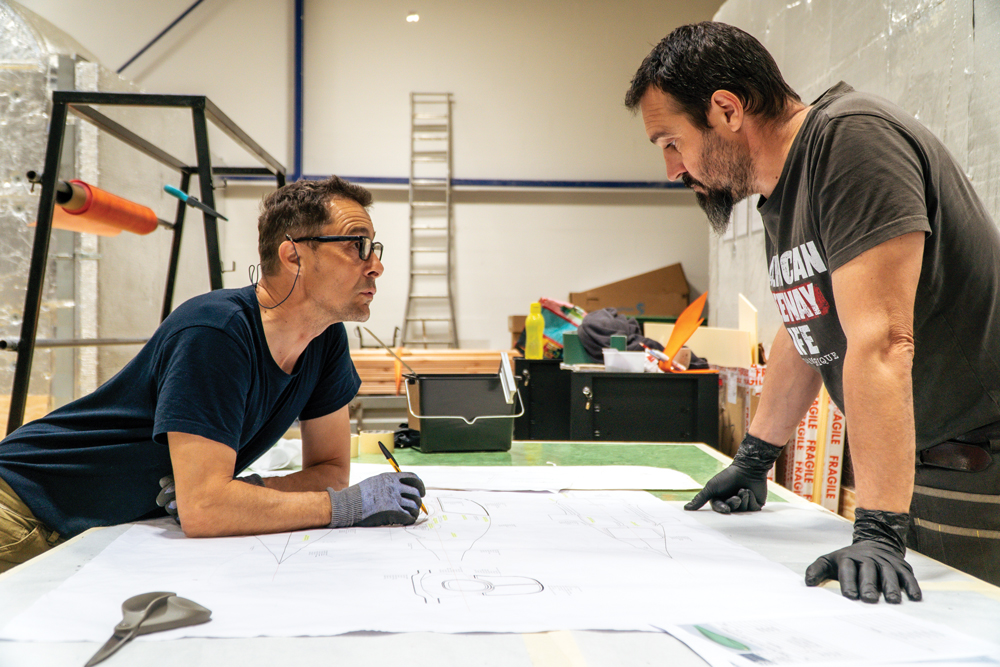
“Rather than focusing on ‘pure science,’ Syensqo’s approach is to apply science to solve real-world challenges,” says Syensqo CEO Mike Radossich.
2024 photo by Julien Bourseguin courtesy of Climate Impulse
Syensqo’s current global facility portfolio includes 54 major industrial sites and 12 research & innovation centers and a total of 13,000 employees. I’ve seen news about the expansion in Maryland … where else are you expanding or looking to expand or locate new facilities, and why?
Mike Radossich: Our footprint reflects where our customers innovate and grow. Today, Syensqo operates 54 industrial sites and 12 major R&I centers across the Americas, Europe and Asia-Pacific, and we continue to invest where we see long-term customer demand and opportunities to strengthen our global manufacturing network. A good example is indeed our recent multi-million-dollar investment in Havre de Grace, Maryland, where we are expanding our manufacturing capacity by more than 30%. This investment strengthens our ability to supply advanced structural adhesives and surfacing materials for commercial aerospace, defense, propulsion, space, advanced air mobility and automotive customers. It also improves supply reliability and complements the capacity expansion we previously completed in Wrexham, UK.
Composite materials is one of Syensqo’s key growth engines. We delivered 4% organic growth in 2025, expect composite materials to lead volume growth again in 2026, driven by strong aerospace demand, and we’re focused on disciplined investment — leveraging our existing footprint while selectively investing in innovation and high-return growth opportunities.