
Affordability delivers a higher standard of living in the Sooner State.
by LISA A. BASTIAN
Savvy site selectors understand that quality of life is a critical factor that is growing in importance for long-term operational success. More than ever, it influences where workers choose to build their lives and careers.
Rising housing costs, inflation and high tax burdens are some of the everyday concerns discussed at dinner tables across America. That’s why businesses need to conduct solid research on those issues when expanding or relocating.
Oklahoma stands apart from the other 49 states in one critical quality-of-life area: affordability. Living here costs 15% less than the national average. That translates into greater purchasing power, more attainable homeownership and lower day-to-day expenses. It also creates an overall standard of living that allows residents’ dollars to stretch further than in many competing markets.
The more buying power you have, the higher your standard of living.
For much of the past two decades, respected groups such as the Missouri Economic Research and Information Center routinely rank Oklahoma among America’s 10 most affordable states. More recently this long-standing livability advantage has gained broader attention as affordability pressures intensify across much of the country.
The state’s major metros are drawing kudos too for their lower costs in transportation, utilities, healthcare and the like. In its 2025–2026 rankings, U.S. News & World Report named Oklahoma City the No. 1 “Best Big City to Live in the United States.” Meanwhile, MarketWatch’s 2025 affordability rankings placed Oklahoma City at No. 3 and Tulsa at No. 5 among America’s larger cities.
Affordable Housing & Low Taxes
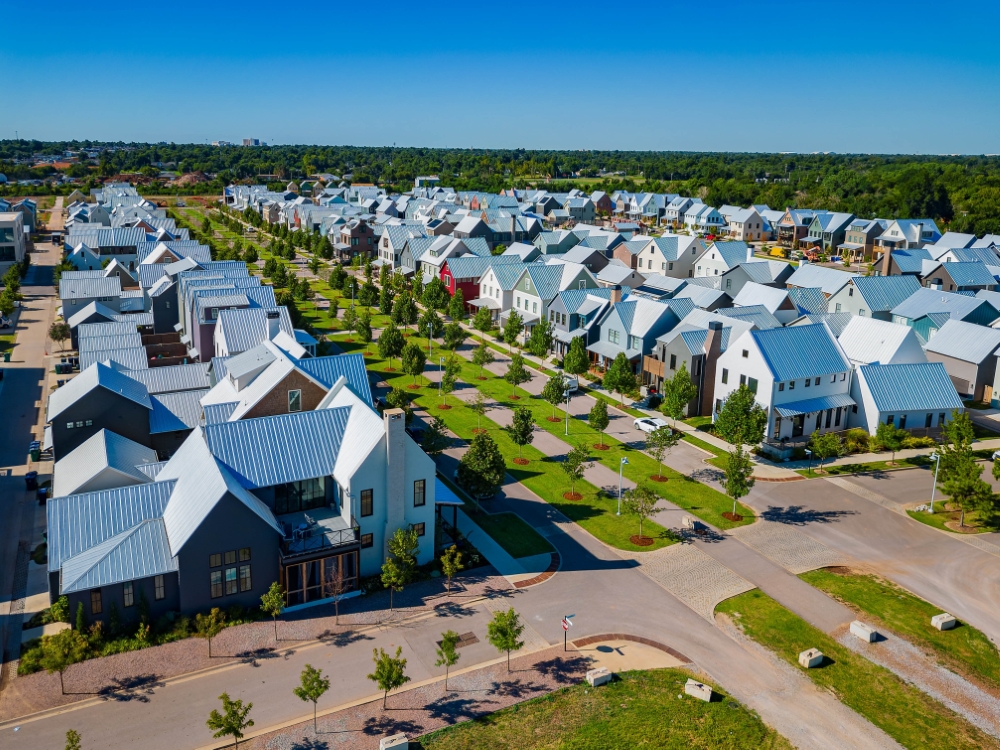
Oklahoma’s affordability advantage is especially evident in housing, where homeownership remains attainable for many middle-income residents at every stage of life. This advantage directly benefits employers, too, as workers who can comfortably afford homes often are less likely to relocate elsewhere for marginally higher pay.
Small-town, friendly living is a defining part of Oklahoma’s identity. Across much of the state, families can find single-family homes at prices well below national averages in places offering shorter commutes, plus lower property and everyday living costs. In scores of smaller Oklahoma communities, prices commonly range from the mid-$100,000s to low-$200,000s for comfortably sized single-family homes.
Housing remains comparatively attainable in the largest metros as well. Myriad market data place median home prices in both Oklahoma City and Tulsa comfortably in the mid-$200,000 range. In stark contrast, median home prices frequently exceed $400,000 in many U.S. metros. Those stats easily explain why Oklahoma City was identified in 2026 as the most affordable U.S. metro area for first-time homebuyers, per MoveBuddha.
Oklahoma maintains a relatively low tax burden by national standards according to Tax Foundation data. Property taxes also remain moderate across many communities. Together, these factors help residents retain more of their income and reinforce the state’s overall affordability.

Affordable Lifestyle Amenities
Companies already established in Oklahoma appreciate how affordable lifestyle amenities help employees enjoy a healthy work-life balance without straining family budgets.
For example, the state has a surprisingly high concentration of accessible public recreation options relative to its population. Its 51 state parks provide residents affordable outdoor recreation opportunities such as hiking, camping, fishing and boating. While parks in larger states increasingly contend with overcrowding and rising recreation-related costs, Oklahoma continues offering comparatively affordable and less-congested outdoor experiences.
Individuals seeking more structured lifestyle amenities will be drawn to Oklahoma City, Tulsa, Lawton and Enid (recently named the 15th most affordable U.S. metro area by purchasing power by the Tax Foundation). Their urban areas are expanding with significant investments in downtown districts and “quality of place” projects, all attracting younger, high-skill professionals (biotech, IT, engineering) prized by diverse industries. But desirable amenities aren’t limited to big cities. Regional hubs like Stillwater, Ardmore and Muskogee provide a diverse and affordable experiences, as do hundreds of smaller towns.
Moreover, countless festivals, outdoor concerts and seasonal community events contribute to Oklahoma’s affordable quality of life, too. Many are free or low-cost to attend and create the type of community engagement employers find valuable in workforce attraction and retention. In particular, farmers markets are increasingly popular, with an estimated 100 operating statewide.

Affordability Underpins Corporate Competitive Advantages
The state’s affordability benefits extend well beyond consumer-focused metrics. Consider the labor sustainability issue. Nationwide, companies face mounting pressures to raise wages simply so employees can keep pace with everyday expenses. In Oklahoma those same wage pressures are more manageable for businesses since worker incomes stretch further.
The state’s low 4% corporate income tax rate, moderate property taxes and competitive energy costs also help create more available discretionary capital for growth and innovation. That explains why companies like Google, CBC Global Ammunition and Emirates Global Aluminium cite Oklahoma’s reliable, low-cost energy and overall business-friendly environment as reasons for making major capital investments here.
For companies evaluating their next relocation or expansion move, the state deserves serious consideration. Its competitive affordability assets help attract top-tier talent without the high turnover challenges common in many larger, higher-cost markets. This makes Oklahoma an ideal choice for businesses seeking an innovative, pro-growth location.