How Tennessee Became an Economic Powerhouse.
You don’t have to land an NFL Super Bowl to signify that your state has emerged as a global superpower in economic development, but it sure doesn’t hurt.
Tennessee Gov. Bill Lee basked in the announcement May 20 when he said: “Tennessee’s selection to host the 2030 Super Bowl is a proud moment for our state. We invested in a new stadium with a vision for the future — one that brings major events, drives tourism and fuels economic growth while creating new opportunities for communities across Tennessee. I’m grateful for the partnerships that made this possible, and we look forward to showcasing all that our state has to offer on a global stage.”
When it comes to showcasing Tennessee on the world stage, the governor and the Tennessee Department of Economic and Community Development (TNECD) have been doing that for a long time.
Since being elected governor seven years ago, Lee has presided over an economic development effort that has attracted $55B+ in capital investment and brought nearly 115,000 new jobs to Tennessee. He has elevated the business climate and profile of Tennessee to the point that it is now the envy of the rest of the country.
Here is a sampling of 2025-2026 accolades:
- No. 1 Best State for Manufacturing (Site Selection Group)
- No. 1 Best City (Nashville) in America for Corporate Headquarters (Site Selection Magazine)
- No. 2 State in Economic Outlook (Rich States, Poor States)
- No. 3 Best State for Business (Chief Executive Magazine)
- No. 3 State for Business Friendliness (CNBC)
- No. 5 Best State Business Climate (Business Facilities Magazine)
- No. 6 Best State for Doing Business (Area Development Magazine)
- No. 8 Top State for Business (CNBC)
Lee makes it clear that Tennessee did not win these accolades simply by good fortune. Rather, they are the result of applying proven strategies that work. His core principles are a strong commitment to fiscal conservatism and government efficiency, an unwavering belief in the value of free-market capitalism and a commitment to invest in education and worker training so that Tennessee has the best workforce development ecosystem in the nation. This reflects his belief that “the state with the workers will win the future.”
A Track Record of Winning
Tennessee is winning the future today. Since the beginning of 2014, Tennessee has amassed a cumulative GDP growth of 78.8%, ninth best in the country. Tennessee is achieving this growth because it has become a preferred destination for high-growth companies and the cutting-edge talent they need. Since the start of 2015, only five other states have added more people than Tennessee’s 430,284.
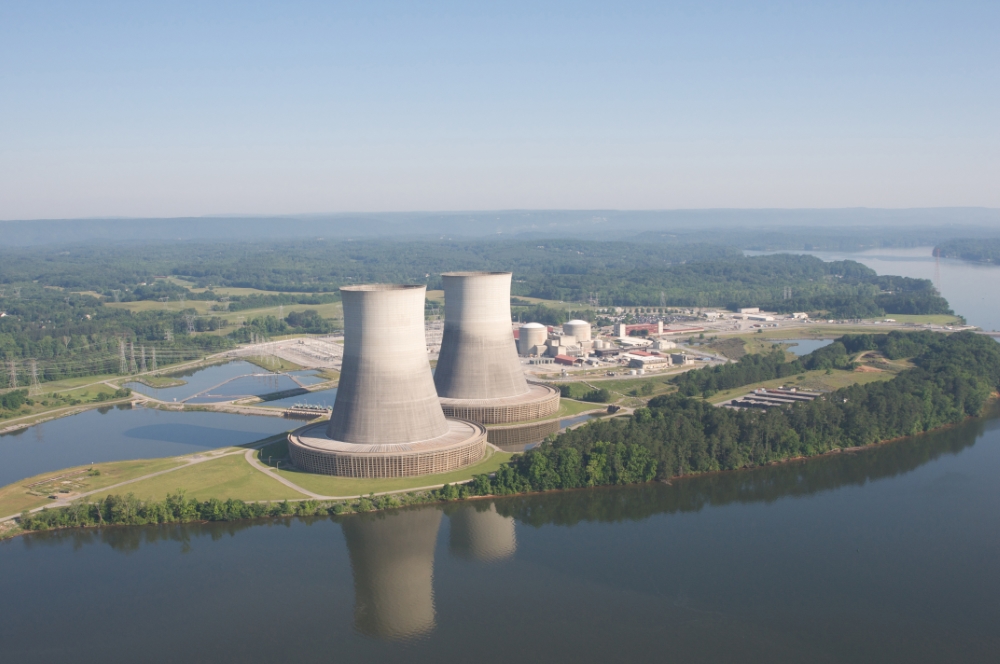
Companies are moving to Tennessee in record numbers in an attempt to harness this talent pool. This has resulted in Tennessee’s becoming the No. 1 state for nuclear energy know-how, per the American Nuclear Society, and in Nashville’s becoming the No. 1 Fastest-Growing Startup Scene in the World, per Pitchbook.
Today, Tennessee is a Who’s Who of the Fortune 1000. Household names like In-N-Out Burger, HCA Healthcare, Nissan, Bridgestone, General Motors, LG Chem, FedEx, Eastman, Jack Daniel’s, Beretta USA Corp., Google and many others call the Volunteer State home.
In a recent interview with Deputy Governor and TNECD Commissioner Stuart C. McWhorter, he listed several factors that he believes are most responsible for Tennessee’s success: best-in-America worker training programs, including the gold standard in this area—the Tennessee Colleges of Applied Technology (TCAT) System, a state government that consistently keeps taxes low for businesses and residents, a cost of living that is 9% lower than the national average, highly competitive pricing for industrial electricity and other energy, a state committed to keeping the regulatory burden at a level that does not impede business growth and continued investment to improve teacher pay and K-12 public education.
“At the end of the day, it is about how we invest taxpayer dollars,” McWhorter said. “Governor Lee is very pro-business. Tennessee provides a business environment that is conducive to business. At TNECD, we evaluate companies’ ability to perform and be successful.”
In other words, Tennessee puts the taxpayer first and the customer—the business investor—second. This formula has worked consistently for a long time.
The Central Value Proposition
That is why TNECD recently made the decision to launch its rebrand “Tennessee: Experience High Volume,” which builds on its legacy as a manufacturing state. TNECD lays out its central value proposition to businesses succinctly: “From opportunities and entertainment to natural beauty and next-door neighbors, you just get more in Tennessee. Combine all that with our competitive tax environment and low cost of living, and we’ve laid the foundation for businesses to take it to the next level.”

“Our culture attracts and retains talent. We have a quality of life that is second to none. All of that comes together to build the perfect storm. We call that a rising tide.”
– Jeff Hite, Chief Economic Development Officer, Nashville Area Chamber of Commerce
High-value-added companies have been taking Tennessee up on that offer since the dawn of the decade. The only thing that has changed in that pattern since is its pace.
In 2025, TNECD landed 75 economic development projects that topped $11.2 billion in capital investment and brought 8,086 jobs to the state. Some 41 out of 95 counties landed a project, with 28 of them being rural.
Davidson County in Middle Tennessee led the way with six projects, while Roane County in East Tennessee garnered the most new jobs with 1,047. Montgomery County, in north central Tennessee along the Kentucky line, led in capital investment with $6.6 billion.
Many records were broken along the way. With 55% of all deals occurring in rural counties, 2025 was the strongest year yet for these communities. Meanwhile, the single largest capex project in state history—Korea Zinc’s $6.6 billion investment in nonferrous metal manufacturing—landed in Clarksville and Gordonsville.
“This transformative project represents far more than a single company investment. It reflects Tennessee’s emergence as a national hub for critical minerals, advanced manufacturing and energy innovation,” McWhorter said.
The rural trend continued with Shoals Technologies Group cutting the ribbon to open its new mega-facility in Portland, Tennessee, a project that will create more than 500 new jobs and establish Shoals as one of Sumner County’s largest employers. McWhorter said that “Shoals’ investment in energy research, development and manufacturing reflects exactly the type of forward-looking growth Tennessee is working to attract and support.”
Since the start of 2026, the pace of investment has increased. Stella-Jones announced earlier this year that it will expand its statewide footprint with a new steel lattice tower manufacturing plant at the Runway Centre Industrial Park, a Select Tennessee Certified Site, in Lincoln County, adding more than 200 new jobs and investing $45 million. This will become the company’s first U.S.-based steel structure factory in Fayetteville.
In May, Reinhausen, a German power equipment maker, announced that it will invest $6.7 million and create 90 new jobs as part of a plan to expand its U.S. hub in Gibson County. The project will support the firm’s capacity to manufacture transformers, voltage regulation equipment and grid-automation technologies.
‘Talent Drives Everything’
Jeff Hite, chief economic development officer for the Nashville Area Chamber of Commerce, said progress like this is evidence that “talent drives everything. You have to check all of the boxes to win, and that is what we do in Tennessee.”
Hite credits former Governor and Nashville Mayor Phil Bredesen, who spent much of the 1990s and 2000s leading impactful economic development efforts in both Nashville and across Tennessee.
“He talked about civic furniture,” Hite said. “With venues like Bridgestone Arena and Nissan Stadium, that is what we’ve built. We now have a Major League Soccer team, and Vanderbilt University is one of the top universities on the globe. All of our regional partners agree that the core has to be strong in order for the whole region to thrive.”
He adds that other factors make Tennessee thrive. “We have a very diverse economy. Education is the foundation of our economic development push,” he noted. “People want to be here, and we see investment following the talent. Our brand has grown organically, and we are very confident going forward.”
When National Football League Commissioner Roger Goodell announced the awarding of Super Bowl LXIV to Nashville, the news was celebrated across Tennessee. Kemp Conrad, vice chairman and principal of Cushman & Wakefield Commercial Advisors in Memphis, called Nashville the “unparalleled urban flywheel of the South.” He added that other cities had “a lot to learn from the rise of this phenomenal Southern metropolis.”
But it’s not just Music City that’s celebrating. Around Tennessee, people are experiencing this rapid rise.
“Regional partnerships are critical to what we do,” Hite said. “When prospects visit, they see one team. The city of Nashville and the state of Tennessee have created a great business and tax environment. Our culture attracts and retains talent. We have a quality of life that is second to none. All of that comes together to build the perfect storm. We call that a rising tide.”

Burgess Falls in Putnam and White counties beckons travelers from all over.
Photo courtesy of Tennessee Department of Tourist Development