The location portfolio of a global clinical trials company is an ideal lens for finding top eds & meds districts.
Take a walk across the famous blue Roebling Bridge from Kentucky to Ohio and you’ll come out on the doorstep of Great American Ball Park, the home stadium of the Cincinnati Reds with magnificent views looking out over the Ohio River. Walk in the other direction and you’ll come out in a place with a commanding view of the global life sciences sector.
In addition to being home to Cincinnati Children’s Hospital, UC Health and St. Elizabeth Healthcare, the region claims a Northern Kentucky branch that is home base for three of the top 20 global contract research organizations: MedPace, PPD and CTI Clinical Trial and Consulting, whose offices are located in one of the distinctive RiverCenter high-rise buildings along the Ohio River developed by Corporex founder and Covington native Bill Butler in the 1980s. Across the way is LifeSciKY, the growing state-backed incubator for life sciences startups. Not far away on the Ohio side of the river, a wealth of life sciences companies continue to prosper and expand, including a new Eli Lilly and Company and contract development and manufacturing organization (CDMO) Resilience tie-up announced in July that will bring a $750 million investment and at least 400 new jobs.
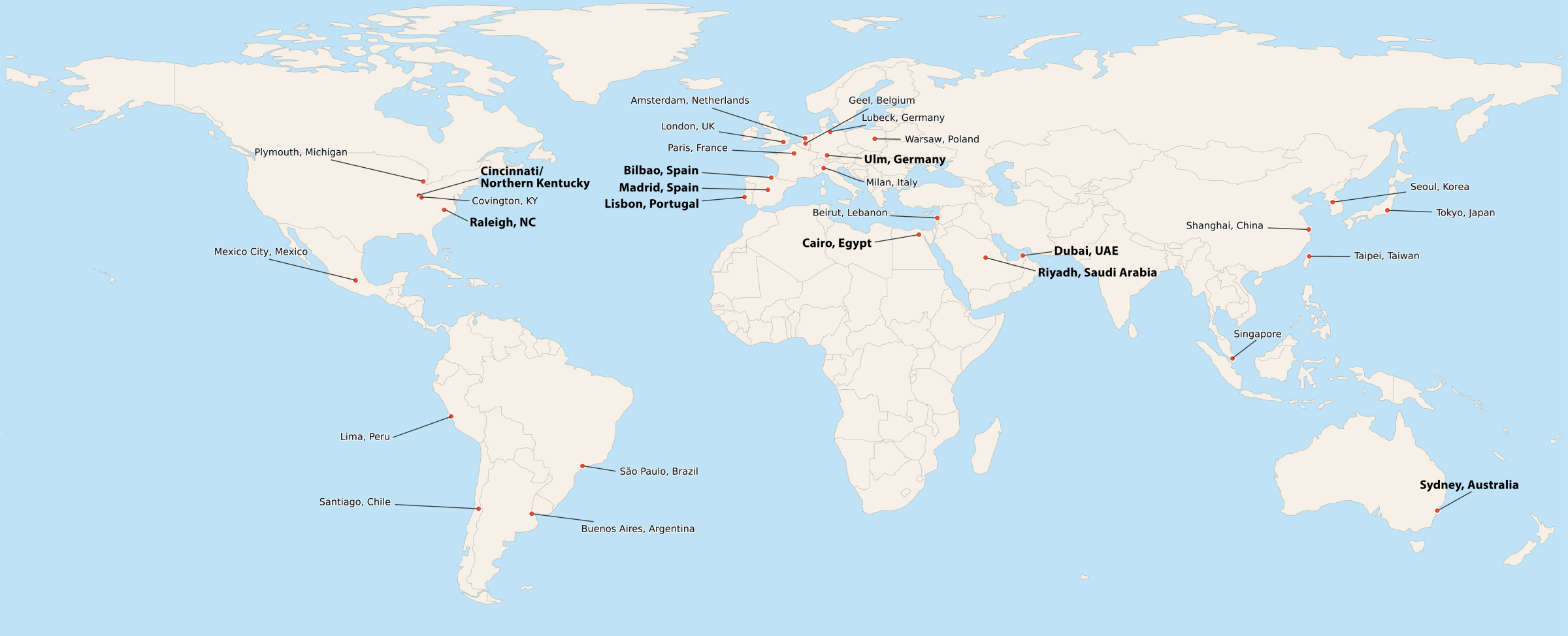
It was in CTI’s offices this past spring that I met CTI Founder and Executive Chairman Timothy Schroeder, who has more than 35 years of clinical, academic and industry experience in global drug and device development. Those years included numerous faculty positions at the University of Cincinnati College of Medicine. Since its founding in 1999, CTI has grown into an organization with associates in more than 60 countries and offices in 30 of them that has now worked on more than 25,000 projects on every continent except Antarctica and has contributed to 219 new drug and device approvals through global regulatory agencies such as the FDA, EMA and others. Currently, CTI works with more than 250 pharmaceutical and emerging biotech and medical device companies. I asked Schroeder if a map of CTI client operations would be a good proxy for global life sciences innovation.
“It would,” he said. “Think about our customer base and it is a spectrum of the largest pharma companies and the smallest,” from global giants to “three scientists and a molecule.” It’s about curing diseases as opposed to treating their symptoms, which means “we get a front row seat to the most incredible science, [for instance] taking genetically altered pig organs to transplant into humans to save their lives. We’re managing that research.”
CTI started 27 years ago in a carriage house in Clifton, Ohio, near all the area hospitals. Today, “we work with more than 3,000 academic medical centers around the world,” Schroeder says. “That’s where the innovation is taking place.”
This summer, as construction continued on the Kentucky Center of Biomedical Excellence across the way from his office, I followed up with Schroeder to see if CTI’s global experience could shed light on locations where the drive to learn and discover is sparking new levels of economic growth. What follows is an edited transcript of our conversation.
You work with more than 3,000 academic medical centers around the world. What are your thoughts on a few locations and their institutions that stand out for how well they integrate the eds and meds into a district?
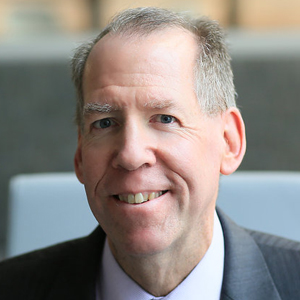
Tim Schroeder, Founder and Executive Chairman, CTI Clinical Trial and Consulting
Tim Schroeder: If you look at it in general, these academic medical centers are frequently some of the biggest employers in a region, number one. Number two, beyond their economic impact, I think they’re so important relative to the healthcare of the population. A lot of times the academic medical centers have both ends of the spectrum, as they are the place of choice for the most cutting-edge innovative medicine but at the other end of the spectrum, a large percentage of the indigent care gets delivered at places like that. I think they’re really, really important on all those levels.
When you think in terms of their trickle-down impact relative to companies like ours locating close to them, our first office was literally two or three blocks away from the University of Cincinnati and Cincinnati Children’s Hospital. That was very intentional on our part.
Having said that, the office space and the parking and the expansion around those places sometimes is very, very competitive and very limited. So relatively quickly, as we grew, we moved elsewhere. We’re still within 20 or 30 minutes of it.
Are there a few of these centers that you’ve encountered in your work or travels in the last year or two that stand out to you for the progress you’ve observed over time?
Schroeder: That’s an interesting question. Some of it gets driven by a disease. So if I say, “Let’s talk United States and cancer,” if we each wrote down a list independently and we compared them, I bet we would have a lot of crossover — MD Anderson, Sloan Kettering, Dana Farber, Fred Hutchinson — there are certain ones that are just affiliated with treatments and diseases and progress. Having said that, one of the things that’s intriguing to me is because of our global locations. The last time I was in Saudi Arabia — we have an office in Riyadh — I happened to be at King Faisal Hospital, and we were treating the first person in all of Saudi Arabia that particular week with a novel gene therapy. They invited us to be there while that was occurring. For the CEO of the pharma company, it was such a big event for them, they actually brought their executive team along, and even part of the royal family had a presence because they were celebrating not just the importance for this patient and their family, but for the region and the country as a whole, being at the forefront of research.
Those are the kinds of things we get a chance to see quite frequently. In some cases, there are institutions that have been around for hundreds and hundreds of years. It’s an extension of the great work they’re doing and the reputation. And other times it’s newer organizations — King Faisal Hospital is not a 100-year-old hospital. Most of their cutting-edge patient care and research has been delivered over the last 30 or 40 years. We get a chance to contribute to that and also get a chance to watch that progress.
When you see that actual cutting-edge progress in person, it’s a pretty tremendous thing, right?
Schroeder: And the impact of raising the quality of healthcare for all the lives, you know, not just the most affluent or the most educated. A closer-to-home example is, literally just the week before last week, we treated the first child in the world with a gene therapy for hearing as part of a small group that has a genetic defect and will never hear. This particular treatment was delivered up at the Massachusetts Eye and Ear Institute (MEE). They’re one of three hospitals where, in this first study, we’re going to treat a small number of patients and make sure we get a sense of “Are we using the right dose? Are we administering it correctly?” We’ll start testing after four weeks. But based on the previous experience with either other therapies like this or in laboratory testing of it, we would expect a significant number of the children to either have their hearing completely restored or at least partially restored. If you spend a lot of time in Boston, where there are so many healthcare institutions and so many academic medical centers, MEE is a conglomerate of several of those.
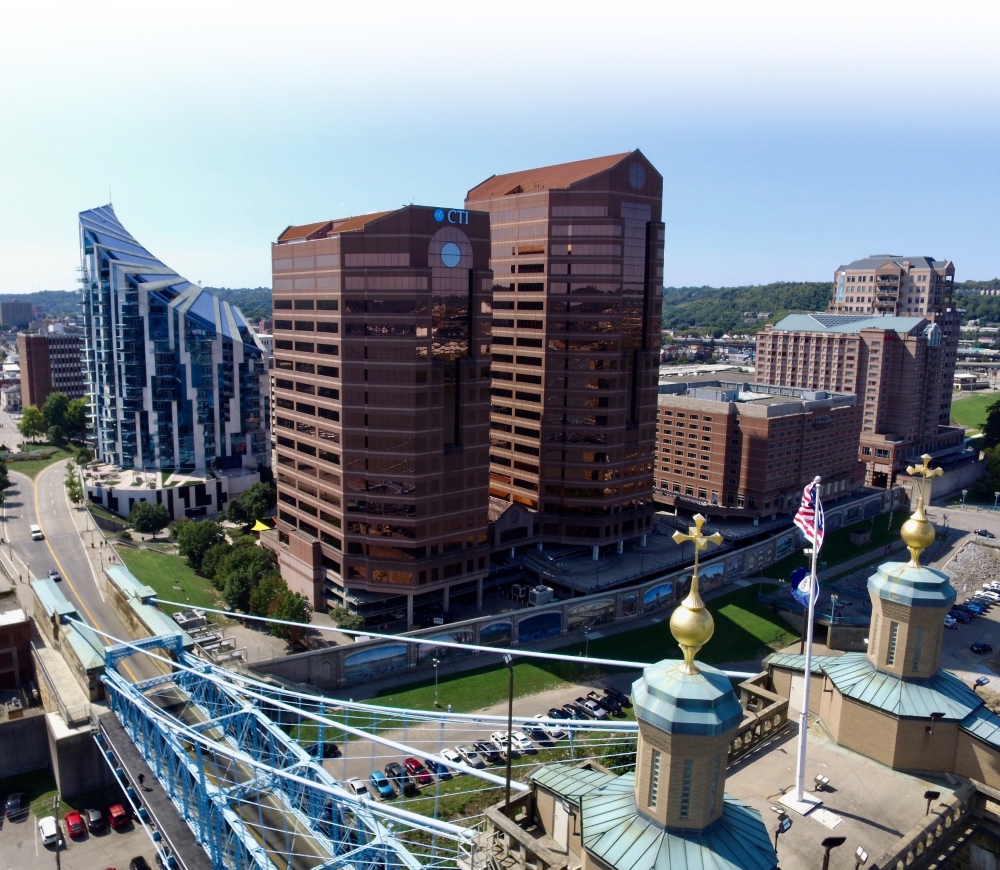
CTI headquarters in Covington, Kentucky, is not far away from the company’s North American Laboratory facilities across the Ohio River in Cincinnati.
How much has CTI’s work with clients influenced the development and infrastructure of eds and meds districts?
Schroeder: We’re very intentional, whether it’s picking a first location in a country or considering where to expand. We actually just recently tripled the size of our space in Raleigh-Durham. The Research Triangle has an immense amount of academic power, with Duke and North Carolina and NC State and Wake Forest, and then SAS and companies like that. In our industry, a lot of the biggest CROs [clinical research organizations] are there. It’s an example where we’ve made that a priority.
We have 10 campuses around the world that we highlight as our core. It’s not saying other places don’t matter, but those are our core growth areas. Almost always those are located close to the academic medical centers. And they’re usually located in these economic development districts where a lot of innovation and a lot of talent is collaborative.
We just opened an office in China in the last eight or 10 weeks, and it’s in Shanghai. We did a wide heat map and then started narrowing it through a combination of where our customers — pharmaceutical and biotech companies — are located and where are the investigators at those hospitals and medical centers we want to work with? Across China, they have a number of examples of developments or districts where they try to concentrate as much of the workforce and the companies as they can in close proximity. In China we narrowed it to three, and it ended up Beijing was our second choice. We felt like Shanghai as a core, headquartered China location had a number of attributes the others didn’t.
I think the UAE may be the single best example. Our office in Dubai is in Healthcare City. Many of the hospitals are there. Many of the clinics and researchers and manufacturers and things like that are all in a very close proximity to each other, which I think is quite unique now. They built that recently over the last four years. That’s really different than a city like Boston, where those things have evolved over 200-plus years.
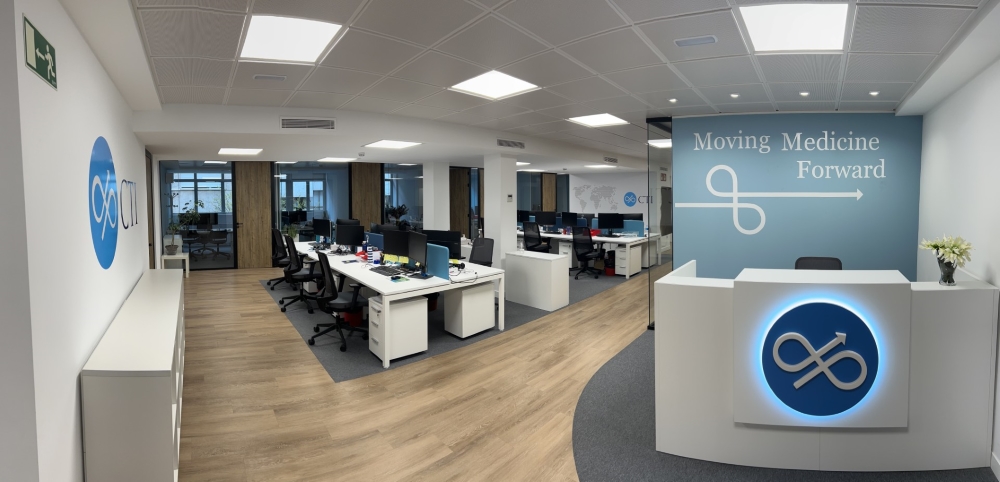
When we started our European build-out 20 years ago, our German location was very intentional. If you look at the map, we’re outside of Stuttgart just by a small amount. The triangle is Frankfurt to the north, Munich to the east and Basel, Switzerland, to the south. Those are all within a couple hours of where our office is, and a combination of where our customers are — the biggest pharmaceutical companies in Europe — as well as some of the leading academic institutions. When we opened in Spain shortly after Germany, it was basically Barcelona or Madrid. We ended up choosing Madrid. That doesn’t mean we don’t have employees in the other places, but it just ends up that you feel like one place is a focus of concentration.