Kentucky is building on its coal-rich energy history with nuclear, battery storage and renewables.
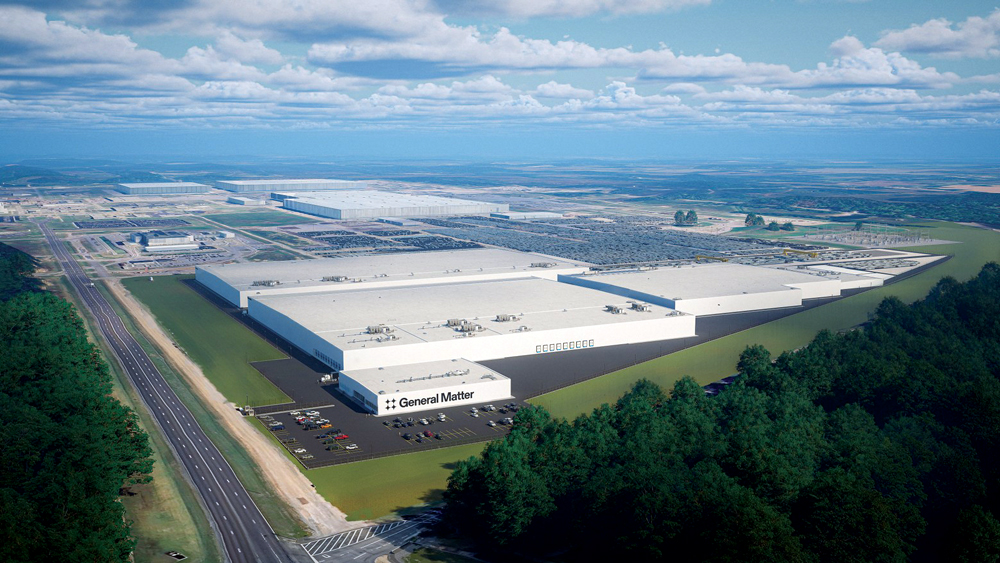
McCracken County in Kentucky will soon become the site of new and impressive energy infrastructure investments, including a $1.5 billion project by American nuclear energy and uranium enrichment startup General Matter. The company is leasing the former Paducah Gaseous Diffusion Plant for commercial uranium enrichment operations, which is expected to support 140 well-paying jobs. When the project is completed, it is expected to be the largest economic development project in the history of Western Kentucky.
Jantien Shizuru, project manager for General Matter’s Paducah program, notes that the “commercial uranium enrichment facility will reestablish domestic enrichment capabilities in the United States, revitalizing Kentucky’s nuclear legacy and establishing it at the forefront of the nuclear renaissance.”
Energy Rich Beyond Your Wildest Dreams
General Matter will construct and operate the new, privately developed plant on about 100 acres at the former Paducah Plant site, which closed in 2013. With plans to provide fuel for commercial nuclear power by 2030, the facility will produce low enriched uranium (LEU) and high-assay low-enriched uranium (HALEU). Almost all existing commercial light-water nuclear reactors use LEU to produce electricity, and most new nuclear reactors in the U.S. are being designed to be smaller, more adaptable and less expensive to build — they will also require HALEU to run, a commodity not yet available at a commercial scale within the United States. Presently, Russia and China lead the global commercial supply of HALEU.
The benefits to having uranium processing assets on Kentucky soil are immense for the nuclear energy industry in the United States, which has a long history in the Bluegrass State. Shizuru explains that 75 years ago, the U.S. Atomic Energy Commission selected Paducah to help lead the nation’s original enrichment efforts.
“The Paducah Gaseous Diffusion Plant was the first location where the U.S. industrialized enrichment technology, enabling the eventual widespread adoption of commercial nuclear power. This legacy lives on through Paducah’s leadership as a nuclear community. This proposed facility is reactivating this historic site to power a new era of American energy independence and fuel clean, safe, baseload power for utilities and consumers alike.”
The General Matter project was awarded $900 million by the U.S. Department of Energy in January 2026, two years after the startup was founded. The injection of federal dollars will accelerate the company’s timeline to satisfy domestic HALEU demand years ahead of schedule.
“General Matter is the American uranium enrichment company, bringing homegrown nuclear fuel development back to the U.S. after decades of outsourcing, powering both economic growth and national security,” says Shizuru. “We leverage scale manufacturing and vertical integration to reduce the cost of enrichment and unlock marketability for U.S. production.”
Another uranium enrichment facility is progressing toward a new-location announcement, as Global Laser Enrichment in late 2024 announced a land swap with the Commonwealth of Kentucky to clear the way for a project on nearly 700 acres in Paducah. The pilot plant includes plans to locate on approximately 200 acres and comprise a 1-million-square-foot processing building. Construction is expected to generate over 1,000 temporary jobs, and the plant would have hundreds of high-paying permanent positions once completed. Major construction could begin as soon as 2027, with hopes to deploy uranium with laser-based technology by 2030.
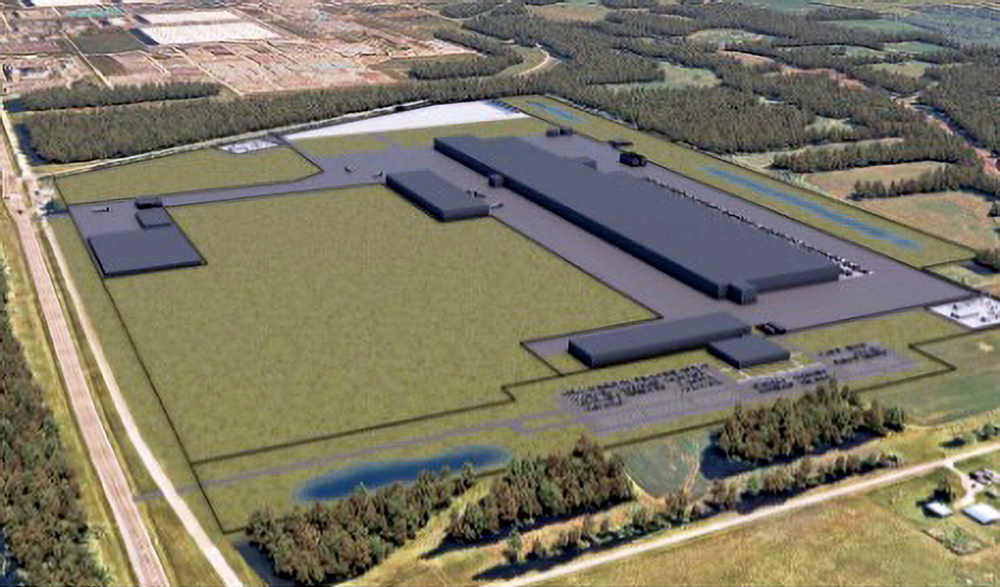
Conceptual plans of the Global Laser Enrichment facility in McCracken County.
Image courtesy of Global Laser Enrichment
“We are the first company to deploy this tech anywhere in the world,” says GLE Vice President of Government Relations and Communications Nima Ashkeboussi of the laser-based methods of uranium enrichment his company leverages. “Establishing this facility gives us a strong energy security foothold for nuclear fuel, and it strengthens our exports to our allies.”
The United States currently relies on getting two-thirds of its enriched uranium requirements met through imports. GLE has a 70,000-square-foot manufacturing facility in Wilmington that will produce infrastructure components for the Paducah plant. GLE is currently licensing the Paducah plant with the U.S. Nuclear Regulatory Commission and is presently the only one of its kind under review. Formed in 2007, GLE has been a fully privately backed venture since the start, with roughly $550 million in private capital. In January 2026, the company received its first-ever government funding — $28 million toward its Wilmington, North Carolina, plant to advance deployment readiness. Ashkeboussi notes that choosing Paducah for the new facility was guided by the area’s strong legacy in the nuclear industry, its strong workforce with recent memory of nuclear, a supportive business infrastructure and the nearby depleted uranium feedstock located in the General Matter facility area.
“We lack these capabilities as a nation to satisfy our needs,” says Ashkeboussi about having uranium processing assets in Kentucky. “In terms of domestic priorities, it’s reasserting our energy independence. The old plant was the center of uranium enrichment in the country. We are bringing that legacy back to Paducah and … [to] the skilled workforce in that area. We are bringing high-paying jobs back. And we see a welcoming community for us.”
Charged Up For The Future
Energy storage projects are also on the rise in Kentucky, and they are raking in record job numbers. Announced in late 2024, Shelby County will be home to a $712 million facility from Shelbyville Battery Manufacturing that will create over 1,500 highly skilled, well-paying technical jobs once open. Shelbyville Battery Manufacturing is a subsidiary of Ontario-based e-STORAGE, owned by Canadian Solar, which specializes in creating and integrating battery energy storage systems for utility-scale applications. The 6-gigawatt-hour battery cell, module and packaging manufacturing facility to be located in Shelbyville will span 1 million square feet and is expected to break ground in early 2026.
“We are proud to be a part of the growing energy technology transformation across the U.S., and we are thrilled to announce our investment in a new, state-of-the-art industrial battery cell, module and packaging plant in Shelbyville, Kentucky,” said Colin Parkin, president of e-Storage, when the project was announced. “This new plant will allow us to provide our U.S. customers with cutting-edge, American-made battery energy storage products.”

“General Matter is the American uranium enrichment company, bringing homegrown nuclear fuel development back to the U.S. after decades of outsourcing, powering both economic growth and national security. We leverage scale manufacturing and vertical integration to reduce the cost of enrichment and unlock marketability for U.S. production.”
— Jantien Shizuru, General Matter Paducah Project Manager
A little over an hour’s drive from Shelbyville is Glendale, where Ford Motor Company is also turning its existing EV battery manufacturing assets, BlueOval SK Battery Park, into a facility that will develop battery energy storage systems. In a December 2025 press release, Ford announced its intention to invest about $2 billion to scale production in this business sector, launching a new battery energy storage system arm of the company. The repurposed Glendale facility will produce 5 MWh+ advanced battery energy storage systems, LFP prismatic cells, battery energy storage system modules and 20-foot DC container systems, which are key technologies for data centers, utilities and large-scale industrial and commercial customers, according to Ford.
The site is expected to be operational in 2027, with plans to deploy 20 GWh annually by the end of that year. Ford plans to hire over 2,000 people at the new battery facility.