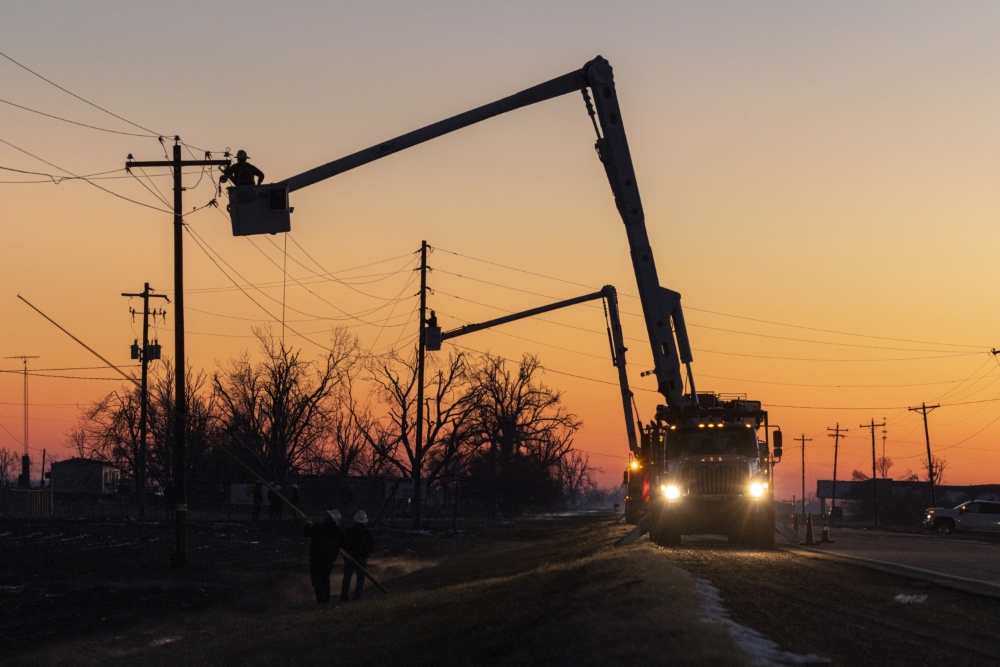
Mississippi is powering the next generation of industry through a highly diversified energy generation portfolio and policies designed to maximize it.
With a healthy mix of nuclear power, natural gas and renewable resources, Mississippi has positioned itself to be an energy leader in America for decades to come. Being home to the largest nuclear power reactor in the U.S is part of the equation. The Grand Gulf Nuclear Station in Port Gibson, operated by Entergy, has a net summer generation capacity of 1,400 megawatts, making it the most powerful single reactor unit in the country.
But that’s not where Mississippi’s competitive advantage stops. Mississippi attracts record-breaking capital investments from AI hyperscaling data centers because the Magnolia State is a net exporter of energy. Moreover, this power surplus is augmented by an extensive network of gas and crude oil pipelines.
Joe Hagerman, director of the Energy and Natural Resources Division of the Mississippi Development Authority, says that when Gov. Tate Reeves last year announced his Mississippi Power Play initiative — a multi-pronged program to support an “all of the above” approach to energy — it was a transformational moment.
“The governor recognizes that the whole country is at an existential risk of missing out on future economic development without new power capacity,” Hagerman says. “When he stood up and announced the Power Play, it was very impactful. It made national news. At that meeting, the governor laid out a lot of things like being receptive to more industry coming in, prioritizing permitting of new energy projects and supporting legislation to make this happen.”

“We understand speed to market and time to power. Those issues make or break a company’s decision to invest here.”
— Joe Hagerman, Director, Energy and Natural Resources Division, Mississippi Development Authority
During the most recent legislative session in Jackson, the Mississippi Legislature passed two state laws to address this issue. “One authorizes Energy Ready Grants,” says Hagerman. “We always get $20 million a year in the state budget to offer to economic development organizations to improve the competitiveness of sites. We give grants to make sites shovel-ready. Now we are taking it one step farther. A shovel-ready site is not good enough anymore. We must provide power at the sites. Similar to shovel-ready grants, these are grants to get power to the sites. Whatever you need to bring power, this is for natural gas and electrical power.”
New Bank Funds Power Supplies
The second piece of legislation, notes Hagerman, “launches an energy infrastructure bank or fund with a revolving loan program to help prospects purchase the large power equipment they may need for their site — like power substation transformers — using state dollars. We are trying to bend time with this infrastructure bank. We can enable the prospect to pre-order this infrastructure for power. We are looking to use this as a way to recruit businesses. We can say, ‘Come to Mississippi — we already have this set up.’ ”
Reaction to both bills has been extremely positive, says Hagerman. “This has caused a lot of companies to look in Mississippi,” he says. “We understand speed to market and time to power. Those issues make or break a company’s decision to invest here.”
While the infrastructure bank has yet to be funded, Hagerman says the goal is to reduce the time it takes to deliver power to a site. It can take years to deliver a new transformer to a site, but this new fund can expedite the ordering and purchasing process.
“The Power Play is so important because it shows that the governor recognizes what companies need in order to grow,” Hagerman says. “That proved to be true when Elon Musk and xAI chose to invest in DeSoto County, Mississippi, just across the state line from Memphis.”
Mississippi is governed by the Midcontinent Independent System Operator grid. “That is our load balancing authority,” says Hagerman. “Entergy Mississippi is in that market. We are in Load Service Area 9, which covers Mississippi and Louisiana. Facebook and AWS are grid-connected data centers. They are there because we have the power capacity and we have enough transmission capacity to move the power. Entergy is vertically integrated. Those companies go to Entergy for power, and Entergy is a one-stop shop for all of their power requirements. We have the most available generation and the most available transmission to enable these companies to build wherever they want. We also have the fiber internet. Companies want power, transmission and connectivity. We have all three.”