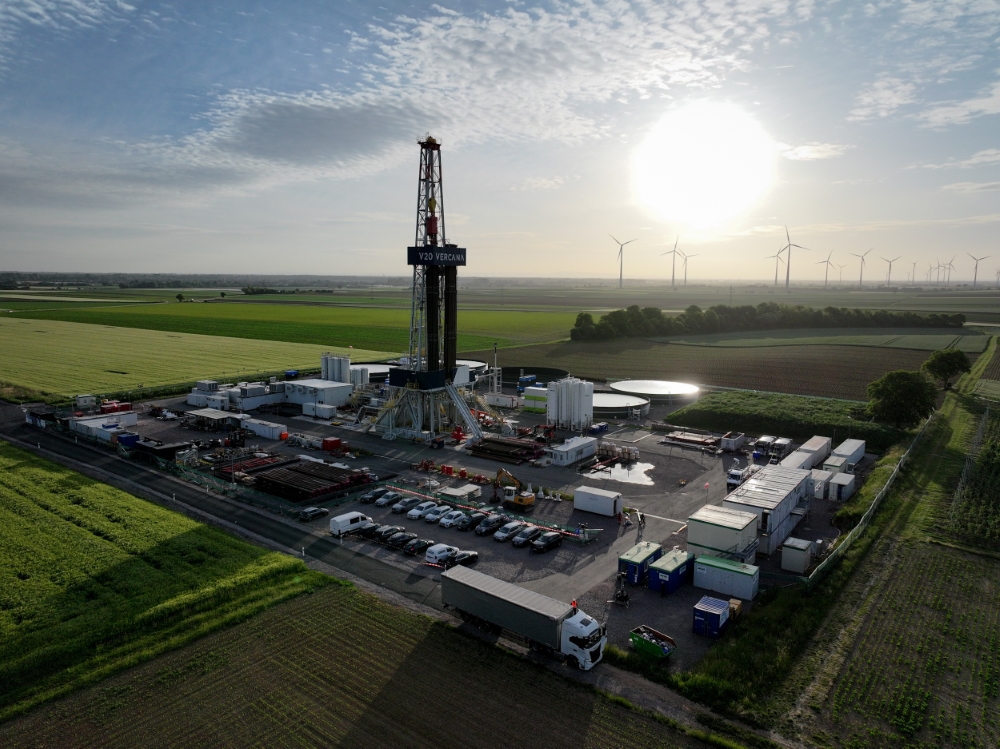
Known for its longstanding history of natural gas reserves, the Altmark Basin in northern Germany recently saw big gains with another valuable asset — lithium. With a reported 43 million tons of lithium carbonate equivalent (LCE) discovered recently in the region, it’s clear why German companies are investing heavily in the prized resource.
Striking Gold in Lithium Reserves
Neptune Energy, a global oil and natural gas company, started testing for the presence of lithium in the Altmark Basin in late 2024 in collaboration with French technology company Geolith and U.S.-based engineering and construction firm KBR. Lithium carbonate was then extracted at their pilot plant in the Steinitz district and confirmed to meet the necessary requirements to be used in lithium-ion batteries. Lilac, a direct lithium extraction (DLE) technology provider, partnered with Neptune Energy on their pilot plant in Steinitz, Saxony-Anhalt, a first for Lilac in the European market. Brine extracted from a reservoir of natural gas wells located below the ground at the pilot site will be processed and turned into lithium carbonate that can then be used in battery production.
“We’re excited to work alongside Neptune to demonstrate that lithium can be cost-effectively produced in the Altmark while adhering to the highest environmental standards,” said Lilac CEO Raef Sully in a press release. “Lilac’s technology is a strong fit for the Altmark brine and can enable this resource to become a significant source of German lithium production in the future.”
The rewards of testing, pilot and mining endeavors have been swift. Neptune reaped a big boon in September 2025 — the discovery of 43 million tons of LCE in the Altmark area, lending credibility to the energy company’s claim that 70 million tons of LCE may lie in the region ready to be tapped. The unearthing of the LCE reserves in the Altmark Basin puts this region on the map as one of the largest of its kind in the world, with the potential of freeing Europe from its dependence on China and other countries for lithium processing.
Strengthening the Supply Chain
Two lithium projects from Vulcan Energy received support from the German government this past summer to strengthen the country’s supply chain of raw materials and accelerate production of electric vehicle batteries.
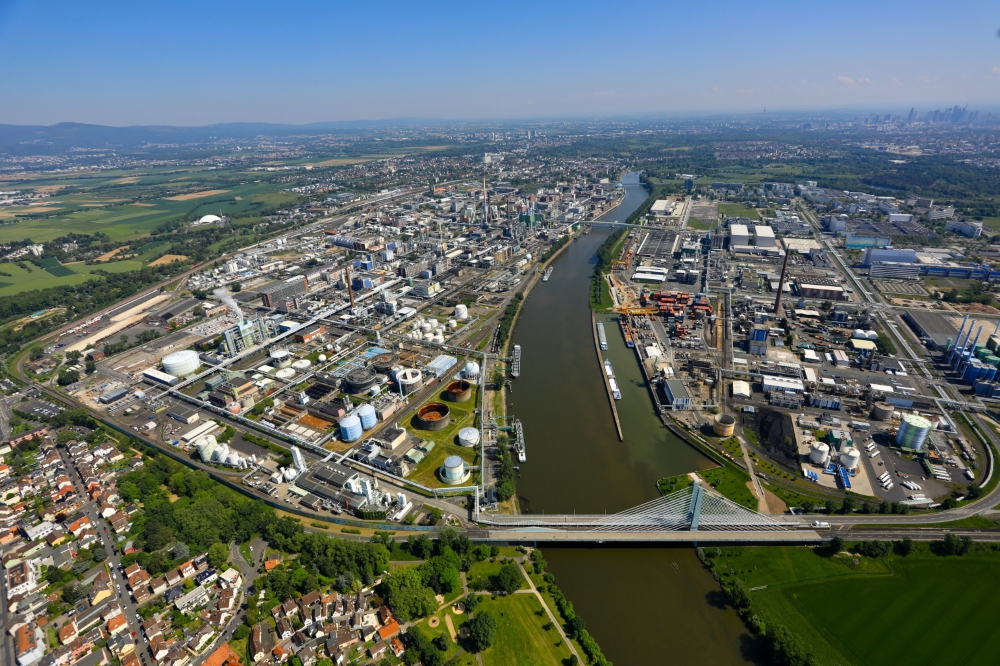
Industrial Park Höchst in Frankfurt is the planned location of Vulcan’s commercial Central Lithium Plant.
Photo courtesy of Infraserv GmbH & Co. Höchst KG.
Vulcan Energy Resources is a lithium and renewable energy producer specializing in producing lithium with a net-zero carbon footprint. This year, the startup received €104 million from the German federal government and states of Rhineland-Palatine and Hesse to produce clean lithium with the goal to boost EV production and decrease the country’s need to import raw materials. The company has already invested €690 million in its first plant in Landau, Rhineland-Palatine.
“As the home of a world-leading automotive industry, Germany faces growing demand for lithium — a need that will only increase as the mobility transition accelerates amid an increasingly favorable policy environment,” a Vulcan Energy spokesperson says. “Currently, Germany imports all of its lithium, creating critical dependencies on foreign suppliers. However, Germany and broader Europe possess significant lithium reserves, and political and economic interest in developing these domestic sources is strong.
“Projects that can supply lithium in a sustainable and economically viable way are essential in Germany and therefore enjoy strong support from both local and national stakeholders,” the spokesperson continues. “In addition, Germany’s advanced industrial infrastructure and robust innovation ecosystem make it a fitting environment for scaling new lithium manufacturing projects efficiently and responsibly.”
The new facilities in Landau and Frankfurt are an integral part of the company’s Phase One Lionheart Project, the spokesperson explains. The new facilities will produce lithium hydroxide monohydrate (LHM) on a commercial scale for the company’s offtake partners from the European battery and automotive industry with a capacity of up to 24,000 metric tons per year.
The Landau facility is an integrated geothermal and lithium plant (G-LEP) that will extract lithium from brine in the Upper Rhine Valley while also providing renewable heat and power to local homes. The lithium chloride produced at the upstream G-LEP plant will then be refined at the downstream central lithium plant in Frankfurt-Höchst. This process is already happening on a smaller scale at the Landau and Frankfurt optimization plants, and the new facilities will take this production process to a commercial scale.
Landau was chosen for its long history of oil and gas production (i.e., multiple chemical parks, over 1,000 existing wells and a mature producing field) as well as the salinity, temperature and lithium concentration of the brine set to be harvested there. There is also already an abundance of data on subsurface activity at the ready. For Vulcan Energy, this made the area the natural choice for phase one of the Lionheart project.
Lithium mining is no easy feat. A challenge in extracting and processing it is the ability to produce an end-product that can meet the high quality and purity standards required for battery production.
“Vulcan’s lithium will be supplied directly to key European battery and automotive manufacturers including Stellantis, Volkswagen LG and Umicore, so it is essential that our product meets specifications,” Vulcan Energy says. “To achieve this, we use our optimization plants to produce samples of the product for the qualification process with our offtake partners. We produced the first battery-quality LHM at our central lithium electrolysis optimization plant (CLEOP) in Frankfurt Höchst in January this year, and initial amounts have already been delivered to our offtake partners for qualification.”
Localizing the refining and manufacturing of lithium will fortify Germany’s access to battery material at a time when the global supply chain and geopolitical landscape are under fire. Notably, Germany and the European Union have introduced an array of incentives to accelerate lithium operations and strengthen related supply chains on the continent. The Critical Raw Materials Act developed by the EU was adopted in 2024 and establishes a framework to secure access to critical raw materials, lithium included. Forty-seven projects were awarded “strategic project status” in 2025, providing streamlined permitting and improved access to financing options. The Lionheart Project was one of the 47 projects selected for this program.