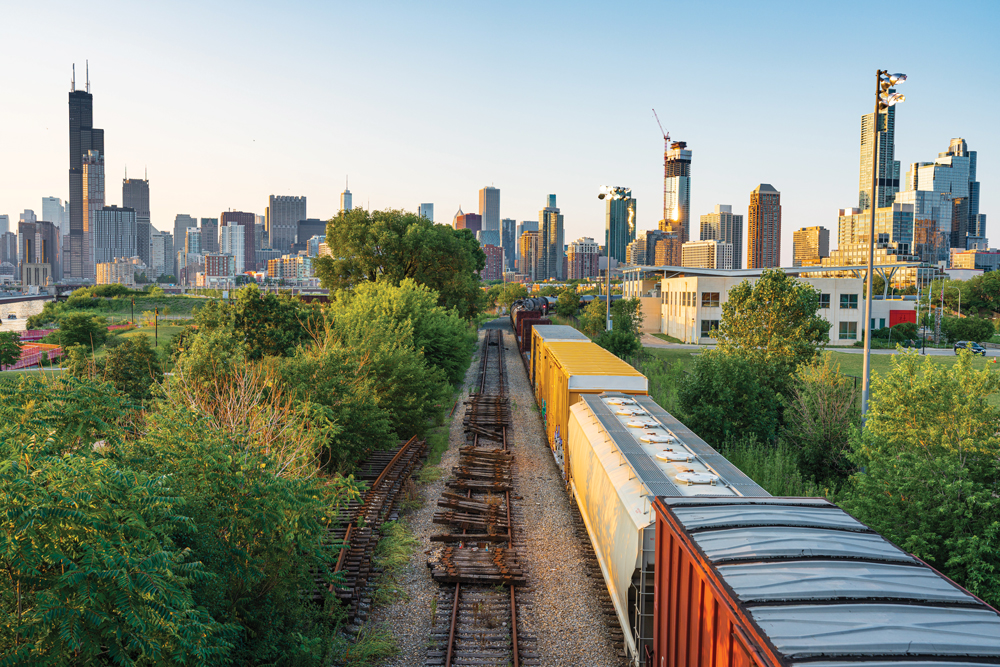
The Great Lakes region sees depth in investments and economy.
“If you look at the assets within the Great Lakes region, the number one asset is the water and number two is the logistics,” says Teresa Nortillo, president of EcoDevo360, about a region that makes up the third largest economy in the world. She and Dean Prestegaard, an economist and economic development strategist at DMP Development Analytics, were recently named vice-chair and chair, respectively, of the Great Lakes Economic Development Council Advisory Board, which is one organization among many looking to bring all the Great Lakes’ assets under one umbrella.
What are some other factors driving corporate investment in the $6 trillion regional GDP of the Great Lakes? Many would include the draw of its nature-filled landscape, family-welcoming communities, a highly skilled technical workforce and strong infrastructure left over from the region’s heyday as part of the premier manufacturing belt in the world.
Transforming a Legacy Manufacturing Belt
Brownfield sites in the Great Lakes region have vast potential for redevelopment, Prestegaard tells Site Selection, noting that “there’s old manufacturing facilities that have all the connectivity to transportation and in other types of infrastructure, but the contamination becomes a barrier, and it’s being able to provide that solution or show that there’s a solution to site selectors and to the firm that wants to locate there that it will really be a good site if you just move forward with the redevelopment.”
In June 2025, the Northeast-Midwest Institute released a report on EPA-designated brownfield sites in the 18-state Northeast-Midwest region, including the Great Lakes. Brownfield remediation and redevelopment is a top priority and opportunity for this region and its history of steel, automobile and manufacturing sites in the area that have built during economic booms and vacated during periods of recession.
Today, the Great Lakes states (Minnesota, Wisconsin, Michigan, Illinois, Indiana, Ohio, Pennsylvania and New York) have nearly 32% of all EPA-designated brownfield sites in the United States, according to the Northeast-Midwest Institute brownfield report and data from the EPA’s Assessment, Cleanup and Redevelopment Exchange System. The benefits of remediating these sites include improving property values, generating millions in additional tax revenue dollars and improving health and community outcomes under the umbrella of environmental restoration and justice.
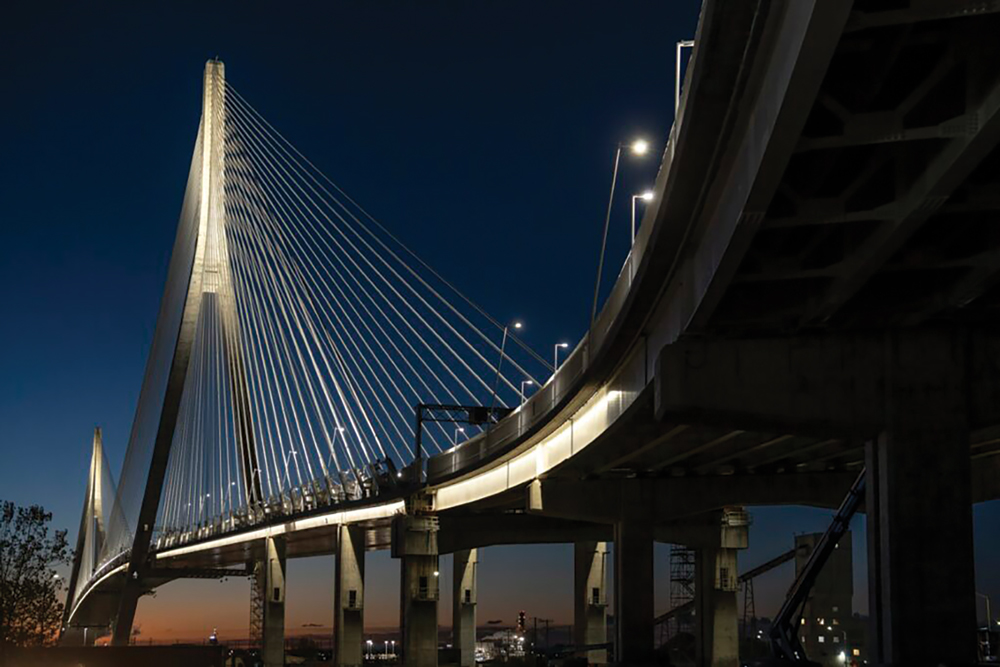
The Gordie Howe International Bridge (pictured) is anticipated to open this year and will connect Interstate 75 in Michigan to Highway 401 in Ontario, strengthening the transportation corridor between Windsor-Essex and Detroit.
Photo courtesy of Port International/ Gordie Howe International Bridge
That’s part of what’s driving the State of Michigan to spend $77 million to revitalize communities and redevelop brownfield sites, an initiative that was announced by the Michigan Department of Environment, Great Lakes, and Energy (EGLE) last November. The legislation doubles the amount per brownfield remediation project, from $1 million to $2 million; removes a “one-project-per-community” limit, allowing places with multiple contaminated sites to pursue more than one redevelopment per year; and reduces cost-share barriers for local governments that own contaminated property.
“Brownfield redevelopment is about more than cleaning up contaminated land, it’s about giving communities the tools they need to grow stronger and more resilient,” said EGLE Director Phil Roos in November 2025. “These projects create jobs, attract private investment and make our cities safer and more sustainable for generations to come. With support from the Whitmer-Gilchrist Administration and our partners in the Legislature, EGLE is proud to help communities transform environmental challenges into economic opportunities.”
Prestegaard and Nortillo both note the transfer of research and tech in legacy industrial and manufacturing sectors in the Great Lakes, providing a more sophisticated framework for projects and workforce development. Nortillo says that one sees “a lot of advanced manufacturing coming out of what had been the historically automotive areas.”
A network of top-tier universities and research organizations, including Chicagoland institutions like Fermilab, Argonne National Laboratory, University of Chicago and Northwestern University, provide a sophisticated R&D framework fueling everything from food and beverage processing to quantum computing.
Workers and their families may also find opportunity in the region. As reported in these pages by Ron Starner, the Midwest, including the Great Lakes states of Wisconsin, Indiana and Michigan, has seen a rise in people moving to cities there from other areas of the United States, driven in part by affordability.
“One of the big issues we’re faced with right now is with workforce and trying to attract workforce wherever you’re looking to site a new facility,” says Prestegaard. “In the Great Lakes region, we offer so many different activities with the natural environment — there is an attraction to the younger workforce to be in places like this when they’re thinking about raising their families. There are some advantages to being in the Great Lakes region because of what it offers in that respect and if the firm is dependent upon attracting that talent to a place. They may find that the Great Lakes region offers the best option for success, whether that’s a highly skilled technical workforce or more of a skilled trade workforce.”
A Moving Economy
In my conversation with Nortillo and Prestegaard, discussion naturally turned toward the logistics portion of the Great Lakes economy.
“The logistics port here has a significant concentration of supply chain activity,” says Nortillo about the powerhouse hub of Chicago and similar ports dotting the Great Lakes, adding that the water of the Great Lakes itself has become a much more valuable commodity in the local market. “That resource is second to none in the regional economy,” she adds.
The Port of Chicago, the busiest freight rail hub in the United States, is host to a quarter of all U.S. freight rail activity, according to the Association of American Railroads. This equals about 1,300 trains each day. The Chicago area is also a major operator of intermodal freight, handling half of national intermodal trains and serving all seven Class I railroads in the United States (BNSF Railway, Canadian National Railway, Canadian Pacific Kansas City, CSX Transportation, Norfolk Southern Railway, Union Pacific Railroad and passenger railroad Amtrak).
In January 2026, Norfolk Southern launched East Edge, a double-stacked intermodal corridor connecting Chicago to the New England freight rail hub of Ayer, Massachusetts, northwest of Boston, reducing transit times and adding substantial network capacity. Other cities on this new service route include Elkhart and Fort Wayne in Indiana; Detroit, Michigan; Toledo, Bellevue and Cleveland in Ohio; and Buffalo, Binghamton and Albany in New York.
“In the Great Lakes region, we offer so many different activities with the natural environment — there is an attraction to the younger workforce to be in places like this when they’re thinking about raising their families.”
— Dean Prestegaard, Economic Development Strategist, DMP Development Analytics
In early 2026, the American Great Lakes Ports Association (AGLPA) and the Great Lakes St. Lawrence Seaway Development Corporation announced they would launch a market study targeting how to increase cargo shipments between the Great Lakes and inland waterway systems. The study will focus on expanding river-lake shipping in Lake Michigan ports located in Indiana, Indiana and Wisconsin, which comprise about 65% of all Great Lakes shipping-related activity in the United States.
“For too long, the connection between the Great Lakes and the Inland Waterways has been an underutilized asset in America’s freight network,” said AGLPA President Captain Paul C. LaMarre III in February. “This study will help identify the cargoes, markets and infrastructure needed to make river–lake shipping more efficient and commercially viable. AGLPA and our member ports are committed to a data-driven approach that strengthens maritime commerce and reinforces our region’s vital role in the nation’s supply chains.”
Some wins for the Great Lakes’ shipping infrastructure include the opening of Toronto’s Ship Channel Bridge in April 2026 following wintertime work. The multiphase project began four years ago in the Port of Toronto and will be completely done in two years. Rehabilitation of the bascule bridge was needed to not only maintain marine transportation of products, but also increase tonnage of cargo and shipments of heavy single-component consignments. Each year, the Port of Toronto handles over 2 million metric tons of goods, according to the Toronto Port Authority. Also, the Gordie Howe International Bridge is still anticipated to open this year. The $4.4 billion transportation project, which started construction in 2018, will connect Windsor, Ontario, to Detroit, Michigan, spanning the Detroit River.