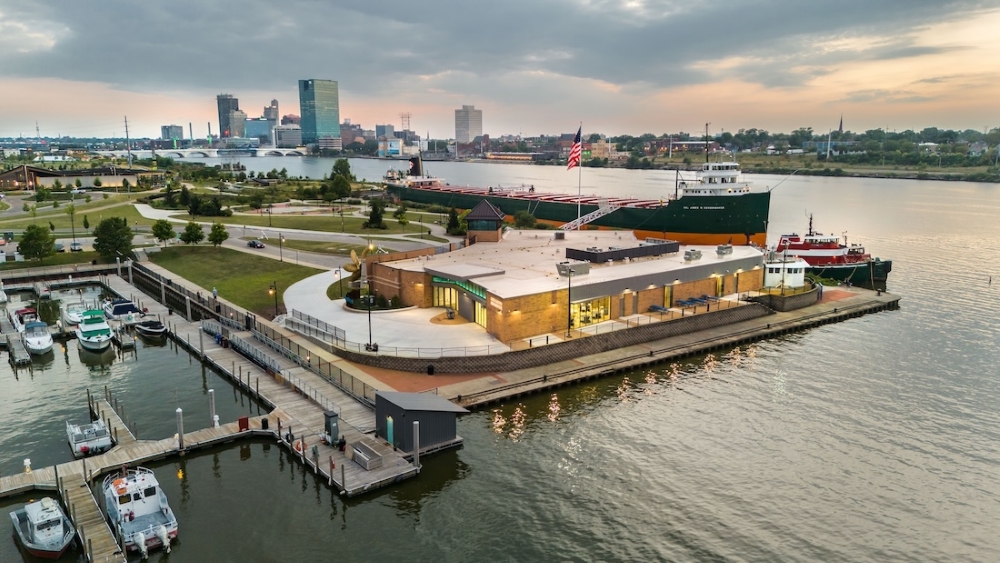
The National Museum of the Great Lakes, rooted in Toledo, Ohio, since 2014, arose from the efforts of the Great Lakes Historical Society to tell the essential stories shaping the cultural and historical fabric of the region. Sara Smith, the museum’s director of institutional advancement, shares more on what the museum has to offer through this mission.
“The National Museum of the Great Lakes was built out of more than 80 years of passion for preserving and sharing Great Lakes history — and a desire to make that history accessible to more people,” she says. “Our organization began in the basement of the Cleveland Public Library with the Inland Seas Journal, connecting enthusiasts who not only loved Great Lakes history, but actively collected it. As that collection grew, so did the need for a dedicated space, leading to our first museum in Vermilion, Ohio.”
A Maritime Institution in The Glass City
The nonprofit’s current museum in Toledo, which saw a 5,000-sq.-ft. expansion in 2025, has nine interactive exhibit galleries, a rotating exhibition space, historic vessels (e.g., the Col. James M. Schoonmaker Museum Ship and the Museum Tug Ohio) and the pilothouse of the St. Marys Challenger.
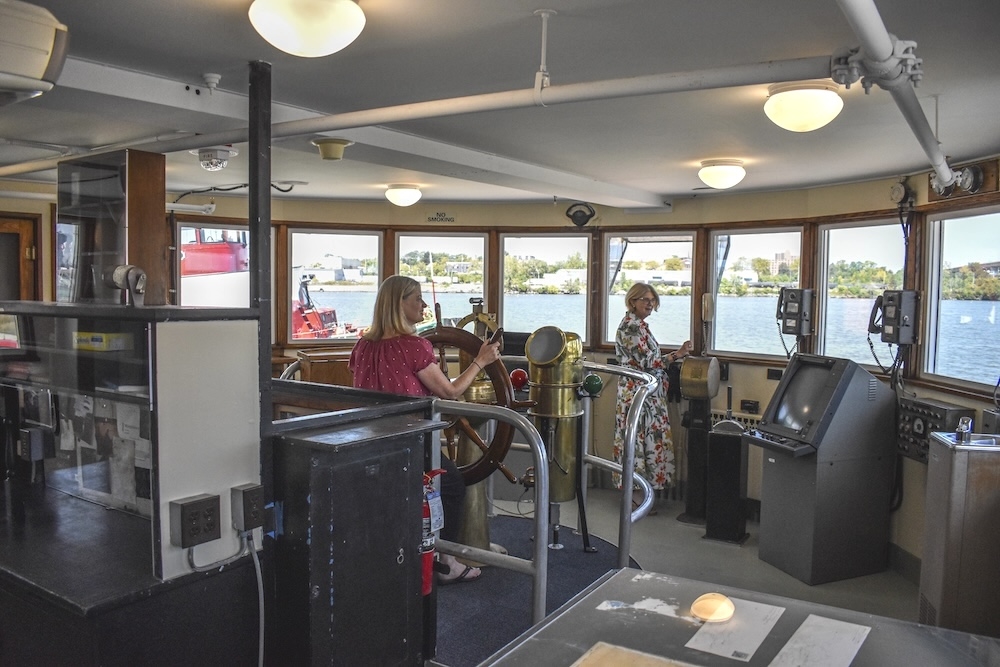
The National Great Lakes Museum, which saw a 5,000-sq.-ft. expansion in the summer of 2025, is home to nine interactive exhibit galleries, a rotating exhibition space, historic vessels (i.e., the Col. James M. Schoonmaker Museum Ship and the Museum Tug Ohio) and the pilothouse of the St. Marys Challenger.
Photos courtesy of the National Museum of the Great Lakes
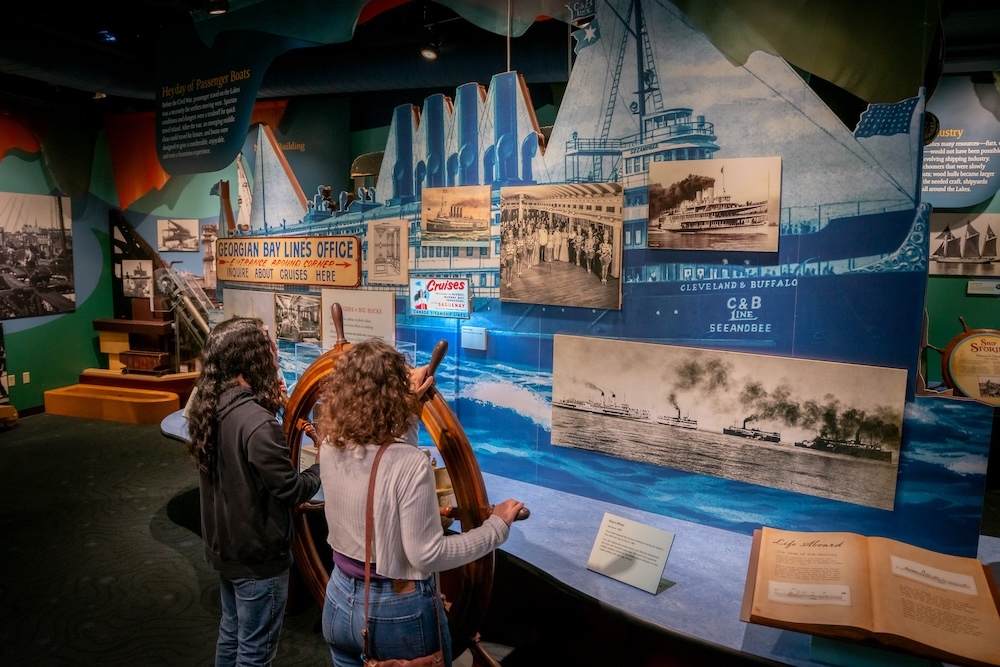
Smith notes that “unlike many maritime museums that focus on a single port, topic or stretch of water, we tell the full, interconnected story of all five Great Lakes — across both the U.S. and Canada. To truly ‘make known’ that broad and shared history, we needed to be in a place where more people could engage with it.”
Toledo borders Lake Erie and sits at the mouth of the Maumee River, the largest watershed feeding the Great Lakes system. The St. Lawrence Seaway flows east of Toledo, with Duluth-Superior to the west. The city sits at the intersection of I-75 and I-80/90, nicknamed the “Crossroads of America.” Its industrial legacy is constantly marching forward, transforming into an economy powered by the development of advanced manufacturing and sustainable technologies. In April 2026, insulation, roof and fiberglass company Owens Corning announced it would invest another $250 million upgrading its global headquarters in downtown Toledo, committing to another 30 years in The Glass City.
Outside of its logistics and manufacturing industries, Toledo has plenty to offer tourists and residents alike: Maumee Bay State Park, the world-renowned Toledo Museum of Art, the award-winning Metroparks (including the Glass City Metropark and Riverwalk on the Maumee River, adjacent to the National Museum of the Great Lakes; Owens Corning’s HQ also shares riverfront with the Riverwalk) and Imagination Station Science Museum; entertainment venues and options including the Live Arts Toledo, the Valentine Theatre, the Stranahan and Toledo Zoo.
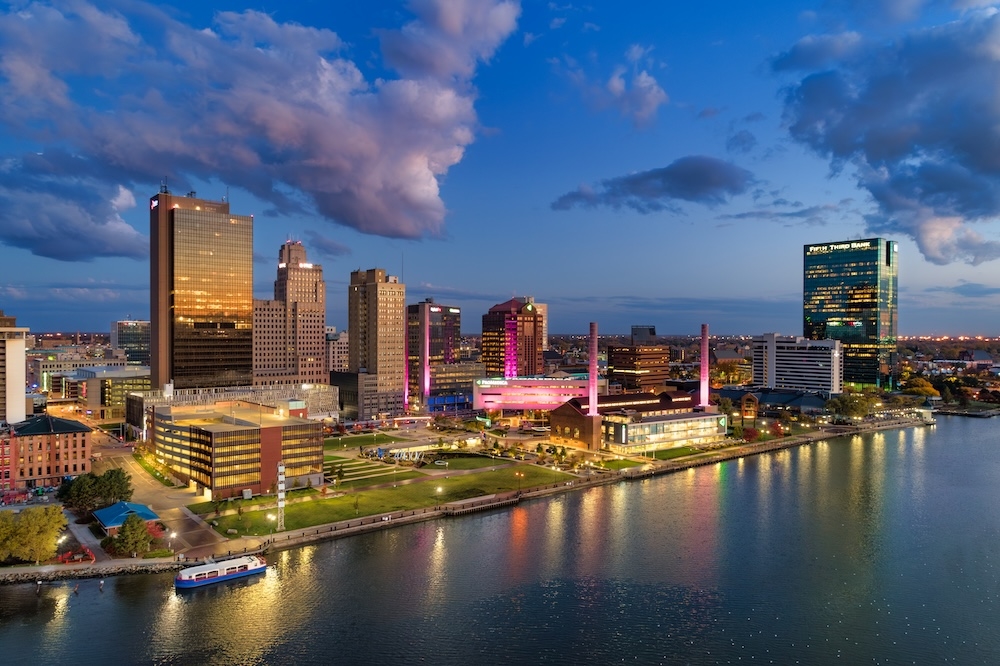
Toledo (pictured) borders Lake Erie and sits at the mouth of the Maumee River, the largest watershed feeding the Great Lakes system. The city sits at the intersection of I-75 and I-80/90, nicknamed the “Crossroads of America.”
Photo by Dee Liu: Getty Images
Smith explains that Toledo is not just a historic port city, but a hub for Great Lakes dialogue — guided by the core values of education, sustainability, inclusivity, leadership and partnership.
“Today, the museum has grown into a true destination, welcoming more than 32,000 visitors annually, with a majority coming from outside the Toledo area and contributing meaningfully to the local economy,” Smith says. “More importantly, our role has evolved. While we remain committed to preserving history, we also recognize that Great Lakes history is still being written every day. With 21% of the world’s freshwater, these lakes are central to conversations about sustainability, industry and our collective future.”
The busiest season at the National Museum of the Great Lakes is May 1 to October 31 — when the museum ships are open. Smith says the most significant item on display (and the largest) is the Col. James M. Schoonmaker Museum Ship.
The Queen of the Lakes
The Schoonmaker was constructed in Ecorse, Michigan, in 1911 — styled the “Queen of the Lakes” at the debut of her sailing career. The vessel, which was the flagship of the Shenango Furnace Company, was also the largest ship operating on the Great Lakes for three years, transporting record-breaking levels of cargo that comprised iron ore, coal and grain. The ship was retired in 1980 and then preserved as a museum in ship in 1987 by the City of Toledo. For a period of time, the ship was known as the SS Willis B. Boyer under different ownership but regained her maiden name Schoonmaker in 2011 on her 100th birthday.
“Today, permanently docked along the Maumee River at our museum, the Schoonmaker allows visitors to step aboard and experience Great Lakes history firsthand,” says Smith. “It’s not just our largest artifact — it’s one of the most tangible and inspiring ways we bring the story of the Great Lakes to life.”
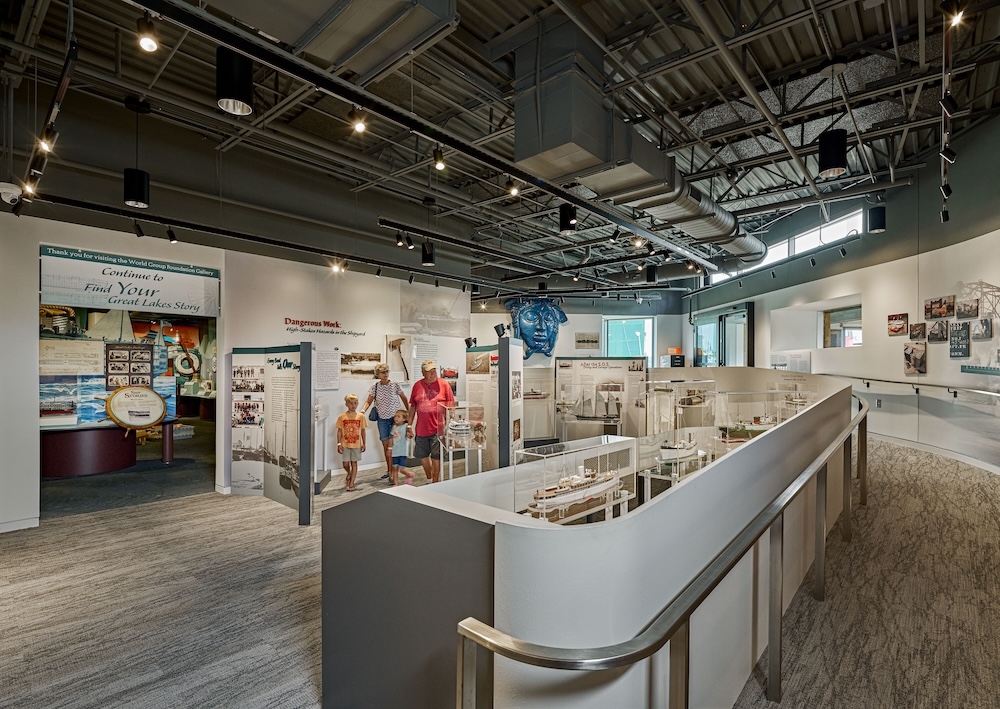
The mission of the National Museum of the Great Lakes is to preserve, share and celebrate the region’s past, present and future — while striving to be the gathering place for Great Lakes conversations, says Sara Smith, director of institutional advancement at the National Museum of the Great Lakes.
Photo Courtesy of the National Museum of the Great Lakes
The museum holds a revolving door of exhibits and full programming for visitors, including free lectures, Freighter Golf mini-golf in June onboard the Schoonmaker, yoga and tai chi in the summer and Capt. Scupper’s youth educational activities every Saturday in the summer. Currently, a micro-exhibit showcasing a new shipwreck can be taken in as can a large-scale temporary exhibit, “Currents of Change: The Living History of the Great Lakes,” which started on Earth Day and will stay open through October 2026.
“While we remain committed to preserving history, we also recognize that Great Lakes history is still being written every day.”
— Sara Smith, Director of Institutional Advancement, The National Museum of the Great Lakes
“Each lake has its own character, from the maritime heritage of Lake Erie and the industrial history tied to ports like Toledo and Detroit, to the natural splendor of Lake Superior’s dramatic landscapes,” Smith says, noting that diversity is what truly sets the Great Lakes apart. “Across the region, visitors can explore charming coastal towns, major cities, historic lighthouses and more than a century of rich maritime history — including shipwrecks, working freighters and museum vessels like the Col. James M. Schoonmaker.”