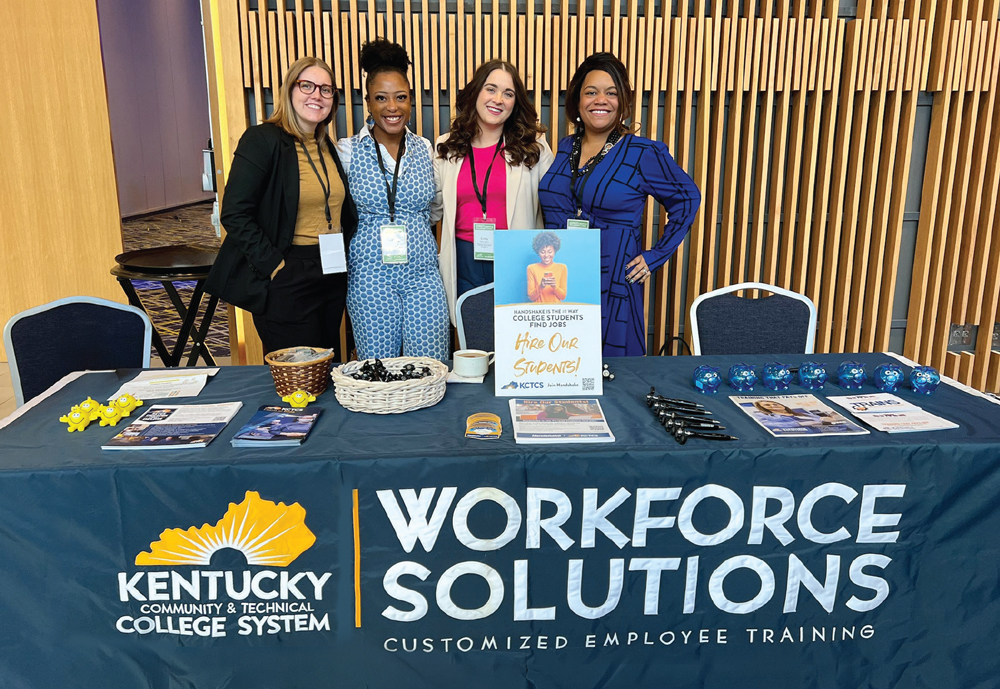
Kentucky’s higher education mission means good jobs for students.
In Kentucky, the roads to excellent higher education and workforce wins start at the elementary level, according to Governor Andy Beshear.
In an interview with Site Selection Editor-in-Chief Adam Bruns, Gov. Beshear notes that the state has “one of the best workforce development programs in the nation. It starts in our K-12, primarily our high schools where we’ve invested $250 million-plus in renovating our career and technical education centers. … It’s exciting to see nursing students, welders and robotics students all cheering each other on in the same facility as we give them the best skills that we can to enter that workforce. Then we have our community colleges, where we have what’s called an Education First Employer program where you as a company can come in, talk to that community college about your needs and they will develop a program where we train your workers and they get an education credential all at the same time. You can actually watch your pipeline two years in advance. Then we have our four-year universities spread across Kentucky with very strong engineering schools.”
The Education First Employer program, started by the Kentucky Community and Technical College System (KCTCS) in 2023, was created so that employers could support college students/workers with tuition support, flexible work schedules and livable wages. In return, students are able to complete their education and college credentials and advance their opportunities in the workforce, all while strengthening the local talent pipeline, boosting retention and maximizing ROI for employer-offered tuition benefits. Goodwill Industries of Kentucky was the first statewide employer to join the Education First Employer program, doing so in early 2025. The network comprises about 60 companies, including Amazon, Gibbs, Appalachian Regional Healthcare, Baptist Health, Kentucky Power, Novelis, Humana and more.
Students First
“The Kentucky Community and Technical College System prioritizes career readiness and workforce training as part of our higher education mission,” a KCTCS spokesperson tells Site Selection. “This means we are regularly reviewing our more than 600 programs to ensure our offered programs and curriculum is aligned with the skills that employers require. We also prioritize our partnerships with business and industry to support our students’ career pathways. We work with nearly 3,000 employers to foster engagements and develop skilled-talent pipelines into the Kentucky economy.”
Within the KCTCS network, three-year graduation rates have increased each year since 2021, from 36% in 2019–2020 to 51% in 2024–2025. Serving a diverse population of students, KCTCS relies on the hard work of its faculty and staff to advise students on career prospects. Veterans, single parents, first-generation and low-income students all make up a significant portion of the student base at KCTCS, in addition to traditional college-age attendees. The median age of a KCTCS student is 27 years old. KCTCS also has high schoolers earning dual credit courses in their institutions. Some high school students enrolled in KCTCS institutions earn their associate degrees before graduating from high school.
“Kentucky has been very intentional about focusing on our student success and our workforce outcomes through our statewide agenda at the Kentucky Council on Postsecondary Education. We’re attempting to align affordability, student success and workforce relevance.”
— Dr. Leslie M. Sizemore, CPE Workforce Initiatives Assistant Vice President
“KCTCS meets each student where they are and works to eliminate barriers to keep them on course to completing their degree,” says the spokesperson. “This could mean raising dollars for our college emergency funds and food pantries, providing child care and transportation services, or allowing flexible scheduling so our students who work full-time can still attend classes. This has led to improved outcomes across all our colleges. KCTCS also keeps tuition and the cost of earning a degree as low as possible.”
KCTCS schools typically cost less than half of what it costs to attend other higher education institutions. Nearly three-quarters of KCTCS graduates leave college with no student loan debt. KCTCS regularly reviews key industry sectors in Kentucky for the most in-demand and high-paying jobs, allowing the organization to build a skilled pipeline of graduates for the fields where workers are needed most.
According to KCTCS, more than 70% of graduates stay and work in the communities in which they live. Further, KCTCS engages in many work-and-learn partnerships, including a Federation for Advanced Manufacturing Education (FAME) USA–supported relationship with Toyota Motor Manufacturing Kentucky, which allows participating students at Lexington-based Bluegrass Community and Technical College to work with their employer before graduating.
“In addition to the partnership with Toyota, KCTCS prioritizes many of these employment pipelines for students across the state, including with partners like Humana (for our nursing and health care students) and Marathon (for our applied process technologies students) among several others, that ensure job placement after graduation,” KCTCS tells Site Selection. “We see significant improvements to graduation rates and employment rates after graduation for students in these programs. We also offer a scope of programs that support the state and national economies’ booming advanced manufacturing sector. Our additive manufacturing programs offer students the opportunity to work directly with employers to develop technologies that can improve critical processes. For example, students in additive manufacturing at Somerset Community College helped 3D print a concrete house that is resistant to flood and other natural disasters. We are not only training the future workforce, we are also expanding Kentucky’s supply chains in collaboration with industry.”
KCTCS also supports transferring students and is “committed to being good partners with our fellow state higher education institutions to support our students who want to transfer to continue their higher education journey. We maintain over 350 transfer agreements across our system with our four-year partners. This ensures that students in these transfer pathways can seamlessly move their credentials and course credits earned at one of our 16 colleges to count toward their bachelor’s and advanced degrees. Additionally, we are working on a common course numbering system that removes additional barriers to transfer to ensure that students don’t lose time or money as they continue their higher education.”
Each year, about 15,000 students transfer from a KCTCS college or school to a four-year higher education institution, though a significant number enroll in technical, skills-based credential programs and enter a trade career right after completing their studies.
KCTCS also has launched a systemwide AI task force, with some of the colleges in the system adding it as the eleventh skill in addition to the 10 Essential Skills framework taught throughout the system. The organization is “looking to leverage AI and technology to improve educational and employment outcomes for students across the state, supporting them from prospect and into the workforce. We’re helping to increase access to AI skills while our students are enrolled by embedding AI literacy across the curriculum and ensuring that faculty, staff and students have access to AI tools.”
In spring 2025, KCTCS graduated more than 24,000 students with more than 42,000 credentials, the highest amount in the history of the school system. KCTCS ranks as fourth in the nation in credentials awarded per capita and aims to be no. 1.
Top of the Class
In early 2025, the percent of working-age people in Kentucky with a postsecondary certificate or degree rose to 56.2%, up nearly 6% over the preceding five years, according to Kentucky’s Council on Postsecondary Education (CPE). By 2030, the state wants to make this number 60%.
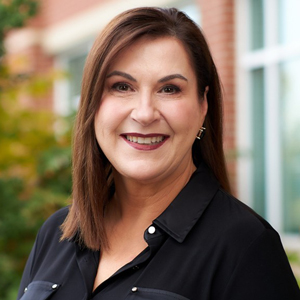
Dr. Leslie M. Sizemore, CPE Workforce Initiatives Assistant Vice President
“Kentucky has been very intentional about focusing on our student success and our workforce outcomes through our statewide agenda at the Kentucky Council on Postsecondary Education,” says Dr. Leslie M. Sizemore, CPE Workforce Initiatives assistant vice president. “We’re attempting to align affordability, student success and workforce relevance. So we have a key goal that is our 60 by 30 initiative, and it aims to ensure that 60% of Kentuckians have a degree or a credential that matters by 2030. And we’re also using performance-based funding, which means we’re awarding our institutions public dollars for improving things like graduation rates, closing gaps [and] producing credentials that lead to good jobs. We think that this model ensures that our institutions stay focused on the outcomes, and the outcome goal is no longer enrollment. It’s completion, credentials and careers for our Kentuckians.”
Kentucky has been proactive in developing public-private partnerships (P3s), which allows government entities to partner with private parties to finance university expansions, technology initiatives and transportation projects through long-term contracts. The Healthcare Workforce Investment Fund (HWIF), approved during Kentucky’s 2023 legislative session, is one such case. The initiative provides health care training scholarships for Kentucky resident students and incentives to reward performance and academic excellence.
“Since its inception, the HWIF has awarded about $18 million in scholarships and has really helped close the gap in the health care workforce crisis here in in the state,” says Sizemore. “From the success of this HWIF initiative, there was another one that was created in the 2024 legislative period called the Aerospace Education Investment Opportunity Act, or AERO Act for short. This one is still in the building-out phase. We have the infrastructure there ready to go, and it’s about fostering partnerships between Kentucky’s postsecondary aviation, aerospace and defense programs with those matching sectors. And so private or industry dollars put money into a state fund and that money is then matched dollar-for-dollar by the state, both for AERO and HWIF.”
The AERO Act, if passed in the 2026 state legislative session, would support aviation training scholarships for individuals pursuing FAA-issued licenses or certifications, undergraduate degrees in aviation and engineering and high-demand career and technical education credentials as well as aviation equipment grants for Kentucky high school vocational programs and public postsecondary institutions.
These higher education programs are designed and implemented to not only close the gap in the workforce crisis but also incentivize and retain graduates in Kentucky by providing a low- or no-cost education in high-demand, high-wage and highly skilled jobs. Another innovative program coming out of the Bluegrass State is Collegiate Recovery Resource Centers (CRRCs), headed by the CPE through funding support from opioid abatement grants.
“CPE has partnered with five institutions, both private and public, across the state, to support adult learners in recovery from substance use disorder and those managing co-occurring mental health challenges,” says Sizemore about the CRRCs. “This has been really cool to see — some boots-on-the-ground work being done to support students who are our opportunity populations and also just more broadly across the state.”
In spring 2025, CPE received $489,000 in grant funding from Kentucky’s Opioid Abatement Advisory Commission to fund CRRCs on those five college campuses. In addition, CPE has been working on the integration of AI in the classroom, collaborating with the University of Kentucky’s Center for Applied Artificial Intelligence and the KCTCS system, as well as their satellite schools (Hazard, Henderson, Gateway and Jefferson).
“We’ve been working with the KCTCS systems office and the satellite schools and the UK Center to do some workshops around the state that support new and emerging researchers from faculty levels, staff and students to make sure that they know about the range of tools that are available to them through the NSF and different projects that exist in the state,” says Dr. Miles Feroli, CPE Workforce Initiatives senior associate. “The other thing that CPE has been working on is Futuriti.org. This [resource] ranges from supporting secondary students, even sometimes middle-school-level students, through postsecondary and adult learners.”