From Hammond to Fort Wayne, the Hoosier State is balling out.
When word broke that the Chicago Bears were expanding their stadium site search to include places in northwest Indiana, things got real for a lot of folks quickly.
Whether or not the most storied franchise in National Football League history moves to Indiana, the reality is that corporate leaders from AWS, FedEx, Microsoft, Nippon Steel and other global firms are beating a path to the Hoosier State.
Markets like LaPorte, Hobart, Noblesville, Fishers, Carmel, Westfield and other towns aren’t just competing for coveted projects; they’re winning them.
Case in point: John Deere. On January 27, Indiana Gov. Mike Braun announced that the 189-year-old farm equipment manufacturer would invest $125 million to build a 1.2-million-sq.-ft. warehouse and distribution center on 234 acres in Lake County near the Lowell-Hebron area of Northwest Indiana. The new facility is expected to create 150 jobs that pay wages above the county average.
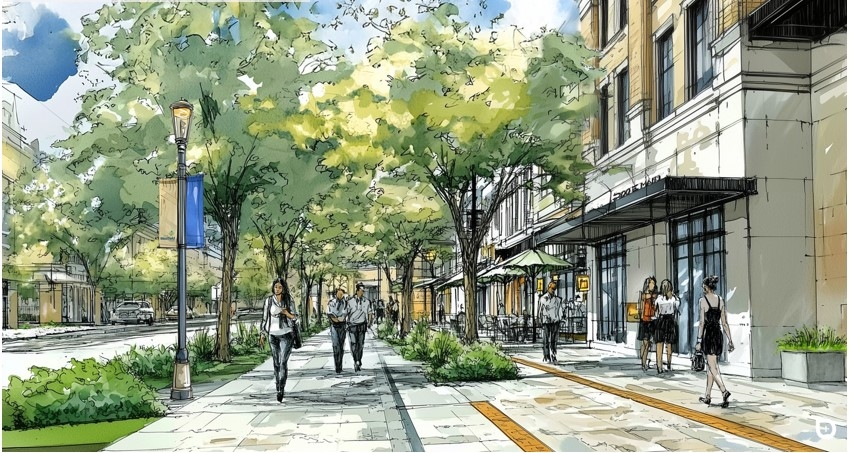
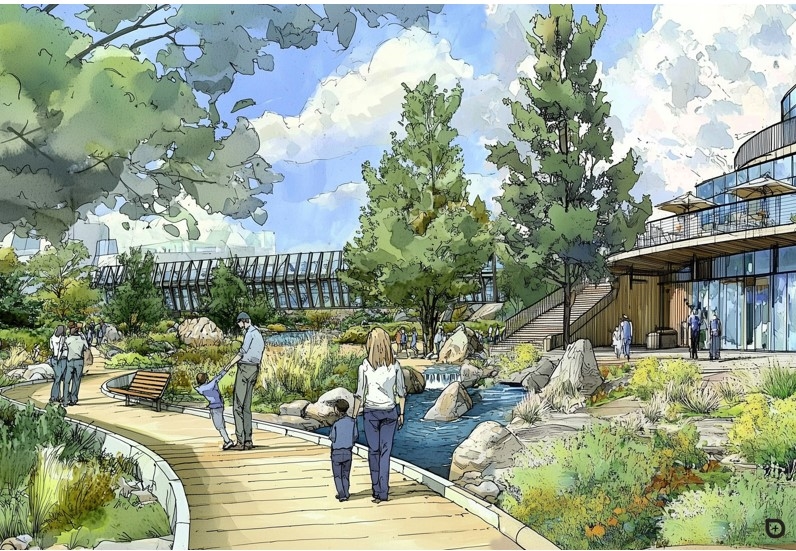
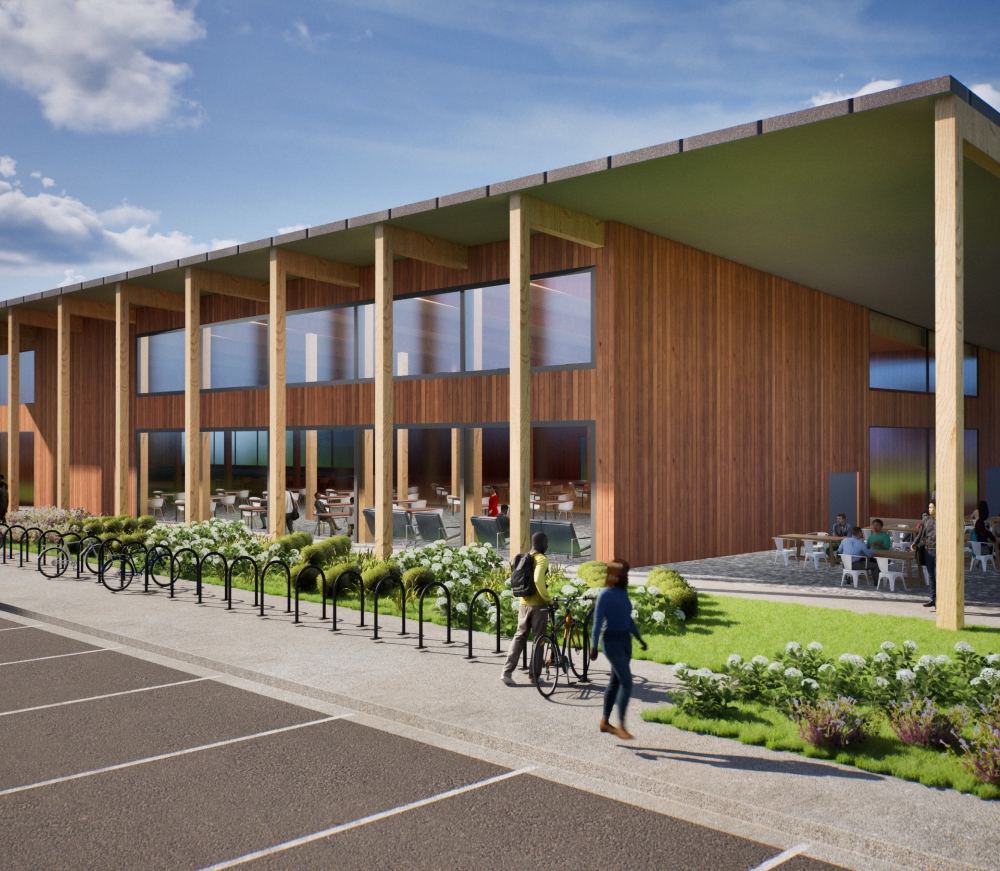
Renderings courtesy of City of Westfield
“This new facility is an investment in customer expectations around world-class product support through parts availability for our U.S.-based ag, turf, construction, forestry and mining customers,” said Denver Caldwell, vice president of aftermarket and customer support at the $45.7 billion company headquartered in Moline, Illinois. “Indiana’s strong workforce and central location make it an ideal choice for expansion.”
The announcement is part of John Deere’s pledge to invest $20 billion in America-based manufacturing and logistics support plants over the next 10 years. Based upon the firm’s job commitment plans, the Indiana Economic Development Corporation (IEDC) announced it would award John Deere up to $2.5 million in incentive-based tax credits.
Heather Ennis, president and CEO of the Northwest Indiana Forum (NWI), the economic development partnership for the seven-county region just across the Illinois line from Chicago, is no stranger to big deals. Just a few months ago, she celebrated the successful recruitment of Amazon Web Services to Hobart in Lake County, where AWS plans to develop $15 billion worth of data center facilities on multiple campuses.
She says that data centers, value-added agricultural projects and the quantum computing sector are all having a big impact on the Northwest Indiana economy.
“We’re seeing a lot of large-load needs coming through,” says Ennis. “It’s been pretty strong around data center opportunities. We’re also seeing a significant amount of interest around advanced manufacturing and semiconductors. The ongoing investment at the Illinois Quantum and Microelectronics Park in Chicago has created a quantum computing corridor that extends to Northwest Indiana.”
The NWI region has 870,000 people and includes cities like Valparaiso, Gary and Fair Oaks. Fair Oaks Farms is a major employer through its joint venture with Coca-Cola and Fairlife Milk. Around half of the region is part of the Chicago metropolitan statistical area — an MSA that Site Selection has ranked as the No. 1 metro in the nation for project activity for more than the past dozen years, including 2025.
Taking a Pass at the NFL
Besides AWS, the biggest deal announced in the region this past year was Nippon Steel Corporation committing to invest $3.1 billion into facility improvements at the U.S. Steel plant it purchased in Gary two years ago.
“That’s exciting for us,” says Ennis. “We’re seeing expansion of general advanced manufacturing in the region. Nippon will be doing improvements in tech advancements and adding employees to the steel mill in Gary.”
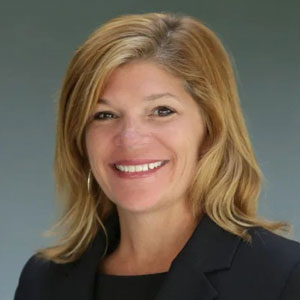
“As the second-largest urban area in the state, we want everyone to know that they will find genuinely welcome people and an ease of doing business here. I think people should not count out Indiana.”
— Heather Ennis, President & CEO, Northwest Indiana Forum
When I asked Ennis to name the region’s biggest project wins of 2025, she listed AWS, the steel mill and a $60 million FedEx distribution hub in Gary. “We’re also seeing new developments in our housing market,” she noted. “Our commuter rail service is causing housing markets to flourish in Northwest Indiana.”
And then she sprung the big news: “The Chicago Bears are looking at Northwest Indiana,” she said. When I asked her if she thought this was just a ploy by the Bears to get a better deal in Chicago, she didn’t bat an eye. “We take all at-bats as real at-bats. We practice like we play,” she added.
Ennis elaborated by saying, “They have come and they have looked at sites in Northwest Indiana. Their conversation is with the governor and legislators. It would have to be a public-private partnership with the state, the locals and the Bears. Places like Hammond and western Porter County are a half-hour to 45-minute drive to downtown Chicago, and they are very accessible by commuter rail and boat.”
Another person who’s taking the Bears’ potential move seriously is John Boyd Jr., principal of The Boyd Company Inc., a national site selection consulting firm.
“Indiana is a global case study of a state successfully leveraging sports for high-level economic development,” Boyd says. “We see this with the NCAA headquarters attraction from Kansas City back in 1999, the Indianapolis Motor Speedway, the Colts and the Pacers, top-notch University programs in Bloomington, West Lafayette, South Bend and Muncie. We’re also seeing this now with Gov. Braun, and the legislature’s working on an incentive package to attract the iconic Chicago Bears franchise from Illinois.” (At press time, Indiana legislators passed a bill supporting the stadium proposal.)
Bears’ ownership in September 2025 put forward detailed plans for a new stadium at the former Arlington International Racecourse in Arlington Heights, Illinois, where the team purchased property in 2023. But negotiations over incentives have dragged out since then. Bears President and CEO Kevin Warren published an open letter to fans in December decrying a lack of legislative partnership, announcing the expanded search was on and stating, “This is not about leverage.”
Boyd says that “the economic impact of an amenity-rich domed stadium capable of hosting year-round events — and the multi-billion-dollar mixed-use real estate development around the stadium — would mean thousands of new jobs and tax revenue for Northwest Indiana and the state as a whole. And, unlike most other types of private-sector employers, sports franchises and stadiums are steady generational economic engines much less vulnerable to swings in the economy than most other types of businesses.”
Asked why an historic franchise like the Bears would consider a move across state lines, Boyd says, “The Bears — as well as future commercial tenants in the surrounding mixed-use development — would find the same business climate advantages [lower taxes, lower business costs and more business-friendly regulations] that so many companies that have ditched Illinois for Indiana over the years already enjoy in the Hoosier State.”
Sports Projects Rise in Westfield
Down the highway in Central Indiana, the northern Indianapolis suburb of Westfield in Hamilton County is experiencing a wave of accelerated economic development with the rise of multiple sports-related projects. Among them is the new corporate headquarters of Ed Carpenter Racing, which is building a 76,000-sq.-ft. facility that should open in 2027. (See p. 182.)
Westfield recently celebrated the groundbreaking of two large mixed-use developments in downtown — the $27 million Ambrose on Main and the $105 million Grand on Main, a project that will be the new Indiana headquarters for Skender and feature an Underground Railroad art history attraction.
Jenell Fairman, executive chief of economic and community development for Westfield, says that two major mixed-use developments at Grand Park by Keystone Group on the north side and Card & Associates on the south side will be game-changers for the city. “Keystone will develop two mixed-use blocks that they will break ground on soon, adding another parking garage and retail space,” she says. “We will also be expanding the efforts of the sporting community to focus on health and wellness by helping people stay active.”
Also in the works are a new full-service hotel adjacent to the Grand Park Event Center; an ice hockey arena at Grand Park Lake; a major flag football competition at the Droplight Grand Park Sports Campus this July; and a new $11.2 million headquarters for Vikan North America in Westfield.
Two Dreams, Two Pitches
Fort Wayne in Allen County is banking on a new soccer stadium generating a sizable economic impact in Northeast Indiana. Local business owner Mark Music announced the project on November 4, 2024. Upon completion in 2026, Fort Wayne FC Park will be the permanent home of Fort Wayne FC, a seven-year-old club that competes in USL League One, the third division of American professional soccer. The 9,200-seat facility at Bass Road and Interstate 69 will be the largest outdoor stadium in Northeast Indiana and is slated to open in time for the club’s home opener on May 2. The project is being funded entirely with private money and no taxpayer dollars.
“While this will be an incredible stadium for soccer fans and event attendees, we want to look beyond the field to the potential of contributing to the growth of sport in Northeast Indiana and beyond,” said Music, majority owner of Fort Wayne FC. “Sports is an integral part of today’s society and adds to the quality of place. Soccer will continue to grow, especially with the World Cup phenomenon that will come to the U.S. in 2026.”
Music added that “this will be an incredible fan-first stadium, making the fan experience a top priority. There will be many viewing options including premium seating, right down to the pitch level. Because of the steeper rake of the upper grandstand, no seat will be more than 55 feet from the touch line, providing amazing line-of-sight views, so everyone will feel like they are part of the action. I’m hopeful that the community will see this soccer park as a true asset for Northeast Indiana.”
While the owners have not publicly divulged the cost of the project, earlier published reports said the stadium would be part of a larger $150 million mixed-use development.
About 122 miles to the west in Portage, Indiana, Heather Ennis says it’s time for Indiana to spread the word that Hoosiers play for keeps. “We have a Northwest Indiana marketing campaign called ‘As Real As It Gets.’ We are promoting that through a variety of social media channels,” she says. “We are relationship-driven. We meet with site selectors, brokers and other business leaders. As the second-largest urban area in the state, we want everyone to know that they will find genuinely welcoming people and an ease of doing business here. I think people should not count out Indiana.”
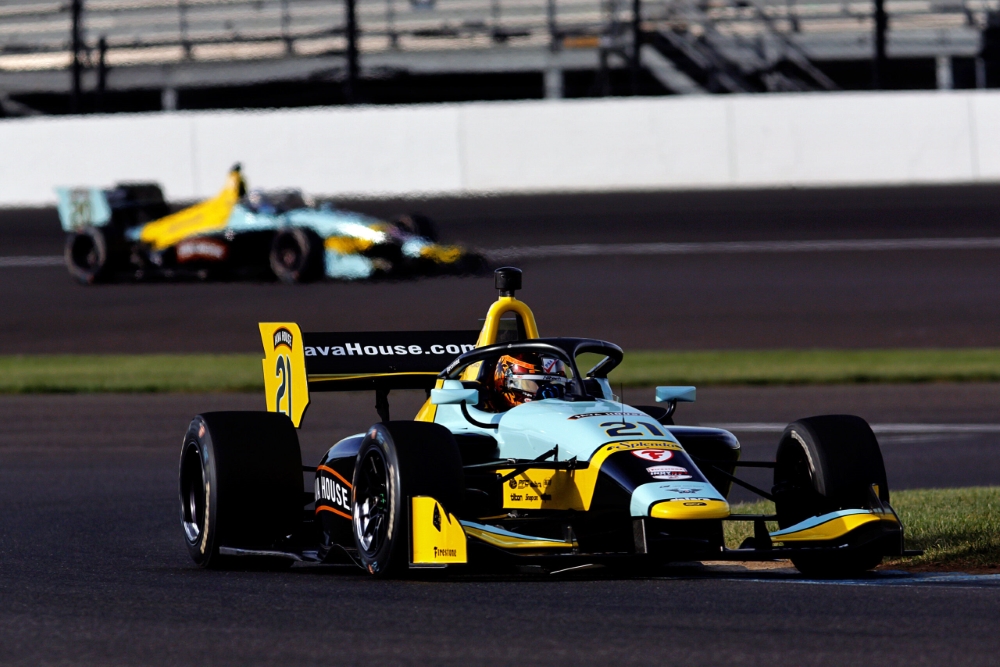
Ed Carpenter Racing is building a new 76,000-sq.-ft. headquarters in Westfield, Indiana. ECR competes in the NTT IndyCar Series and fielded three cars in the 2025 Indianapolis 500.
Ed Carpenter Racing Speeds into Westfield
Indianapolis suburb Westfield in Hamilton County may be known as the “Youth Sports Capital of America,” but it’s still a magnet for big-time professional sports teams. The latest to make the move to Westfield is Ed Carpenter Racing, the accomplished NTT IndyCar Series team that announced in mid-2025 that it is relocating its headquarters to just south of the Grand Park Event Center on the west side of Grand Park Boulevard.
ECR plans to move into a brand-new 76,000-sq.-ft. facility that will serve as the central hub of the team’s professional racing operations and house advanced engineering and technical development spaces while adding a strategic retail and fan engagement component. The project includes the construction of Westfield’s first city-funded parking garage at the Droplight Grand Park Sports Campus.
Founded in 2011, ECR has called Indianapolis home for the last 15 years. The firm is led by team co-owner Ed Carpenter, three-time pole winner of the Indianapolis 500 (2013, 2014 and 2018). The team’s three current IndyCar drivers are Carpenter, Alexander Rossi and Christian Rasmussen.
ECR will soon enter its 15th season of racing under the direction of its four owners, who are all Indiana businessmen: Carpenter, Ted Gelov, Tony George and Stuart Reed. Gelov, owner of Heartland Food Products Group, joined the team prior to the 2015 season. Heartland FPG is also headquartered in Hamilton County. The firm is best known for its Splenda and Java House Coffee brands.
“Establishing ECR’s permanent home at Grand Park is a defining moment for our organization,” said Gelov. “This new headquarters will not only serve as the foundation for our racing operations and technical development, but also as a place where fans can truly connect with our team, our partners and the sport of IndyCar. As a longtime Hamilton County resident and business owner, I’m proud to invest in this community and help bring a new level of energy, innovation and opportunity to Westfield.” — Ron Starner
Meta’s 1-GW data center development locating at the LEAP Innovation District in Lebanon, Indiana, will total $10 billion in local data center and community infrastructure.
Rendering courtesy of Meta
Another LEAP Forward in Lebanon
A30-minute drive northwest of Indianapolis is the city of Lebanon, conveniently seated along I-65. The Indiana town of nearly 18,000 saw the groundbreaking of a new data center from Meta in early February this year at the LEAP Innovation District, which offers megasite, advanced manufacturing, mixed-use and corporate campus space on an SSI-certified site.
The facility will deliver over 1 gigawatt (GW) of capacity and will manage AI workloads and support the company’s core products. The scale of the massive Meta project will provide increased capacity and flexibility, facilitating the use of technology with higher bandwidth, reduced latency and more reliability.
The data center development is a $10 billion investment in the Boone County community and local data infrastructure and will generate 300 operational jobs once complete and over 4,000 jobs during the construction phrase.
It’s one of Meta’s largest projects to date and the second site in the Hoosier State. The company is committed to providing the local community “grant programs, multiyear donations for energy affordability and ongoing investments in public infrastructure.” More than $120 million will be invested by Meta in critical water infrastructure and public improvements like roads, transmission lines and utility upgrades, according to a company press release.
Meta covers the entire cost of energy used by their data centers, working closely with utilities to plan energy usage years ahead of time. The company will provide $1 million annually to the Boone REMC Community Fund over the next two decades, supporting direct assistance with energy bills and emergency water utility assistance through The Caring Center, a Lebanon-based not-for-profit organization serving families and individuals facing food and housing insecurity. Meta will also apply its Community Action Grants programming to the county soon, which provides funding for schools, nonprofits and local organizations.
The tech juggernaut is also committed to sustainable operations. The data center in Lebanon is positioned to meet LEED Gold certification when up and running. The facility will leverage a “a water-efficient closed-loop, liquid-cooled system that recirculates the same water and will use zero water for a majority of the year.”
Meta is matching 100% of the new project’s energy use with clean energy and will also restore 100% of water consumed at the Lebanon site through a decade-long partnership with Arable, which will restore 200 million gallons of water annually and provide irrigation technology to independent farmers in Indiana’s Upper Wabash River Basin.
Meta is not the only big company locating in the LEAP Innovation District. In May of last year, Eli Lilly broke ground on The Lilly Medicine Foundry in the LEAP District. The $4.5 billion facility, part of a larger $13 billion investment in the area by Lilly, will combine research, process and drug development, manufacturing and other tech innovations at a single site, where the production of molecular therapies, including small molecules, biologics and cutting-edge therapeutics (genetic medicines), will take place.
The facility is expected to launch its first products in 2027 and will provide an investigative medicine supply for clinical research trials. Alzheimer’s disease and chronic pain are two conditions that can be treated by the therapies planned to be made at the Lilly Medicine Foundry in Lebanon.
The Foundry will span 1.2 million sq. ft. and generate more than 500 highly skilled, full-time jobs once complete and 2,000 construction roles during build-out. — Kelly Barraza