
by SAVANNAH YAWN
North Dakota’s life sciences sector may be small, but it is mighty and growing.
Companies working in biotechnology manufacturing, medical devices and bio‑industrial materials have established operations across the state, with most activity concentrated in the Fargo-Moorhead region. Companies such as Aldevron and CorVent Medical anchor a growing bioscience cluster.
Regional economic development analysis from the Greater Fargo Moorhead Economic Development Corporation estimates that the industry generated roughly $89.6 million in earnings and contributed about $227.1 million to regional gross product in 2021.
North Dakota State University’s research capabilities in Fargo, combined with a business environment that allows startups and manufacturers to scale quickly, have attracted companies across biotechnology, medical devices and health‑technology manufacturing over the past two decades. Together, these firms form the nucleus of the state’s life sciences cluster.
Among the most prominent examples is Aldevron, a Fargo‑based biotechnology manufacturer whose growth helped anchor the region’s bioscience cluster. Founded in 1998 by North Dakota State University graduate students as a small vaccine‑testing company, Aldevron grew alongside the university’s expanding research capabilities and access to scientific talent. As demand increased for plasmid DNA and other biological materials used in advanced therapies and vaccines, the company scaled rapidly while remaining rooted in Fargo. Its success demonstrated that complex biotechnology manufacturing could thrive in North Dakota, helping attract startups and reinforcing the region’s reputation as a viable life sciences location. In 2021, Aldevron was acquired by Danaher Corporation in a $9.6 billion deal, further elevating Fargo’s visibility within the global bioscience industry.
Additional investments demonstrate the region’s continued expansion in medical technology manufacturing. According to Conway Data project tracking, Zopec Medical announced plans to establish manufacturing operations in Fargo that could create approximately 75 jobs, further strengthening the region’s presence in medical device production. Conway Data records also indicate recent expansion activity from Precision Dental Laboratories in Fargo, reflecting continued growth in specialized health care manufacturing. Newer bioscience innovators are also contributing to the region’s momentum. Companies such as CorVent Medical represent a new generation of firms developing advanced biologics and medical technologies while choosing North Dakota as their base of operations.
Together, these companies illustrate the range of bioscience innovation emerging in the Fargo ecosystem. According to Greater Fargo Moorhead Economic Development Corporation Chief Business Development Officer Ryan Aasheim, the region’s bioscience sector has grown rapidly over the past decade, with economic output increasing roughly 450% from about $90.3 million in 2015 to nearly $497 million in 2025 as companies expanded and new firms formed.
The cluster also includes firms such as Axis Clinicals, Genovac, Checkable Medical and IMRIS/IMRICOR, working in areas ranging from clinical research and antibody development to diagnostics and medical imaging. Industry collaboration is further supported by the Bioscience Association of North Dakota (BioND), which connects companies, researchers and investors while advocating for bioscience development statewide.
While Fargo remains the center of the state’s bioscience activity, related innovation and manufacturing are beginning to appear elsewhere in North Dakota. According to Conway Data project tracking, Dakota Hurd Company in Wahpeton is developing new uses for industrial hemp fiber, producing materials used in construction and other industrial applications. Conway Data records also indicate manufacturing activity from Americarbon Products in Underwood focused on producing carbon-based materials derived from North Dakota’s lignite resources.
Much of that momentum traces back to the state’s research universities.
Universities and Ecosystem Partners Power the Workforce Pipeline
Universities play an important role in supporting North Dakota’s bioscience ecosystem by developing talent, conducting research and helping translate scientific discoveries into commercial opportunities.
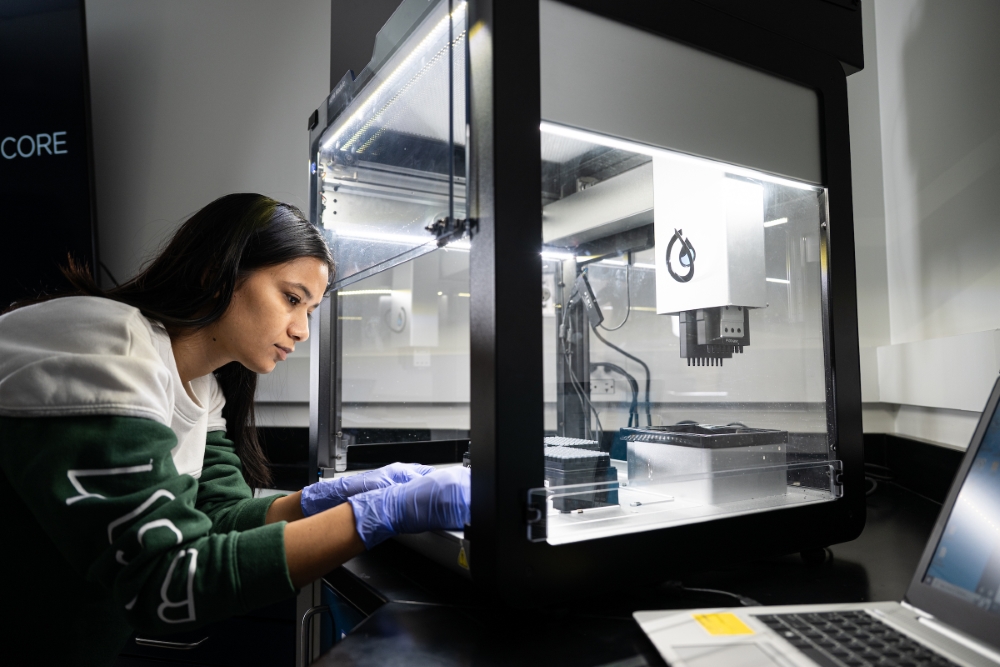
North Dakota State University, a Carnegie R1 research institution with roughly $155 million in annual research expenditures, conducts bioscience research across areas including cancer detection, vaccine development, biomedical polymers and disease prevention technologies. Facilities such as the university’s Biotech Innovation Core provide specialized laboratory infrastructure that supports both academic research and industry collaboration.
“NDSU prepares students for careers in biosciences, biotechnology, and related STEM fields by combining strong academic programs with hands‑on research and industry-connected learning,” says Dr. Scott Hoselton, director of the Biotech Innovation Core Lab at North Dakota State University. “Students in biological sciences, microbiology, biotechnology, chemistry, engineering, and veterinary technology programs work directly with faculty on research that mirrors the kind of work happening in emerging life science companies.”
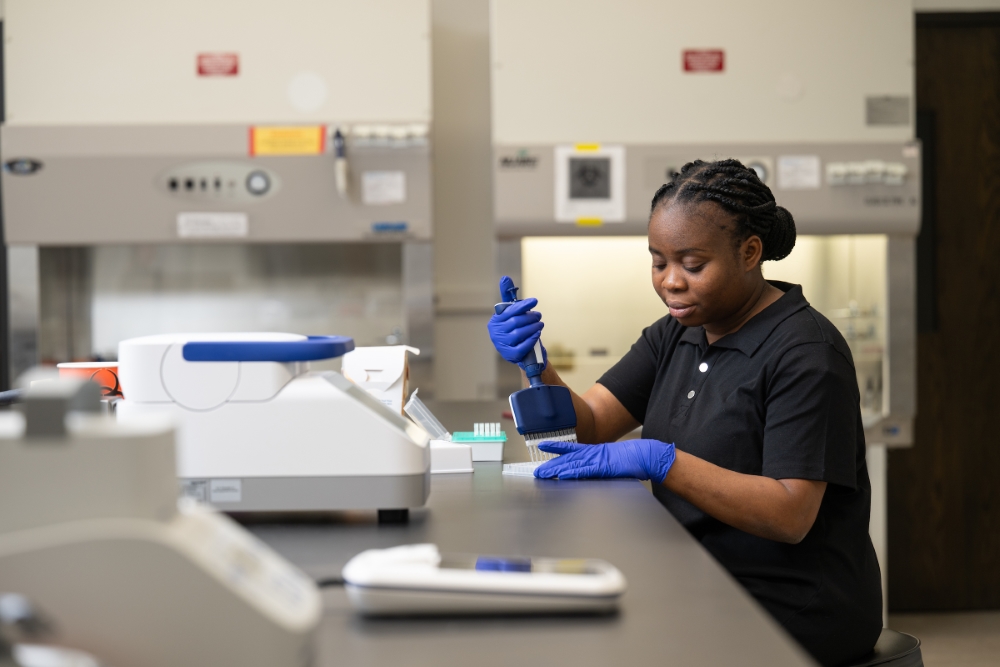
Research training in fields such as microbiology, biotechnology and molecular biology helps prepare NDSU students for careers in bioscience, pharmaceutical and medical technology industries.
Photo courtesy of North Dakota State University
Hoselton notes that experiential learning is embedded throughout the curriculum. Students participate in course-based undergraduate research experiences, applied laboratory courses and collaborative projects with industry partners, giving them exposure to the tools and technologies used in modern bioscience companies.
“The Biotech Innovation Core and NDSU’s shared research facilities play a vital role in student training, industry collaboration and regional economic development,” Hoselton says. “These facilities give students hands-on experience with advanced technologies used across bioscience and biotechnology [imaging platforms, analytical instrumentation and molecular biology tools], helping them build confidence with the same equipment and workflows they will encounter in their careers.”
The shared research infrastructure also allows companies to collaborate with university researchers and access specialized equipment that can accelerate early-stage development. Hoselton says partners such as Aldevron, Genovac and John Deere have used NDSU facilities for product development, validation and applied research projects.
The University of North Dakota in Grand Forks contributes to the innovation pipeline through commercialization programs and its Center for Innovation, which helps startups connect with research expertise, mentorship and workforce resources.
Beyond the universities themselves, several collaborative programs help strengthen the broader ecosystem. The Bioscience Association of North Dakota (BioND), formed in 2010, supports the development and expansion of bioscience companies across life sciences, bio‑agriculture, bio‑materials and bio‑fuels.
Aasheim notes that universities across the region are actively partnering with industry to address emerging workforce needs. Academic collaboration is also reflected in the joint Biomedical Engineering (BME) graduate program between North Dakota State University and the University of North Dakota. The program trains students in biomedical research and device development while encouraging intellectual property creation and potential company spinoffs.
Additional workforce initiatives such as Concordia College’s CLIMB (Concordia Leads: Instructing and Mentoring in Biotechnology) program help prepare students for biotechnology careers through scholarships, mentoring and career preparation supported by National Science Foundation funding.
Workforce and Business Climate Advantages
Another factor supporting the state’s bioscience growth is access to technical talent combined with a business environment that allows companies to expand efficiently.
“We tend to think about cost of living and business friendly, low-cost business environment as being the obvious standouts which they no doubt are in many regards,” says Aasheim. “However, I think our market is probably underappreciated for the amount and caliber of talent that we generate.”
The Fargo–Moorhead region is home to 21,000 college students across five universities and technical colleges. Aasheim says those institutions provide significant firepower for workforce development, producing graduates with skills in pharmaceutical sciences, biology, Good Manufacturing Practice (GMP), software development and commercial roles such as marketing and sales. Programs in biological sciences, biomedical engineering, bioengineering and laboratory technologies provide a steady pipeline of talent for companies operating in the sector.
Hoselton says employers consistently emphasize the need for graduates who understand both scientific methods and the practical skills required in regulated environments. He notes that companies are looking for employees who can troubleshoot laboratory processes, work confidently with instrumentation, manage data and communicate results clearly.
Beyond workforce development, North Dakota also offers operating conditions many emerging life sciences companies find attractive. Compared with larger coastal biotech markets, companies often encounter lower operating costs, direct access to state leadership and a collaborative regulatory environment, factors that can help firms move more quickly from research to manufacturing and commercialization.