
Maryland accelerates innovation across key tech and science sectors.
Aligning policy, capital and talent around innovation-driven industries, Maryland has been gaining in its “lighthouse sectors” that comprise tech (AI, cybersecurity and quantum technology), the life sciences and aerospace & defense. Several known factors drive this growth, including the state’s highly educated and technically skilled workforce, supported by world-class universities, a high concentration of federal laboratories and a strong private sector in research and development, making Maryland a prime location to site investments.
Ricardo Benn, Maryland Department of Commerce deputy secretary, highlighted the department’s Build Our Future grant program, a proven and successful accelerator of specialized research, lab and innovation infrastructure for high-growth companies needing to scale. He notes that “rather than functioning as a traditional incentive program, the Build Our Future program serves as a catalytic investment where by co-investing with high-growth entities, we’re de-risking complex projects, shortening development timelines and really
leveraging significant additional private sector capital. And so it’s been particularly successful in the life sciences and advanced technology projects. The key feedback that we have is that this type of co-investment approach where Maryland can identify and de-risk projects early enough in sort of the high growth phase — that really is quite attractive, not only to domestic investors, but also to international companies that may have a base in Maryland, but are seeking to expand.”
FDI in Maryland
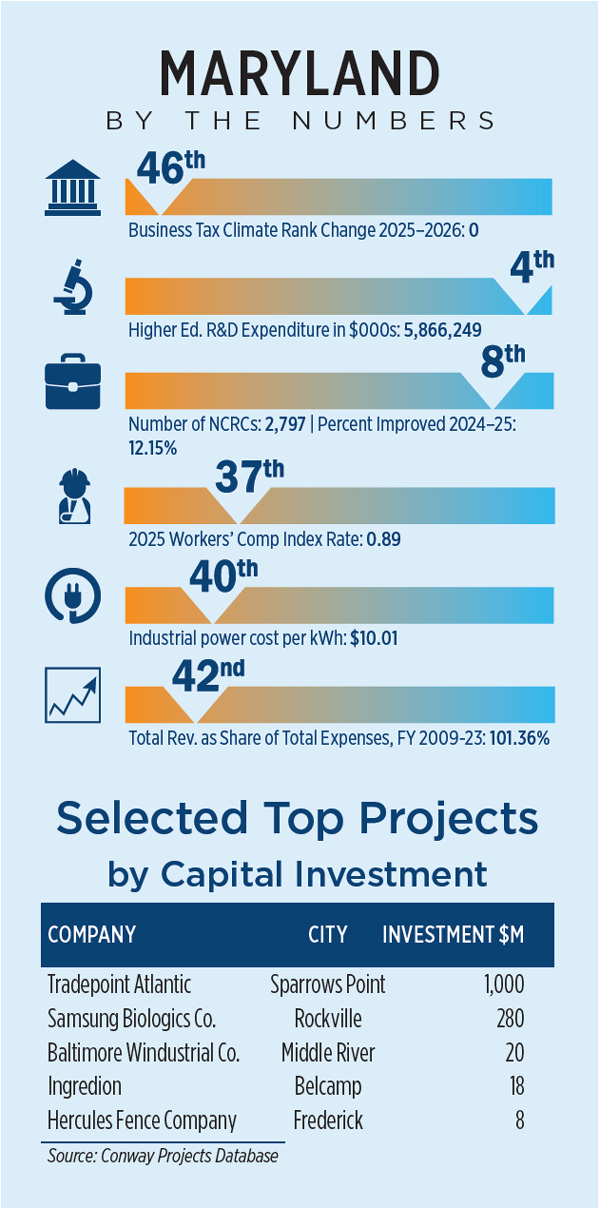
Foreign investors will find no shortage of opportunity in Maryland. In December 2025, South Korea-based Samsung Biologics announced its first U.S.-based manufacturing site in Rockville, acquiring a GSK facility for $280 million. Samsung Biologics, a global CDMO, will continue producing some GSK products at the site to start, like lupus medication Benlysta, and will expand to produce more monoclonal antibody therapies. Benn noted that Maryland Governor Wes Moore led a mission to Japan and South Korea with a clear message emphasizing the state’s strengths in biomanufacturing, regulatory readiness and the depth of its workforce offerings.
“Those initial seeds were planted, and they found receptive ground,” Benn explains. “It’s really nice to see that linkage between elements of our foreign direct investment. … I think that beyond immediate job retention [and] job creation capital investment, this decision really positions Maryland as a critical U.S. platform for Asian life science firms that are seeking proximity to innovation, talent and the U.S. market, certainly in the case of a South Korean entity like Samsung Biologics in the life sciences sector. Another South Korean company, Nature Cell, made a similar announcement where Maryland would be their footprint for their efforts as well. And so, what we see is really this narrative that’s evolving in terms of that mission to Asia, where we clearly highlighted those lighthouse sectors that I mentioned, and then investment decisions that are being made by these companies as they seek to establish a presence in the U.S. and particularly in Maryland.”
Foreign direct investment (FDI) is central to the state’s economic resilience and long-term competitiveness, Benn explains. British biopharmaceutical AstraZeneca recently announced a $2-billion investment to expand its manufacturing capacity at its Frederick site and build a clinical manufacturing facility in Gaithersburg. Hitachi Rail opened its $100-million, 300,000-sq.-ft. “digital” factory in Hagerstown in September 2025, which created over 500 jobs in advanced manufacturing and supports another 1,300 local jobs; railcars built at the Hagerstown Hitachi site are already running on the Baltimore Metro.
“Particularly at a time of increasing geopolitical uncertainty, supply chain realignment and capital uncertainty, it becomes even more imperative for us to have a clear and well-articulated foreign direct investment strategy,” says Benn. “And so Maryland has deliberately pivoted its FDI strategy toward deeper, more complex engagements that build on trust, alignment and long-term partnership because what we know is that these are the three attributes that really cement and underpin the economic decision to invest in the state. … So those investments really anchor global firms within Maryland’s innovation ecosystem, and the net result of our FDI strategy is that they continue to strengthen our position in terms of evolving global value chains. We have to stay quite nimble with respect to what’s happening from a geopolitical perspective. But our strategy continues to deliver results.”
The state’s highly educated and skilled workforce is certainly a draw for investors — Maryland has one of the highest rates of master’s, professional or doctorate degree-holding people in the country (about 20%), giving the state a strong competitive advantage in recruiting companies operating in the life sciences, tech and aerospace & defense, especially in mission-critical, technology-intensive environments. Quantum technologies especially have become a rising, salient component of Maryland’s business scene.
In September 2025, Gov. Moore indicated the state’s intention to partner with Microsoft on developing a quantum research center at the University of Maryland “to support collaborative hardware and software development between government agencies, academic institutions and quantum companies. The center will also attract skilled quantum experts to the state, providing a space for Microsoft engineers to interact and collaborate with the Maryland quantum ecosystem, including University of Maryland students and researchers.”
The university is already working on quantum research with the U.S. Department of Defense.
“Maryland has certainly emerged as a national leader in quantum research, commercialization and workforce development,” says Benn. “But now we’re really focused on converting that leadership into private investment. We are looking at not just quantum computing, but across the entire quantum technology stack.”
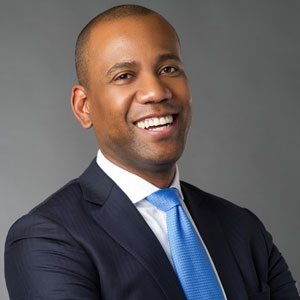
“Maryland has deliberately pivoted its FDI strategy toward deeper, more complex engagements that build on trust, alignment and long-term partnership because what we know is that these are the three attributes that really cement and underpin the economic decision to invest in the state.”
— Ricardo Benn, Maryland Department of Commerce Deputy Secretary
Tipping the Hyperscales
An hour or so west of Baltimore, Aligned Data Centers’ 72-MW data center broke ground in Quantum Frederick Park in Frederick County in early 2025. Aligned Data Centers, which was acquired in October 2025 in a $40-billion business deal backed by a consortium of juggernaut companies (Nvidia, Microsoft, xAI and BlackRock), views the Maryland data center project as a critical component of the company’s broader corporate strategy.
“Aligned’s Frederick County campus is a cornerstone of Aligned’s broader strategy to provide the sustainable, adaptive infrastructure required to power the global digital economy,” says Joanna Soucy, Aligned’s EVP of Brand Strategy. “As Aligned has expanded its footprint to 80 data centers under management and development — totaling 5 GW of operational and planned capacity — the Frederick campus is a key hyperscale hub.”
Located on 75 acres, the site will comprise four multilevel buildings. The campus’s proximity to the Northern Virginia market offers “low latency to the world’s largest interconnection hub. The site also provided the land and power required for immediate scale, ensuring we have the optionality to expand in lockstep with evolving market demand,” explains Soucy. “The campus aligned with a key pillar of Aligned’s sustainability mission: the revitalization of brownfield sites. Transforming the former Eastalco Alcoa Works — a dormant industrial property — into a data center campus jumpstarted local employment and preserved regional green spaces.”
The 2,100-acre property, formerly the site of the Eastalco smelter that closed in 2010, was sold by Alcoa Corporation subsidiary Eastalco Aluminum Company in June 2021 to Quantum Loophole and TPG Real Estate Partners; Quantum Loophole was removed from the project in September 2024 by TPG after Aligned briefly pulled its plans to locate at the Frederick site in 2023. Aligned rejoined in 2024, continuing in a “business as usual” fashion, according to the company.
Aligned Data Centers designs, builds and operates cutting-edge campuses and data centers for global hyperscalers, neocloud providers and enterprises. Like other data center companies in this space, Aligned has taken measures to ensure sustainability in new campus operations.
“In addition to ensuring that the site was remediated prior to constructing on it, Aligned’s data centers utilize a highly efficient, air-cooled heat rejection system combined with a closed-loop cooling infrastructure designed to recycle water for cooling,” says Soucy. “This design requires water only for the initial closed-loop cooling system fill and subsequent maintenance. Following initial system fill and maintenance, water consumption is limited only to essential non-industrial uses, such as restrooms and general amenities. These systems ensure that Aligned saves tens of millions of gallons of water per data center per year when compared to traditional/legacy data center designs.”
The company also employs cooling systems that remove heat at the source and minimize stranded capacity, providing more efficient cooling. Aligned also has a long track record in sustainable facilities, recognized multiple times by the Green Building Initiative in the data center sector. Since 2020, Aligned has powered the entirety of its operations in the United States with renewable energy and has a 2040 net-zero energy plan in place. The Frederick campus will add to Aligned’s portfolio of over 30 global data center sites. Rowan Digital Infrastructure is also planning to build the state’s first hyperscale data center facility on the former Alcoa site.
Connecting the MDOT’s Communities
Transportation has increasingly gained prominence in Maryland, as reported in Site Selection’s September 2025 issue (“Transit-Oriented Development: Cranes, Trains and Fewer Automobiles”), with economic development potential, along with housing options and multimodal connectivity for commuters and residents, being key aspects of build-out.
In late 2025, the Maryland Department of Transportation (MDOT) announced a partnership with Homes for America (HFA) and Questar Properties in developing a 10-acre parking lot located on the west of Odenton MARC Station in Odenton, Maryland, into a new mixed-use development. The station services the MARC Penn Line, which operates between Union Station in Washington, D.C., and Perryville, Maryland. The Odenton MARC Station project is one of the first steps in MDOT’s 2024 MARC Penn Line Strategy, which is focused on building out mixed-use, transit-centered communities along the busy commuter rail corridor. The National Security Agency has a shuttle from the station to its Fort Meade headquarters, as does the U.S. Army. Additional shuttle services also connect the station to Annapolis and Arundel Mills.
“Odenton is the front door to Fort Meade, and the MARC Station is the heart of that connection. Questar is proud to work with MDOT and HFA on a development that strengthens that link — creating new homes, improving transit access and delivering the kind of walkable, high‑quality community the neighborhood deserves,” says Abdo Roffe, vice president of development & acquisitions at Questar Properties, Inc. “This project will not only support the Fort Meade workforce but also attract the many individuals and families who are choosing Odenton for its convenience, connectivity and long‑term livability.”
According to an MDOT press release, the Odenton station area is expected to generate $270 million in state and county tax revenue over 30 years and support over 100,000 MARC trips annually once completed. Housing, retail and multimodal transportation access are planned components of the project planned near Odenton’s town center.
HFA and Questar Properties have plans to build 585 multifamily units (130 affordable, 20 workforce and 435 market-rate homes), more than 30,000 sq. ft. of retail space, over 180,000 sq. ft. of public amenities and integrated pedestrian and bicycle pathways.
In Maryland’s 2026 legislative session, Governor Wes Moore announced a housing growth and affordability agenda, which included three pieces of legislation that would facilitate the purchase and building of housing throughout the state, concentrating on transit-oriented development to speed along community revitalization around transit stations.