Within three days of one another, two major medical technology companies this fall announced milestones that recognized the storied past and the promising future for medicine delivery devices.
On October 6, BD (Becton, Dickinson and Company) marked 65 years of manufacturing in Canaan, Connecticut, which the company refers to as “the birthplace of the world’s first fully sterile, single-use disposable plastic syringe and the largest syringe manufacturing operation in the United States.” The company’s head count has gone from eight employees to over 500 today, making more than 2 billion syringes a year at a site where BD has invested more than $34 million over the past five years in expansion and improvements, including three new syringe manufacturing lines.
BD said the Canaan team has supported major public health efforts, including smallpox eradication, H1N1 vaccination programs and the COVID-19 response. “The BD® Syringe was invented here in Canaan as a breakthrough in patient safety and has become an essential part of care around the world, touching 80 patients every second,” said Eric Borin, worldwide president, Medication Delivery Solutions at BD.
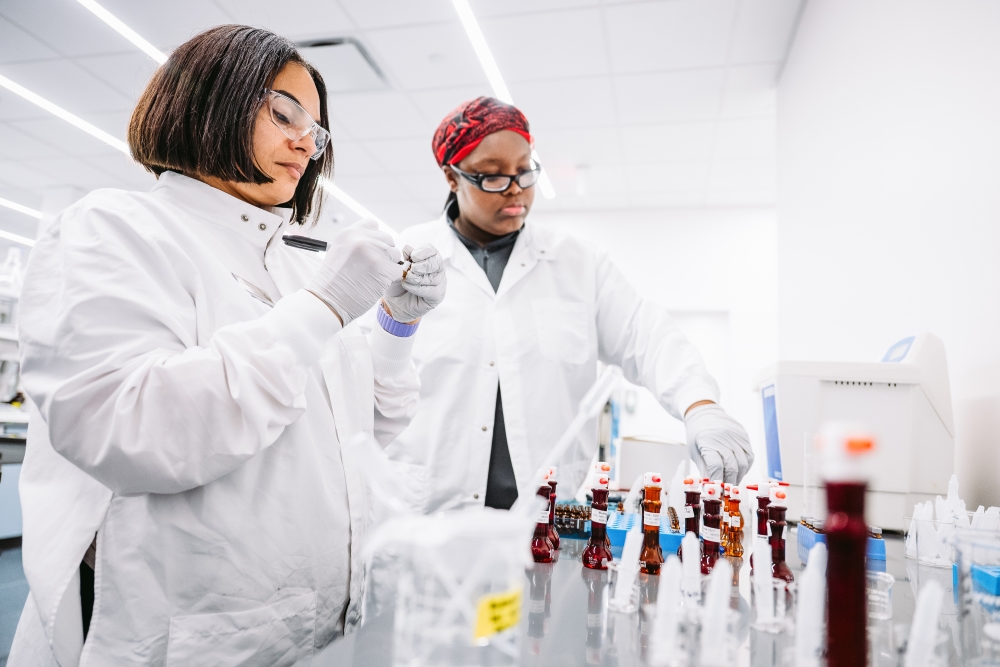
On October 8, 800-plus miles down the East Coast from BD’s operation, The Ritedose Corporation announced the opening of a new, $17 million-plus Good Manufacturing Practice (cGMP) laboratory at Ritedose Performance Park in Columbia, South Carolina. Coupled with the expansion of Ritedose’s microbiology laboratory at its main manufacturing campus and equipped with advanced chromatographic, spectroscopic and mass spectrometric technologies, the new laboratories support testing of raw materials, active pharmaceutical ingredients (APIs), excipients, packaging components, in-process materials and finished drug products.
“This investment represents much more than additional lab space — it’s investing in the future of pharmaceutical innovation,” Ritedose President and CEO Jody Chastain said in a company release. “As therapies become increasingly complex, our customers need partners with sophisticated analytical capabilities, scientific expertise and the capacity to move swiftly. This facility enhances our ability to deliver all three while reinforcing our growing reputation as a destination for quality excellence and manufacturing innovation.”
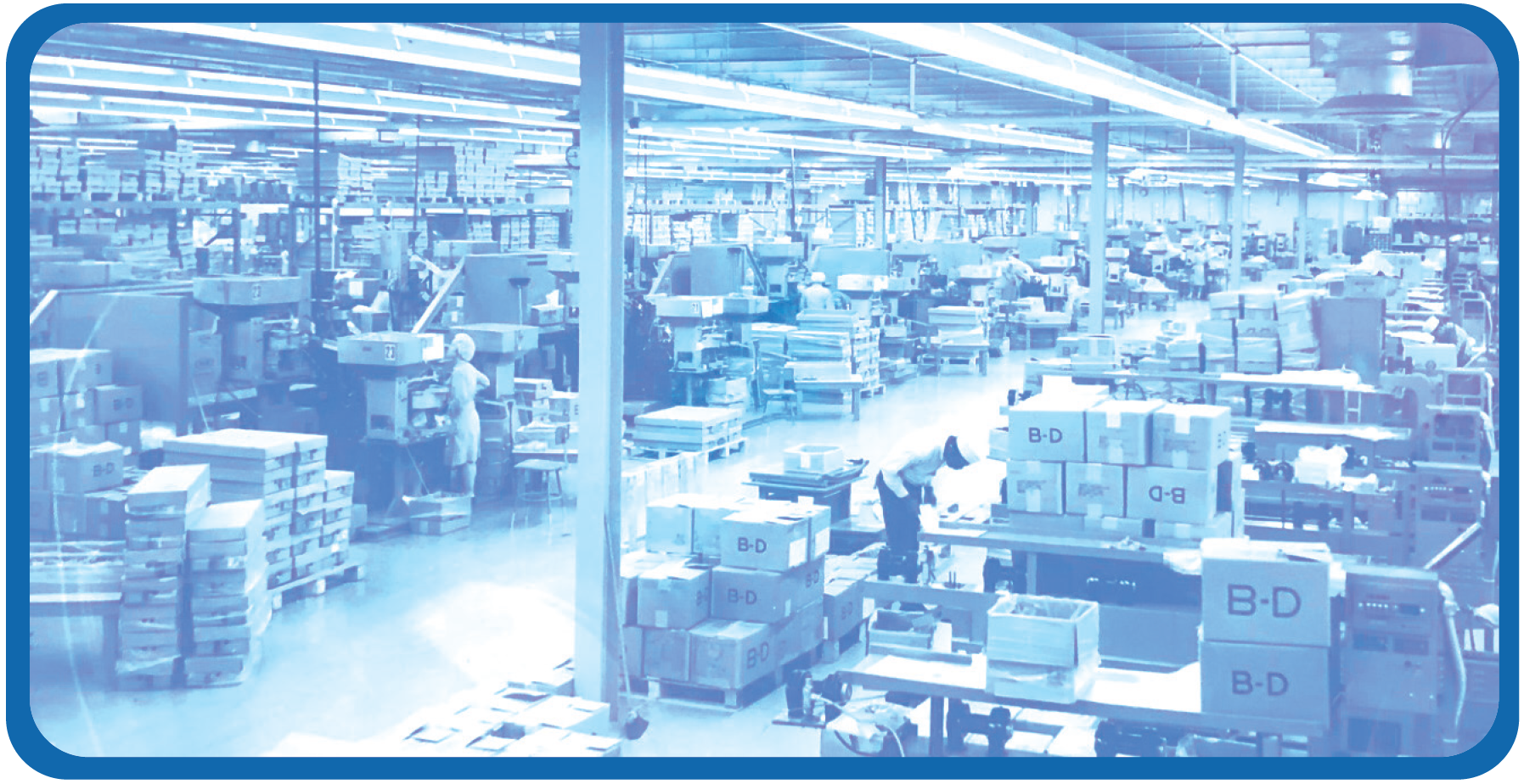
Over 65 years in business, the pioneering BD site in Canaan, Connecticut, has gone from eight employees and around 10 million syringes a year to more than 500 employees and north of 2 billion syringes a year.
Photos courtesy of BD
A look at Site Selection’s Conway Projects Database found nearly 20 facility investments around the world since January 2024 that involve companies that make syringes and similar medicine delivery devices, in places as diverse as Shanghai, China; Cincinnati, Ohio; Noida, India; Clinton, Tennessee; Columbus, Nebraska (another BD site); Grand Rapids, Michigan; and Lodi, Italy. Three of them come from Germany’s Schott Pharma, which has made recent investments in Lucacshaza, Hungary; Jambusar, Gujarat, India; and Wilson, North Carolina.
The Ritedose Story
Ritedose, which employs around 550 at its Columbia location, is the largest sterile contract development manufacturing organization (CDMO) in the U.S. specializing in sterile Blow Fill Seal (BFS) technology that ensures sterile, consistent and safe unit dose delivery. Among other products such as vaccines, it’s known for the millions of annual doses it makes for nebulizers used by asthma patients.
In 2023, the company came to the rescue when there was a national shortage of albuterol sulfate, the medicine in those inhalation solution doses that had a demand of 20 million doses annually. Ritedose, which had a capacity of around 2 billion dosages annually, is the nation’s largest albuterol sulfate inhalation solution manufacturer. At the time of the shortage, the medicine was supplied to the market by Akorn, Inc., and Nephron Pharmaceuticals, a Ritedose competitor with over 840,000 sq. ft. of space located, as it happens, directly across town from Ritedose in Columbia. Nephron recently has experienced quality issues flagged by the FDA and, in October, saw the departure of CEO Lou Kennedy. She was replaced by interim CEO Haywood Miller, managing director of Atlanta-based global consulting group Berkeley Research Group, known for its expertise in corporate turnaround and restructuring.
Across town, Ritedose is turning toward the future. And that future includes more structures.
The more than $17 million investment in the new lab significantly triples the company’s laboratory footprint while creating what it calls “one of the most advanced analytical testing environments in the Southeast.” President and CEO Jody Chastain joined the company in 2005 after nine years at Fuji Photo Film in Greenwood, South Carolina. The Clemson graduate says the location was chosen nearly 31 years ago by a German proprietor whose original preferences were Charleston, South Carolina, or Napa, California.
“They obviously liked coastal areas, and apparently they liked coastal areas that had a really high cost of living,” Chastain says. “Ultimately, I think a little bit of their CFO’s influence allowed them to be in South Carolina with lower labor rates, obviously a lower cost of living than California, but also knowing that we were going to be getting heavy equipment in to stock this whole facility, so they needed to be in close proximity to the Port of Charleston or an import port.” Being near a major airport (in this case, in Charlotte) was a must also. “So Columbia made a lot of sense at that point.”
Until 2018, Chastain says, Ritedose only occupied one site in Carolina Research Park, the property managed by the South Carolina Research Authority (SCRA). “We decided we needed additional space for packaging and distribution,” he says. There were roughly 150 acres inside the park where Midlands Technical College, located adjacent to the park, had first rights. “So I talked with Midlands Tech, talked to the county and we purchased an additional 16 acres at that time in that area to expand and put the 125,000-square-foot packaging and distribution facility on. At that point we thought, ‘Hey, look, we will never need any additional space. My gosh, we’ve got all this under roof now.’
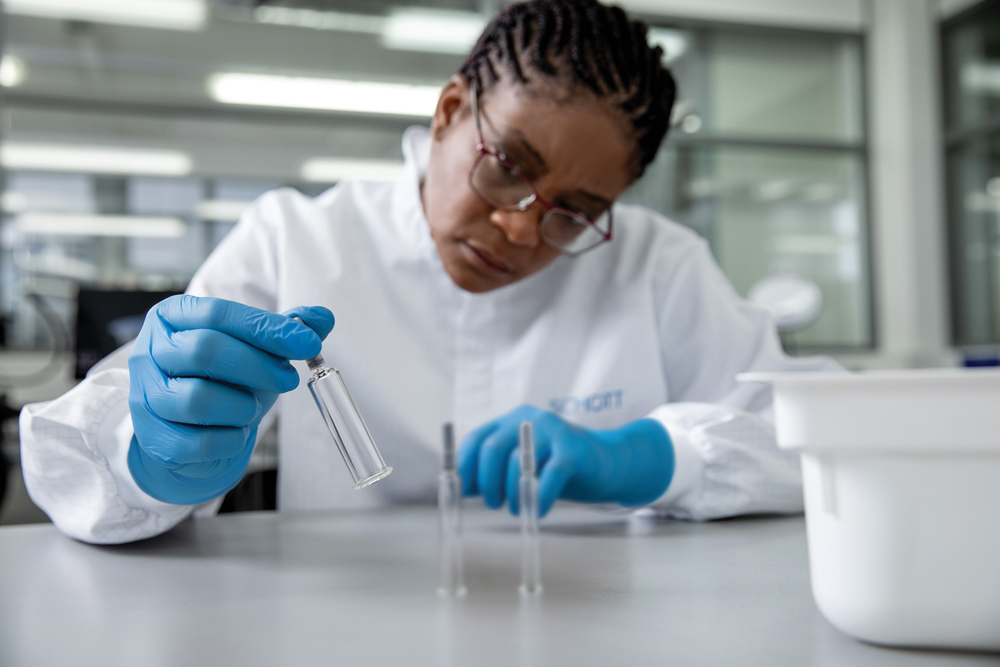
A new large-volume, prefillable glass syringe from SCHOTT Pharma facilitates self-injection of biologics at home.
Photo by Oana Szekely courtesy of SCHOTT Pharma
“Well, never say never,” he says. “Fast forward to 2023, lo and behold, we needed to expand further, put in additional packaging, put in additional storage and distribution space as well as filling machines capacity. And so I approached the county again, approached Midlands Tech and said, ‘What’s the remaining acreage that’s in the park?’ It was 133 acres, so I bought all of it at that time. And when I did, we formed the Ritedose Performance Park. That’s where we went ahead and built the additional 225,000-square-foot distribution facility. That allowed us also to do a facility within a facility with the new $17 million lab expansion inside that building, which also leaves me about another 90 acres to build on for future dosage forms and future expansions.”
Why did he go ahead and purchase all of the property instead of incrementally? There were ongoing discussions at the time about a potential sale for mixed-use development.
“That scared me, to be quite honest, to have a pharmaceutical company that could be bordering a mixed-use environment where you have people living and close proximity to potentially where you’re handling controlled substances, the security that would go along with that, etcetera. So I just took that out of the equation and said, ‘We’ll just buy all the remaining land.’ ”
Ritedose’s facilities encompass a number of different industry classifications, meaning flexibility and an array of capabilities to offer customers, what Chastain describes as an amalgamation of things that need to be done in a sterile environment.
“We manufacture both branded and generic pharmaceuticals. Some of the products that we manufacture require an Rx to get. With saline solution, for instance, 0.9% saline for inhalation is considered by the FDA to be a medical device … so we also make medical devices here. Then from a biologics perspective, we were part of Operation Warp Speed during Covid, and upfitted three of our filling machines to be Biosafety Level 2 [BSL-2] capable. So now we have that capability in house as well.”
Chastain says his time as a technician at Fuji included learning Japanese quality systems and qualifying suppliers for that company’s 35-mm. photographic film finishing facility, work that morphed into production planning for emulsions, coating paper and x-ray film. “I started to get my hands around being in a regulated environment,” he says, learning what it means in the emulsion process to distribute globules and lay something down in nanometer-thick layers. “When I came to Ritedose, I was super excited because all the packaging vendors I’d qualified at Fuji, I could immediately qualify at Ritedose,” he says. “I knew that we could also save some money there. So we improved quality and cut costs. It is rare that you can get to do both, and that made a significant impact here.”
At the same time, Ritedose has made a significant impact of its own thanks to community-oriented programs such as “1,000 Hours of Purpose,” which gives employees company-supported time to volunteer with nonprofit organizations across the Midlands region, “channeling the same discipline, accountability and purpose that define Ritedose’s manufacturing operations into direct community impact.” The program, launched in early 2025, surpassed that 1,000-hour mark in late April 2026.
Asked about this intentional devotion to community engagement and service, Chastain says, “I just fundamentally have always believed that you’re put in position not by what you’ve done, but by the good Lord looking after you and putting you in those positions. To honor that, if you’re blessed, you should bless others, bless the organization, bless the community. In doing that, we leaned heavily into how we can make an impact outside of the four walls of Ritedose.”
That sort of workplace environment has made Ritedose an employer of choice. But it doesn’t mean Chastain and his team are not just as intentional about cultivating talent through institutions like Midlands Tech in such areas as HVAC, industrial maintenance, electrical and mechanical fields. A new partnership is afoot with Newberry College, a small liberal arts school with a strong life sciences program, whereby a new graduate certificate program in pharmaceutical manufacturing will be taught by Ritedose directors and engineers serving as adjunct professors.
Chastain says plenty of companies partner with Clemson or the University of South Carolina. “There’s not as many that are going to lean in and partner with Benedict College, an HBCU, for instance,” he says, where Ritedose has found success with a program that brings foreign students on site and gives the company a runway of several years with a chemistry or microbiology student.
Chastain sits on the board of SCBio, which he credits alongside the SCRA for promoting awareness of South Carolina as a viable life sciences alternative.
“How do you begin to put South Carolina on the map?” he says. “It’s all about the awareness of the life sciences companies that you already have here to draw on. That has really accelerated at SCBio. I think that’s why we’re one of the fastest-growing areas in the United States and in the life sciences in South Carolina.”