Tennessee strengthens national security and domestic supply chain efforts across the state.
Tennesseans have been seeing the rise of national security-driven activity in their own backyards for years, with a brigade of projects spanning defense, critical minerals, nuclear energy and bioscience making evident the efforts of industry and local and state governments.
In March 2026, when the Senate Republican Caucus Chairman Ken Yager introduced the proposal to expand the Y-12 National Security Complex, Tennessee Lieutenant Governor Randy McNally stated that “this investment is about securing Tennessee’s future and making sure our state remains at the forefront of nuclear innovation, advanced manufacturing and national defense. Oak Ridge has long been one of Tennessee’s greatest strategic assets, and this funding helps build on that legacy by creating new opportunities for workforce development, economic growth and research partnerships that will benefit East Tennessee and our entire state for years to come.”
Science Meets Defense
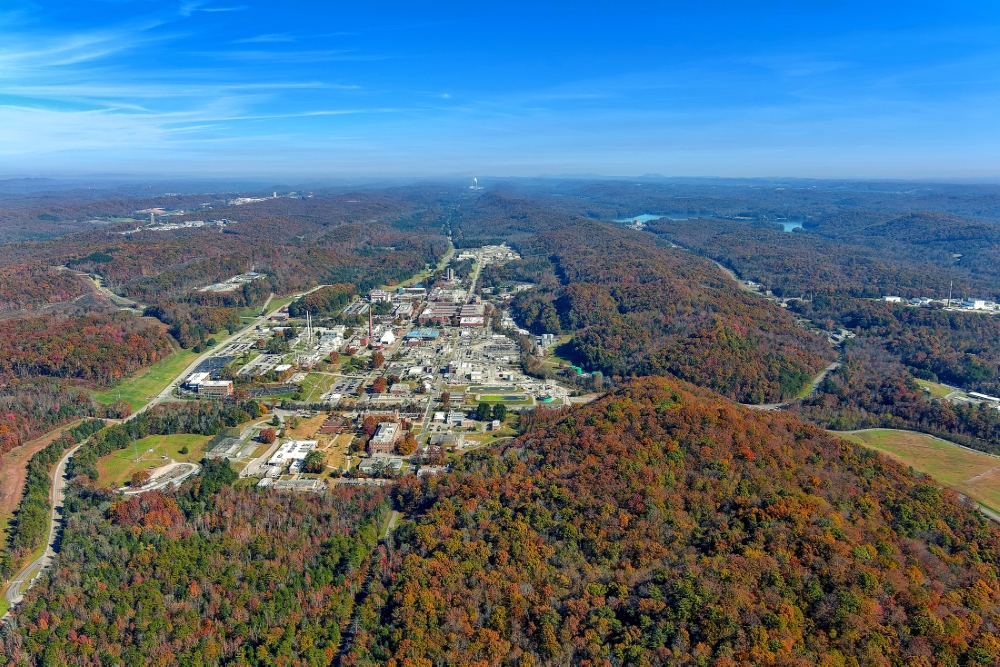
To date, the Y-12 National Security Complex stands as one of the most critical national security assets in the United States, maintaining the U.S. nuclear stockpile, reducing global threats through non-proliferation (which is the prevention of weapons, especially nuclear ones, from being acquired by new countries and entities) and fueling the U.S. nuclear navy, according to the U.S. Department of Energy’s website.
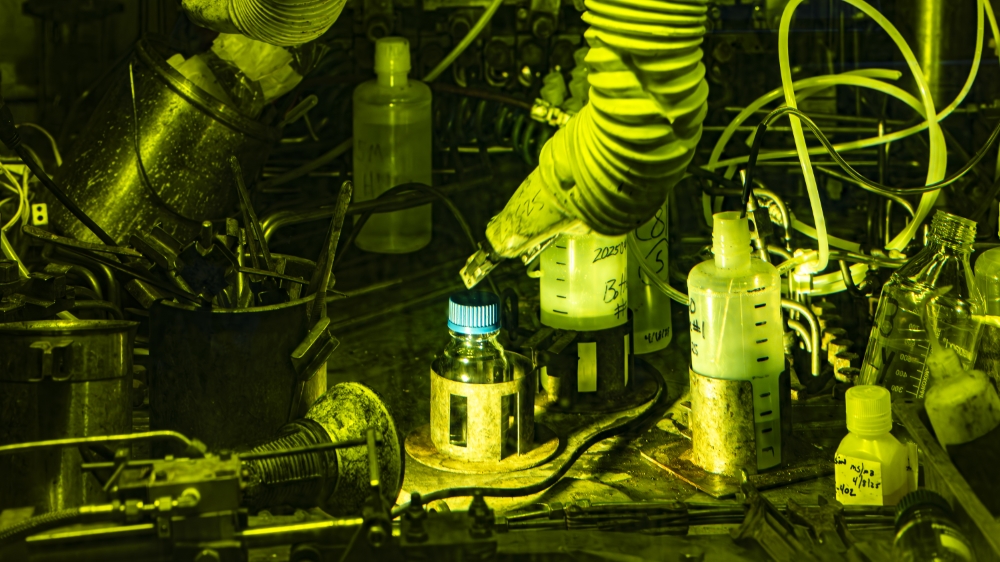
About 10 miles from Y-12 is Oak Ridge National Laboratory (ORNL)—a staple and example of Tennessee’s storied history in leveraging scientific innovation to boost manufacturing and technology advancements. Recently, ORNL has produced research in a swath of sectors that touch every part of the supply chain needed to strengthen the U.S. economy—the improvement of semiconductor components and next-generation battery technologies, energy reduction in water purification and scaling AI-enabled defense manufacturing.
In May 2026, ORNL announced its partnership with New York City-headquartered Autonomous Resource Corporation (ARC), an initiative to be named the “Exascale Foundry” that will incorporate ORNL’s high-performance computing and manufacturing capability with ARC’s ARCNet distributed manufacturing platform, creating a closed-loop system for AI-enabled materials and manufacturing qualification and autonomous production at a scale needed for defense industry applications.
“The United States faces an urgent need to rebuild its manufacturing capacity for critical defense components,” said Bryan Wisk, ARC CEO, when the Exascale Foundry was announced. “By combining ORNL’s world-leading computational, materials science and manufacturing capabilities with our autonomous production infrastructure, we can compress manufacturing and qualification timelines from years to months and deliver manufactured parts at the volumes the warfighter needs.”
One of the most forward-thinking innovations in Tennessee’s technology and science portfolio is happening at the University of Tennessee at Chattanooga (UTC) in the field of quantum networking. UTC is developing the Southeast’s longest repeater-ready, long-distance quantum networking testbed to address the national challenge of scalable, real-world quantum communication. UTC currently operates an on-campus quantum networking node and has access to the quantum network available from electric utility and telecom company Electric Power Board.
The University of Tennessee, Knoxville (UT Knoxville) is also launching a Knoxville Quantum Accelerator (K-Quantum) to advance the region’s position as a leader in quantum technologies and systems. K-Quantum will add another 10 faculty to the existing 30 at UT Knoxville performing quantum material research, with expertise spanning quantum hardware and software over the next four years. A 100,000-square-foot quantum foundry will be built at the UT Research Park in Knoxville, next to the university’s Institute for Advanced Materials and Manufacturing. A next-generation hybrid quantum and classical computing hub will also be built in Knoxville’s Maplehurst Innovation District. Other regional partners for the K-Quantum project include ORNL, the Tennessee Valley Authority, CGI and IonQ.
“The collaboration and partnerships at the center of K-Quantum will drive innovation and position both our university and our region as power players in the future of quantum,” UT Knoxville Chancellor Donde Plowman said. “Leveraging our expertise and capabilities to develop solutions and opportunities in Tennessee is core to our mission as the state’s flagship, land-grant university.”
Unearthing Critical Resources
The endless quest for sourcing critical minerals and rare earths not only is important for fortifying domestic supply chains but also adds to a country and economy’s resilience when competing with other nations. In December 2025, Seoul-based Korea Zinc Company announced it would spend over $6.6 billion on a critical minerals smelter in Clarksville, Tennessee, located in Montgomery County, which borders Kentucky to the north.
Clarksville-Montgomery County Industrial Development Board Executive Director Josh Ward says Korea Zinc’s decision to select Clarksville for its first U.S.-based smelter and U.S. headquarters was driven in part by strong state and federal support. “For years, the current administration has prioritized reducing U.S. dependence on China for critical materials, creating a favorable environment for projects like this. When Korea Zinc first visited our community, we met with their chairman and showcased the Nyrstar site’s multimodal advantages, our robust workforce pipeline and the growing manufacturing momentum across Montgomery County.”
Korea Zinc announced in April 2026 that the operation would launch under the banner of “Crucible Zinc” and will produce 13 metal types, targeting completion in 2029. The site will sit on 1,200 acres and offer private barge access, rail connectivity and will be served by an existing workforce of about 300 workers skilled in zinc smelting.
“Critical minerals are indispensable to national security. Together with ORNL, we are working to secure the future of U.S. energy independence and technological leadership.”
— Jeffrey Willis, CEO and Chairman, United Rare Earths
“From a workforce perspective, few communities are better positioned to support Korea Zinc than Clarksville, Tennessee,” Ward said. “Each month, Clarksville retains roughly 36% of the 350 transitioning soldiers from nearby Fort Campbell, creating a steady and highly skilled industrial workforce pipeline.”
In Caryville, United Rare Earths is also building a magnet recycling facility. The U.S.-owned and -operated company, after facing a few delays, is expected to proceed with construction of the facility located in Campbell County in the northeastern part of Tennessee. According to ORNL’s website, United Rare Earths has licensed two technologies from ORNL, including high-performance magnets that use fewer rare earth elements. “Critical minerals are indispensable to national security,” said Jeffrey Willis, United Rare Earths CEO and chairman, in June 2025. “Together with ORNL, we are working to secure the future of U.S. energy independence and technological leadership.”