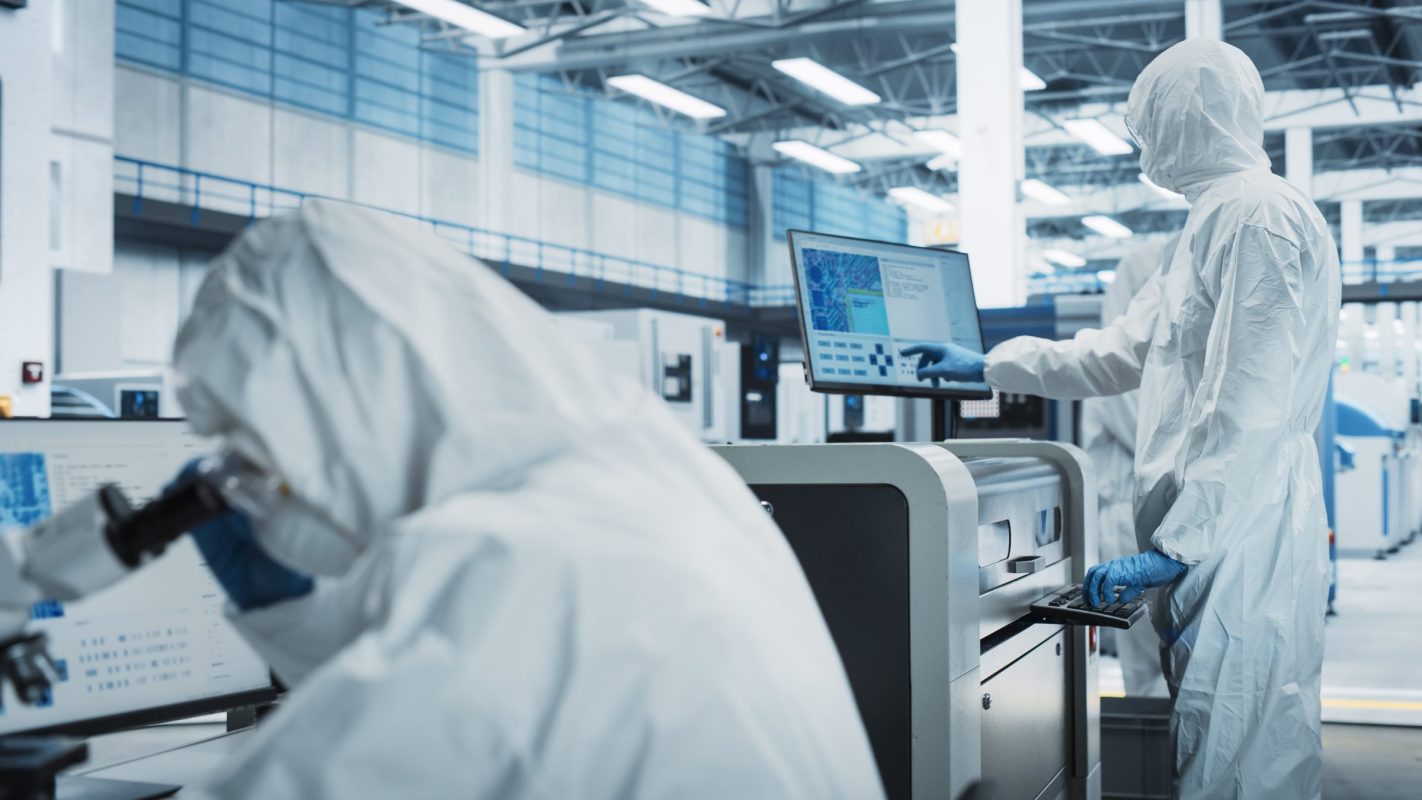
Thanks to Apple’s giant commitment, Broadcom will invest $1.5 billion in Fort Collins. Ford goes all in with China’s Geely in Spain. A Kansas-based company that started in Queens, New York, the same year as Site Selection launched (1954) will invest in Oklahoma’s robust aerospace ecosystem.
“There simply are not enough people,” says Jones Lang LaSalle Global COO of Real Estate Management Services Paul Morgan, who oversees a worldwide staff of 53,000 facilities management professionals in his role directing JLL Workplace Management. He has some thoughts on what to do next.
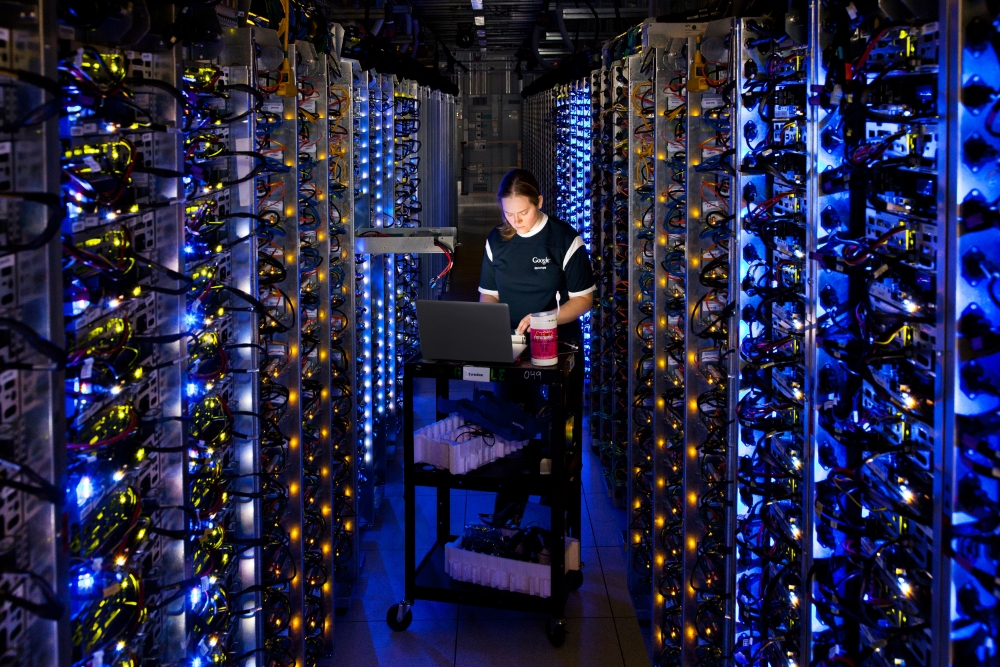
Kelly Barraza speaks with Applied Digital CEO and Chairman Wes Cummins about the company’s newly announced $3.6 billion AI factory in Rapides Parish and to Louisiana Economic Development Chief Business Development Office Paige Carter about how LNG is one of many sectors deepening the state’s investment portfolio.
Faraday Future’s business plan today revolves around robots.
Publicity photo courtesy of Faraday Future
The future of mobility is making way for the present-day needs of mobility: In June, Dermody announced it had acquired the former headquarters of electric vehicle company Faraday Future in Los Angeles in order to develop LogistiCenter at 110, a new 180,705-sq.-ft., Class A logistics facility.
“Strategic infill opportunities of this scale are exceptionally rare,” said Matthew Mexia, Southern California region partner at Dermody. “This site presents a compelling redevelopment opportunity transforming a well-located, formerly occupied campus into a best-in-class logistics facility in an area where developable land is virtually nonexistent. We are excited to deliver modern, functional space that directly addresses the South Bay’s significant unmet demand.”
The news took us back to September 2016 when we documented what sounded like the future of mobility in “Whole New World: Faraday Future’s Billion-Dollar Bet,” a story about the company’s big plans in Nevada. Two years later, it appeared the company, founded in 2014, was headed toward making an actual vehicle in “The State of Mobility” by Gary Daughters, in which Faraday Future’s then-Senior Vice President, Global Manufacturing Dag Reckhorn told him, “I don’t think there’s such a thing as a production paradise. California’s the right place for us because this is where our customers will be.” Reckhorn, who launched his electric vehicle industry career as director of manufacturing at Tesla, moved on to electric truck startup Xos Trucks in 2018 and then to Czinger Vehicles in 2022.
Today, Faraday Future has relocated its HQ to El Segundo and has shifted its focus toward robots, describing itself this way: “a U.S.-based Physical AI ecosystem company dedicated to reshaping the future of robotics and mobility solutions through AI innovation and technologies” via two major product strategies within “the Embodied AI (EAI) robotics business: EAI humanoid and bionic robots, and EAI automotive-focused robots.” Its latest “All-New Futurist” humanoid robot lists for $89,900. — Adam Bruns
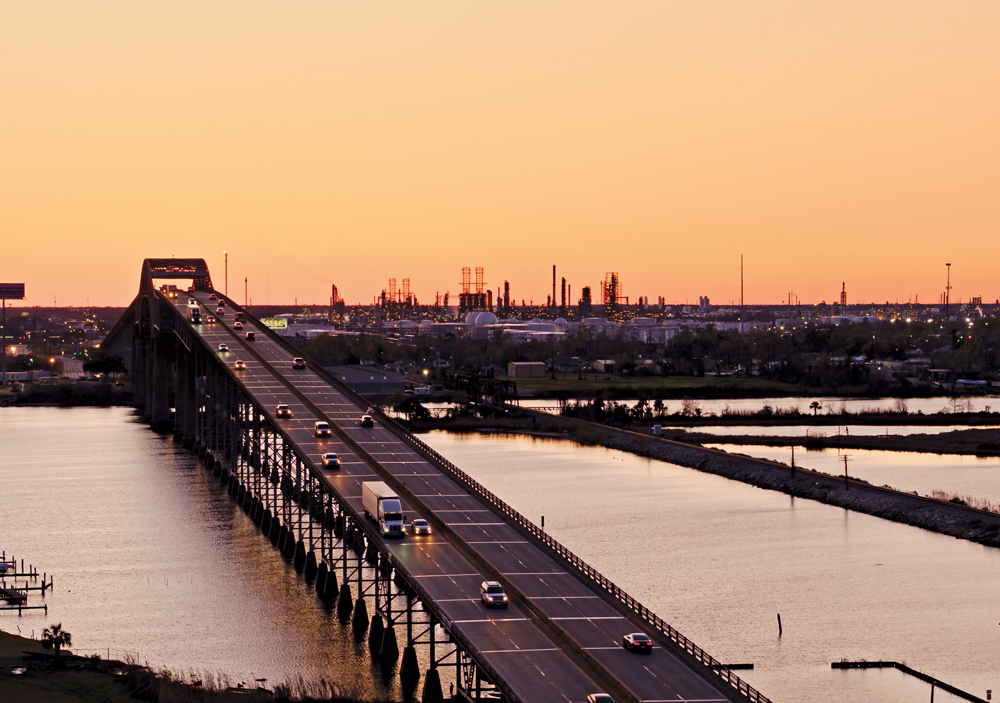
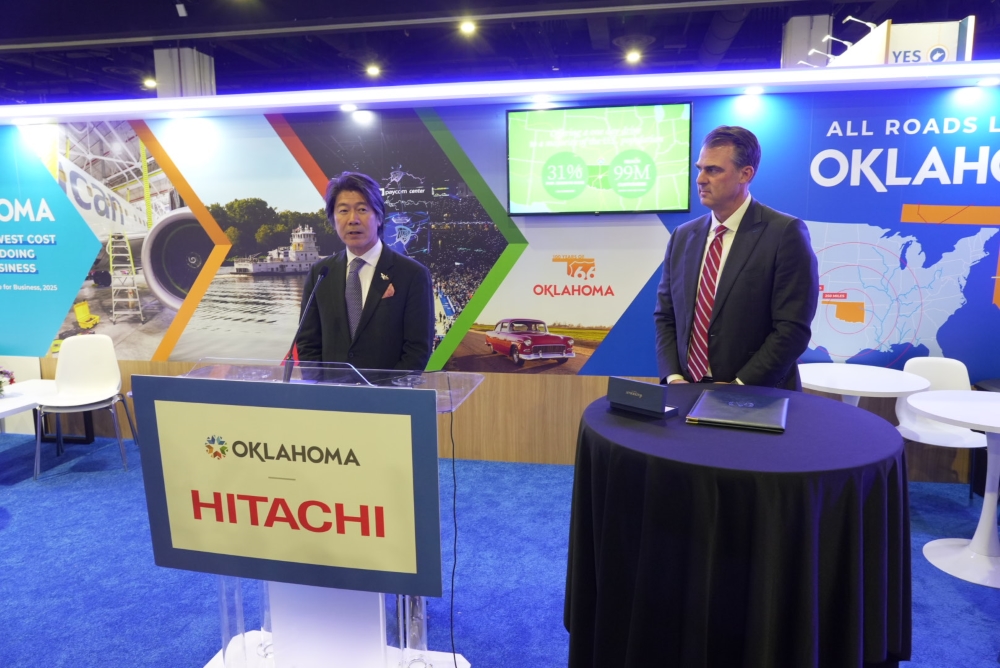
A business-friendly ecosystem supports a series of big project wins, including investments from Hitachi, Google, Firehawk Aerospace, Emirates Global Aluminium, Meta and Kratos Defense & Security Solutions, among others.
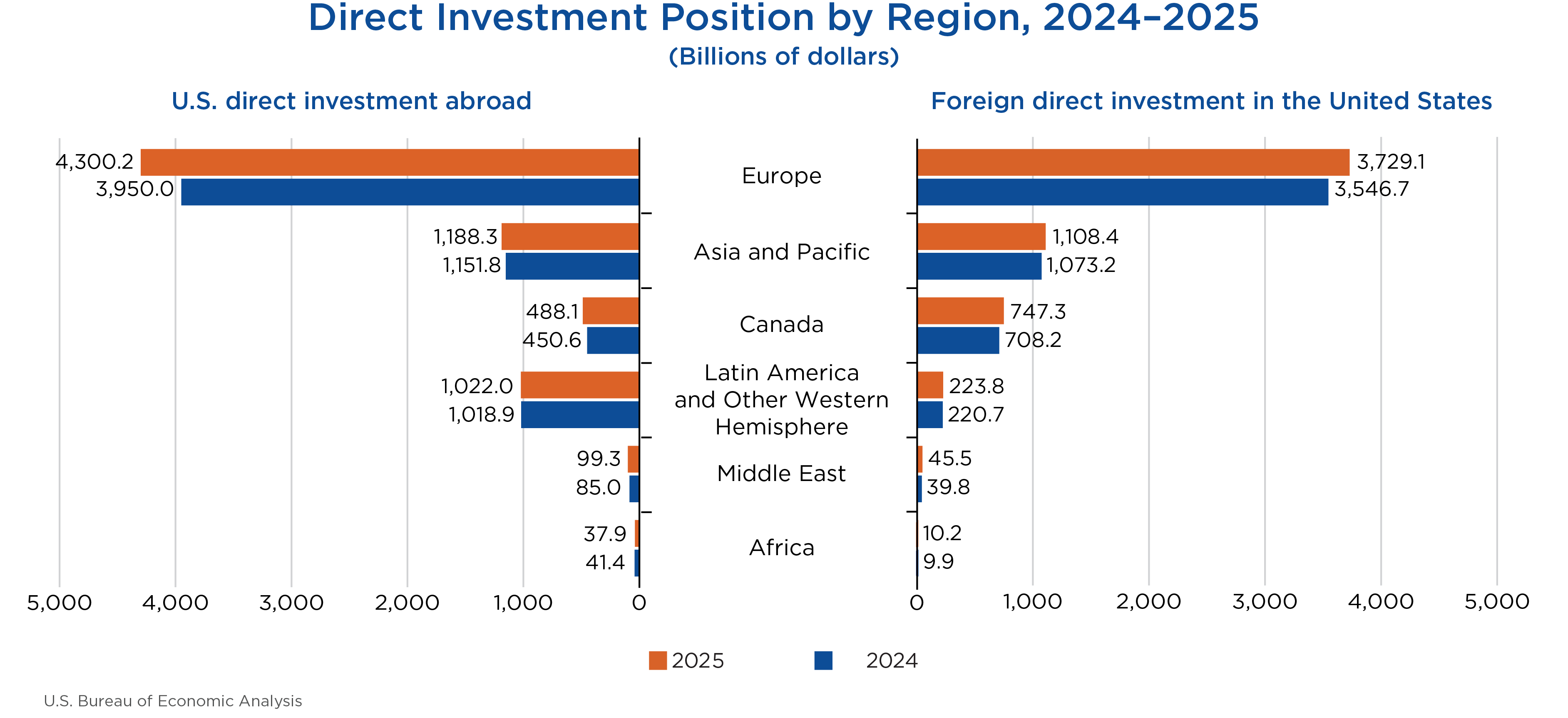
The U.S. direct investment abroad position, or cumulative level of investment, increased $438.1 billion to $7.14 trillion at the end of 2025, according to statistics released by the U.S. Bureau of Economic Analysis. The increase was led by a $350.2 billion increase in the position in Europe, primarily in the United Kingdom and Luxembourg. By industry, manufacturing had the largest increase, led by chemical manufacturing. U.S. multinationals’ position was largest in the United Kingdom ($1,114.7 billion), followed by the Netherlands ($1,044.0 billion), Luxembourg ($645.3 billion), Ireland ($511.9 billion), and Canada ($488.1 billion).
“The foreign direct investment in the United States position increased $266.0 billion to $5.86 trillion at the end of 2025,” the BEA stated. “The increase was led by a $182.4 billion increase in the position from Europe. The largest increase in position was from German multinationals, with a $49.0 billion increase, and the second-largest increase in position was from Canadian multinationals, with a $39.2 billion increase. By industry, manufacturing increased the most, led by electrical equipment and components manufacturing.
“By country of the foreign parent, four countries accounted for more than half of total foreign direct investment in the United States in 2025,” the BEA continued. “Japan was the top investing country with a position of $776.3 billion, followed by the Netherlands ($751.8 billion), Canada ($747.3 billion), and the United Kingdom ($738.3 billion).”
PHOTO OF THE DAY
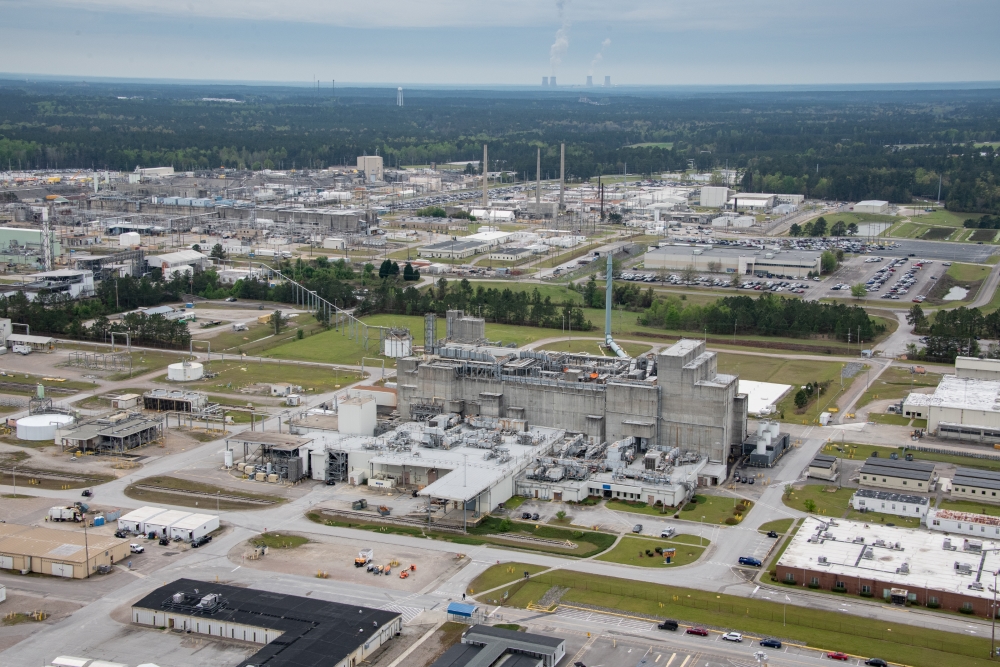
Photo courtesy of Savannah River Site/DOE
On July 20, Atlanta-based data center and fiber network company DC BLOX announced it had been chosen by the U.S. Department of Energy’s National Nuclear Security Administration (NNSA) alongside other companies such as Amentum in a development consortium to enter negotiations for a phased lease to develop an AI data center and dedicated energy generation projects at the Savannah River Site (SRS) in South Carolina.
“The competitive selection marks a pivotal moment in the execution of federal initiatives aimed at leveraging federal sites to lower energy costs by increasing the availability of power to the grid, streamlining AI data center infrastructure builds, and accelerating advanced nuclear reactor technologies,” said the DC BLOX announcement. “The proposed project features a 1-gigawatt data center campus and approximately 2 gigawatts of on-site energy generation.”
Located near Augusta, Georgia, the massive Savannah River Site is known for having developed materials critical for nuclear weapons, primarily tritium and plutonium-239. A DOE fact sheet notes that SRS is a 310-square-mile site (198,046 acres), including parts of Aiken, Barnwell and Allendale counties in South Carolina. “The SRS annual budget is approximately $3.8 billion, with a workforce of about 12,700.”
In addition to being home to a national laboratory, SRS is host to significant radioactive liquid waste management activity. “The waste, totaling about 34 million gallons, is stored in 43 operational underground carbon-steel waste tanks grouped into two tank farms at SRS,” SRS explains. “There are 51 waste tanks at SRS; eight have been operationally closed. To reach tank closure goals, new technology and tools have been built, tested and deployed to remove waste from the underground tanks. The waste is categorized into two forms: sludge waste, which includes highly radioactive solids made up primarily of actinides and strontium, and salt waste, which includes soluble radioactive materials, such as cesium. Sludge waste removed from the tanks is transferred to the Site’s Defense Waste Processing Facility (DWPF), where it is immobilized in a glass form and poured into stainless-steel canisters for safe storage and eventual long-term disposal in a federal repository. Since DWPF began operating in 1996, more than 4,300 canisters have been produced, containing more than 16.2 million pounds of glassified waste.”