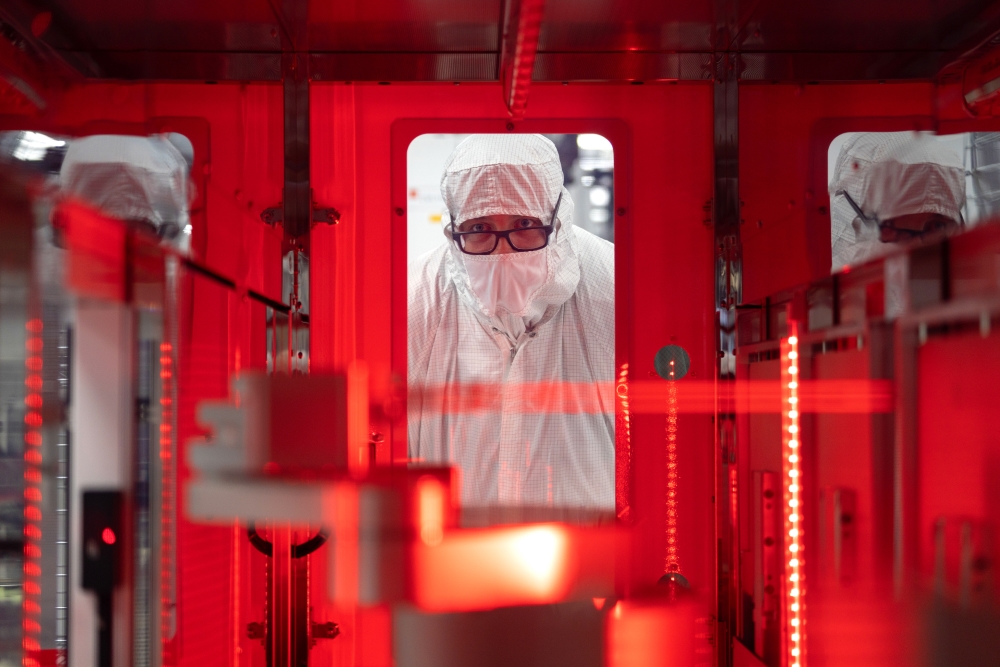
Featuring bonus and expanded content, the Ohio spotlight falls on several company executives offering their perspectives only a powerful node in the state’s life sciences sector, which has seen the number of jobs grow by 12.8% since 2019.
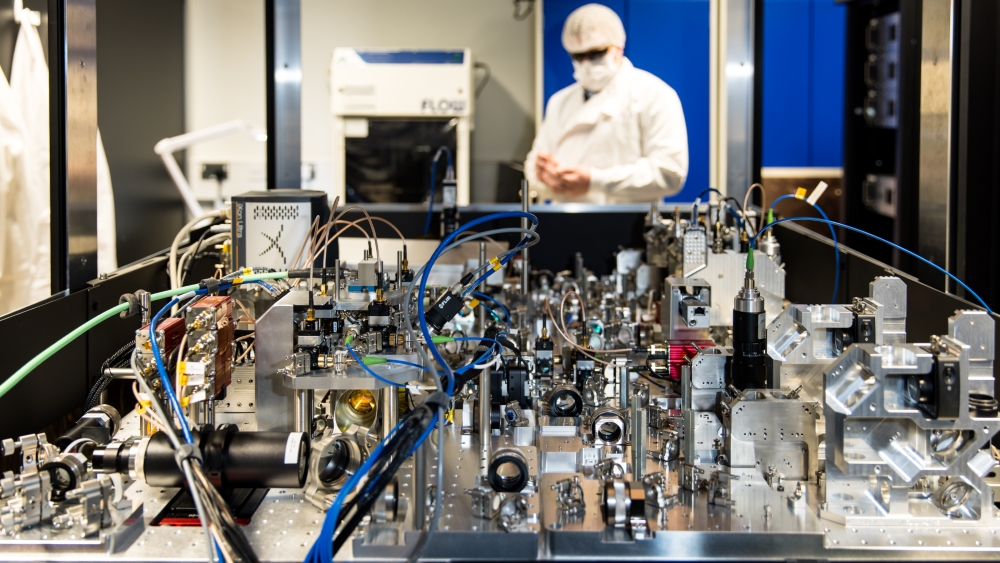
UK Department of Business and Trade Director Matthew Ashworth offers insights into the United Kingdom’s multi-billion-dollar buildout of quantum computers and what that means for growing companies from around the world.
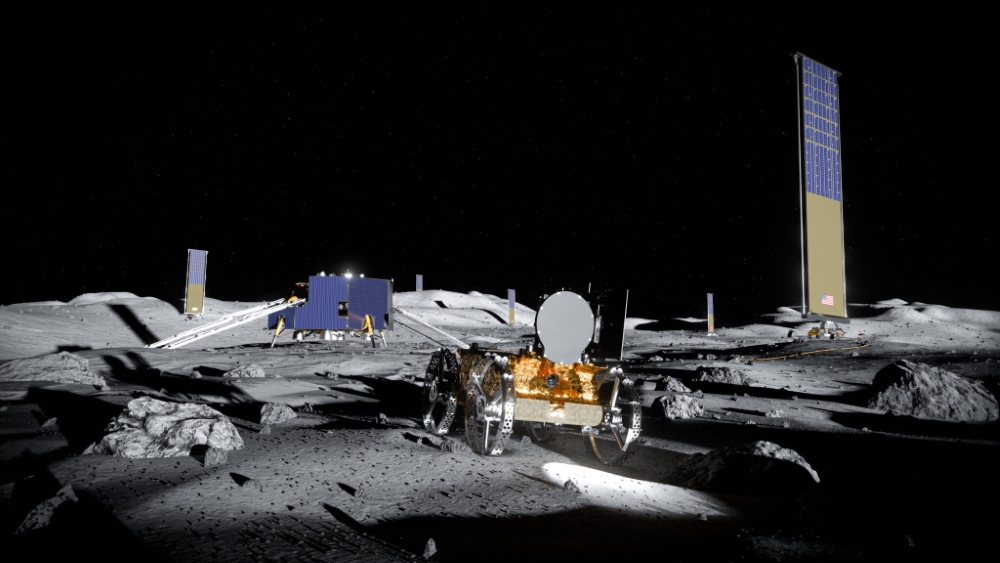
With its acquisition, Voyager Technologies’ lunar operations capabilities will now include surface delivery via Astrobotic’s Peregrine and Griffin landers; and surface power through Astrobotic’s LunaGrid solar distribution system (pictured).
Photo courtesy of Voyager Technologies
Voyager Technologies, a Denver-based aerospace company profiled by Site Selection in its May issue, has agreed to acquire Astrobotic Technology, Ind., a Pittsburgh-based pioneer of commercial lunar delivery, lunar power and reusable rockets whose growth journey has been chronicled in Site Selection in 2015 and, most recently, last summer. Subject to customary regulatory approvals, the transaction is expected to close by early July 2026 for up to approximately $300 million. Astrobotic’s Moon Base headquarters in Pittsburgh will serve as the center of Voyager’s lunar program.
“We are building the infrastructure foundation that will make America’s permanent presence on the Moon a reality,” said Voyager Chairman & CEO Dylan Taylor. “Achieving that vision requires robust operational systems that match the resilience necessary for critical, repeatable missions. With Astrobotic, Voyager is now a lunar platform that will have capability at every infrastructure layer needed to put Americans on the lunar surface and keep them there.”
“Astrobotic was built to prove that commercial companies can deliver to the Moon,” said John Thornton, CEO, Astrobotic. “Joining Voyager gives that mission the scale and long-term commitment it has been building toward for nearly two decades. Our team, our technology and our homes in Pittsburgh and Mojave remain at the center of what we are building, and now we have a partner with the breadth of capabilities and resources to realize a continuous presence on the Moon.”
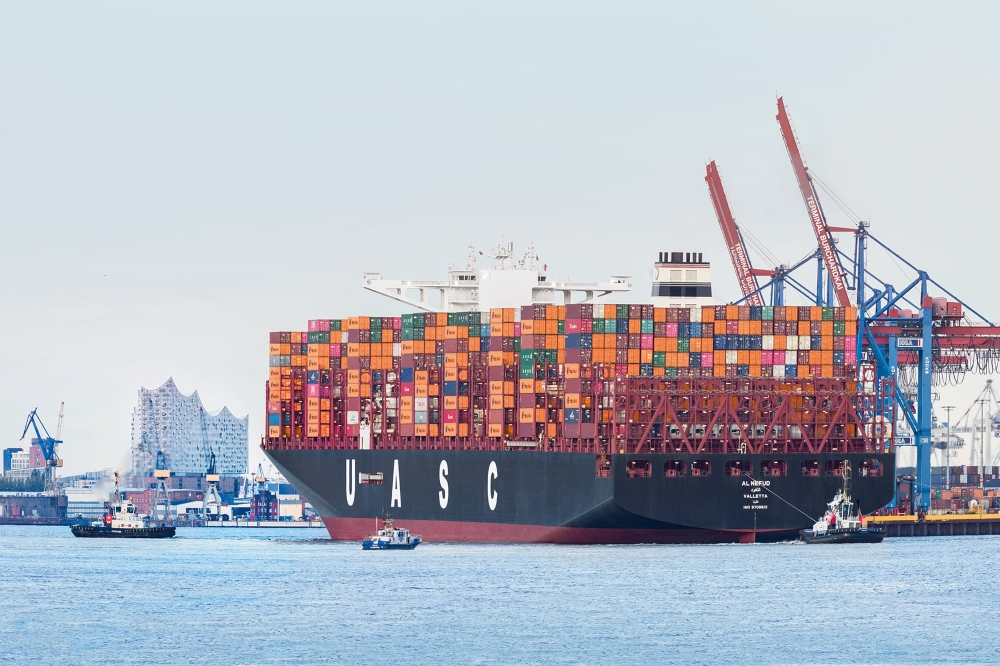
Hapag-Lloyd, sponsor of the Albert Ballin Forum, operates 301 modern container ships with a total transport capacity of 2.5 million TEU and employs around 15,000 people.
Photo courtesy of Hapag-Lloyd
Around 100 guests from the shipping industry and academia gathered at Kühne Logistics University (KLU) in Hamburg, Germany, last month at the Albert Ballin Forum hosted by Hapag-Lloyd to discuss how merchant shipping can respond to massive threats from wars, hybrid attacks and geopolitical tensions. A KLU release about the event is titled, “No shipping, no shopping: Merchant shipping in times of war.”
“Maritime security is currently under threat to an extent not seen since the last world war,” said KLU’s summary. “What do solutions for security on the world’s oceans look like? This question is becoming increasingly urgent for vital supply chains: 60% of German imports and exports currently travel by ship, as do 90% of global trade and 80% of Europe’s energy supply.”
Prof. Dr. Gordon Wilmsmeier, director of the Hapag-Lloyd Center for Shipping and Global Logistics (CSGL) and expert in maritime logistics at KLU and Universidad de los Andes, Colombia, said, “We are surfing on a wave that is too high — no one knows when it will break. Individual interests dominate the actions of political and economic actors … It is already difficult enough to guarantee security on land — at sea, without cameras, public scrutiny and witnesses, it is almost impossible.”
At a ceremonial evening event, the “Albert Ballin Award for Global Action,” which included a prize of €50,000, was presented to Pedro Salazar, founder and director of the Colombian foundation Fundación Amigos del Mar. As director-general, Ballin, born in 1857 in Hamburg, “turned the Hamburg- Amerikanische Packetfahrt-Actien-Gesellschaft (Hapag) into the biggest liner shipping company in the world,” says a company history.
PHOTO OF THE DAY
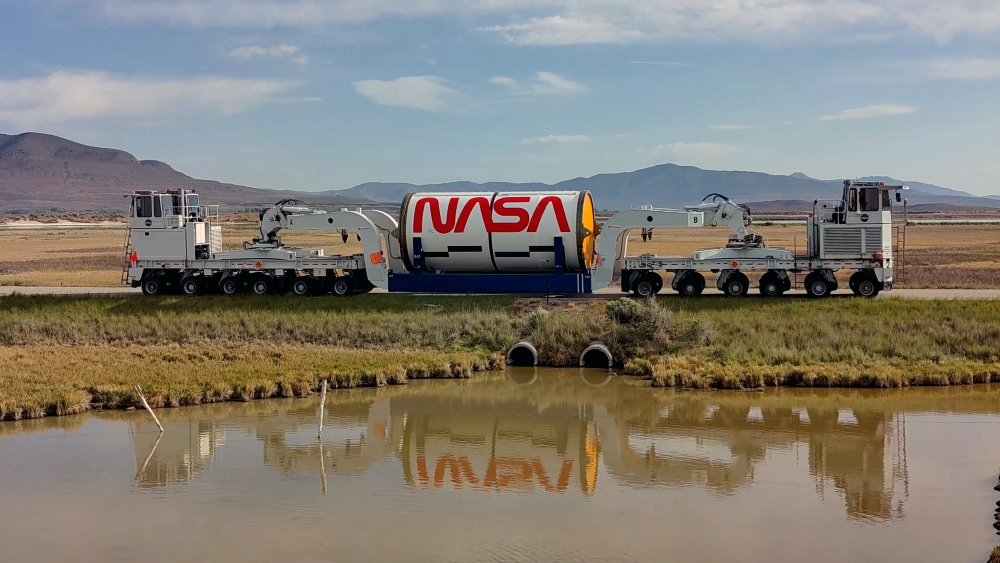
One of the Artemis III solid rocket motor segments features the iconic NASA “worm” logo.
Photo courtesy of Northrop Grumman
Even advanced vessels meant for travel to other celestial bodies require earthbound vehicles to get them to the launch pad. Northrop Grumman yesterday announced it had shipped the final eight twin solid rocket booster motor segments for NASA’s Artemis III mission from Promontory, Utah (pictured), to Kennedy Space Center, Florida, where they will be stacked this summer after traveling by rail. “The solid rocket boosters’ proven performance is ready now to support NASA’s goal of sustained lunar exploration and eventual missions to Mars,” the company stated.