|
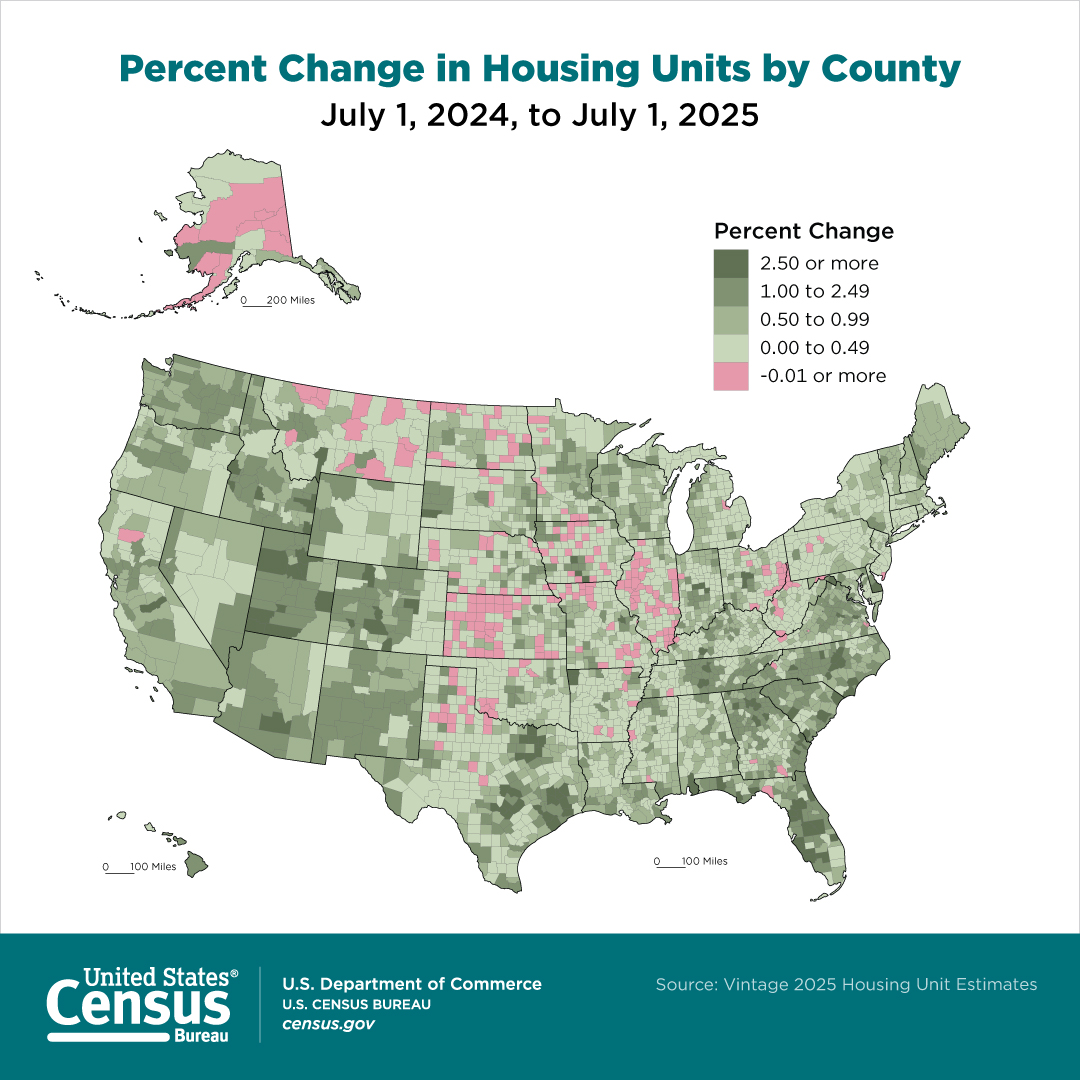
The latest stats from the U.S. Census Bureau have a lot to say about the agency’s Vintage 2025 population estimates for cities (not metro regions), which show numbers declining in large cities but rising on those cities’ outskirts (which in most cases are still part of the nominal city’s metro area).
“Even where the largest cities maintained strong growth, they were often outpaced by smaller cities in the outer portions of the same metro area,” the Bureau stated. “For example, Charlotte, N.C. — the nation’s 14th largest city — gained 20,731 residents between 2024 and 2025, more than any city in the country. However, among cities with a population of 20,000 or more, Charlotte was only the seventh fastest-growing city in its own metro area by percentage increase. The fastest was Fort Mill, S.C. — about 20 miles from downtown Charlotte — which grew by 6.8% to 38,673, ranking 20th nationally. The cities in the metro outranking Charlotte in growth were all midsized, with populations ranging from about 25,000 to 70,000.”
Matt Erickson, a statistician in the Census Bureau’s Population Division, noted that, in many cases, “midsized cities found a ‘Goldilocks zone’ where domestic and international migration, paired with new housing, helped prevent the sluggish growth seen in small towns and larger metropolitan centers.” Erickson teamed with colleague Lindsay Spell to further explore the trends in one of the Bureau’s “America Counts” stories entitled “Movin’ Out: More Growth on Outer Edges of Major Cities.” They chose a major metro area in each of four regions — Dallas-Fort Worth-Arlington; New York-Newark-Jersey City; Minneapolis-St. Paul-Bloomington; and Seattle-Tacoma-Bellevue — and analyzed how the populations have shifted in those regions during the first half of this decade.
Watch for a comprehensive report on attainable workforce housing solutions in the July 2026 issue of Site Selection.
|