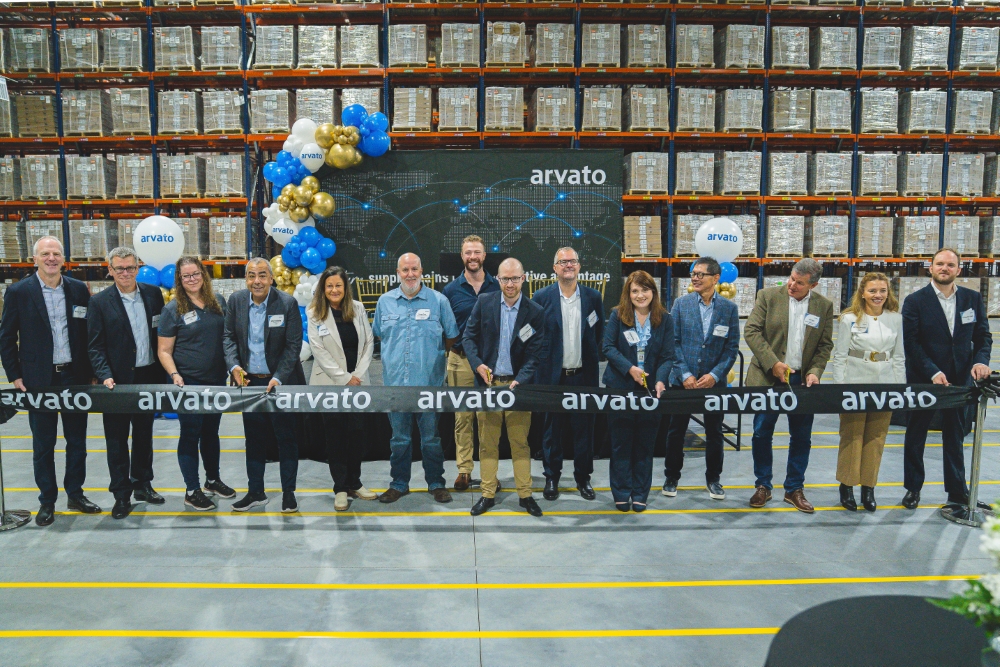
Supported by the equivalent of $356 million in state aid under the European Chips Act, Infineon Technologies is investing $1.2 billion to establish the world’s first high-volume next-generation gallium nitride (GaN) power semiconductor manufacturing facility in Austria. The newly independent Honeywell Aerospace makes a splash near its global HQ with the announcement of a $500 million facility investment in Tempe to address growing demand across its commercial and defense programs. Italy-based Bracco selected Sanford, North Carolina, for a $230 million injectable contrast media plant, complementing global operations in Asia, Canada and Europe.
Texas again reigns No. 1 in Site Selection’s annual state business climate rankings. The story is found in the data from our 16-point index and in a detailed account of one company’s recent location decision.
Each year Site Selection ranks the Top 10 metros and micropolitan areas along the entire 981 miles of the Ohio River corridor. For the fourth year in a row (after tying with Greater Cincinnati in 2022), the bi-state Greater Louisville region leads the way.
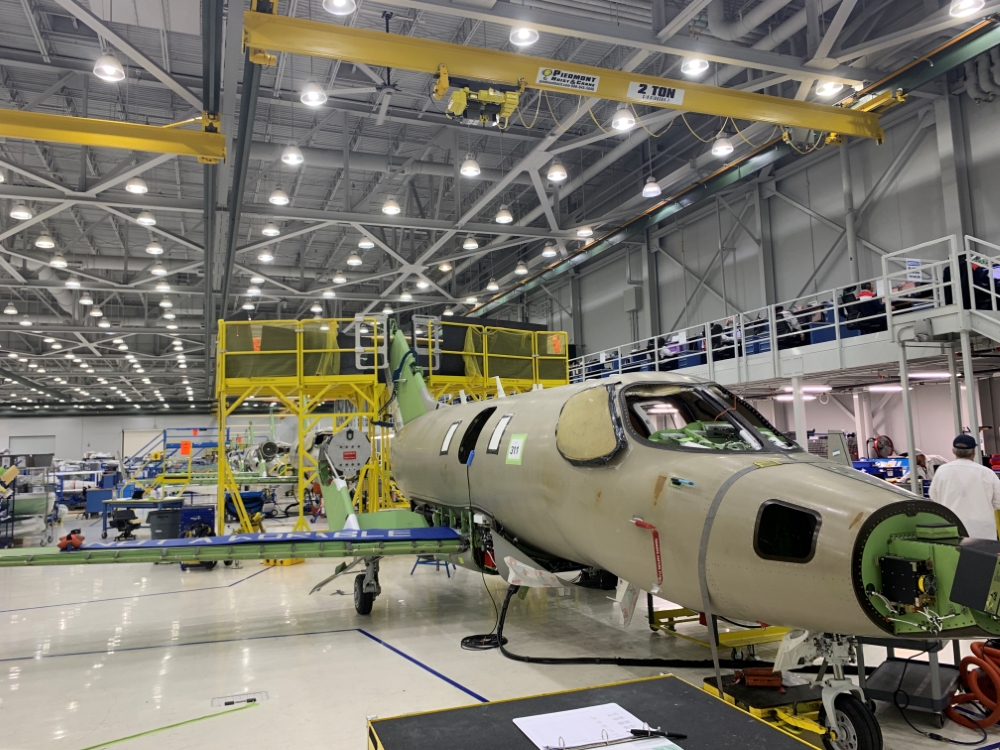
This image shows the 311th aircraft to be manufactured (potentially the 300th to be delivered) at the HondaJet facility at Piedmont Triad International Airport in Greensboro, North Carolina. Deliveries of the HondaJet surpassed the 250 mark in 2024. Editor in Chief Adam Bruns made the photo last week during an aerospace-themed press trip to Asheville and Greensboro hosted by the Economic Development Partnership of North Carolina. Site Selection has documented the sector’s evolution in the state for decades.
Honda Global Aircraft first arrived in the Triad 20 years ago. In saluting Greensboro-High Point as the top tier-2 metro area for 2006 project activity, Site Selection’s March 2007 issue reported on the February 2007 announcement of the assembly plant, which later was among Site Selection’s Top Deals of the Year. The November 2009 article “Carolinian Cluster Approaches Critical Mass” chronicled growth of the company and the sector. And “Aerospace Cluster: Hiring on All Cylinders,” published in September 2019, profiled the important role played by Guilford Technical Community College in educating the workforce needed by aviation companies, including those in the maintenance, repair and overhaul (MRO) sector.
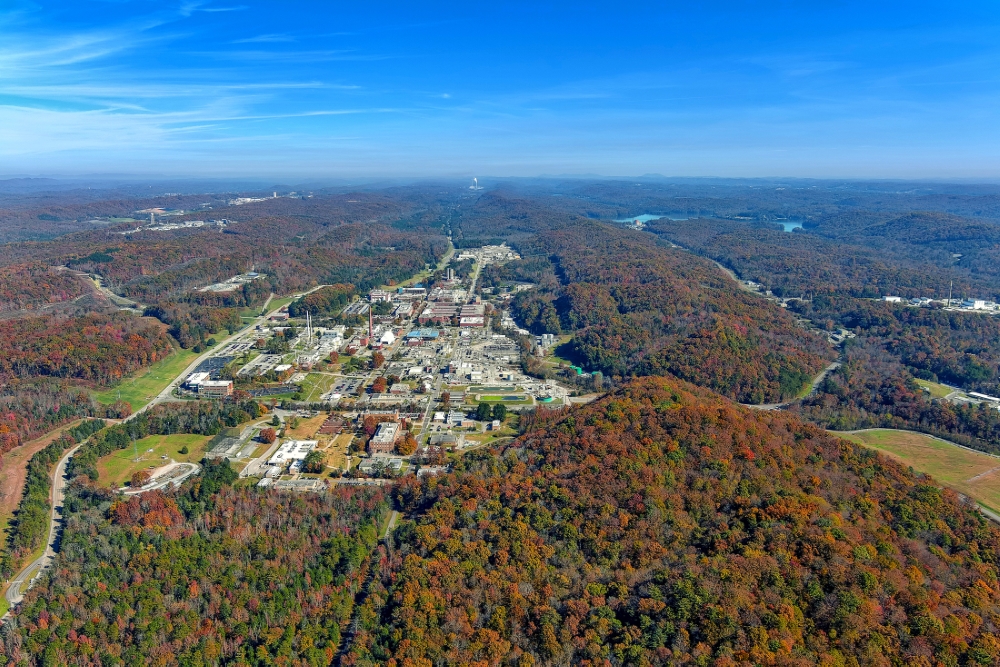
Home to a regional nuclear cluster with unusual depth, East Tennessee has the labs, sites and technical knowledge that nuclear companies need, along with universities and community colleges preparing the workers who will help them grow.
An archive photo from 2021 shows Xiamen Port in East China’s Fujian province.
Photo courtesy of China Daily
Mary E. Lovely and Christine Y. Wan of the Peterson Institute for International Economics in August published “Made with China: Global supply chains and the limits of U.S. decoupling.” Using Asian Development Bank multiregional input-output tables for 2007–24, the policy brief argues that tariffs “failed to significantly reduce America’s dependence on Chinese goods and services” and that the latest round of tariffs “will also likely fail to curb America’s reliance on Chinese imports, some of which are essential inputs to important industries.”
The brief includes a link to the full data used for the analysis. Genuine U.S. economic security, the authors state, “requires a more disciplined strategy — identifying actual chokepoints, building competitive alternative suppliers and the infrastructure connecting them to markets, and cooperating with allies rather than forcing them into separate supply chains.”
PHOTO OF THE DAY
Photo by Jack Delano courtesy of Library of Congress Prints and Photographs Division
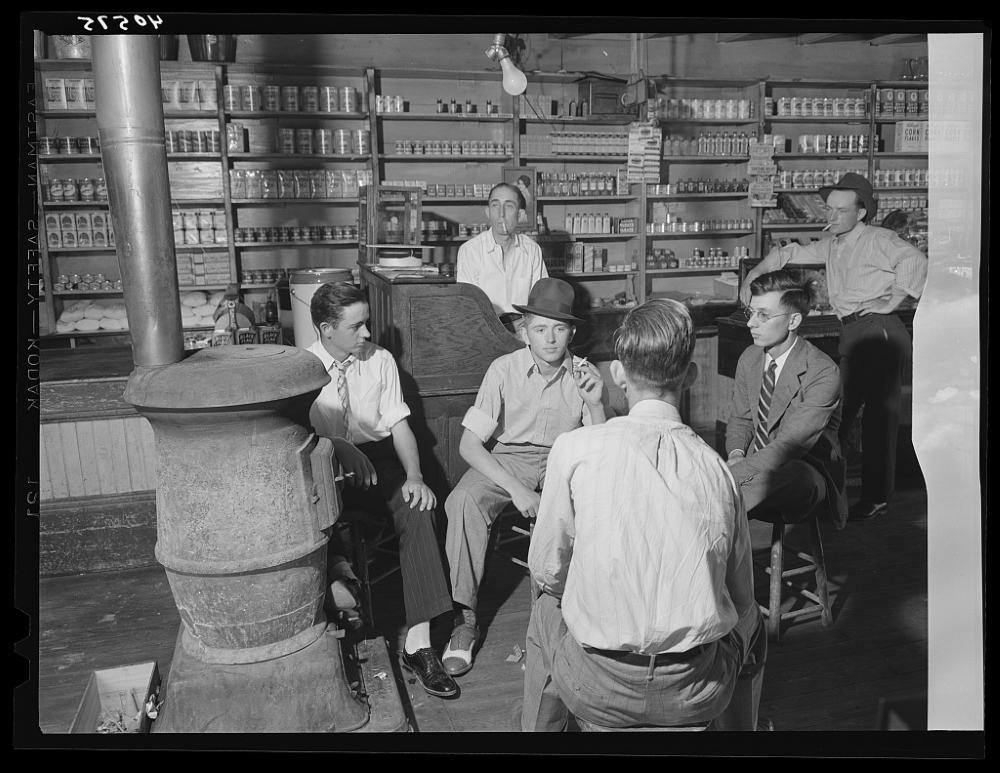
This image from 1940 shows what the Library of Congress says are “high school boys dressed up because it’s Election Day” inside the general store in Stem, Granville County, North Carolina. Located near I-85, the town is 25 minutes from Durham and as of the 2020 Census reported a population of 966 people.
“The history of Stem begins with the area known as Tally Ho,” says the town’s official history. “It was prime fox hunting territory in the 1700s with a stable with an adjoining tavern that served as a common meeting place for thirsty hunters. The tavern was named Tally Ho after the traditional fox hunting call. The town of Stem was established as a separate and distinct entity from Tally Ho township in 1888 by William Thomas Stem. The Stem family were co-proprietors of a general store in the Tally Ho township and owners of the land where a new spur of the Richmond and Danville Railroad terminated.”