We tabulated where all 5,000 Inc. 5000 firms have their headquarters. The first part of a three-part series examines the top states, led by a jurisdiction known for growing half the nation’s vegetables, three-quarters of its fruits and nuts — and 13% of the entire Inc. 5000 list.
What is moving people to go outside? Kelly Barraza takes a hike and talks to Outdoor Industry Association Director of Research Kelly Davis to find out.
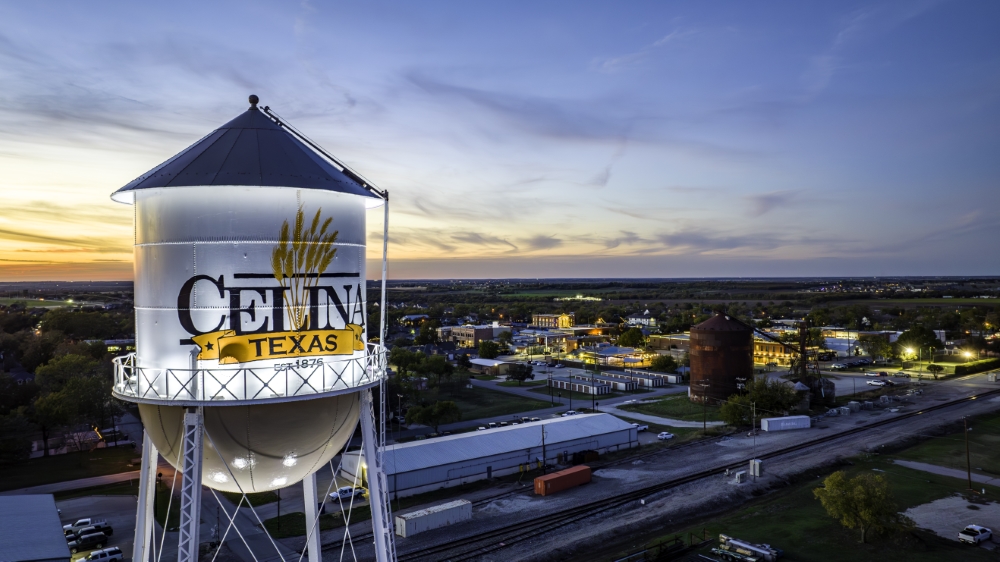
As the DFW metroplex continues to grow, leaders in Celina have recognized an opportunity to turn the city’s authentic Texas identity into a foundation for the city’s next chapter of its own growth.
Boise is one of several locations in Idaho — including Nampa an hour to the west — seeing facility investments from Schweitzer Engineering Laboratories (SEL).
Photo by Duft Waterson/Visionkit Studio courtesy of Visit Boise
Schweitzer Engineering Laboratories (SEL) yesterday announced it is expanding its manufacturing operations in Idaho with the purchase of a facility in Nampa. The $150 million-plus investment in the 103,000-sq.-ft. building and equipment will increase manufacturing capacity to meet growing global demand for products that protect, monitor and control critical infrastructure, the company said, noting that the site will make electronic devices like those produced at SEL facilities in Pullman, Washington (the company’s hometown), and Lewiston, Idaho. The new facility is expected to be operational in 2027 and is initially expected to create “approximately 250 manufacturing careers,” the company said.
The announcement marks the fourth major manufacturing expansion SEL has announced in the past two years. Previous projects include a new electronic device manufacturing facility in Moscow, Idaho; an expansion of panel manufacturing operations in Charlotte, North Carolina; and the acquisition of the former Pullman Building Supply property in Pullman, Washington.
“I am especially pleased to see SEL continue investing in Idaho, a state that values free enterprise, innovation and hard work,” said Dr. Ed Schweitzer, SEL founder and chairman of the board, in an SEL press release. “Idaho has created an environment where manufacturers can grow, create opportunities for families and build products that serve customers around the world.”
Site Selection Managing Editor Kelly Barraza spoke with SEL President Dave Whitehead about the company’s projects in Moscow and Boise for the Idaho spotlight, “Closing the Innovation Gap,” just published in Site Selection’s September 2026 issue.
Nampa is one of several Idaho locations to benefit from a recent investment by SEL.
Photo by Brandon James courtesy of Nampa Chamber of Commerce
During a plenary session last week, the European Parliament adopted new e-commerce and customs rules that among other things establish a new handling fee for goods ordered by EU consumers directly from non-EU countries to come into effect on 1 November 2026 at the latest. The rules also establish an EU-wide IT system called Data Hub to replace more than 111 current systems and establish a new EU customs authority in Lille, France.
“Sellers and platforms that facilitate the distance sales of goods from non-EU countries directly to EU customers will be treated as importers,” the official announcement stated. “This will oblige them to provide customs authorities with all the required data, pay or guarantee any charges, and make sure that the goods shipped to Europe comply with EU laws. To ensure accountability, these companies must be established in the EU or be represented by an EU-based entity having either authorized economic operator (AEO) or trusted trader status. This should prevent the use of shell companies to circumvent the new rules.
“To incentivize bulk shipments that are easier for customs authorities to check,” the statement read, “non-EU country sellers and platforms are encouraged to operate warehouses in the EU. Their intra-EU client shipments will benefit from a lower handling fee, provided their goods are imported in collective packaging and large enough quantities to make customs checks more efficient.”
“This is the biggest reform of European customs since 1968, supporting trade and the enforcement of EU rules,” said Rapporteur Dirk Gotink of the Netherlands. “As rapporteur, I have seen firsthand the tsunami of Chinese parcels violating EU rules, not paying taxes and overwhelming our customs. We are ending the highly toxic business model of cheap non-compliant and dangerous imports from China in favor of trade based on our standards and on fairer competition. We are finally giving Europe’s 80,000 customs officers the instruments they need to protect consumers and businesses for the decades to come.”
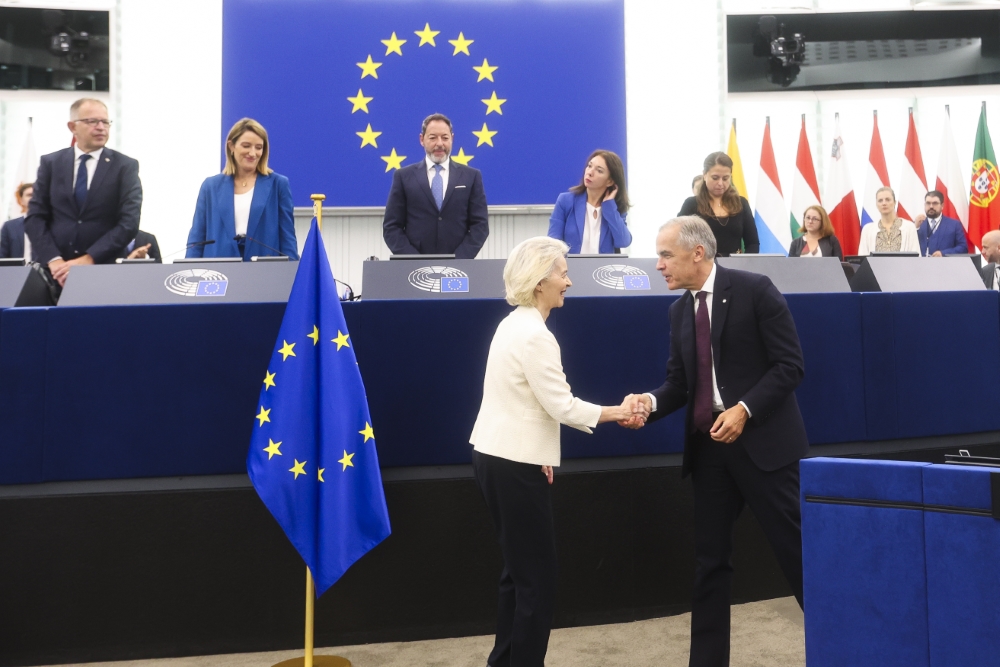
During the annual State of the European Union debate this week in Strasbourg, European Commission President Ursula von der Leyen said, “The state of our Union is the strongest it has ever been. The state of our Union can also feel as precarious as it has ever been.” Speaking about what official EU accounts characterized as the fractured international rules-based system, she said, “We must urgently reimagine our partnerships.” Addressing Canadian Prime Minister Mark Carney in the chamber directly, she said, “I would like to work with you on opening the door for Canada to be the first associate member of the EU.”