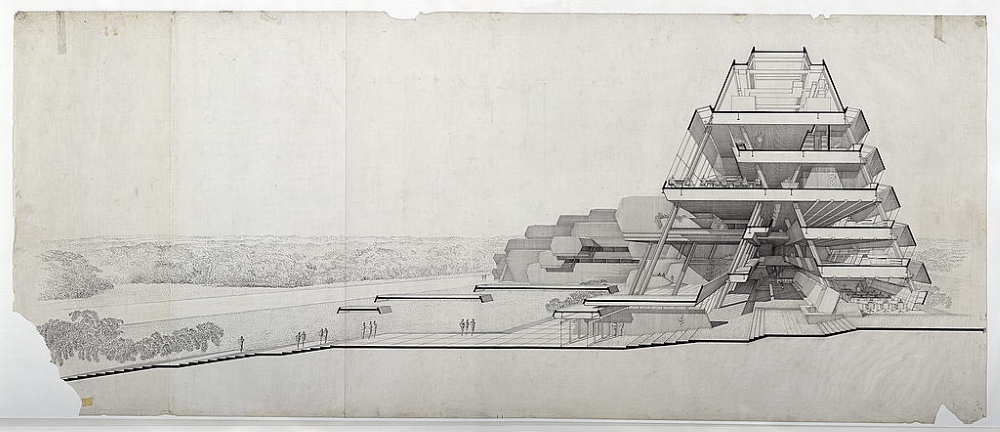
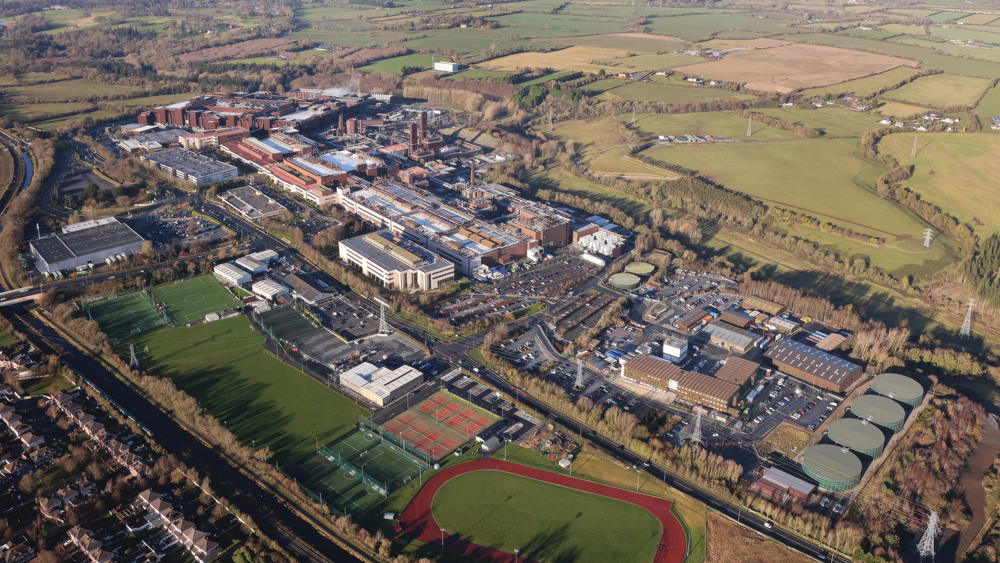
Mack Paul, the co-author of a new history of Research Triangle Park, places a new chapter in context. Then, in this expanded web edition of the story, he speaks at length with Senior Editor Alexis Elmore about the park’s historical figures, why RTP continues to be a model and what it was like to write the book with his late father.
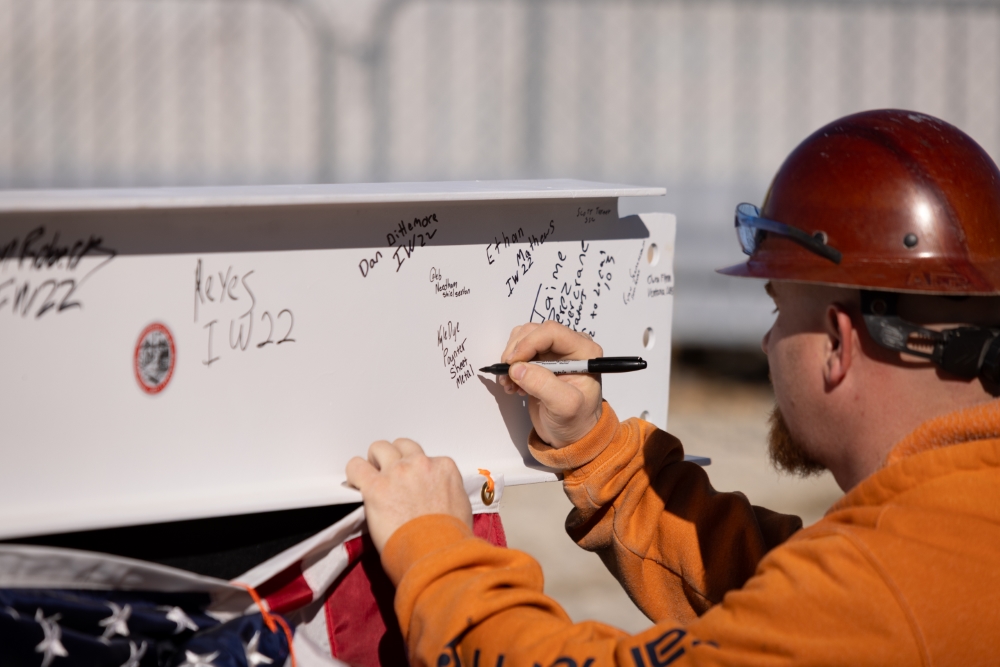
A construction worker signs a beam at the May topping-out ceremony for the new, on-airport Westin Indianapolis International Airport hotel in Indianapolis, Indiana, identified in a new Georgetown CEW report as having the smallest credential-to-job gap of 55 major U.S. metros.
Photo courtesy of Indianapolis Airport Authority
“While the bachelor’s degree remains the surest path to economic opportunity, middle-skills springboard occupations offer high starting pay and strong wage growth to workers with postsecondary certificates or associate’s degrees,” CEW stated. “Researchers project that the number of qualified workers will fall short of the demand in these occupations in all of the nation’s 55 largest metro areas, with negative implications for workers, employers and communities.”
“Across all 55 metro areas, more than 2.1 million middle-skills workers are currently employed in either a healthcare professional and technical or a computer and mathematical sciences springboard occupation,” said Catherine Morris, report co-author and senior editor/writer at CEW. “Meanwhile, occupational groups such as management and installation, maintenance and repair will see the largest year-over-year growth in springboard job openings through 2034.”
According to the data tool, the biggest credential-to-job gaps are in metro Nashville, Grand Rapids and Portland, Oregon. The smallest gaps are in metro Indianapolis, San Jose and Orlando.
North Mississippi is just one small part of a Mississippi strategic advantage that includes deepwater ports on the Gulf, a multimodal freight network, the Tennessee-Tombigbee Waterway and the entire Mississippi River freight corridor.
In keeping with its “Let’s Break New Ground” branding, the Mississippi Development Authority offers an innovative, forward-thinking approach to incentives policies and implementation that is resulting in plenty of literal groundbreakings.
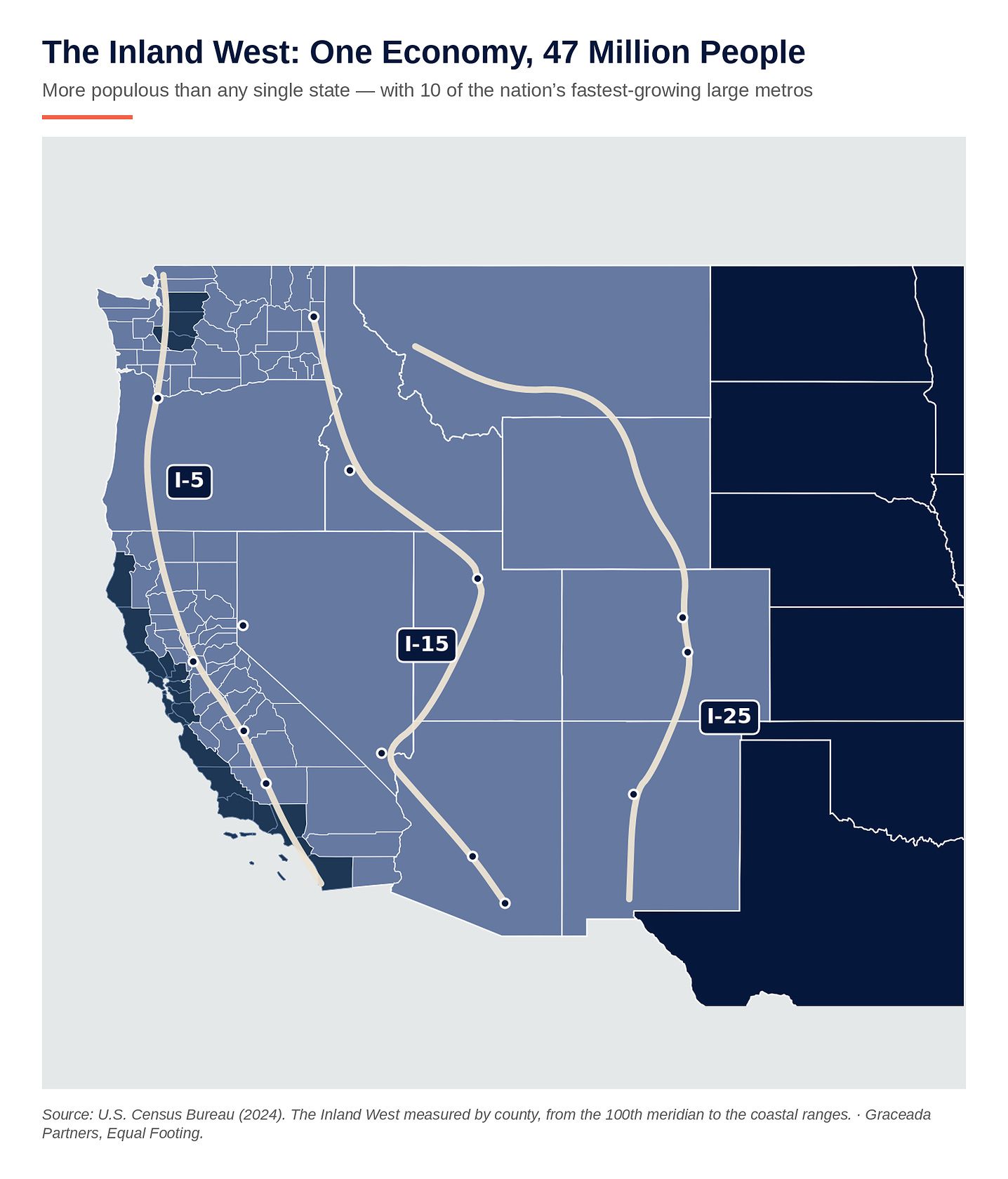
Institutional real estate investment manager Graceada Partners yesterday released a study that evaluates what the firm calls the Inland West — encompassing portions of 11 states in a region the study finds matches or leads the U.S. Southeast on population, income, output and employment growth when measured across 21 years of federal data. Defined from the 100th meridian to the coastal ranges, the region holds roughly 47 million residents and includes 10 of the country’s fastest-growing large metros, including Phoenix, Denver, Las Vegas, Salt Lake City, Sacramento and Boise. “The region does not appear in most regional data because it is carved up by state lines drawn without regard to how its economy runs,” Graceada Partners contends. “Inland California is averaged into San Francisco; Spokane into Seattle.
“Equal Footing: The Inland West and the Southeast” also finds that the two regions have switched places in terms of per-capita income: “In 2003 the Southeast sat closer to the U.S. average (92.6%) than the Inland West (88.8%). By 2024 the two had traded places with the Inland West converging upward and the Southeast drifting down relative to the nation.”
Whether corporate site seekers seek higher per-capita incomes is an open question. But the report notes that “on the affordability, age, migration and industry measures that drive housing and logistics demand, Fresno, Bakersfield, and Spokane behave like Boise and Phoenix, not like the coastal metros they are reported inside.”
PHOTO OF THE DAY
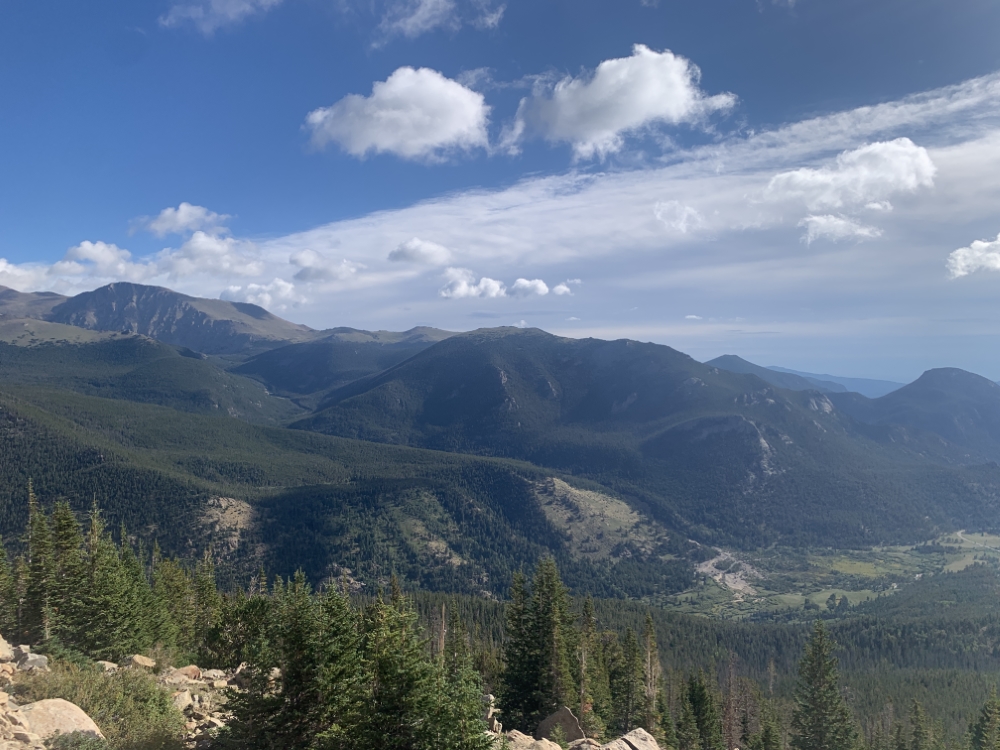
Editor in Chief Adam Bruns made this photo on Tuesday in Rocky Mountain National Park on the approach to the Alpine Visitor Center more than two miles above sea level. RMNP measures more than 415 square miles (265,807 acres) and contains more than 100 peaks above 11,000 feet, including one “fourteener,” Longs Peak, at 14,259 feet. The park also contains herds of elk, now descending to meadows for the fall mating season or rut, a word derived from the Latin term for “roar” that relates to the bull elk’s bugle.